Artwork
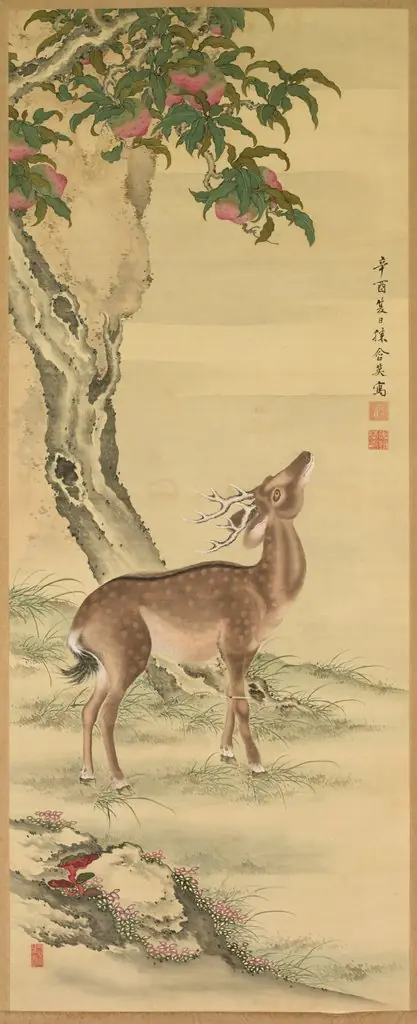
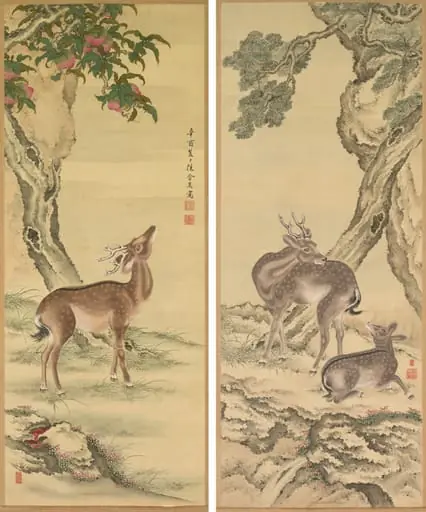
Symbols of Longevity: Deer under Peach and Pine (Peach) (left)
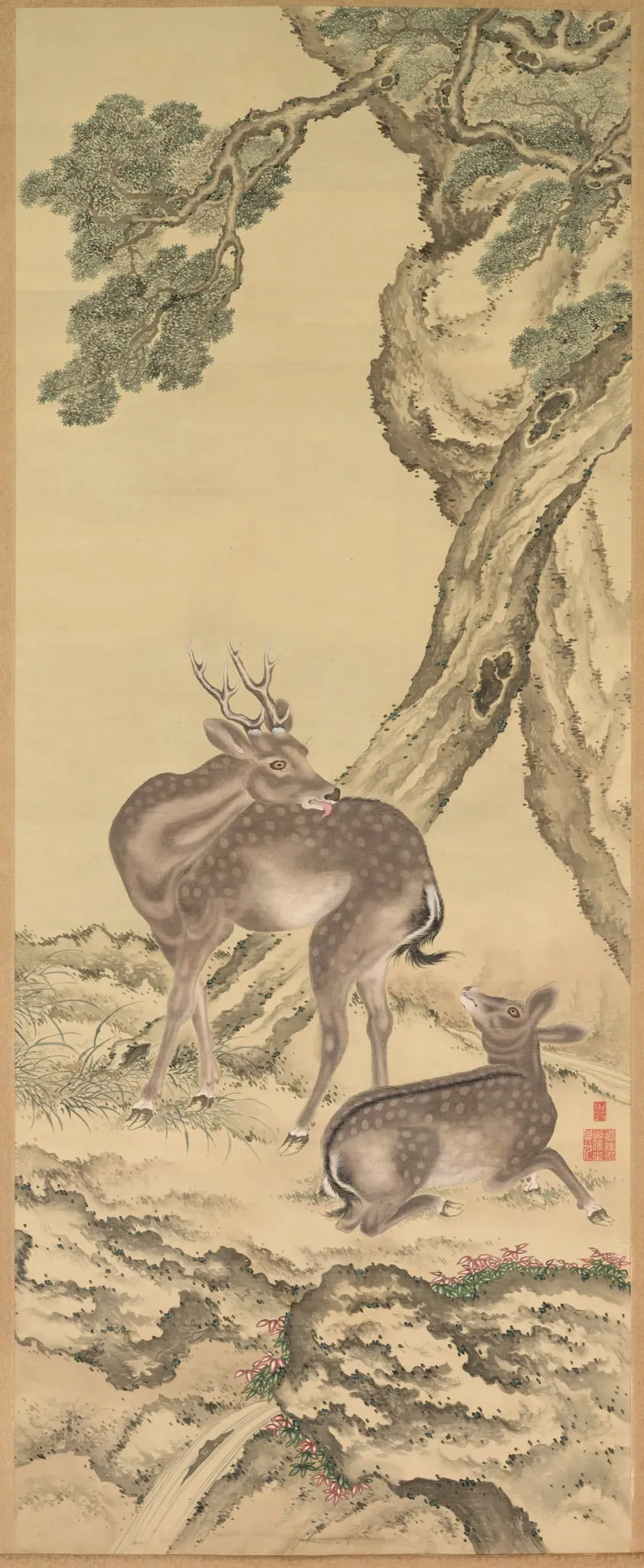
Symbols of Longevity: Deer under Peach and Pine (Peach) (left) is an unspecified painting by the Nihonga artist Toda Tadanaka. It dates from 1801 and is held in the collection of the Cleveland Museum of Art.
About this work
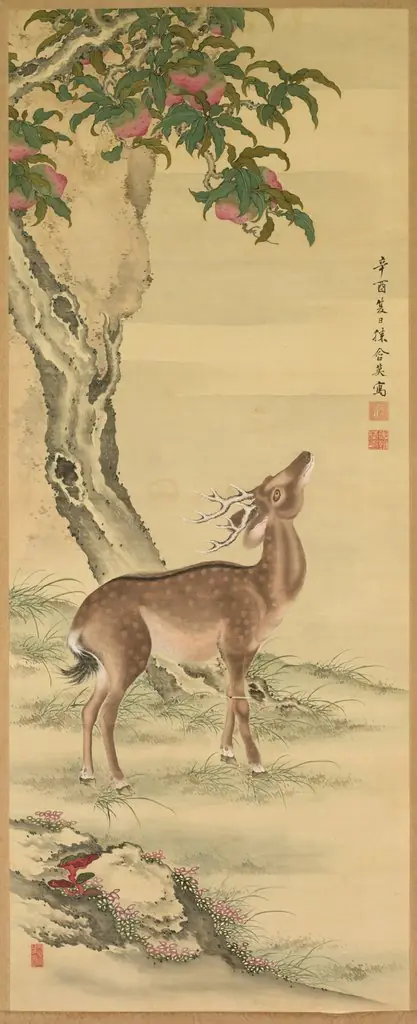
You see a deer standing under a peach tree branch. The tree has pale pink blossoms and small green leaves. The deer looks calm, its head turned slightly toward us.
This painting is from Japan’s Edo period. Artists then liked symbols of long life. Peaches meant immortality. Pine trees also stood for endurance. Deer were lucky messengers.
Look up Toda Tadanaka (Japanese, 1761–1823).
Overview
Symbols of Longevity: Deer under Peach and Pine (Peach) is a painting by Toda Tadanaka, created in 1801. It is part of The Cleveland Museum of Art's collection.
Subject & Meaning
The painting depicts a serene deer standing beneath a peach tree branch adorned with pale pink blossoms and small green leaves. The imagery is rich in symbolism, drawing on motifs associated with longevity and good fortune.
Context
Produced during Japan's Edo period, the work reflects the era's artistic predilection for auspicious symbols. Peaches, pine trees, and deer were particularly revered, representing immortality, endurance, and good luck, respectively.
History & Provenance
Toda Tadanaka, the artist, was active in Japan from 1761 to 1823, a period that spanned significant cultural and artistic developments.
Artist & collection