Artwork
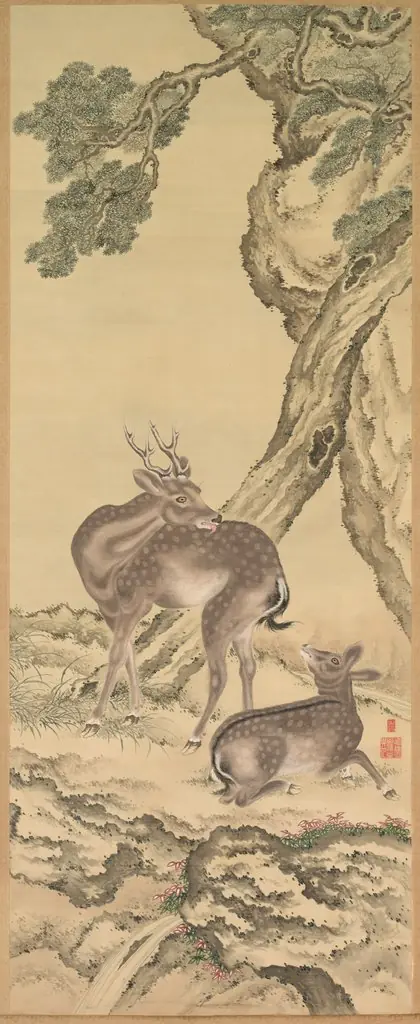
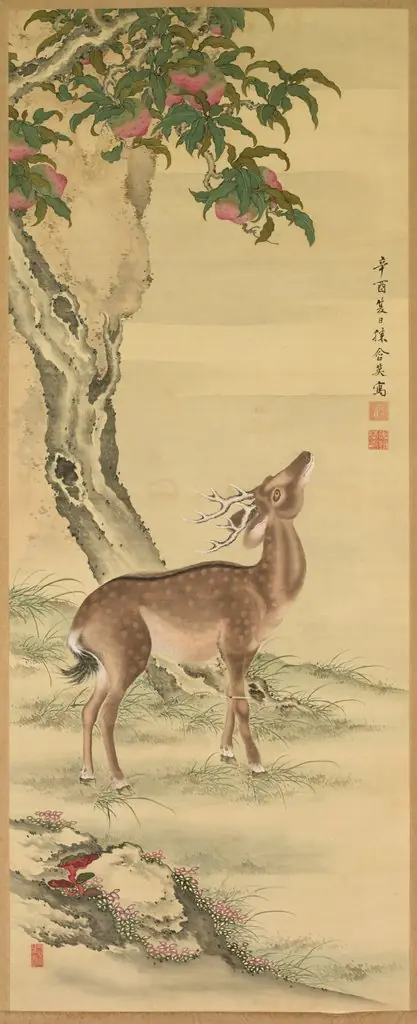
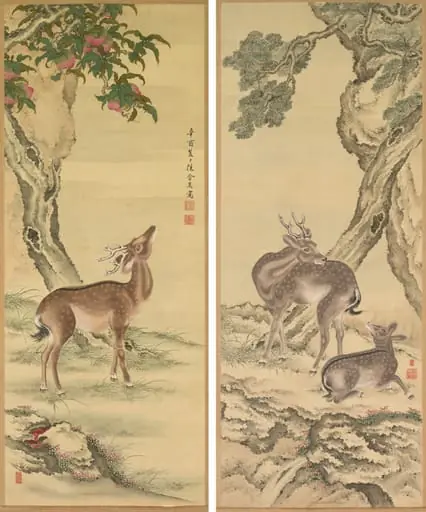
Symbols of Longevity: Deer under Peach and Pine (Pine) (right)
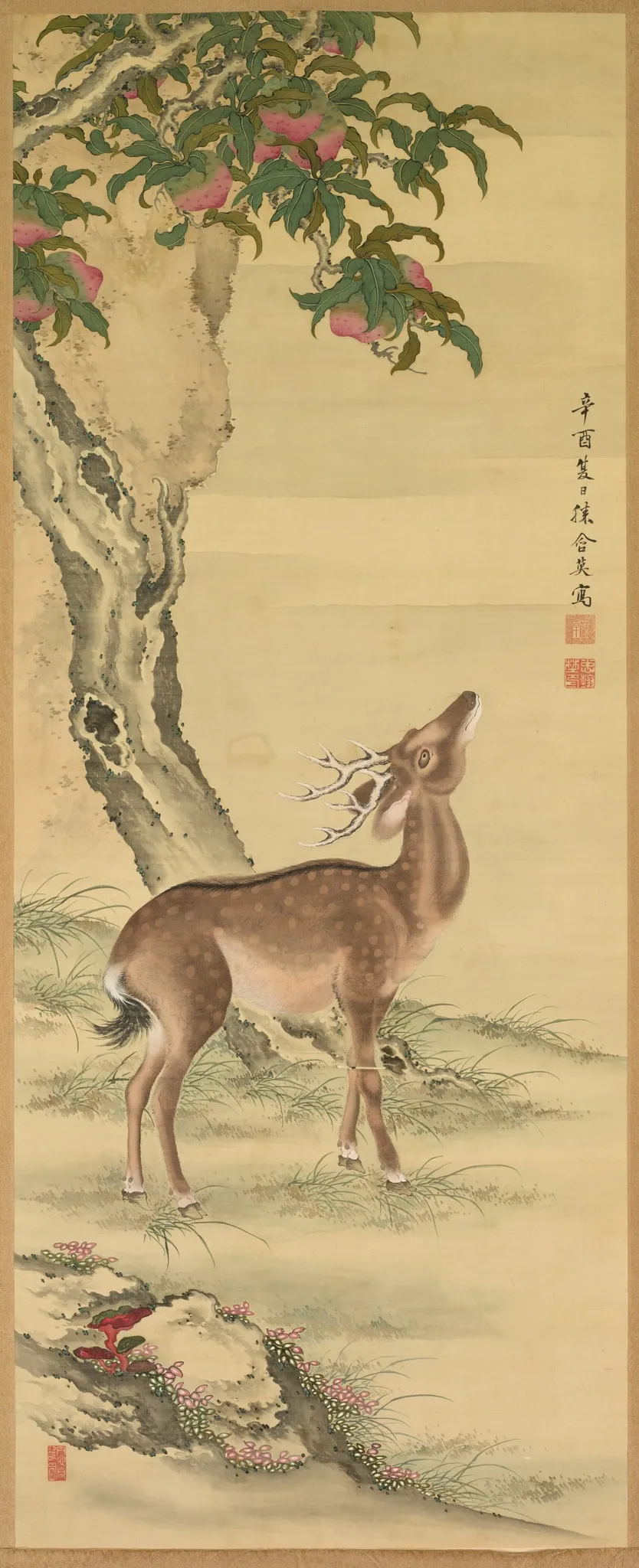
Symbols of Longevity: Deer under Peach and Pine (Pine) (right) is an unspecified painting by Toda Tadanaka. It dates from 1801 and is held in the collection of the Cleveland Museum of Art.
About this work
Overview
Created in 1801 by the Japanese painter Toda Tadanaka, this small hanging scroll depicts a solitary deer beneath a stylised tree. The work is part of the collection of the Cleveland Museum of Art, where it is displayed as an example of early‑nineteenth‑century Japanese genre painting.
Subject & Meaning
The central figure is a deer, rendered with a soft brown coat marked by subtle spots, standing on a carpet of green grass. Above it, a tree with twisted bark bears delicate pink blossoms, a motif traditionally associated with longevity and renewal in East Asian visual culture.
Technique & Style
Tadanaka employs fine brushwork to delineate the deer's fur and the bark’s sinuous lines, while the blossoms are suggested with light washes of pink. The composition balances detailed naturalism with the flat, decorative planes typical of Edo‑period ink and color painting.
History & Provenance
The scroll bears the artist’s seal in the upper‑right corner, confirming its authorship. After remaining in private Japanese collections for more than a century, it entered the Cleveland Museum of Art’s holdings in the early twentieth century, where it has been conserved and studied.
Context
Animal subjects, especially deer, were popular in Toda Tadanaka’s oeuvre, reflecting a broader Edo‑period fascination with nature as a conduit for symbolic meaning. The inclusion of peach‑like blossoms and pine‑like bark aligns the piece with a visual language that celebrated long life and auspiciousness.
Artist & collection