Artwork
Boats
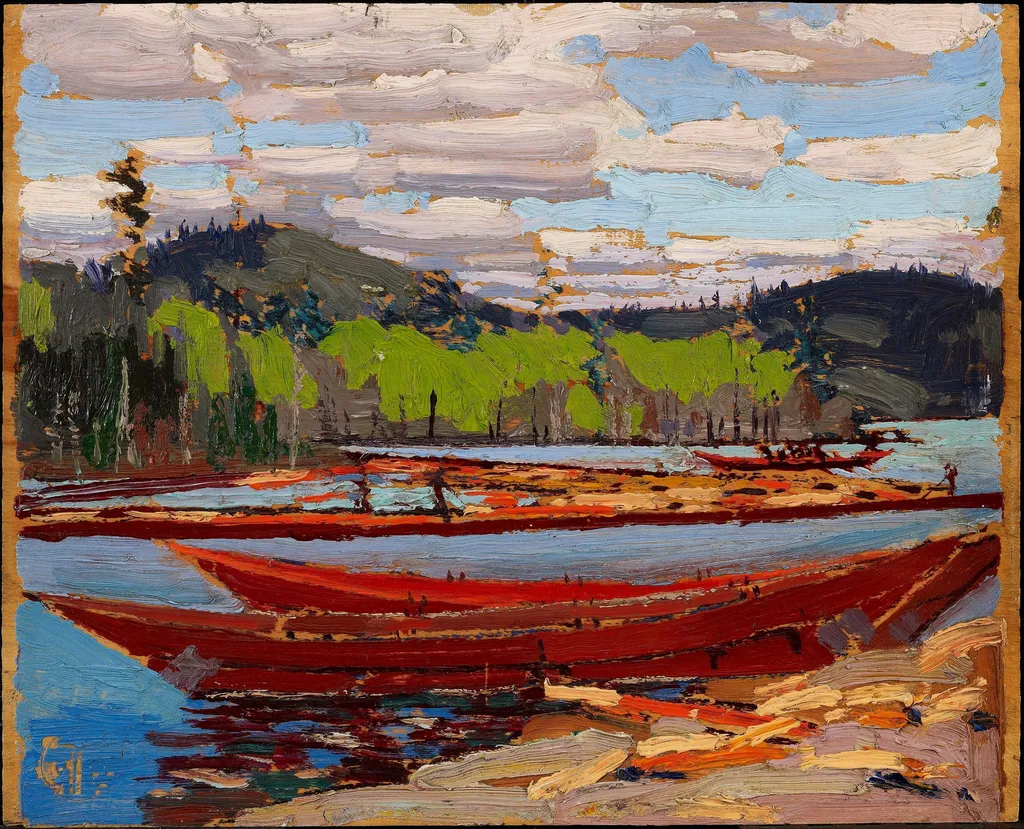
Boats is an oil painting by Tom Thomson. It dates from 1916 and is held in the collection of the Art Gallery of Ontario.
About this work
Overview
Created in 1916, *Boats* is an oil painting by Canadian landscape painter Tom Thomson. The work depicts a tranquil water scene in Ontario, with two red boats positioned in the foreground against a reflective surface that mirrors sky and foliage. Beyond the water, a modestly detailed horizon shows trees, low hills and a clear blue sky dotted with white clouds.
Subject & Meaning
The composition centers on the quiet activity of small boats on a lake, suggesting a moment of leisure within the natural environment. The calm water and soft reflections convey a sense of stillness, while the modest scale of the vessels emphasizes humanity’s modest presence amid the expansive landscape.
Technique & Style
Thomson employs broad, confident brushstrokes and a relatively thin application of paint, allowing the underlying canvas tone to influence the overall hue. The red of the boats stands out against the muted blues and greens, and the reflected sky is rendered with subtle tonal variations that suggest a glazing effect without heavy layering.
History & Provenance
*Boats* belongs to the prolific period when Thomson produced roughly 400 small oil sketches and about 50 larger canvases, almost exclusively of Ontario’s lakes, rivers, and skies. The painting reflects his focused exploration of the province’s scenery during the mid‑1910s, a time when he was establishing his reputation within the Canadian art community.
Context
The work aligns with Thomson’s broader interest in capturing the immediacy of the Canadian wilderness, a theme shared by his contemporaries in the Group of Seven. While not overtly narrative, the painting’s emphasis on color, light, and atmosphere contributes to the early 20th‑century movement toward a distinctly Canadian visual language.
Artist & collection
Artist
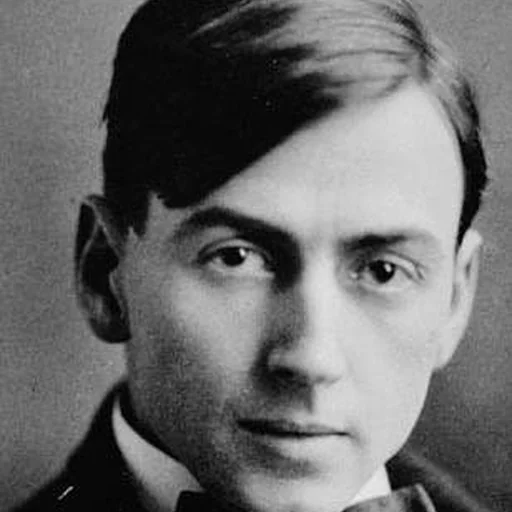
Thomas John Thomson (August 5, 1877 – July 8, 1917) was a Canadian artist active in the early 20th century.