Artwork
The Annunciation
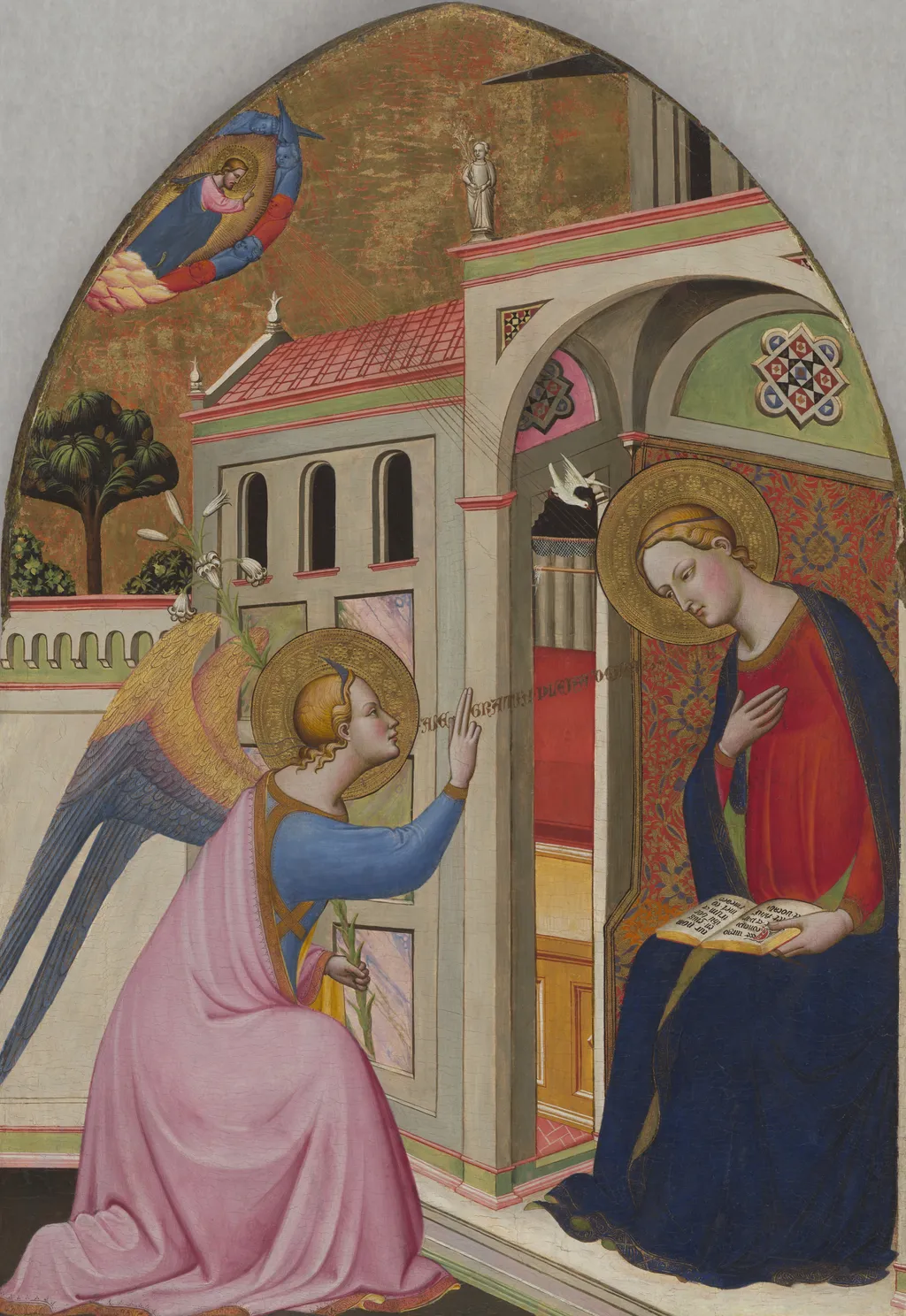
The Annunciation is an unspecified painting by the Byzantine icon painting artist Tommaso del Mazza. It dates from 1396 and is held in the collection of the J. Paul Getty Museum.
About this work
Overview
The composition is set within an interior space that combines architectural elements with decorative detailing, creating a contained yet atmospheric setting.
Tommaso del Mazza’s *Annunciation* (1396) is an early Italian panel painting now in the collection of the J. Paul Getty Museum. The work presents the biblical moment when the Archangel Gabriel announces to the Virgin Mary that she will bear the Christ child. The composition is set within an interior space that combines architectural elements with decorative detailing, creating a contained yet atmospheric setting.
Subject & Meaning
The scene shows Gabriel, kneeling with outstretched wings, offering a white lily—a traditional symbol of Mary's purity—while Mary sits beside a book, her hands clasped in a gesture of reverence. A dove hovers above, alluding to the Holy Spirit. The interaction captures the theological emphasis on divine intervention and Mary's consent, central themes in medieval devotional art.
Technique & Style
Del Mazza employs tempera on panel, rendering figures with delicate brushwork and a restrained palette of blues, reds, and pinks. The careful modeling of drapery and the subtle gradations of tone suggest an early use of sfumato, lending a soft transition between light and shadow that enhances the sense of depth within the confined interior.
History & Provenance
Created at the close of the 14th century, the painting remained in private hands for several centuries before entering the Getty Museum’s collection in the late 20th century. Its provenance reflects the broader movement of Italian Gothic panels into American institutions during the post‑World War II art market.
Artist & collection

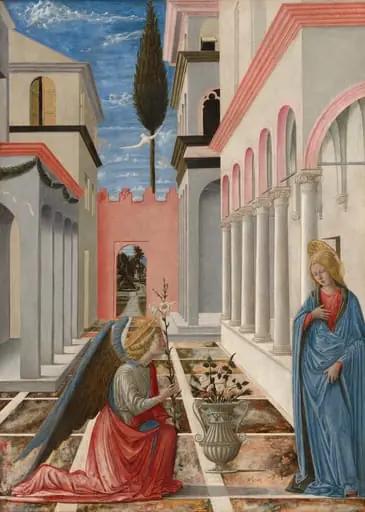 The Annunciation
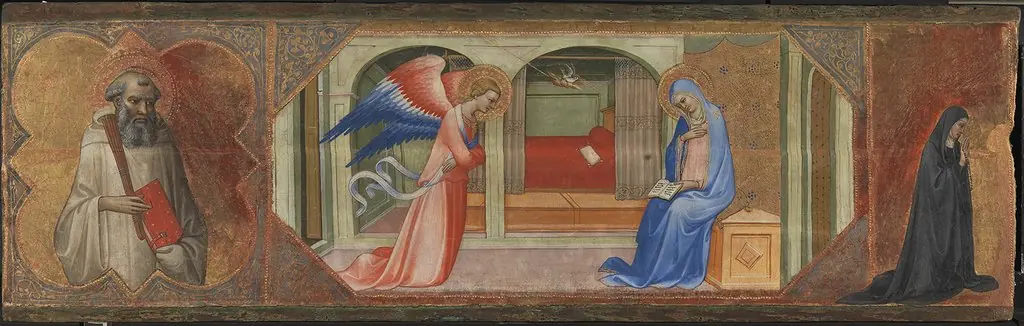 St. Benedict - The Annunciation - A Kneeling Nun
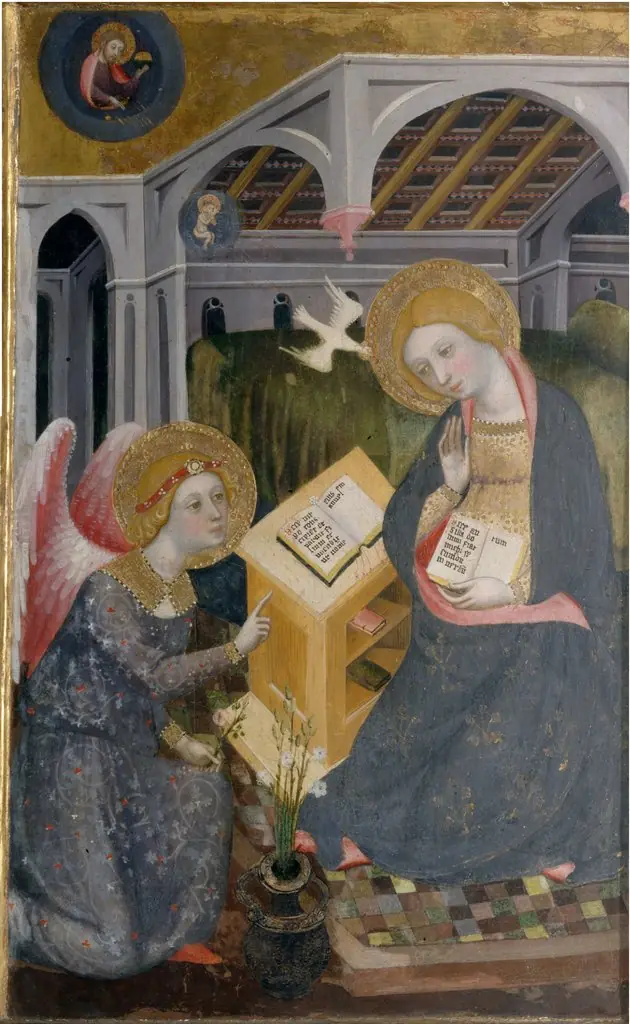 Annunciazione
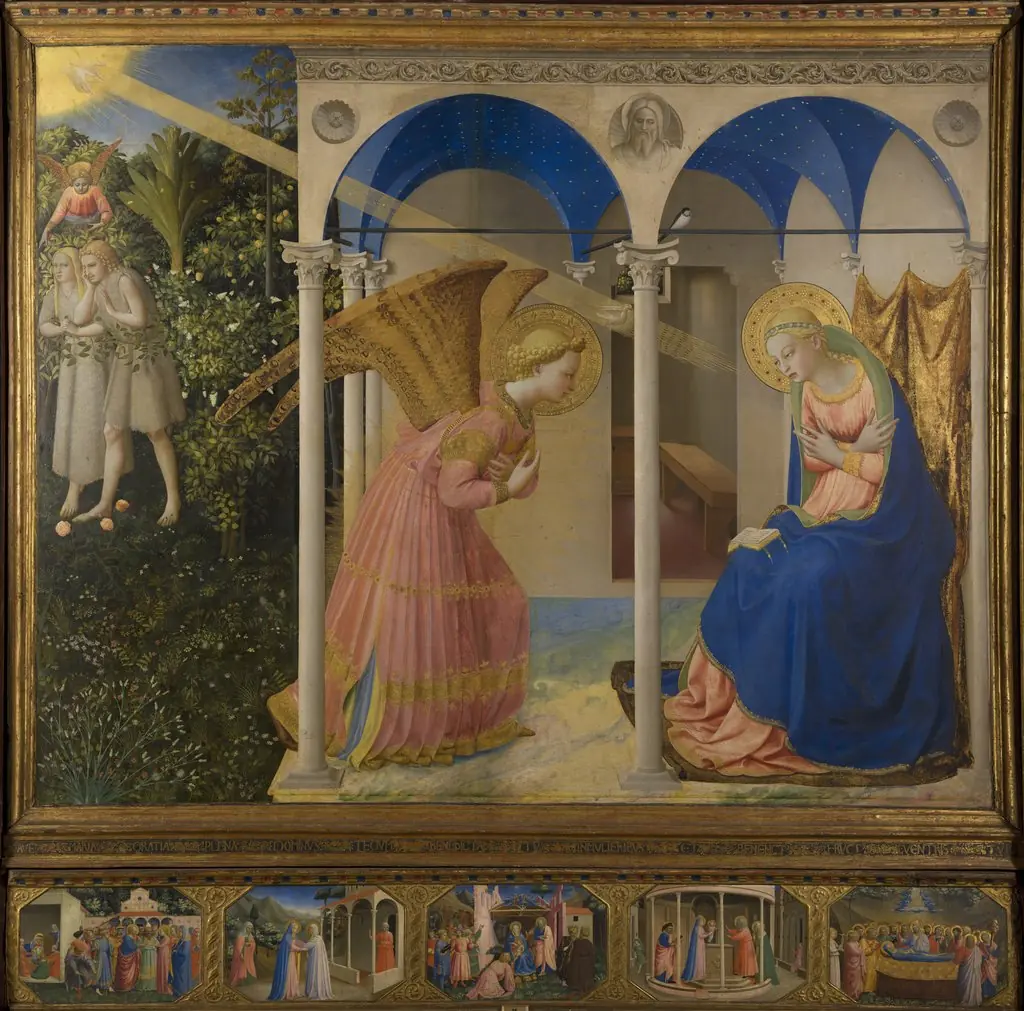 Annunciation
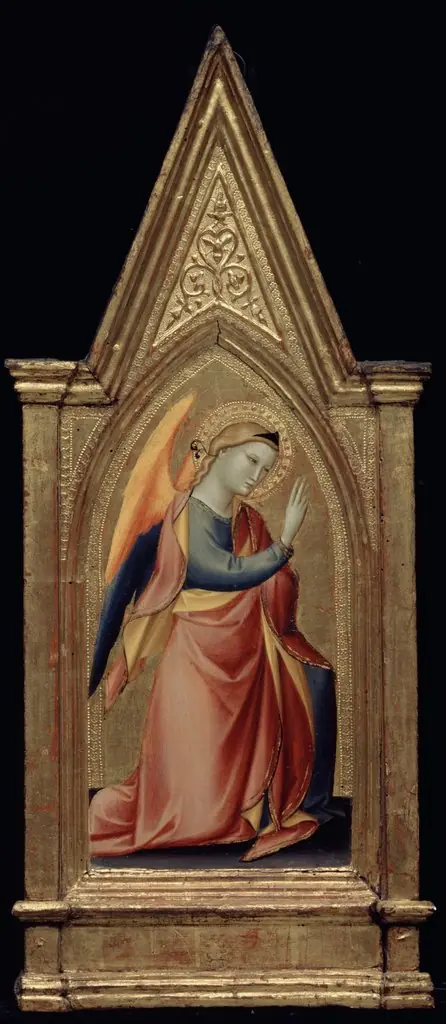 Angel Annunciate
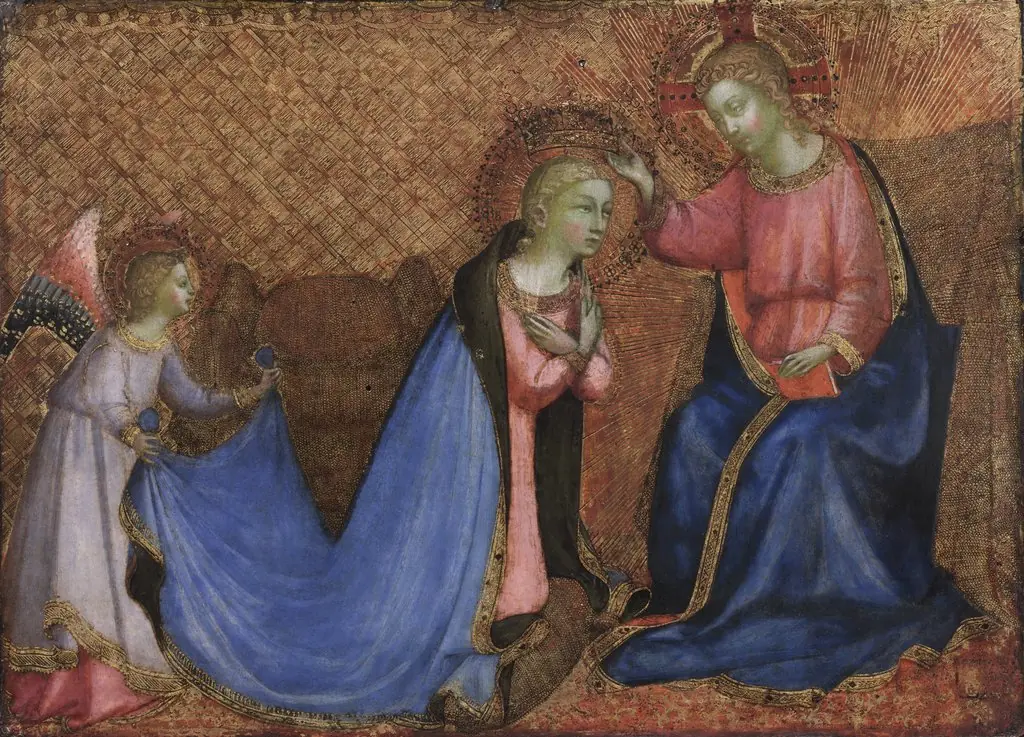 Coronation of the Virgin
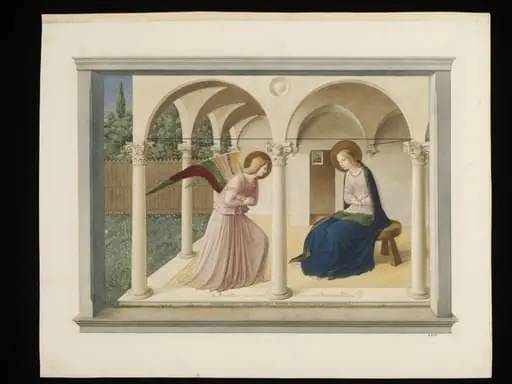 Copy after the Annunciation, Fra Angelico in the Museo di San Marco (Florence)
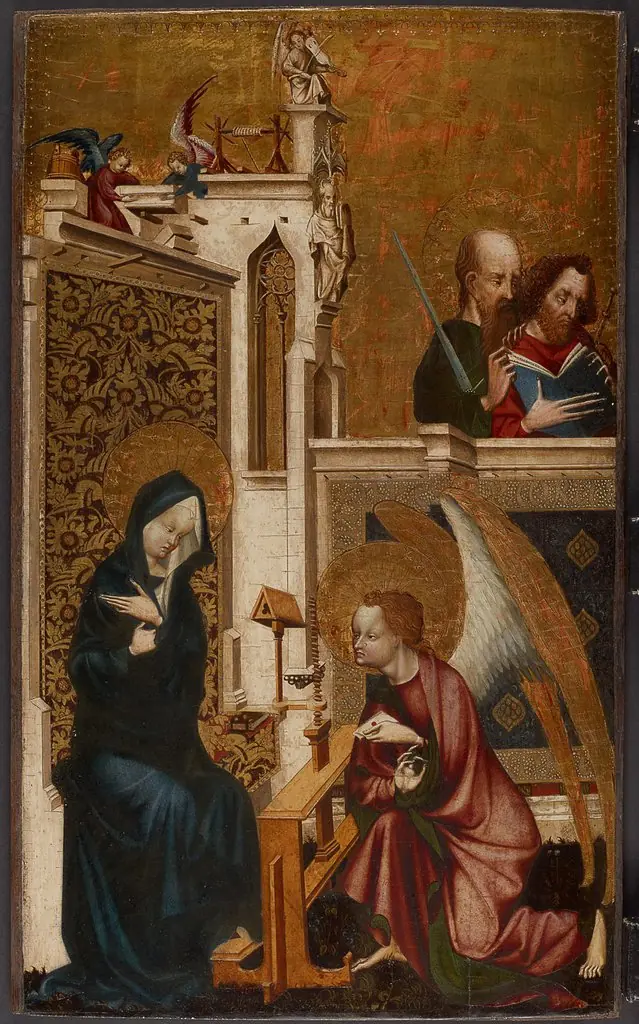 Verkündigung Mariae, Rückseite: Hl. Dorothea
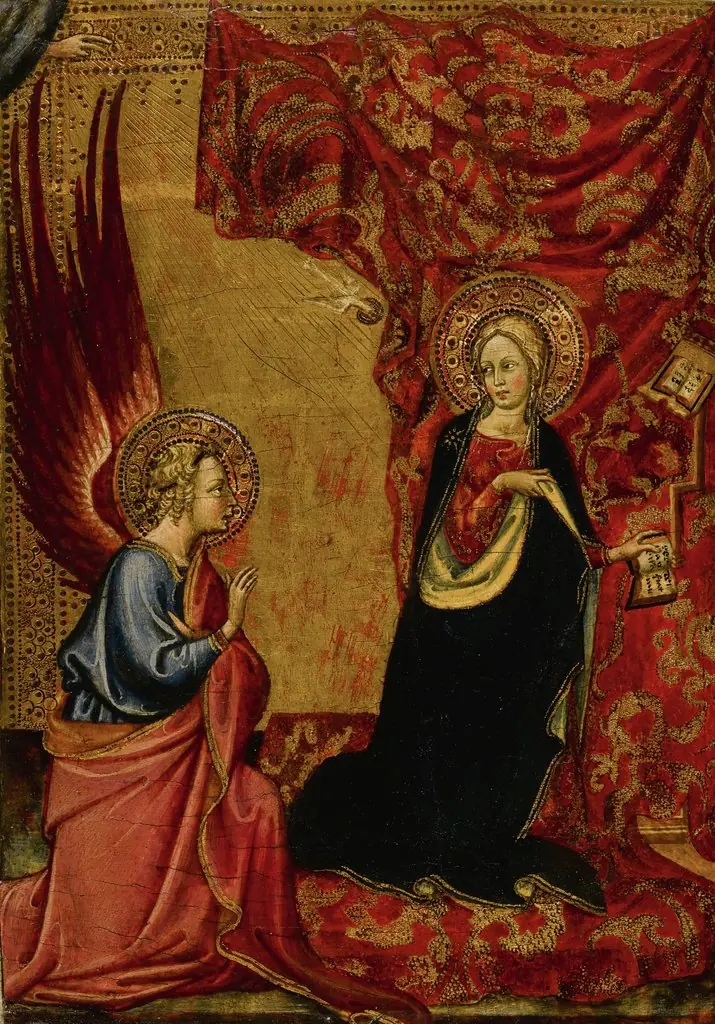 The Annunciation
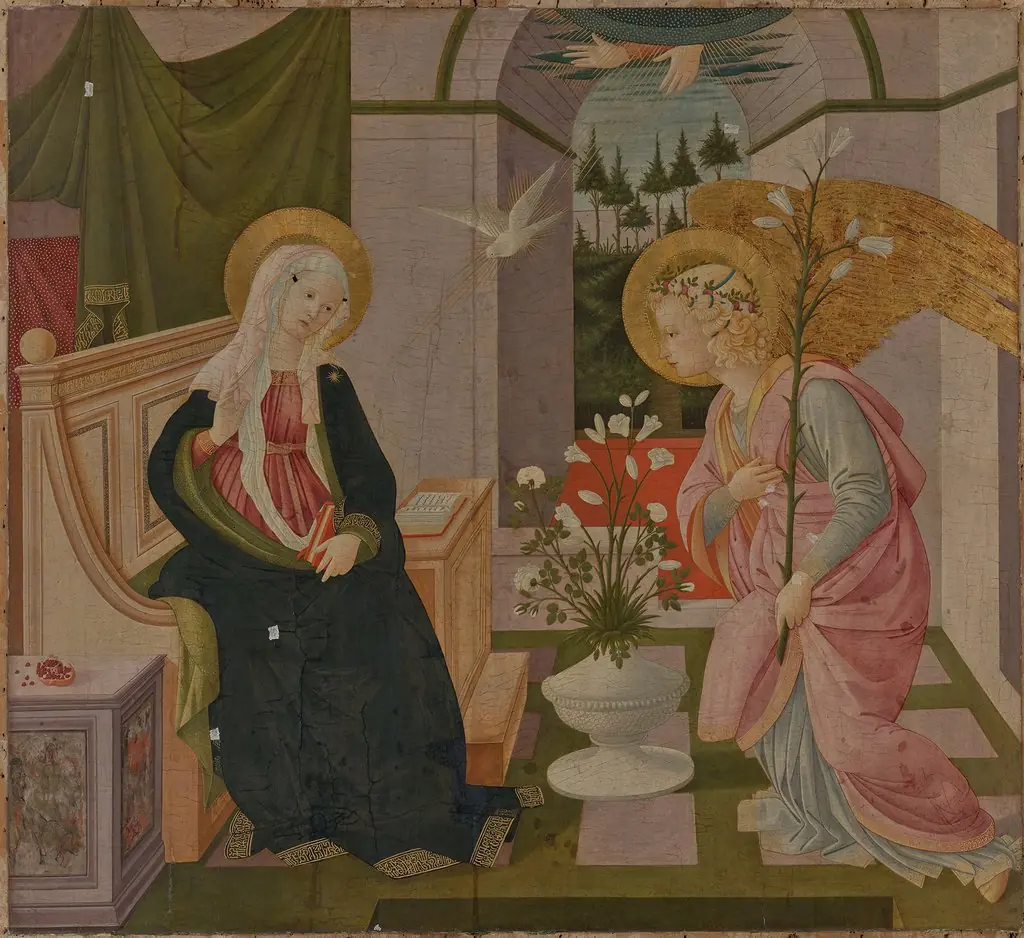 The Annunciation to the Virgin
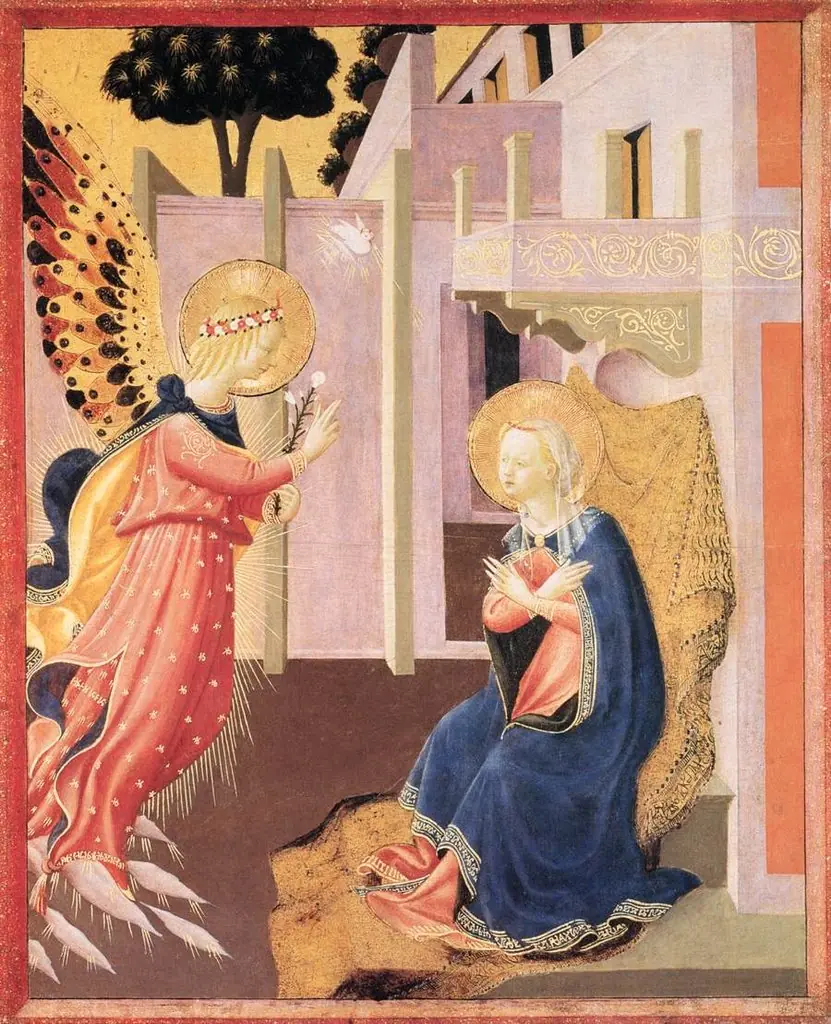 The Annunciation
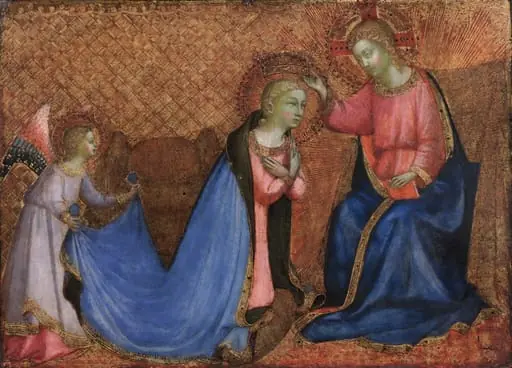 Coronation of the Virgin