Artwork
The Annunciation
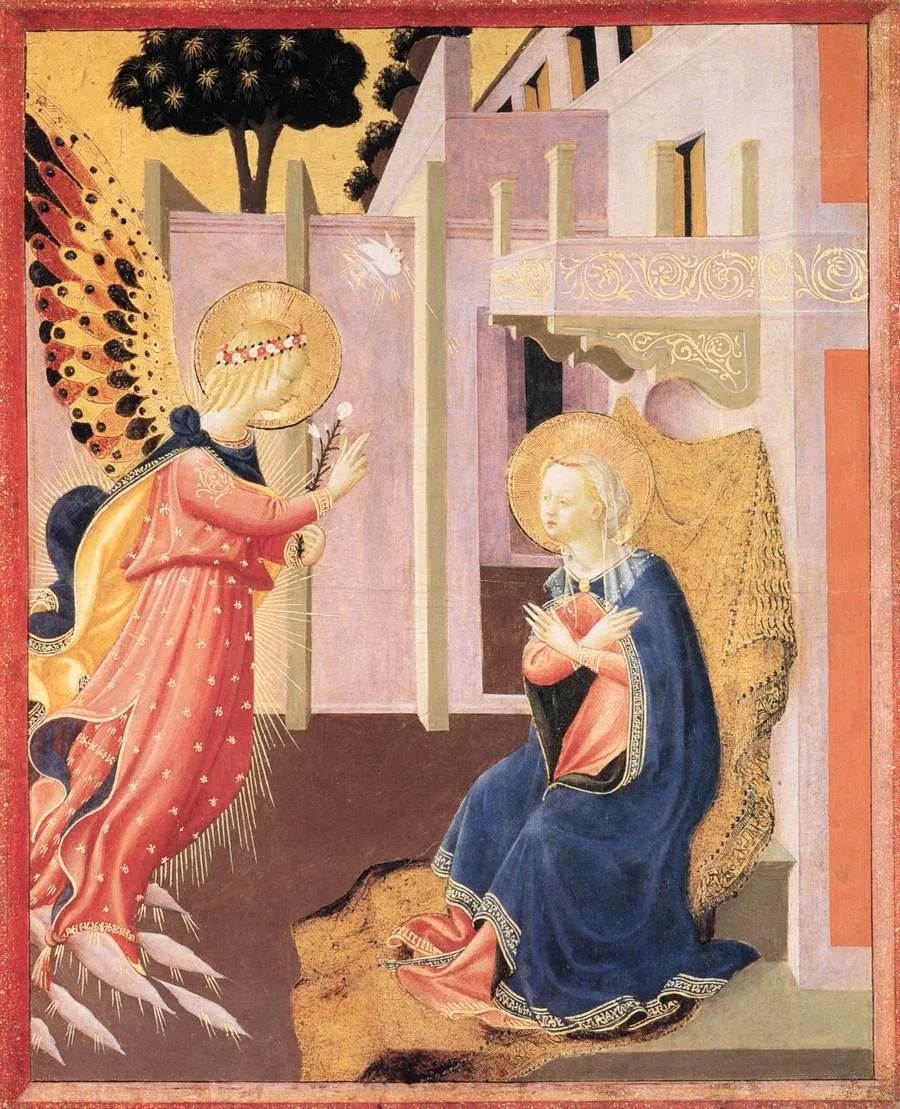
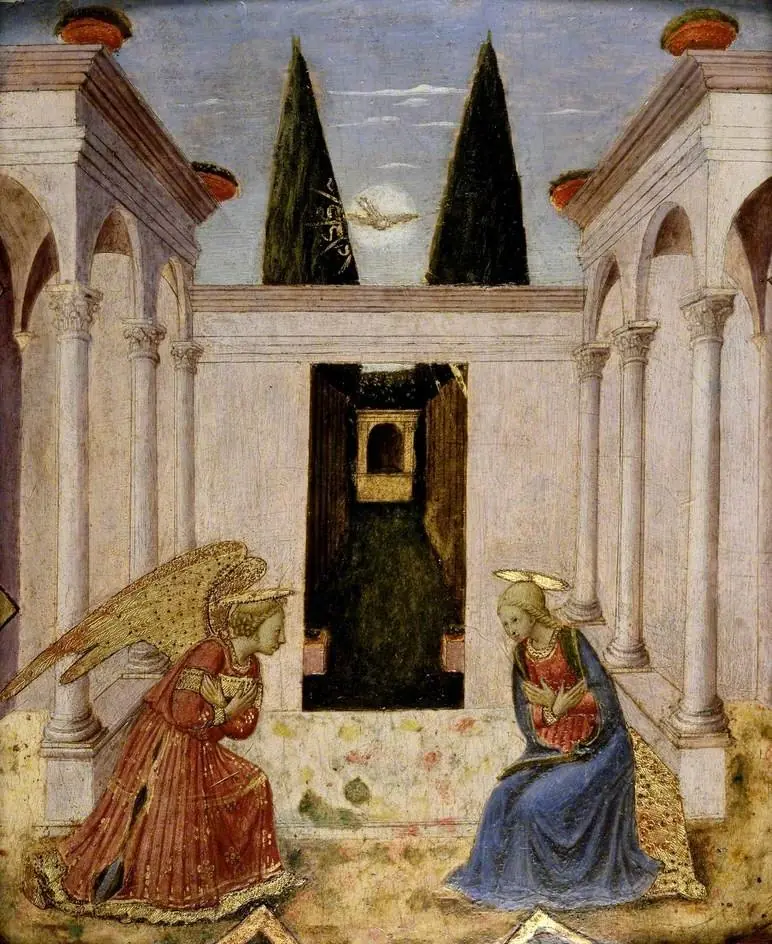
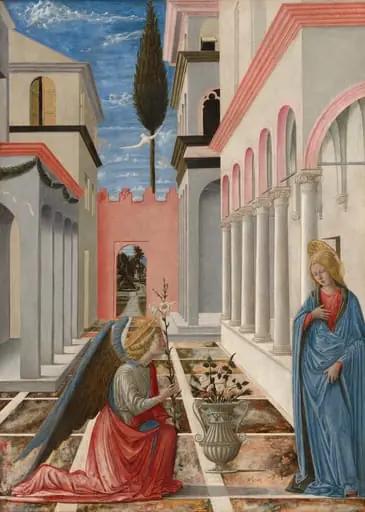
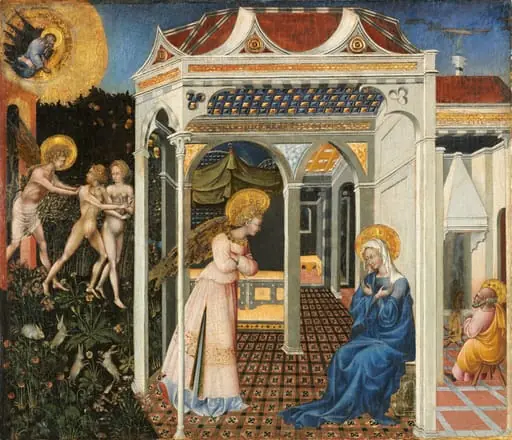
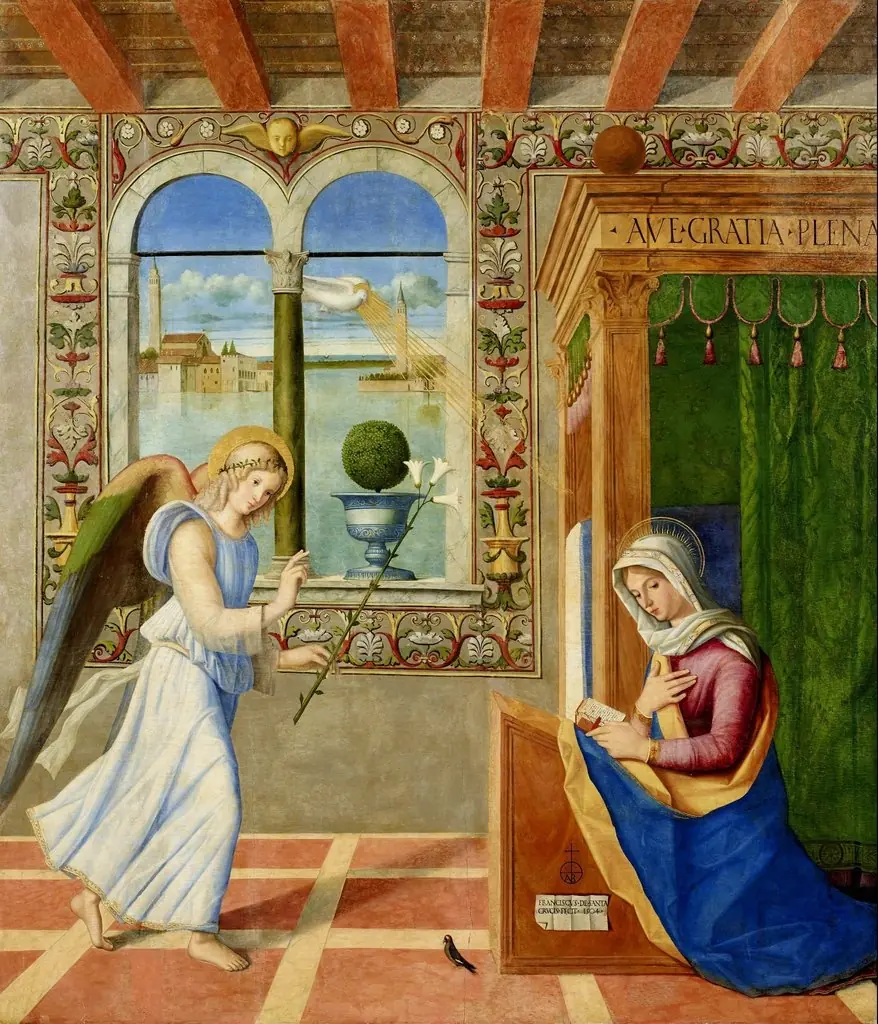
The Annunciation is an unspecified painting by the Early Renaissance artist Zanobi Strozzi. It dates from 1453 and is held in the collection of the Philadelphia Museum of Art.
About this work
Overview
Painted in 1453 by Zanobi Strozzi, a Florentine artist known for both panel painting and manuscript illumination, this work depicts the Annunciation.
Painted in 1453 by Zanobi Strozzi, a Florentine artist known for both panel painting and manuscript illumination, this work depicts the Annunciation. Strozzi, closely linked to Fra Angelico’s circle, produced religious imagery with quiet precision. The painting resides in the Philadelphia Museum of Art, one of a small number of surviving panel works by the artist, reflecting his role in early Renaissance devotional art in Tuscany.
Subject & Meaning
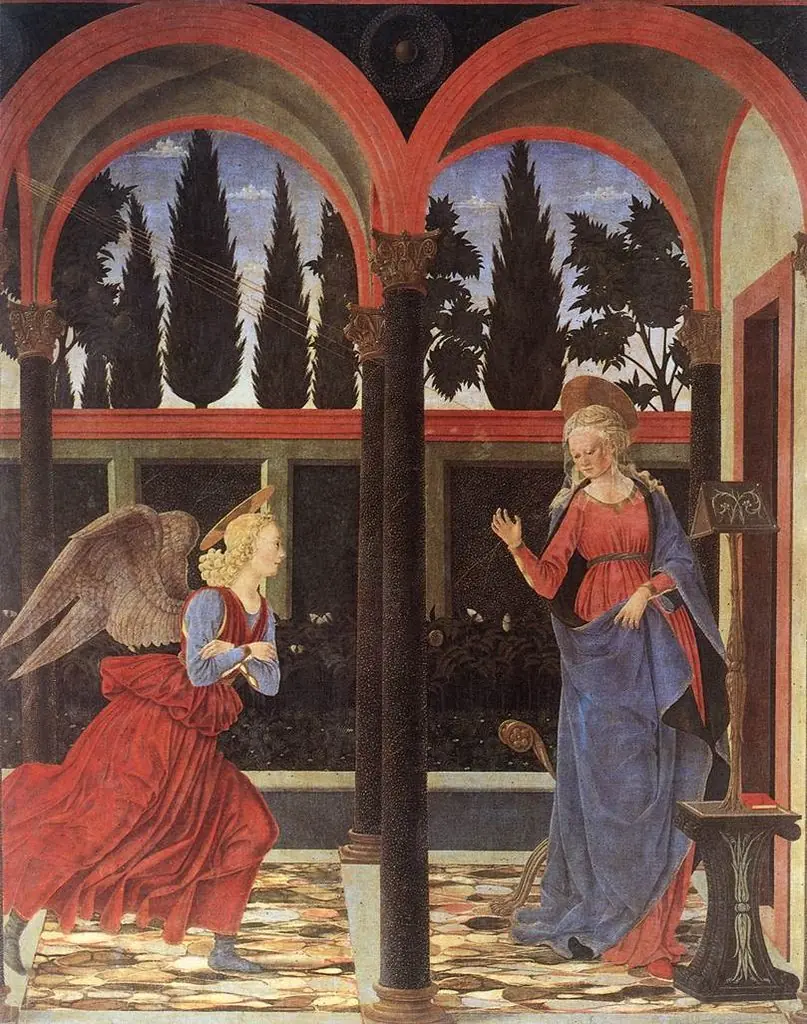
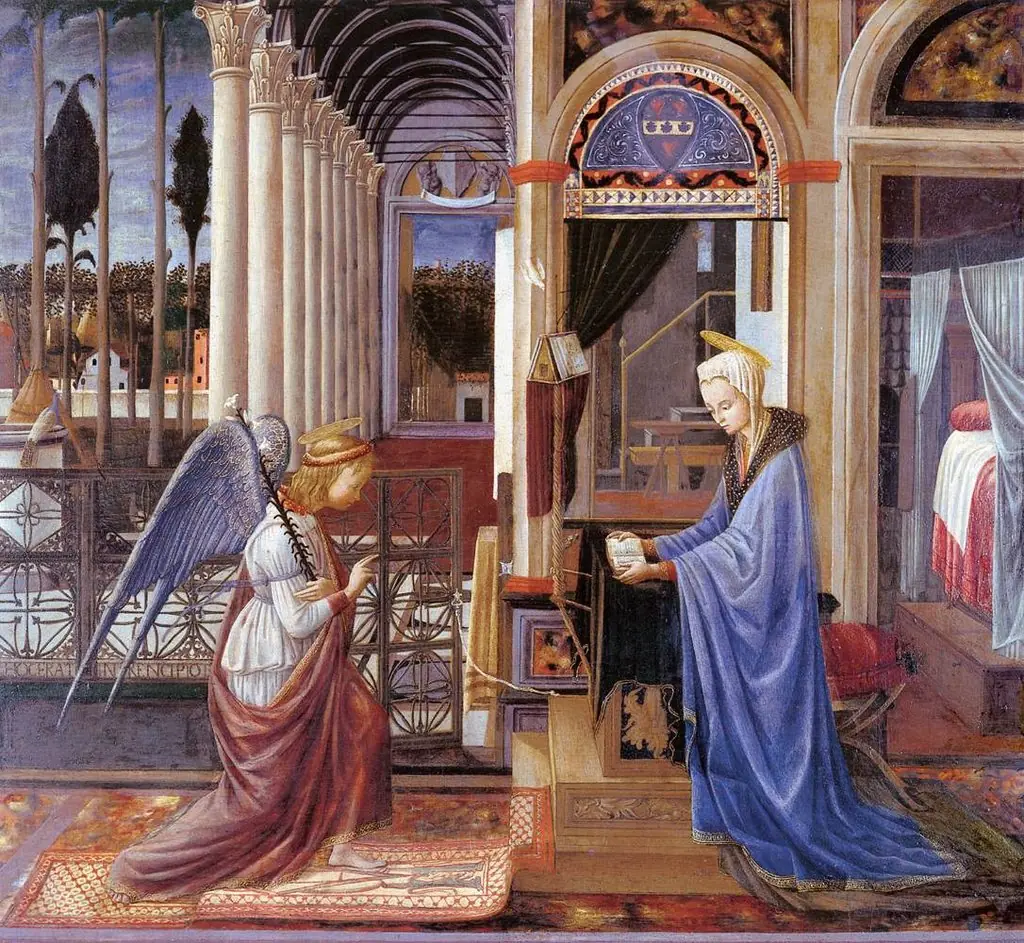
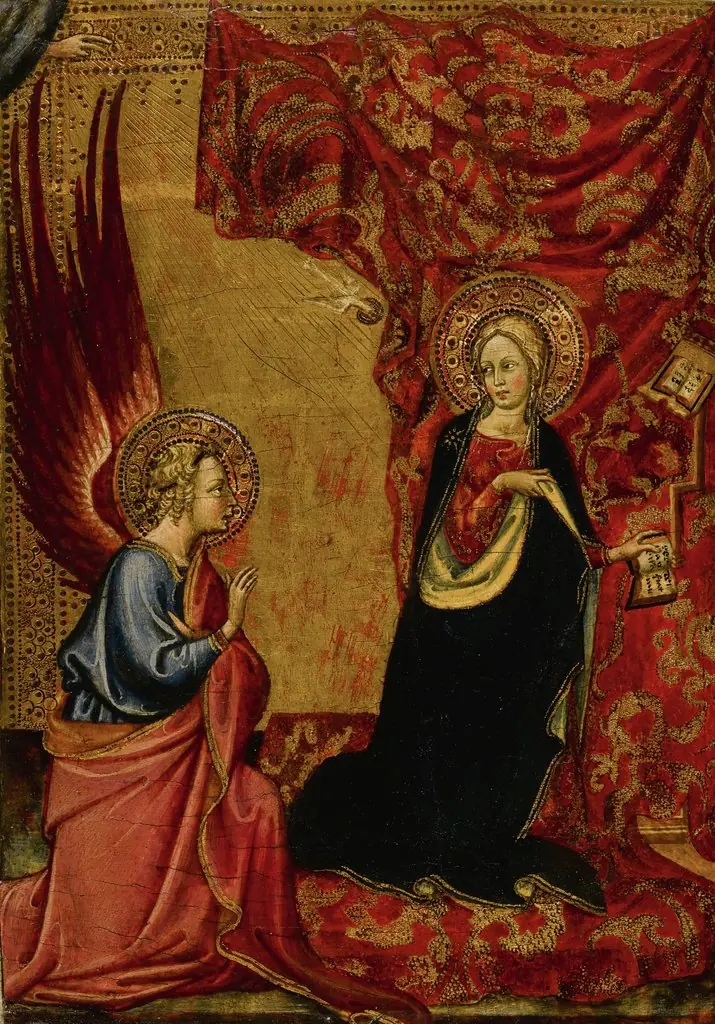
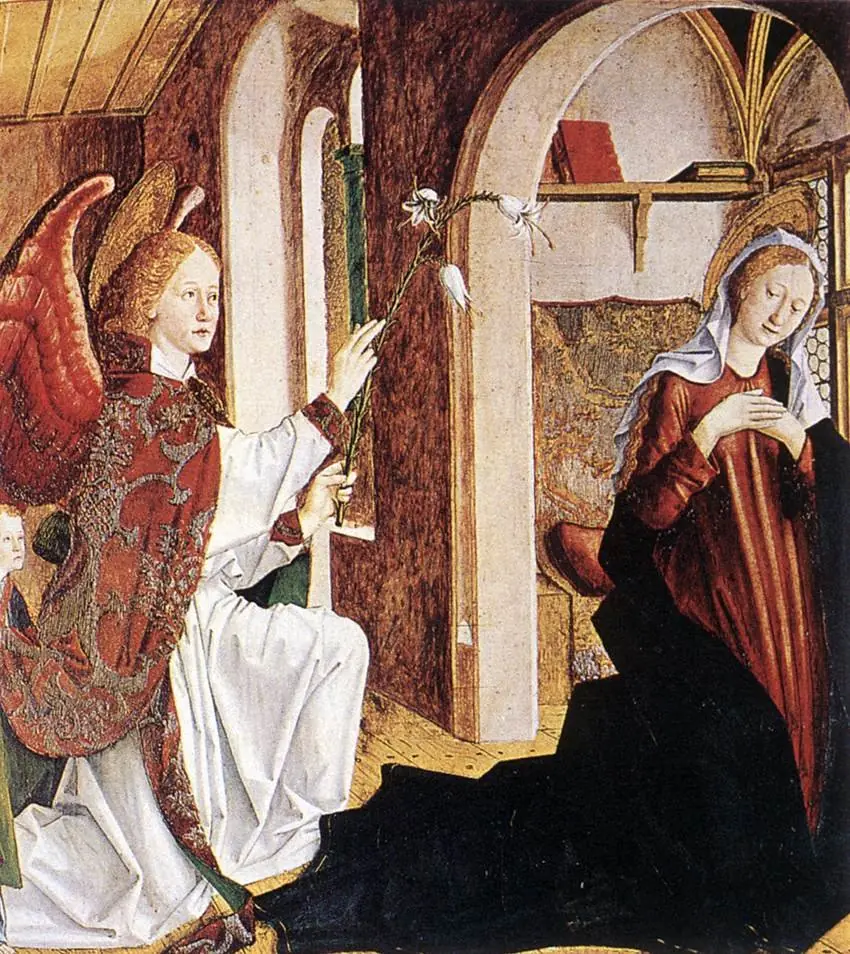
The scene captures the moment the Archangel Gabriel announces to the Virgin Mary that she will bear the Son of God. Gabriel, on the left, presents a white lily—a symbol of purity—while Mary, on the right, reacts with a gesture of surprise and humility. Their halos mark their sacred status. The composition emphasizes spiritual encounter over drama, aligning with the contemplative tone of Florentine religious art of the period.
Technique & Style
Strozzi employs delicate brushwork and layered pigments to render fabric and light. The figures are set against a shallow architectural space with a gold-tinged sky, suggesting depth without full perspective. Rich blues and reds in the garments contrast with the muted tones of the background, drawing focus to the figures. Subtle modeling of faces and drapery hints at emerging chiaroscuro, though the style remains rooted in International Gothic refinement.
History & Provenance
Created for private devotion, the painting likely originated in a Florentine or Fiesole convent or household. Its survival is notable, as many small-scale religious panels from this era were lost or repurposed. The work entered the Philadelphia Museum of Art’s collection in the 20th century, where it is now recognized as a representative example of mid-15th-century Florentine panel painting outside the most prominent workshops.
Context
Strozzi worked during a time when Florence was a hub of religious art production, with artists blending Gothic elegance with early Renaissance naturalism. His style reflects the influence of Fra Angelico’s serene compositions and the manuscript tradition’s attention to detail. This Annunciation exemplifies how devotional imagery was tailored for intimate contemplation, distinct from large altarpieces meant for public churches.
Legacy
Though Strozzi’s name was largely overshadowed by contemporaries like Fra Angelico and Ghirlandaio, his surviving works reveal a skilled hand in translating sacred narratives into quiet, personal moments. This painting contributes to understanding the breadth of Florentine artistic practice beyond major commissions, highlighting the role of smaller workshops in sustaining religious imagery for domestic and monastic use.
Artist & collection
Artist
Zanobi di Benedetto di Caroccio degli Strozzi (17 November 1412 – 6 December 1468) was an Italian Renaissance painter and manuscript illuminator active in Florence and nearby Fiesole.