Artwork
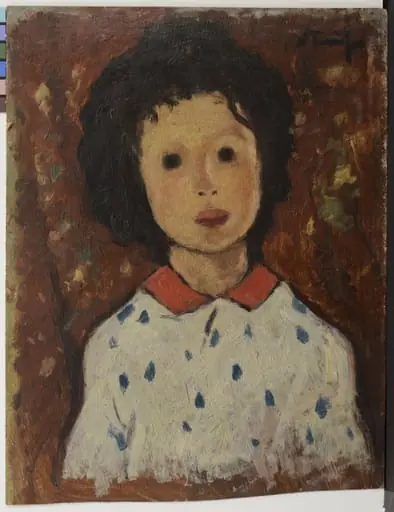
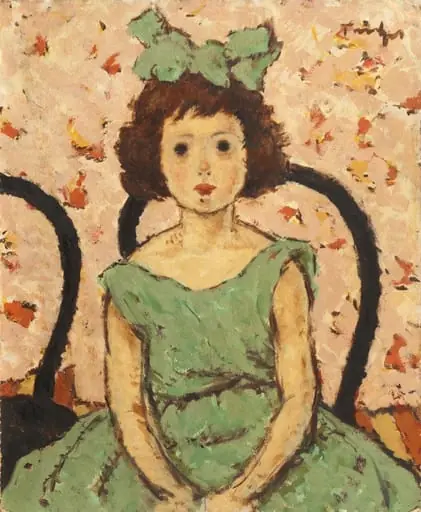
Cap de copil (Micuța unguroaică)
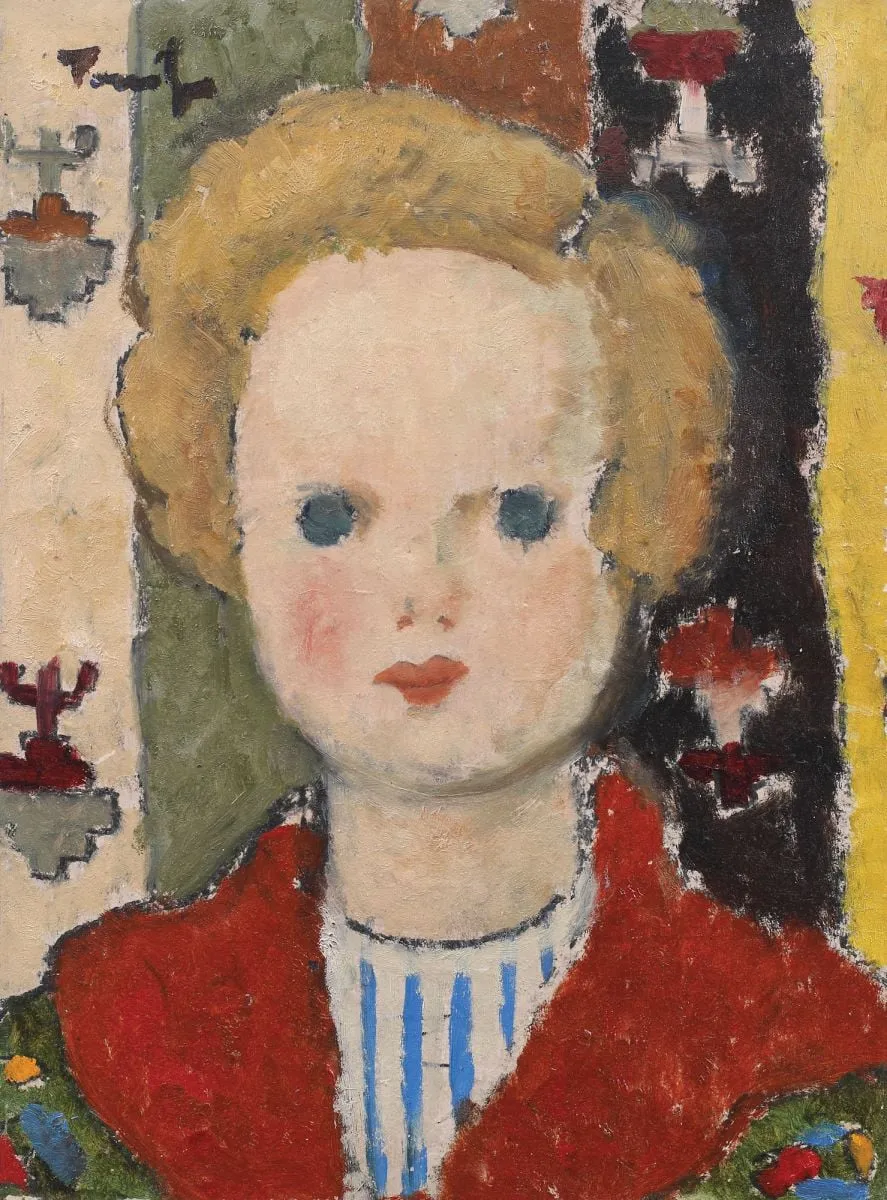
Cap de copil (Micuța unguroaică) is a print by Nicolae Tonitza. It dates from 1923 and is held in the collection of the Colecție particulară - București.
About this work
Overview
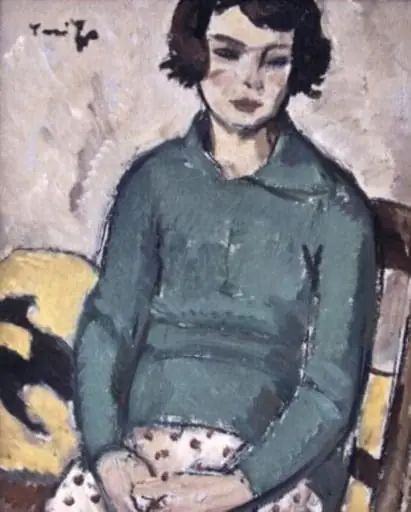
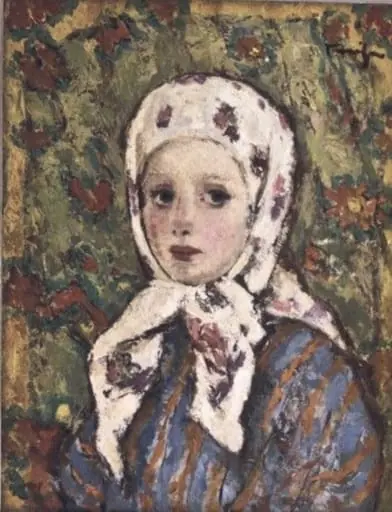
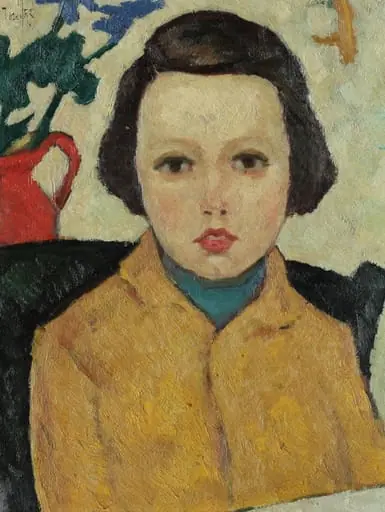
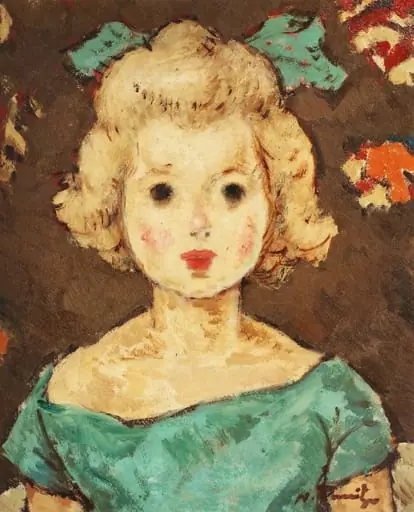
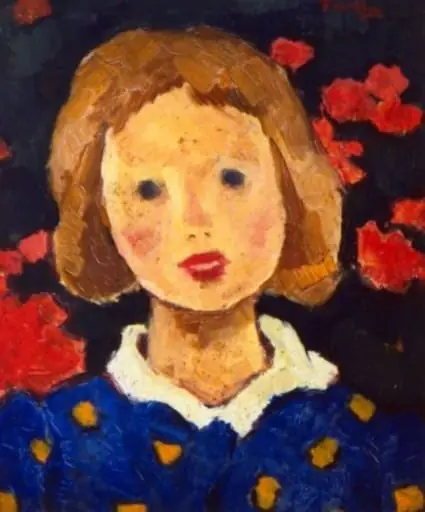
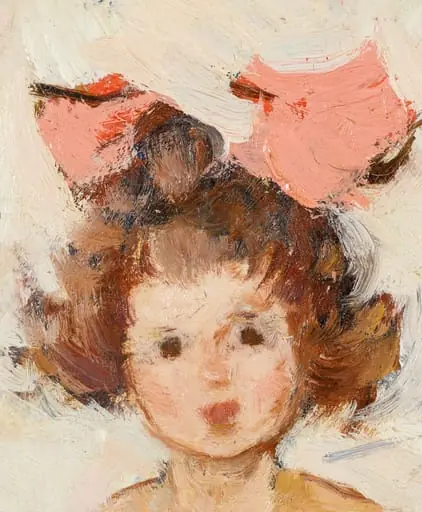
Created around 1923 by Romanian artist Nicolae Tonitza, this portrait depicts a young girl from the Romanian countryside. The work is part of the Museum of Ethnography’s collection and reflects Tonitza’s interest in rural life during the interwar period. Its informal composition and expressive handling distinguish it from academic portraiture of the time.
Subject & Meaning
The subject is a child, likely from a rural Romanian community, identified by her traditional attire. The title references her regional origin, suggesting an ethnographic intent. Her direct gaze and simple features convey quiet presence rather than idealization, emphasizing authenticity over sentimentality. The painting captures a moment of ordinary life with dignity.
Technique & Style
Tonitza applied paint with thick, uneven strokes, using impasto to build texture across the canvas. The background is a chaotic mix of red, yellow, and green hues, loosely rendered to suggest an unfinished space. The girl’s face, in contrast, is simplified and sharply defined, drawing focus through restraint amid the surrounding visual noise.
History & Provenance
The painting entered the Museum of Ethnography’s holdings in the mid-20th century, likely through institutional acquisition or donation. Its preservation within an ethnographic context underscores its role as a cultural document. While its early ownership is undocumented, its placement in the museum reflects its value as a representation of folk identity.
Context
In the 1920s, Romanian artists increasingly turned to rural subjects as part of a broader national identity project. Tonitza, influenced by modernist trends, blended expressive brushwork with ethnographic observation. This work aligns with a movement to elevate folk life as worthy of artistic attention, resisting urban-centric aesthetics of the era.
Legacy
The painting remains a reference point for understanding Tonitza’s synthesis of modern technique and traditional subject matter. It contributes to the broader recognition of Romanian interwar art as both locally grounded and stylistically engaged with European modernism. Its preservation in an ethnographic museum highlights its dual role as art and cultural record.
Artist & collection

Artist
Nicolae Tonitza was a Romanian painter, engraver, lithographer, journalist and art critic. Drawing inspiration from Post-Impressionism and Expressionism, he had a major role in introducing modernist guidelines to local art.