Artwork
Poarta lui Osman
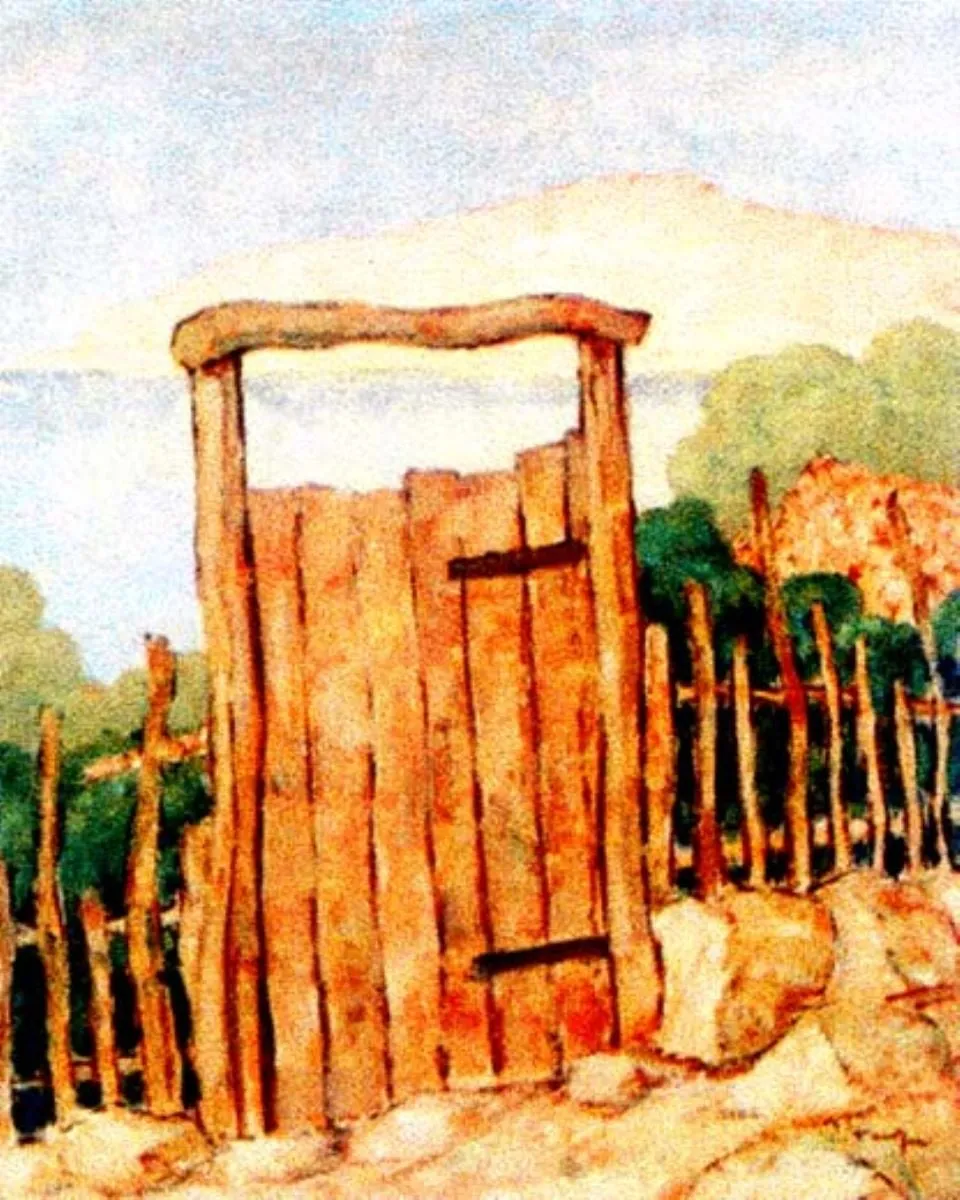
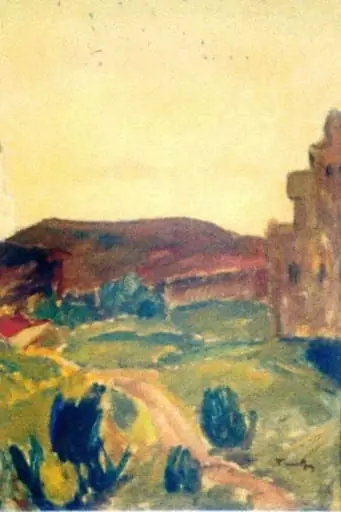
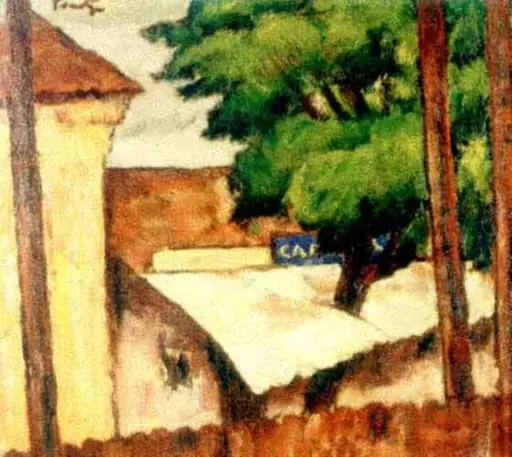
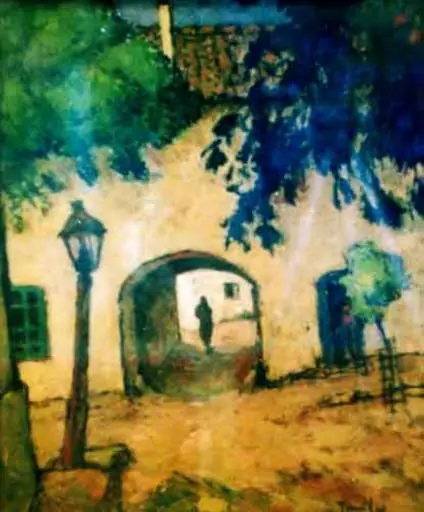
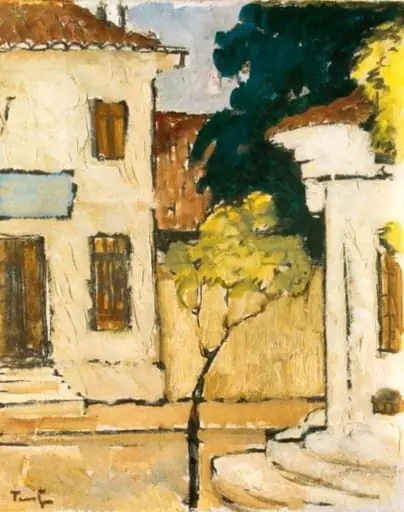
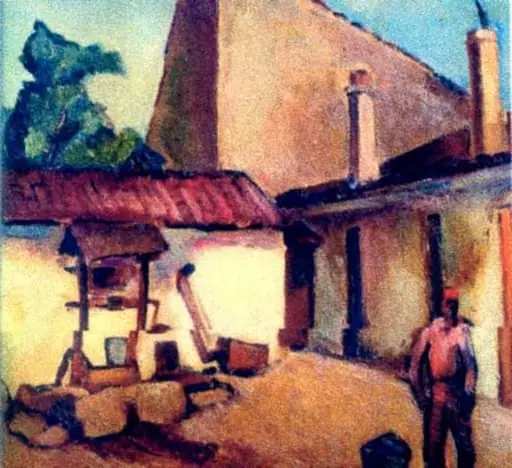
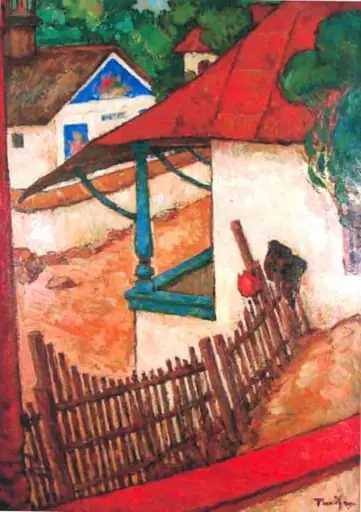
Poarta lui Osman is an unspecified painting by Nicolae Tonitza. It dates from 1923 and is held in the collection of the Art Museum of Constanta.
About this work
Overview
Painted around 1923 by Romanian artist Nicolae Tonitza, Poarta lui Osman is a modestly scaled work depicting a rural wooden gate. It resides in the collection of the Museum of Ethnography, reflecting the artist’s interest in everyday Romanian life. The composition avoids dramatic detail, focusing instead on quiet, grounded forms that suggest a quiet, unremarkable corner of the countryside.
Subject & Meaning
The painting presents a simple wooden gate, framed by vertical planks and flanked by a low fence of slender poles.
The painting presents a simple wooden gate, framed by vertical planks and flanked by a low fence of slender poles. A small central door hints at human use, though no figures are present. The surrounding landscape—trees, a gentle hill, and a pale sky—frames the structure without intrusion. The scene evokes isolation and routine, suggesting the quiet persistence of rural boundaries and domestic life.
Technique & Style
Tonitza employs muted earth tones—browns, beiges, and soft greens—to render the gate and landscape with restrained precision. Brushwork is deliberate but unadorned, avoiding texture for the sake of clarity. The sky is rendered in a uniform light blue, flattening spatial depth and reinforcing the painting’s calm, almost meditative tone. Form is simplified, prioritizing structure over realism.
History & Provenance
Created in the early 1920s, the work entered the Museum of Ethnography’s collection shortly after its completion. Its acquisition aligns with the institution’s broader effort to document vernacular Romanian culture during a period of national identity formation. No record of prior ownership or exhibition exists beyond its institutional custody, suggesting it was likely acquired directly from the artist.
Context
Tonitza painted Poarta lui Osman during a phase when Romanian artists increasingly turned to local themes, distancing themselves from European academic traditions. The work reflects a broader cultural movement to elevate rural life as worthy of artistic attention. Its quiet subject matter contrasts with the political turbulence of post-WWI Romania, offering a contemplative alternative to grand narratives.
Legacy
Though not widely reproduced, Poarta lui Osman remains a representative example of Tonitza’s interest in the poetic potential of ordinary scenes. It contributes to a body of work that helped define Romanian modernism through understated observation. The painting’s endurance in a museum of ethnography underscores its role as both art and cultural artifact.
Artist & collection

Artist
Nicolae Tonitza was a Romanian painter, engraver, lithographer, journalist and art critic. Drawing inspiration from Post-Impressionism and Expressionism, he had a major role in introducing modernist guidelines to local art.