Artwork
Păpușă (Dandy)
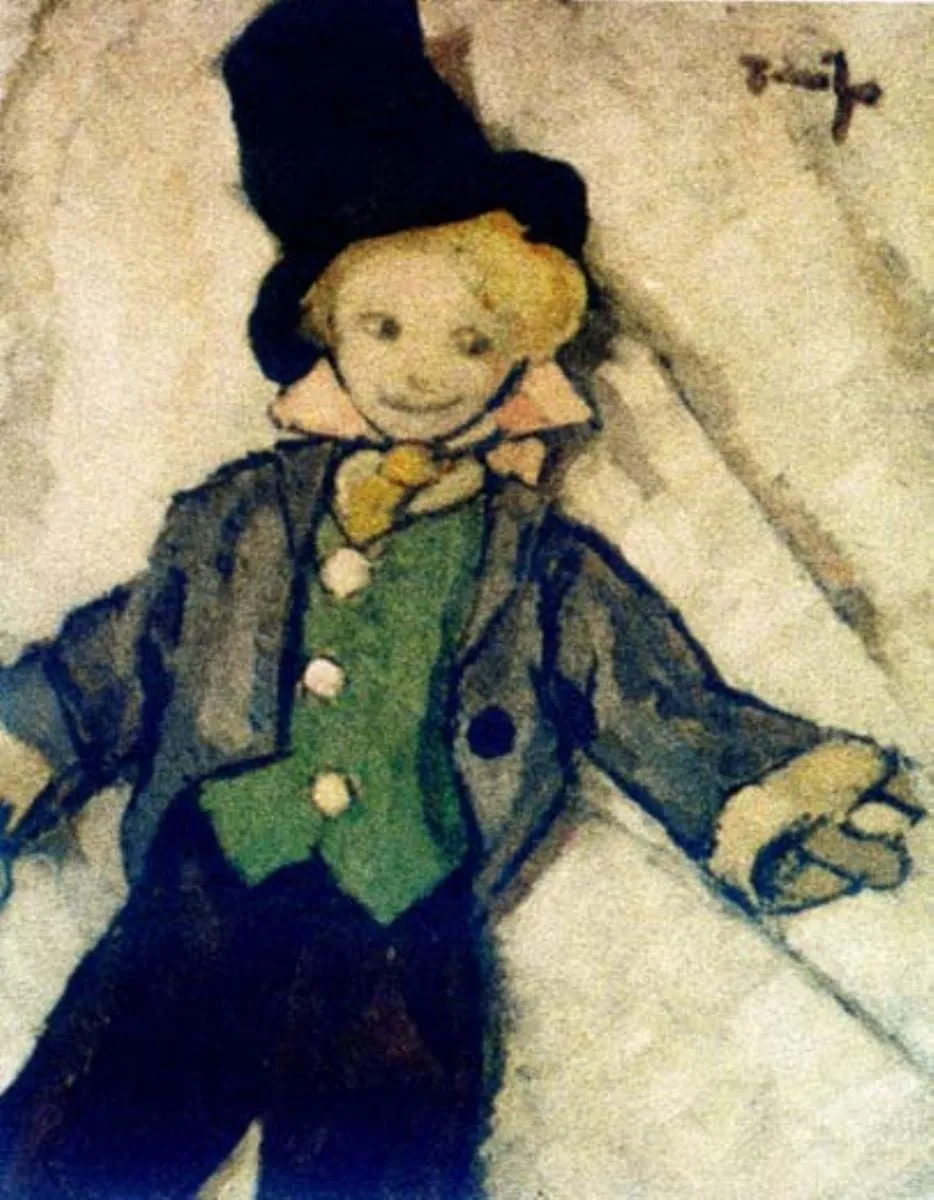
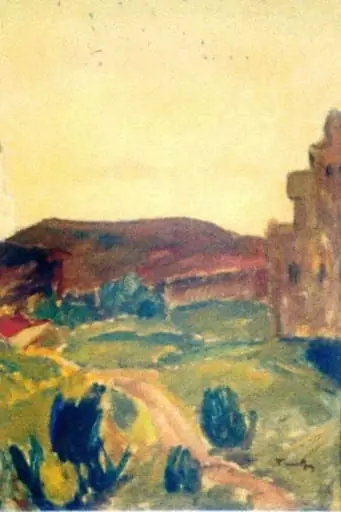
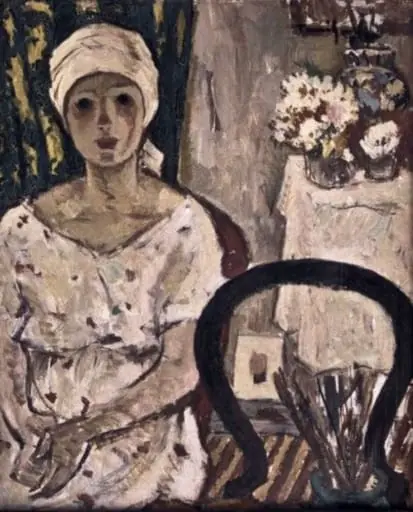
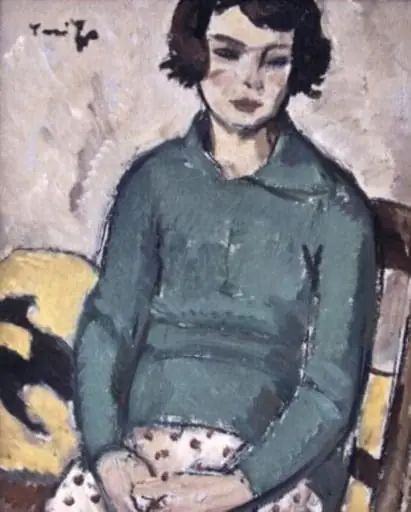
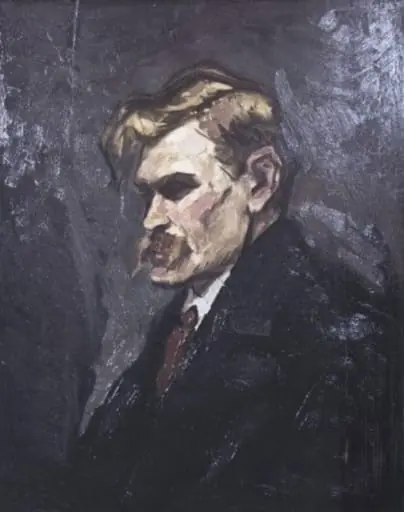
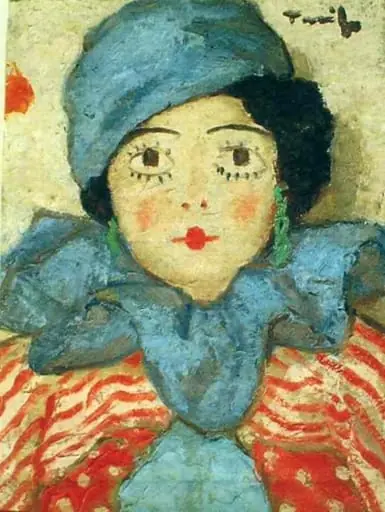
Păpușă (Dandy) is an unspecified painting by Nicolae Tonitza. It dates from 1923 and is held in the collection of the Art Museum of Constanta.
About this work
Overview
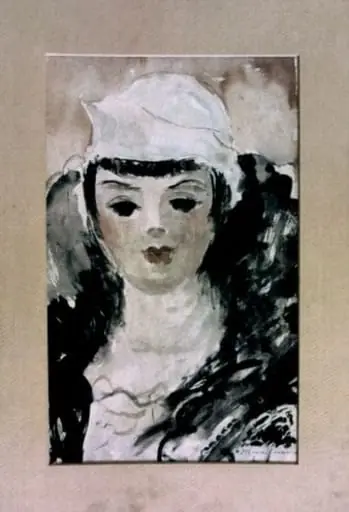
Păpușă (Dandy), painted around 1923 by Nicolae Tonitza, is a small-scale work depicting a stylized male figure in vintage formal attire. Executed in oil on canvas, it resides in the Museum of Ethnography. The figure’s doll-like appearance and simplified forms distinguish it from Tonitza’s more naturalistic portraits, suggesting a deliberate shift toward symbolic or satirical representation.
Subject & Meaning
The figure, dressed in an exaggerated gentleman’s outfit—dark coat, green vest, yellow bow tie, and top hat—evokes a caricature of bourgeois pretension.
The figure, dressed in an exaggerated gentleman’s outfit—dark coat, green vest, yellow bow tie, and top hat—evokes a caricature of bourgeois pretension. Its fixed smile and tucked hands lend an artificial, puppet-like quality, possibly critiquing social performance or the emptiness of outward refinement. The work invites interpretation as a commentary on identity, class, or the performative nature of appearance in early 20th-century Romanian society.
Technique & Style
Tonitza employs flat, unmodulated color areas and minimal shading, giving the figure a two-dimensional, almost folk-art quality. Brushwork is loose and unrefined, with visible texture in the ground beneath the figure. The lack of perspective and the schematic rendering of limbs reinforce a childlike or puppet-like aesthetic, contrasting with the formality of the attire and suggesting irony through visual dissonance.
History & Provenance
Created during Tonitza’s mature period, Păpușă (Dandy) entered the collection of the Museum of Ethnography shortly after its completion. Its placement in an ethnographic context, rather than a fine arts institution, may reflect early curatorial interest in its folk-inspired qualities or its resonance with popular visual culture. No documented exhibition history exists prior to its institutional acquisition.
Context
In the early 1920s, Romanian artists were redefining national identity through a blend of modernism and traditional motifs. Tonitza, influenced by Post-Impressionism and Expressionism, often infused his work with psychological depth. Păpușă (Dandy) aligns with this trend, using stylization to question social norms while drawing from local visual traditions, such as painted wooden dolls and folk costumes.
Legacy
Though not among Tonitza’s most widely reproduced works, Păpușă (Dandy) is recognized for its unique fusion of satire and simplicity. It anticipates later Romanian avant-garde explorations of the grotesque and the puppet as metaphor. Its presence in an ethnographic museum underscores its perceived cultural resonance beyond pure artistic expression, influencing how folk aesthetics were reinterpreted in modernist contexts.
Artist & collection

Artist
Nicolae Tonitza was a Romanian painter, engraver, lithographer, journalist and art critic. Drawing inspiration from Post-Impressionism and Expressionism, he had a major role in introducing modernist guidelines to local art.