Artwork
Net Menders
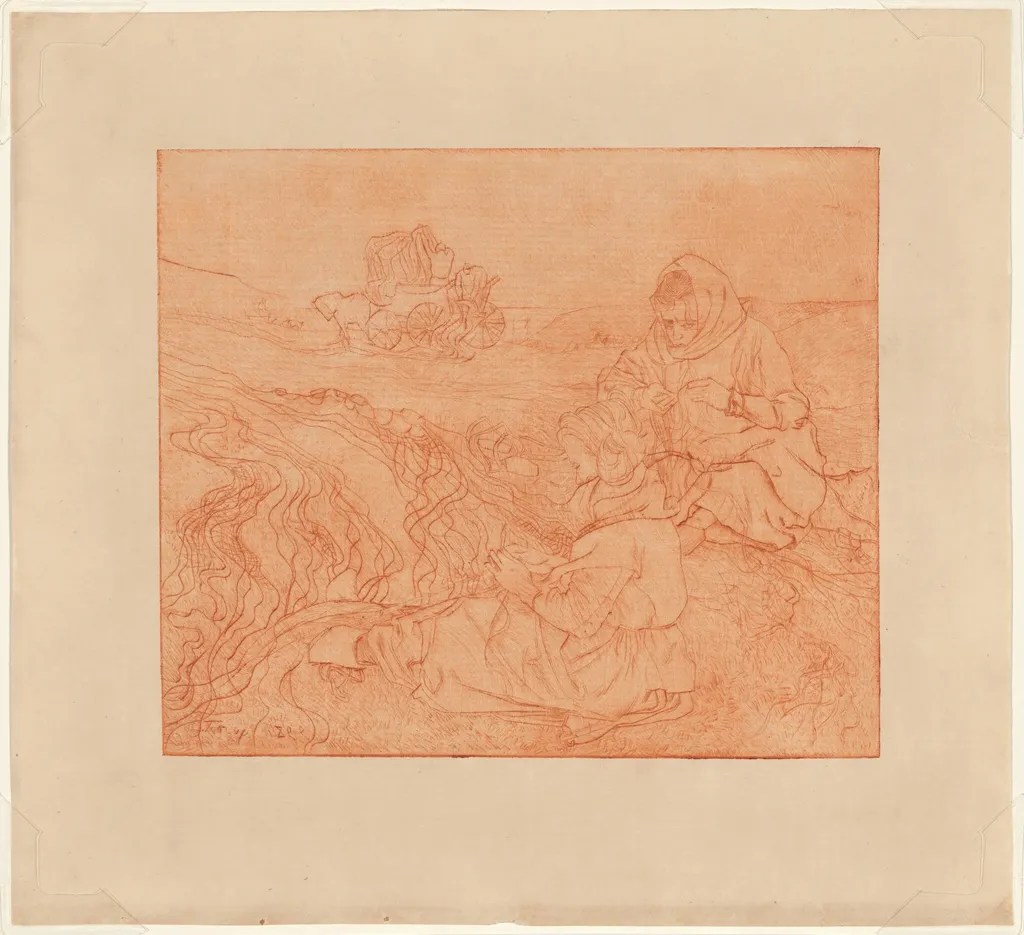
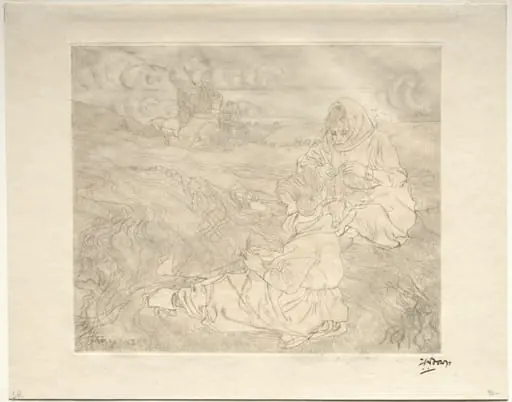
Net Menders is an ink print by the Impressionist artist Jan Toorop. It dates from 1899 and is held in the collection of the National Gallery of Art.
About this work
Overview
Jan Toorop’s 1899 drypoint, *Net Menders*, presents a quiet rural scene in which two women repair fishing nets. Executed on laid paper with red ink, the work balances a warm tonal range with the paper’s subtle texture, creating a sense of depth despite its modest scale. The composition captures a moment of diligent labor set against a calm, open landscape.
Subject & Meaning
The print focuses on two figures—one kneeling, the other seated—engaged in the meticulous task of mending nets. Their simple, traditional clothing and the unadorned surroundings emphasize everyday industry and the quiet dignity of work. The serene horizon and clear sky reinforce a contemplative mood, inviting viewers to consider the rhythm of rural life.
Technique & Style
Toorop employed drypoint, incising lines directly into a copper plate and printing them in red pigment. The resulting marks are fluid and undulating, a hallmark of his later Symbolist and Art Nouveau phase. The laid paper’s ribbed surface interacts with the ink, adding a tactile quality that enhances the work’s rhythmic line work.
History & Provenance
Created as a proof print, this impression likely represents an early or experimental stage of the composition before a final edition was issued. The piece reflects Toorop’s transitional period, when he was moving from Impressionist influences toward a more stylized, symbolically charged visual language.
Context
At the turn of the twentieth century, Toorop’s practice intersected with Symbolism’s interest in mood and allegory and Art Nouveau’s decorative line. *Net Menders* exemplifies this synthesis, merging a realistic depiction of labor with the sinuous, ornamental qualities that would become central to his mature work.
Artist & collection

Artist
Johannes Theodorus "Jan" Toorop was a Dutch painter who worked in various styles, including Symbolism, Art Nouveau, and Pointillism. His early work was influenced by the Amsterdam Impressionism movement.

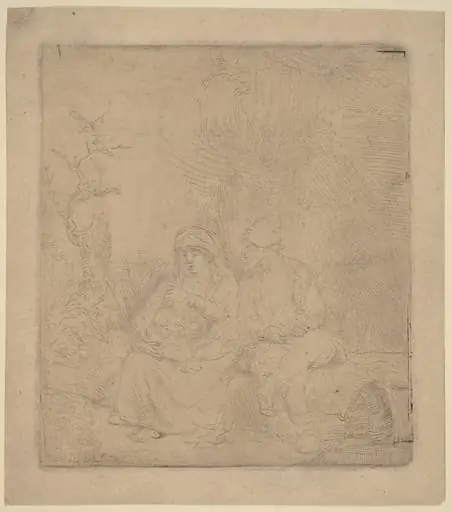 The Rest on the Flight: Lightly Etched
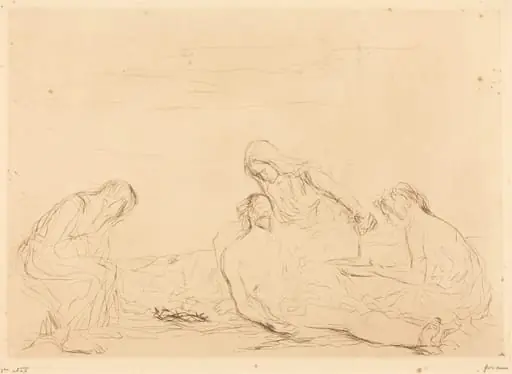 Pietà (3e planche) (Pietà) (third plate)
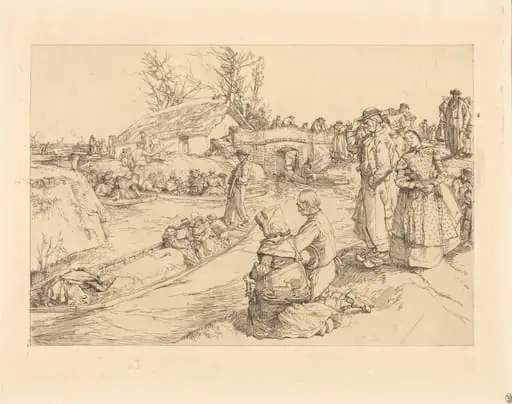 Burial in the Vendeen Marsh (Un enterrement dans le marais Vendeen)
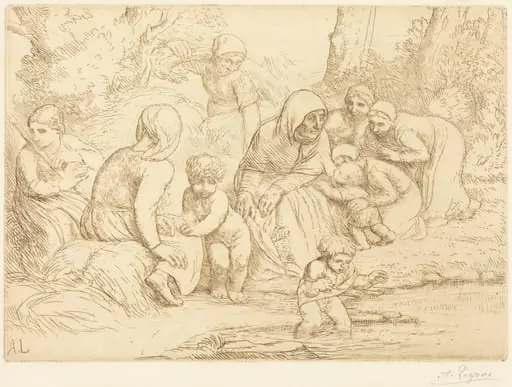 Summer (L'ete)
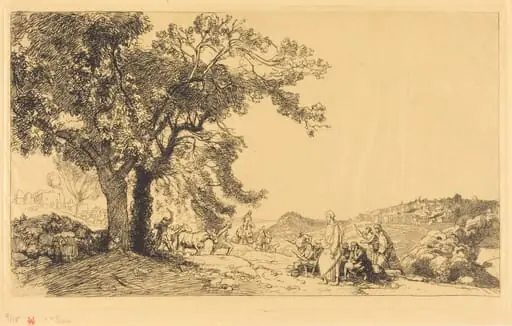 Le Christ au matin de rameaux
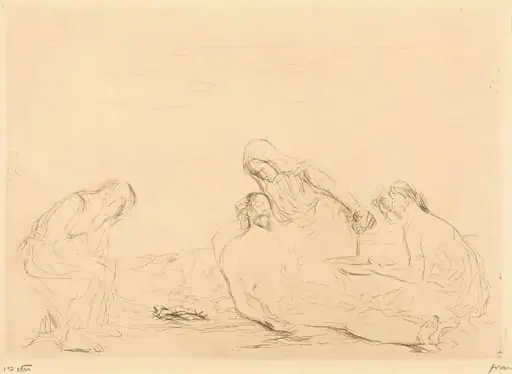 Pietà (3e planche) (Pietà) (third plate)
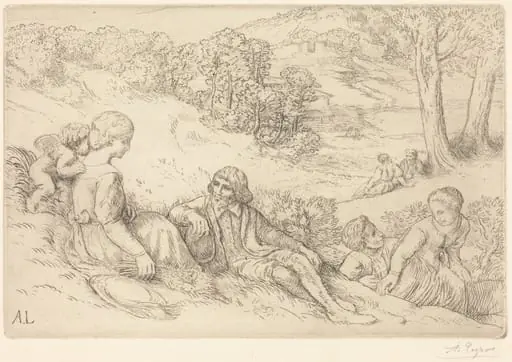 Spring (Le printemps)
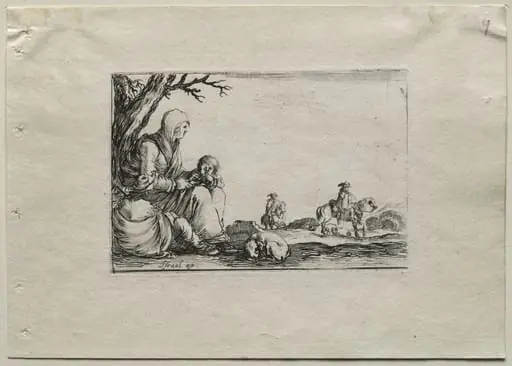 Caprices: Seated Beggar Woman with Two Children
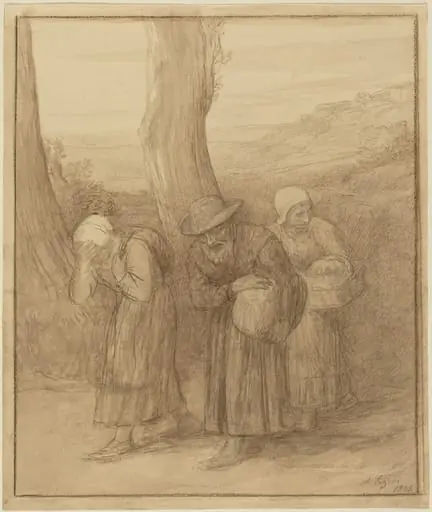 The Departure
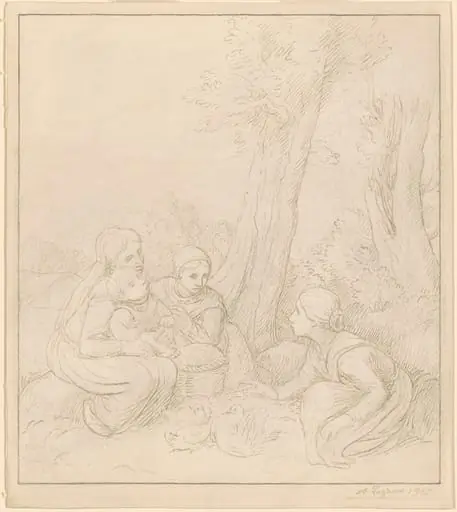 The Pigeons
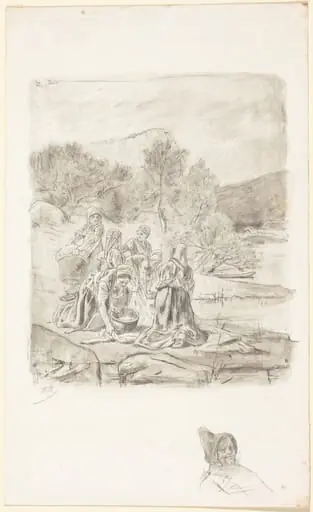 Washerwomen
 Net Menders