Artwork
Ichimura Takenojo and Sanjo Kantaro as a Pair of Lovers in the Yoshiwara
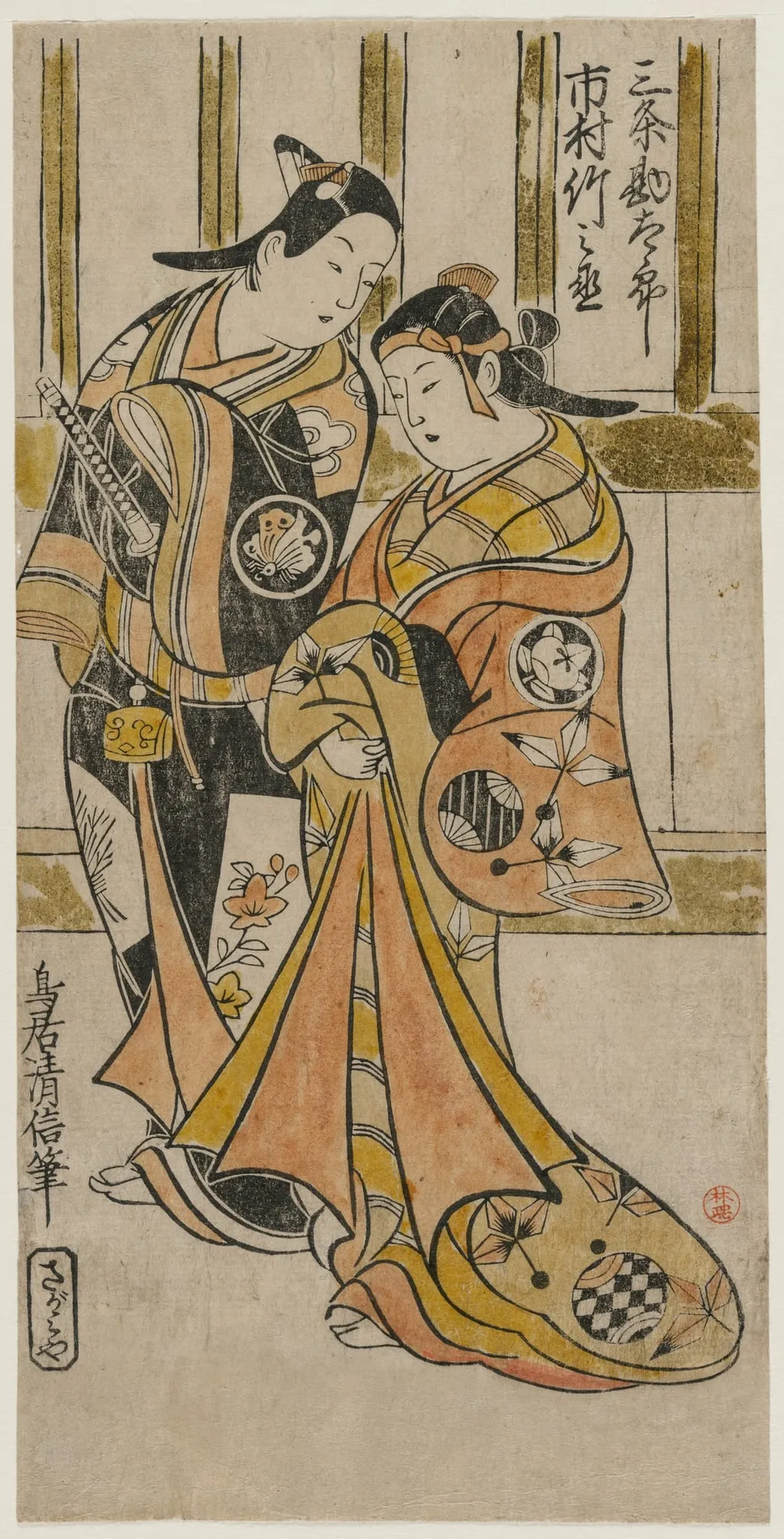
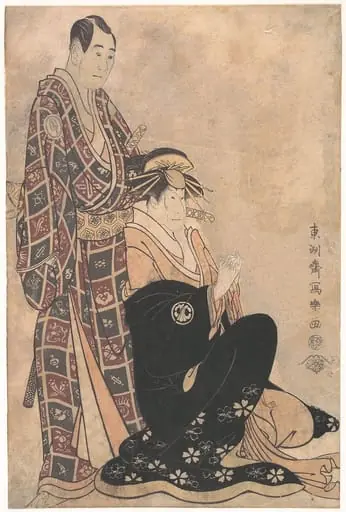
Ichimura Takenojo and Sanjo Kantaro as a Pair of Lovers in the Yoshiwara is a print by the Baroque artist Torii Kiyonobu. It dates from 1724 and is held in the collection of the Cleveland Museum of Art. This woodblock print depicts two kabuki actors, Ichimura Takenojo and Sanjo Kantaro, portraying a romantic pair in a Yoshiwara setting.
About this work
To learn more about similar prints, look up the work of artist Torii Kiyonobu I (Japanese, 1664–1729).
This painting shows two people, Ichimura Takenojo and Sanjo Kantaro, as lovers.
They are dressed in traditional Japanese clothes.
The artist made many prints of actors and scenes from plays.
The interesting thing about this work is that it's one of the many theater prints made by the artist.
These prints were popular and helped establish the artist's style.
To learn more about similar prints, look up the work of artist Torii Kiyonobu I (Japanese, 1664–1729).
Overview
This woodblock print depicts two kabuki actors, Ichimura Takenojo and Sanjo Kantaro, portraying a romantic pair in a Yoshiwara setting. Created by Torii Kiyonobu I, it belongs to a series of theatrical images produced for public consumption. The work exemplifies early ukiyo-e’s shift from religious or decorative art to commercial portrayals of urban entertainment, particularly the kabuki stage.
Subject & Meaning
The figures represent actors in a dramatic scene set within the licensed pleasure quarters of Yoshiwara, a common theme in kabuki theater. Their elaborate costumes and intimate posture suggest a romantic or tragic liaison, typical of domestic dramas popular in the early 18th century. The print captures a moment of emotional tension, reflecting the stylized expressions and gestures central to kabuki performance.
Technique & Style
Kiyonobu employed bold black outlines and hand-applied color, characteristic of early ukiyo-e. Figures are rendered with strong, simplified contours and minimal background detail, focusing attention on posture and costume. The composition emphasizes symmetry and clarity, aligning with the Torii school’s emphasis on theatricality and legibility for mass audiences.
History & Provenance
Produced around the turn of the 18th century, this print emerged during the formative years of commercial printmaking in Edo. As a founding member of the Torii school, Kiyonobu cultivated close ties with kabuki theaters, producing promotional imagery for specific performances. These prints were widely distributed, establishing a new market for actor portraiture and scene reproductions.
Context
In early Edo-period Japan, kabuki theater was both popular entertainment and cultural spectacle. Prints like this one served as souvenirs and advertisements, linking actors to their roles in the public imagination. The Torii school’s dominance in this niche reflected the symbiotic relationship between theater troupes and printmakers, shaping visual culture for decades.
Legacy
Kiyonobu’s work laid the foundation for the Torii school’s 75-year influence over actor prints. His stylistic conventions—clear lines, dramatic poses, and theatrical focus—became standard before being refined by later artists like Shunsho. This print represents a key moment in the evolution of ukiyo-e from niche art to a defining genre of Japanese visual culture.
Artist & collection
Artist
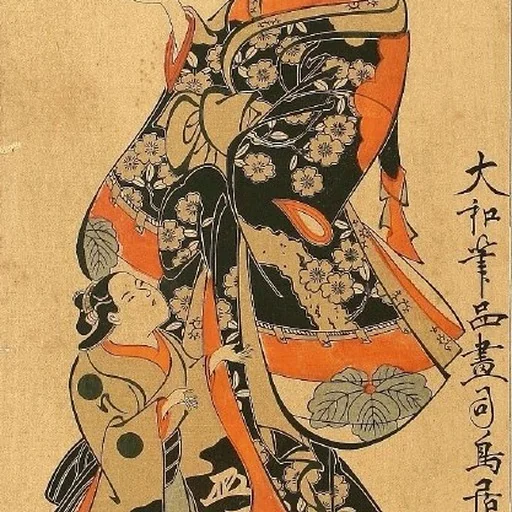
Torii Kiyonobu I (Japanese: 鳥居 清信; c. 1664 – 22 August 1729) was a Japanese painter and printmaker in the ukiyo-e style, who is renowned for his work on kabuki signboards and related materials. Along with his father…

 Untitled
 Untitled
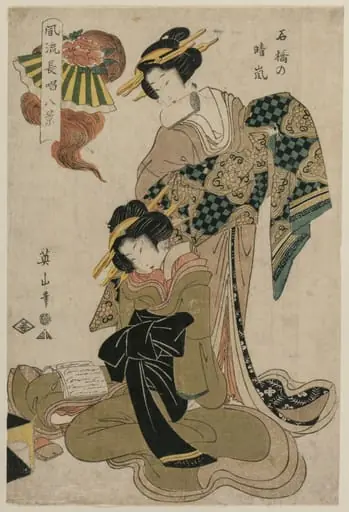 Haze on a Clear Day at Stone Bridge (From the series Eight Elegant Views of Chanted Accompanimnets for Kabuki Plays)
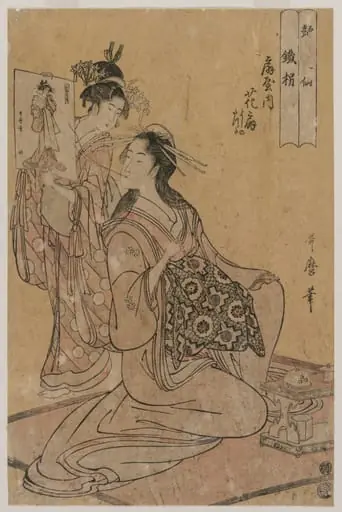 The Courtesan Hana-ogi of Ogiya as the Sennin Tekkai (from the series Eight Immortals of Sensuality)
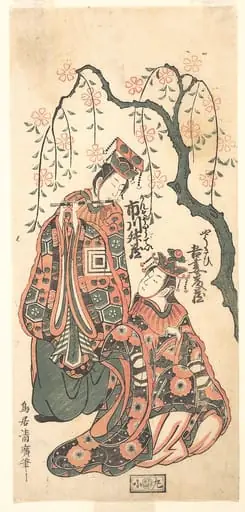 Untitled
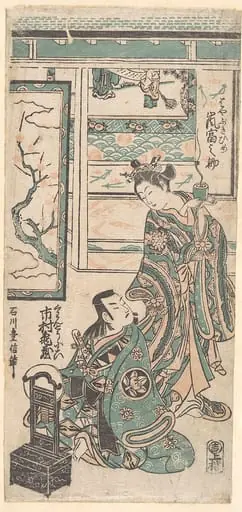 Untitled
 Untitled
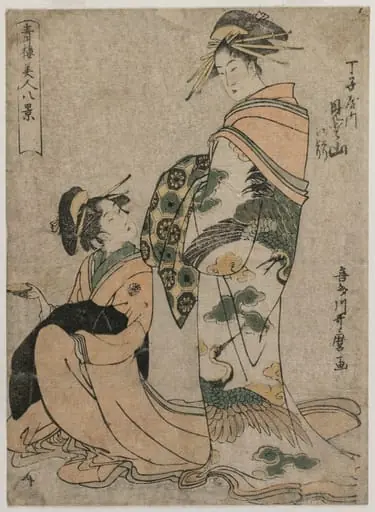 The Courtesan Misyama of Chojiya (from the series Eight Views of Beautiful Women of the Green Houses)
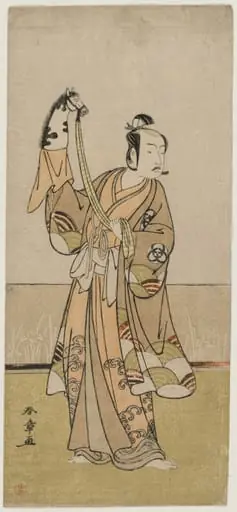 Bando Hikosaburo III Holding a Hand Pupper