Artwork
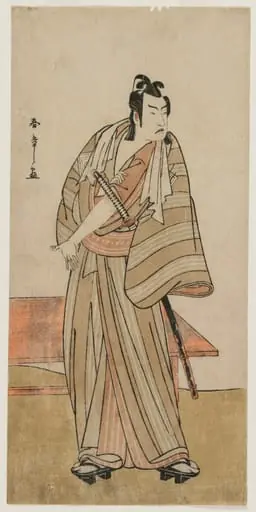
Bando Hikosaburo III Holding a Hand Pupper
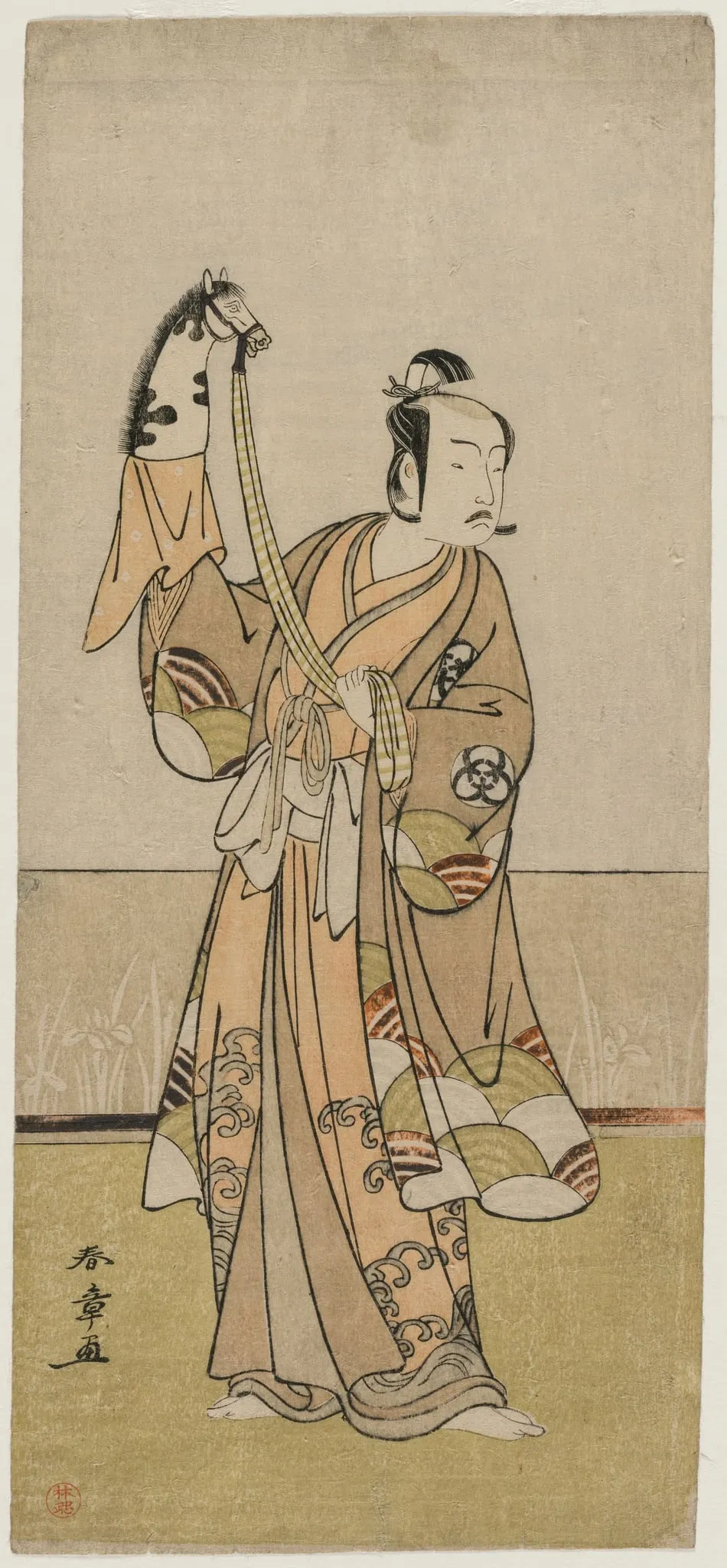
Bando Hikosaburo III Holding a Hand Pupper is a print by the Romanticist artist Katsukawa Shunshō. It dates from 1774 and is held in the collection of the Cleveland Museum of Art.
About this work
Overview
The artist’s signature appears in Japanese characters at the lower edge, a standard practice in prints of this era.
Created around 1774 by Katsukawa Shunshō, this woodblock print depicts the kabuki actor Bando Hikosaburo III in character, holding a small hand puppet shaped like a horse. The image is rendered in the ukiyo-e tradition, emphasizing theatrical presence over elaborate scenery. The artist’s signature appears in Japanese characters at the lower edge, a standard practice in prints of this era. The Cleveland Museum of Art currently holds the work as part of its collection of Edo-period theater imagery.
Subject & Meaning
The print captures a moment of performance, showing the actor not merely as himself but as a performer embodying a role. The hand puppet, likely representing a horse from a puppet theater tradition, suggests a layered performance—acting within acting. This reflects the self-awareness common in kabuki, where actors often referenced other art forms. The absence of background isolates the figure, reinforcing the focus on identity and theatricality.
Technique & Style
Shunshō employed fine linework and subtle color gradations typical of early ukiyo-e actor portraits. The robe’s bold patterns are rendered with precision, using multiple woodblocks to achieve layered hues. The puppet’s form is simplified yet expressive, contrasting with the detailed folds of fabric. The plain background directs attention to the actor’s posture and facial expression, a hallmark of Shunshō’s approach to capturing the essence of stage personas.
History & Provenance
The print was produced during the height of Shunshō’s career, when he was renowned for his actor portraits. It likely circulated as a commercial print among kabuki enthusiasts in Edo. The Cleveland Museum of Art acquired it in the 20th century as part of a broader collection of Japanese prints, preserving its original condition and inscriptions. Its survival in good state reflects its cultural value and careful stewardship over time.
Context
In late 18th-century Edo, actor prints were popular souvenirs for theatergoers, much like modern celebrity photography. Shunshō, a leading figure in the Katsukawa school, specialized in lifelike depictions of performers, moving away from idealized forms. The inclusion of a puppet hints at the interconnectedness of Japanese performance traditions—kabuki, bunraku, and folk theater—each influencing the other in both content and presentation.
Legacy
Shunshō’s portraits helped define the visual language of kabuki celebrity culture. This print exemplifies his ability to convey personality through gesture and costume, influencing later artists like Sharaku. While the specific actor and puppet may be obscure today, the work remains a testament to the era’s fascination with performance, identity, and the blurred line between actor and role.
Artist & collection
Artist
Katsukawa Shunshō spent his life in Edo (now Tokyo), where the city’s teahouses and theaters buzzed with energy.

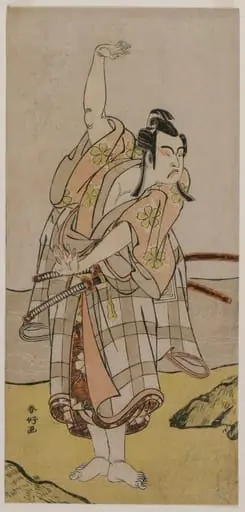 Actor Ichikawa Yaozō II as Sakuramaru
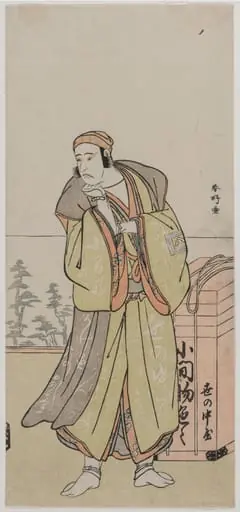 Ichikawa Yaozo II as an Itinerant Peddler
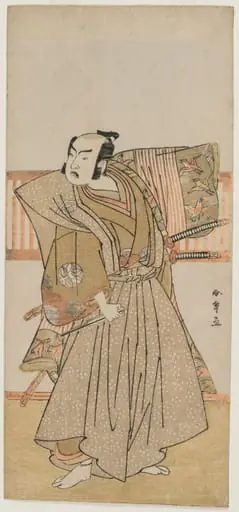 Ichimura Uzaemon IX as Soga no Juro
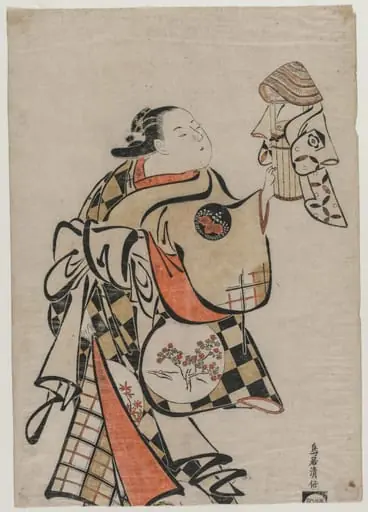 Fujimura Handayu as a Courtesan
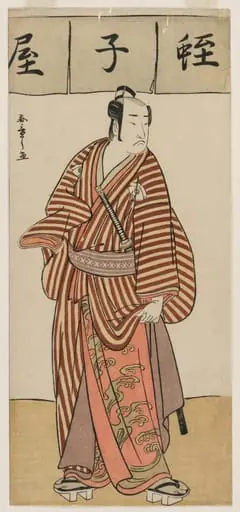 Onoe Matsusuke I as Ebisu, from The Stand-In Seven Gods of Good Fortune
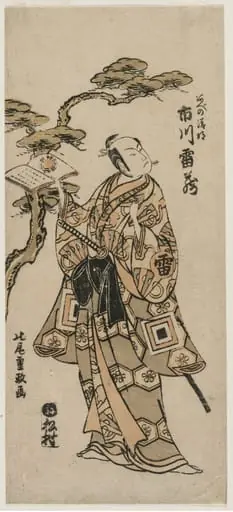 Ichikawa Raizo as Abe no Seimei
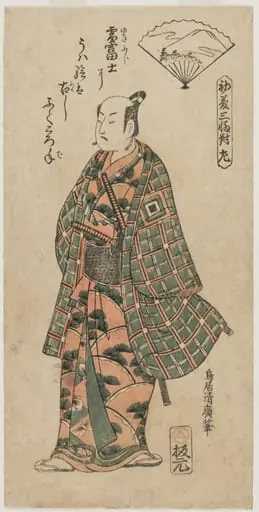 Ichikawa Danjuro II as a Young Samurai
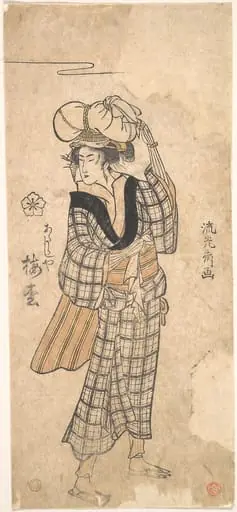 「あたらしや梅松」|The Courtesan Umematsu of the Atarashiya Brothel Costumed as an Ohara Maiden
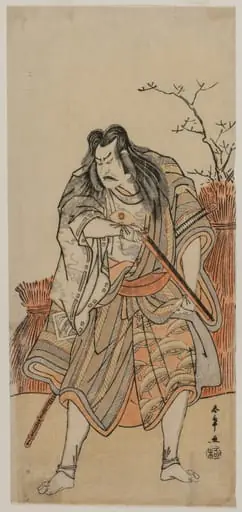 Nakajima Kanzaemon as a Lord Disguised as a Hunter with a Rifle
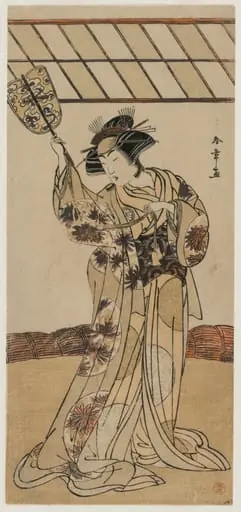 Segawa Kikunojō III as Teruha
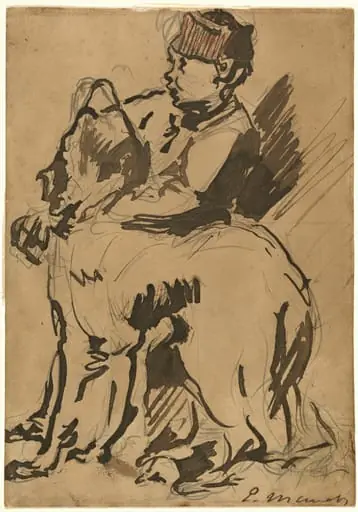 A Boy Holding His Dog
 Ichikawa Yaozo II as a Otokodate Standing by a Bench