Artwork
Le Fou
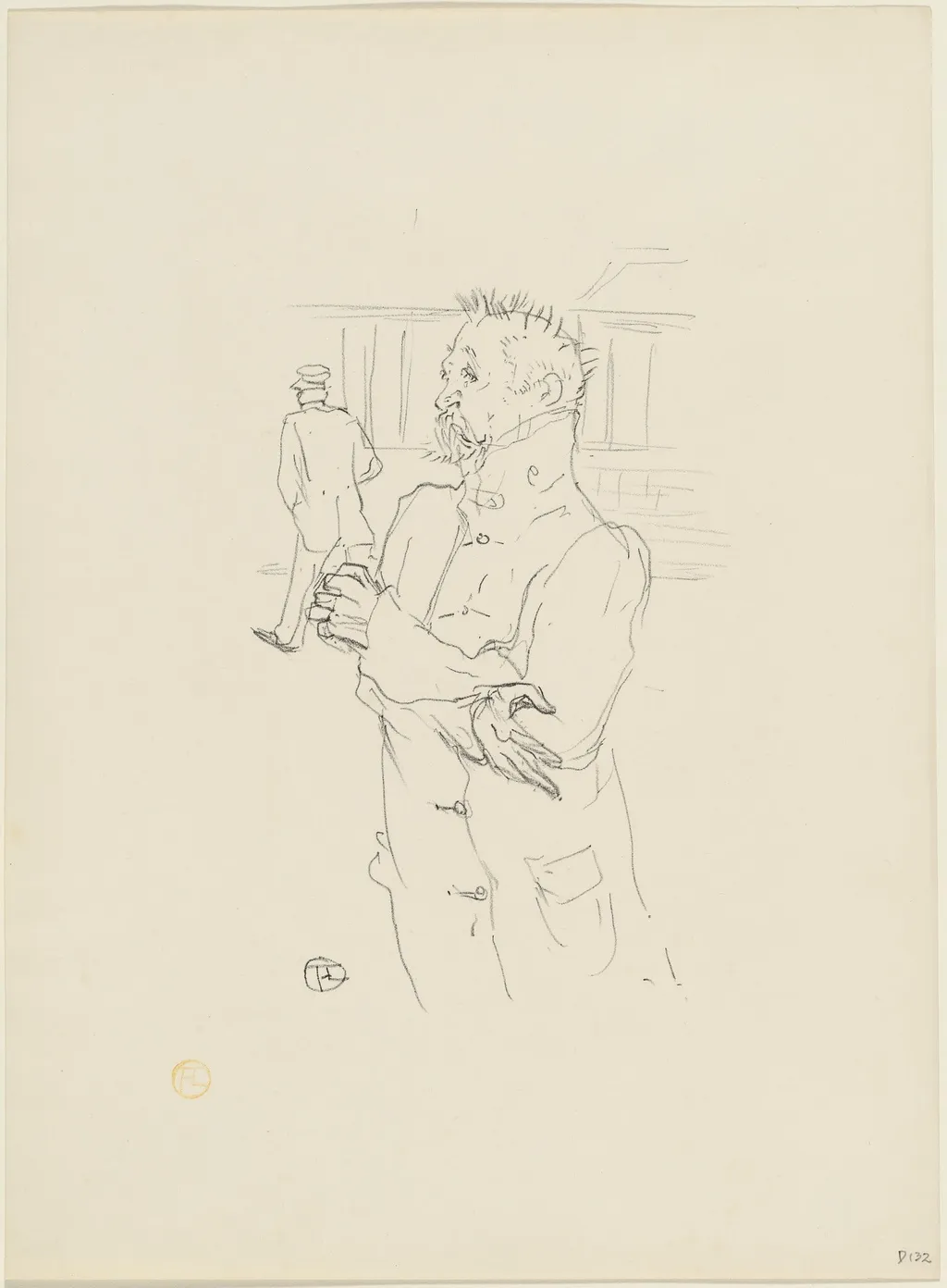
Le Fou is an ink print by the Impressionist artist Henri de Toulouse-Lautrec. It dates from 1895 and is held in the collection of the National Gallery of Art.
About this work
Overview
His use of lithography allowed for accessible reproduction, extending his observations beyond elite circles to a broader public.
Created in 1895, *Le Fou* is a lithograph on velin paper by Henri de Toulouse-Lautrec, part of his broader exploration of Parisian nightlife through printmaking. The work captures a solitary, introspective figure in a sparse urban setting, reflecting Lautrec’s interest in quiet moments amid the chaos of entertainment districts. His use of lithography allowed for accessible reproduction, extending his observations beyond elite circles to a broader public.
Subject & Meaning
The image depicts two men in a muted exchange: one stands facing the viewer with clasped hands, his expression unreadable; the other turns away, his posture suggesting distance. The title, meaning 'The Fool,' hints at social marginalization, though the scene resists caricature. Rather than satire, Lautrec presents a moment of stillness, inviting contemplation of isolation and unspoken connection within the city’s undercurrents.
Technique & Style
Lautrec employed bold, economical linework to define form and space, avoiding shading or detail to emphasize emotional tone. The background is reduced to a few suggestive lines of architecture, directing focus to the figures’ posture and proximity. The lithographic process allowed for rapid, direct expression, aligning with his interest in capturing fleeting gestures and psychological nuance without embellishment.
History & Provenance
Produced during a period of intense printmaking activity, *Le Fou* emerged from Lautrec’s engagement with Montmartre’s performers and patrons. Though not part of a major series, it reflects his consistent practice of documenting individuals often overlooked by mainstream art. The work remained in private collections after his death, its quiet nature contrasting with the more sensationalized scenes for which he is better known.
Context
In 1890s Paris, cabarets and brothels were spaces of both spectacle and solitude, where class boundaries blurred. Lautrec, an aristocrat with a physical disability, moved among these worlds as both insider and observer. His prints, including *Le Fou*, reveal a sensitivity to the quiet dignity of those navigating social edges, offering a counterpoint to the era’s more flamboyant depictions of nightlife.
Legacy
Lautrec’s lithographs like *Le Fou* helped redefine printmaking as a medium for psychological realism rather than mere illustration. His ability to convey complex emotion through minimal means influenced later generations of graphic artists and expressionists. The work endures not for its drama, but for its restraint — a testament to his unique capacity to find humanity in the margins.
Artist & collection
Artist
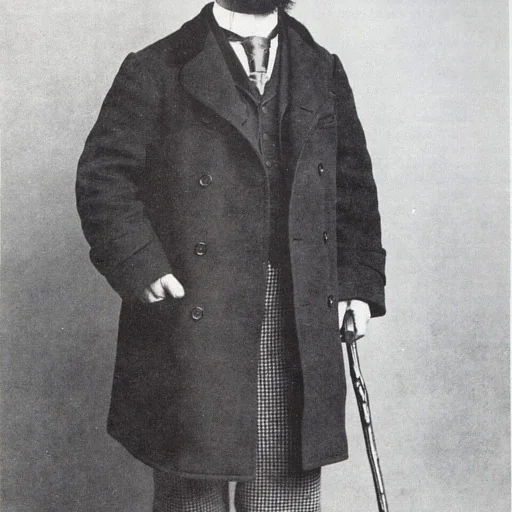
Comte Henri Marie Raymond de Toulouse-Lautrec-Montfa (24 November 1864 – 9 September 1901), known as Toulouse-Lautrec (French: ), was a French painter, printmaker, draughtsman, caricaturist, and illustrator.

 African-American Figure
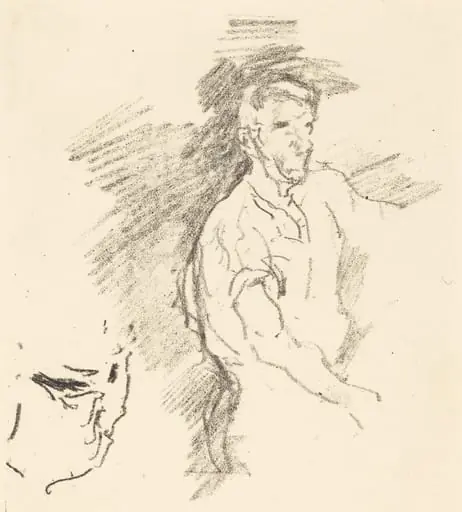 Sketch of a Blacksmith
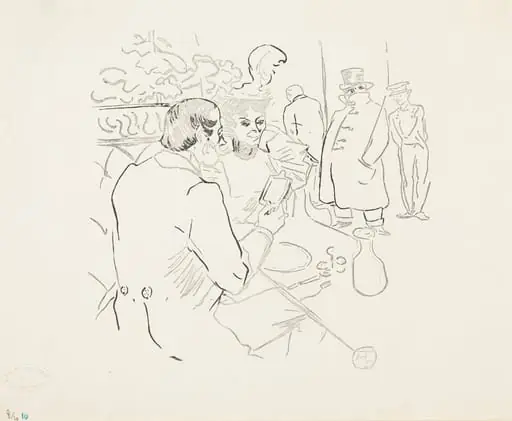 Snobism
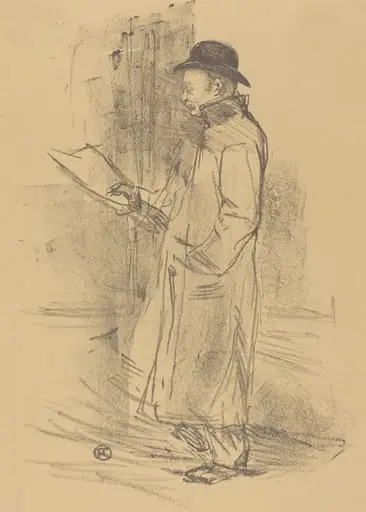 Program for "Benefice Gemier" (Programme du "Bénéfice Gémier")
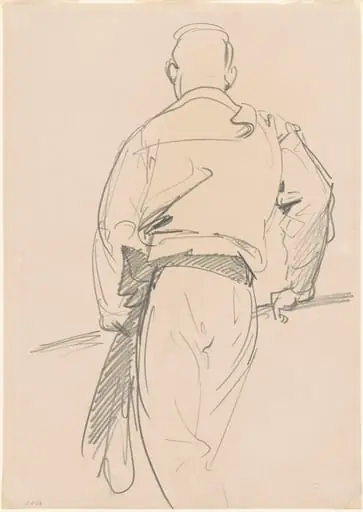 Gondolier, Venice
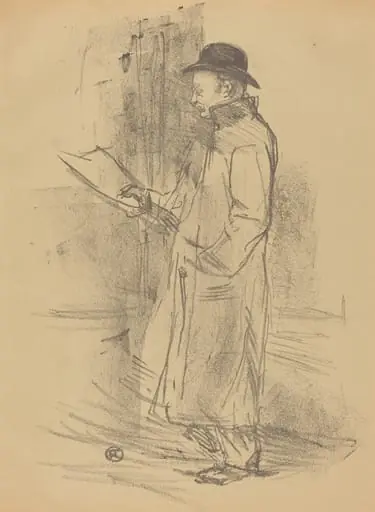 Benefit for Firmin Gémier
 Drawing of a man
 The First Vendor of Jourdan and Brown (Le premier vendeur de Jourdan et Brown)
 Antoine and Gémier in "Une Faillite"
 Seated Woman
 Young son of Shah Shuja Lodiana
 untitled (Woman descending onto a street of umbrellas)