Artwork
To Menilmontant from Bruant (A Ménilmontant, de Bruant)
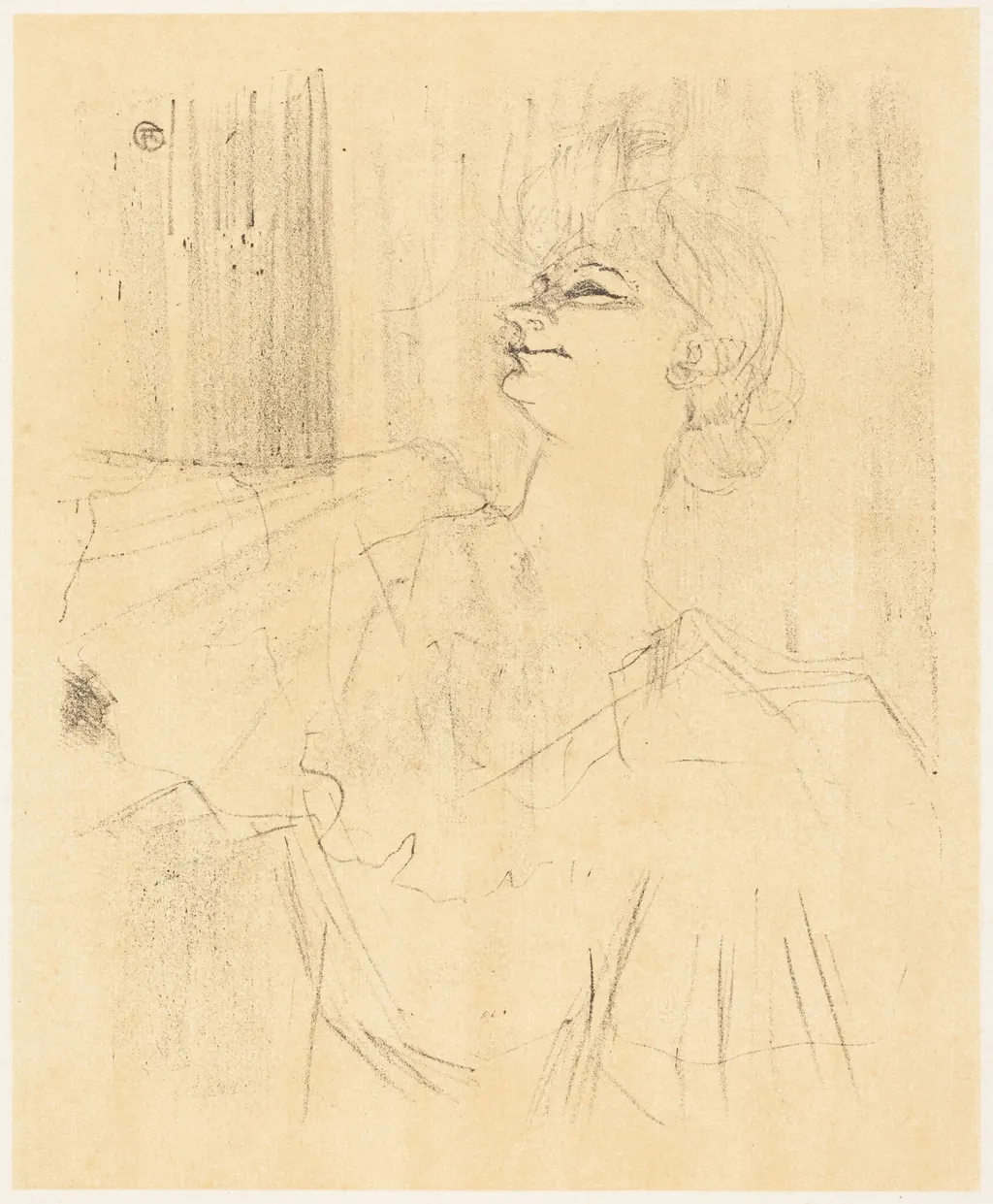
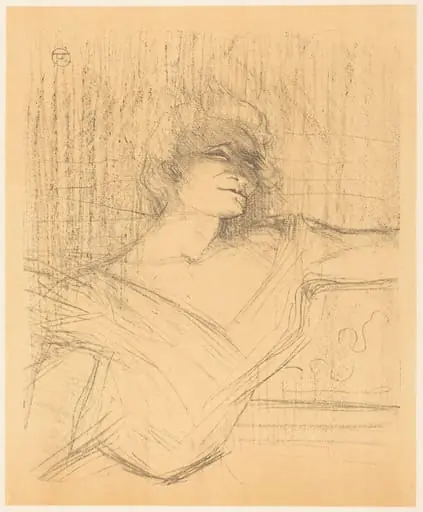
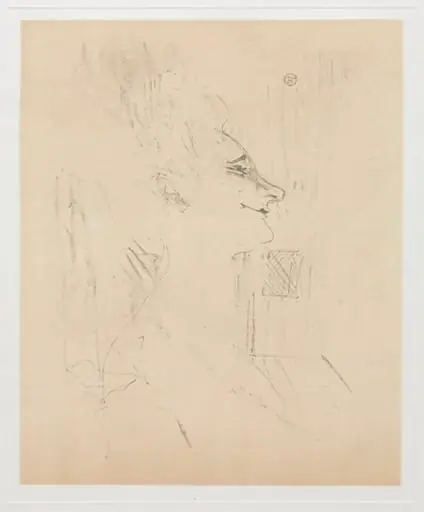
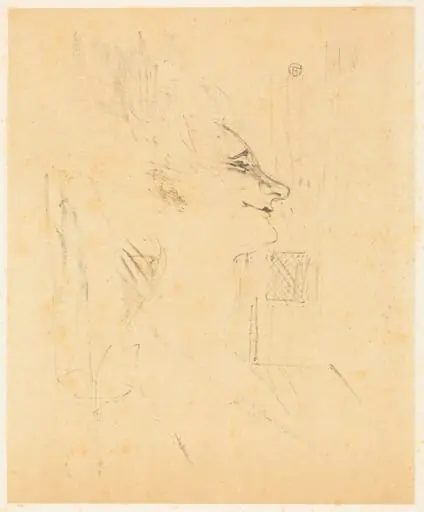
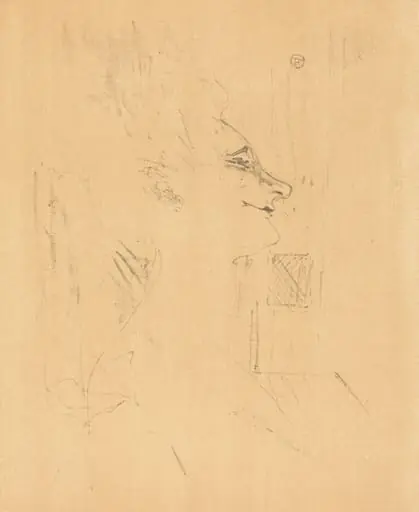
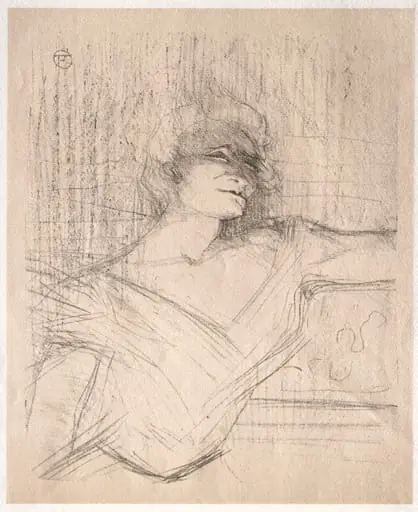
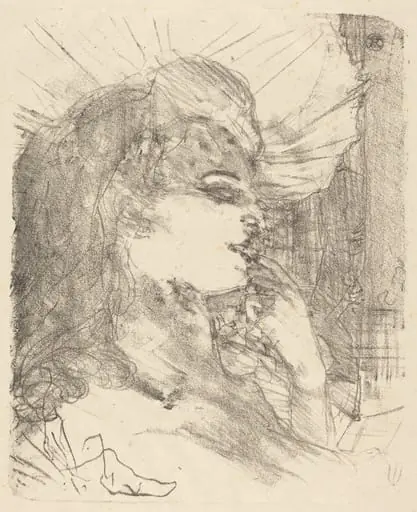
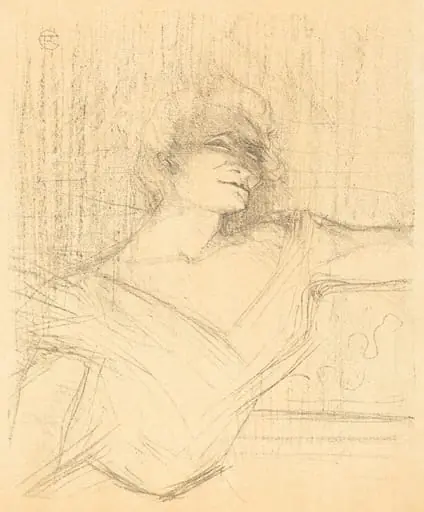
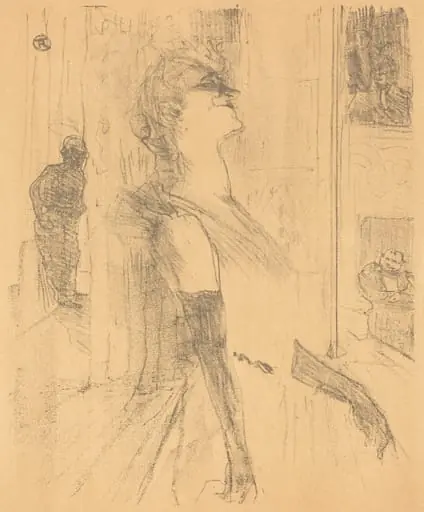
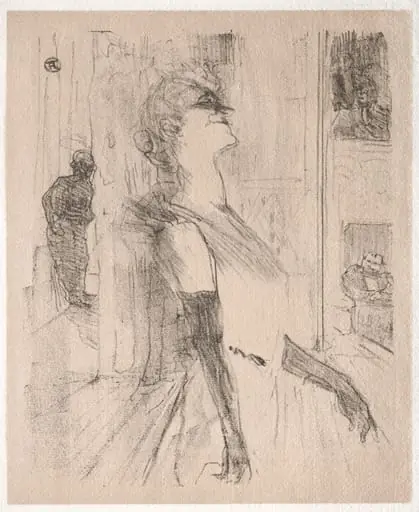
To Menilmontant from Bruant (A Ménilmontant, de Bruant) is an ink print by the Impressionist artist Henri de Toulouse-Lautrec. It dates from 1898 and is held in the collection of the National Gallery of Art.
About this work
Overview
Created in 1898, this lithograph by Henri de Toulouse-Lautrec captures a solitary woman in motion, rendered in stark black ink against a muted beige ground.
Created in 1898, this lithograph by Henri de Toulouse-Lautrec captures a solitary woman in motion, rendered in stark black ink against a muted beige ground. The work belongs to a series of prints inspired by Parisian street life, produced during a period when Lautrec increasingly turned to graphic media. Its restrained palette and simplified forms reflect his mastery of lithography as a tool for psychological observation rather than decorative flourish.
Subject & Meaning
The figure is a woman, likely a working-class Parisian, dressed in a long coat open to reveal her dress, her face turned sharply to the left in quiet contemplation. She is not performing but passing through the urban landscape, suggesting the anonymity and solitude of daily life in the Ménilmontant district. Lautrec avoids sentimentality; her presence is neither glamorous nor tragic, but quietly real — a moment of private stillness amid the city’s rhythm.
Technique & Style
Lautrec employed lithography to achieve bold, fluid contours and tonal contrast with minimal ink. The woman’s form is defined by decisive, unbroken lines, while facial features are reduced to essential shapes — eyes, nose, and mouth implied rather than detailed. The solid beige background eliminates spatial depth, focusing attention on the figure’s posture and expression. This economy of means heightens the emotional resonance of the scene.
History & Provenance
The print was made during Lautrec’s mature period, when he produced numerous lithographs for commercial and personal projects. It was likely printed in a small edition, typical of his graphic work. Though its early ownership is undocumented, it entered public collections in the 20th century as interest grew in his printed oeuvre. The work remains part of a broader body of prints that document Parisian social types beyond the cabaret stage.
Context
In the late 1890s, Lautrec shifted from nightlife scenes to more solitary, observational subjects, influenced by his declining health and a growing interest in ordinary lives. Ménilmontant, a working-class neighborhood, offered subjects removed from the glitter of Montmartre. This print aligns with contemporary photographic and artistic efforts to portray urban anonymity, reflecting a broader cultural turn toward realism in French visual culture.
Legacy
This lithograph exemplifies Lautrec’s contribution to modern printmaking: elevating everyday moments through graphic clarity and emotional restraint. Its influence is visible in 20th-century expressionist and social realist artists who valued line and posture over detail. Though less celebrated than his cabaret posters, works like this reveal his deeper engagement with the quiet dignity of ordinary people in modern Paris.
Artist & collection
Artist
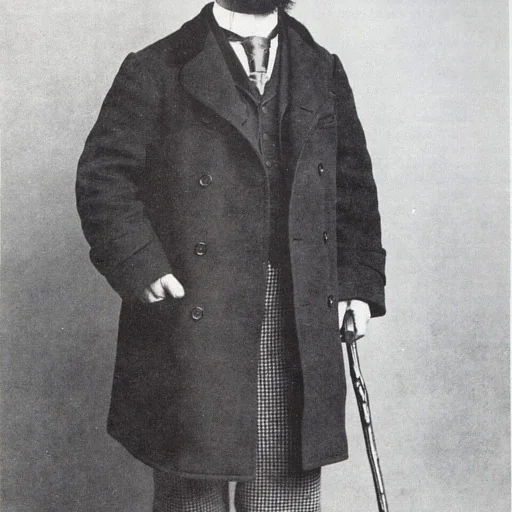
Comte Henri Marie Raymond de Toulouse-Lautrec-Montfa (24 November 1864 – 9 September 1901), known as Toulouse-Lautrec (French: ), was a French painter, printmaker, draughtsman, caricaturist, and illustrator.