Artwork
Mariage d'argent; Le Fardeau de la liberté; Un Client sérieux [recto]
![Mariage d'argent; Le Fardeau de la liberté; Un Client sérieux [recto], by Henri de Toulouse-Lautrec, ink, 1897](https://artifactworldgallery.com/img/henri-de-toulouse-lautrec--mariage-d-argent-le-fardeau-de-la-liberte-un-client-serieux--1a2c6f77da89ba3b-w1024.webp)
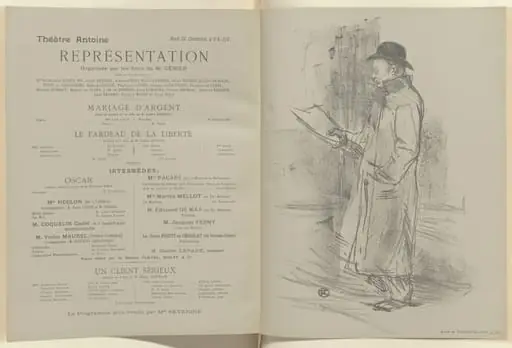
Mariage d'argent; Le Fardeau de la liberté; Un Client sérieux [recto] is an ink print by the Impressionist artist Henri de Toulouse-Lautrec. It dates from 1897 and is held in the collection of the National Gallery of Art.
About this work
On the left side, there’s a list of plays and performers in small, neat writing.
This is a black-and-white poster with text and a sketchy drawing. On the left side, there’s a list of plays and performers in small, neat writing. On the right, a man in a hat and coat stands sideways, holding a cane. His face is blurred, and his body looks stiff, almost like a quick sketch.
The text names plays like *Mariage d’argent* and lists actors’ names. The drawing style is loose and fast, almost like a doodle. This was made in 1897 by an artist who loved capturing real moments.
Next, check out lithography to see how this print was made.
Overview
Henri de Toulouse-Lautrec’s 1897 lithograph, executed in black ink on light‑brown wove paper, functions as a promotional poster for several contemporary Parisian stage productions. The print combines a compact typographic list of play titles and performers with a quickly rendered figure—a hat‑clad man holding a cane—positioned opposite the text. Its stark monochrome palette and sketch‑like drawing convey the immediacy of the city’s theatrical milieu.
Subject & Meaning
The work captures a slice of late‑19th‑century Parisian entertainment culture, foregrounding the commercial aspect of theater through the enumeration of shows such as *Mariage d’argent* and the names of their actors. The solitary, slightly blurred gentleman suggests a patron or spectator, embodying the public’s engagement with the nightlife that Toulouse‑Lautrec frequently documented, while also hinting at the fleeting, transient nature of such experiences.
Technique & Style
Created by lithography, the image employs a single black layer applied to a light‑brown paper base, allowing for bold contrasts and swift, gestural lines. The figure on the right is rendered with loose, almost doodle‑like strokes, emphasizing movement over detail, whereas the left‑hand text is set in a tidy, legible hand. This juxtaposition of precise typography and informal drawing typifies Toulouse‑Lautrec’s hybrid approach to commercial art.
History & Provenance
Printed in 1897, the lithograph was likely produced for distribution among Parisian audiences to advertise the listed performances. As a work by Toulouse‑Lautrec, whose career was marked by a focus on the city’s nightlife and its peripheral figures, it reflects his involvement with the entertainment industry. The piece has since entered museum collections that specialize in fin‑de‑siècle French graphic art.
Artist & collection
Artist
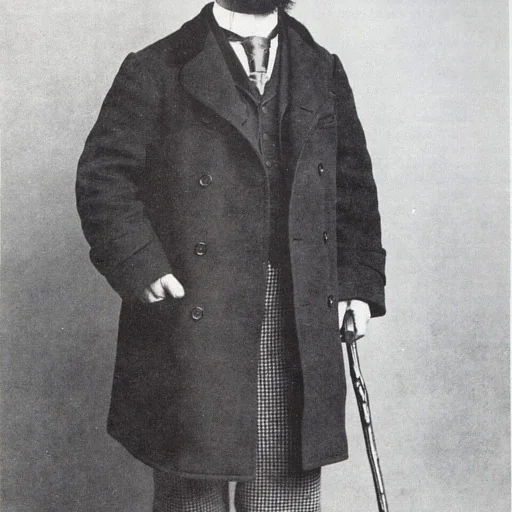
Comte Henri Marie Raymond de Toulouse-Lautrec-Montfa (24 November 1864 – 9 September 1901), known as Toulouse-Lautrec (French: ), was a French painter, printmaker, draughtsman, caricaturist, and illustrator.

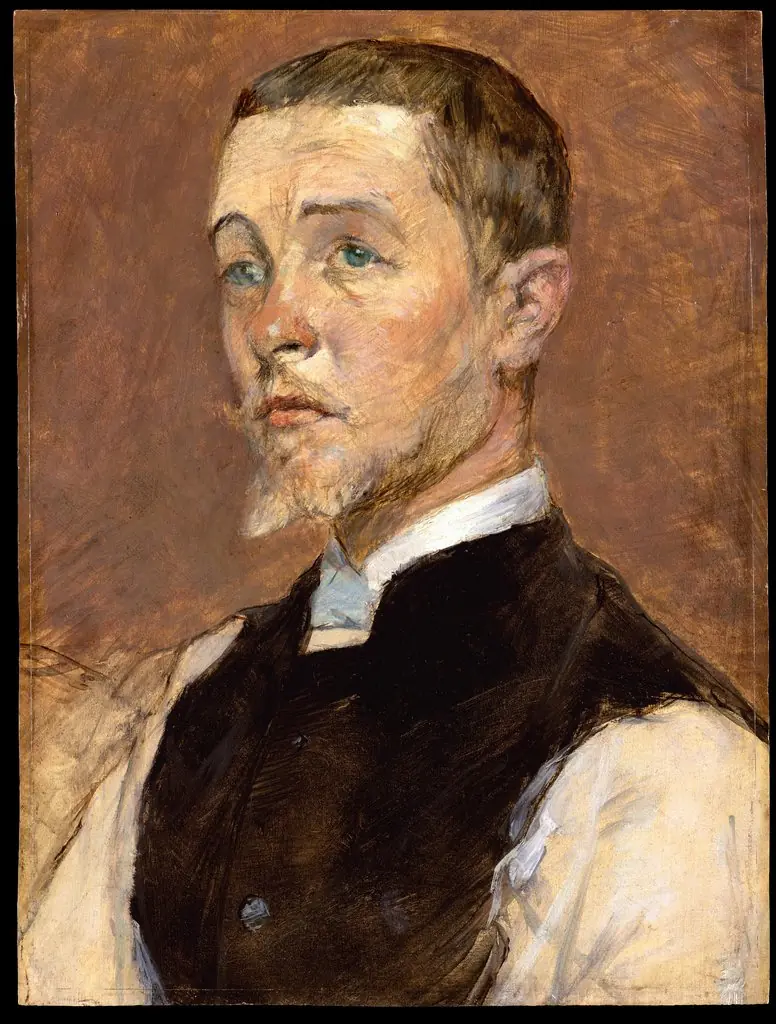
 Untitled
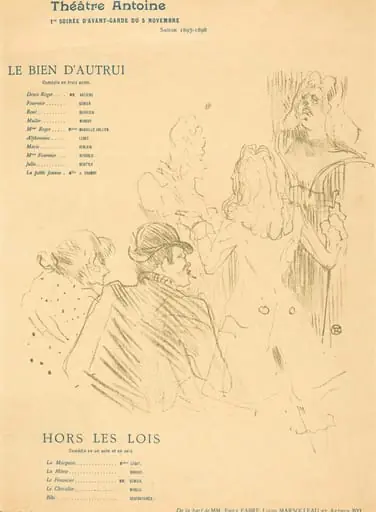 Le Bien d'autrui; Hors Les Lois
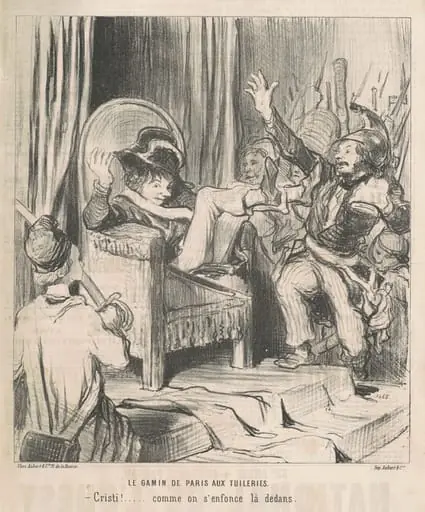 Le Gamin de Paris aux Tuileries
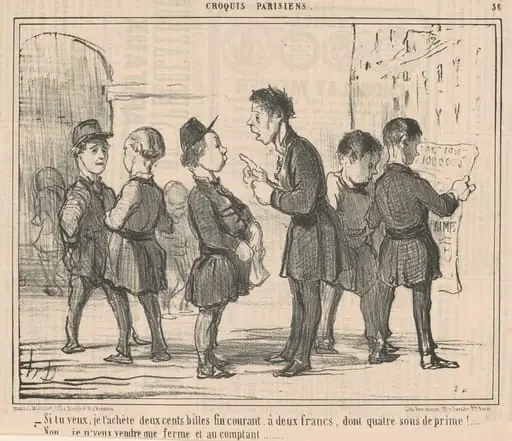 Si tu veux, je t'achète deux cents billes ...
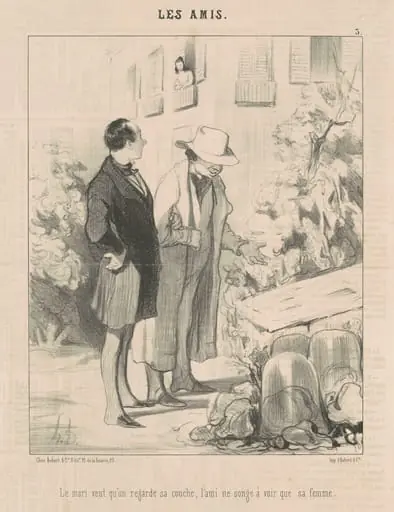 Le mari veut qu'on regarde sa couche ...
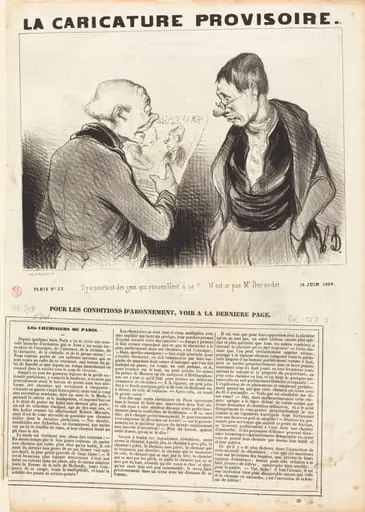 Il y a pourtant des gens qui ressemblent a ça!
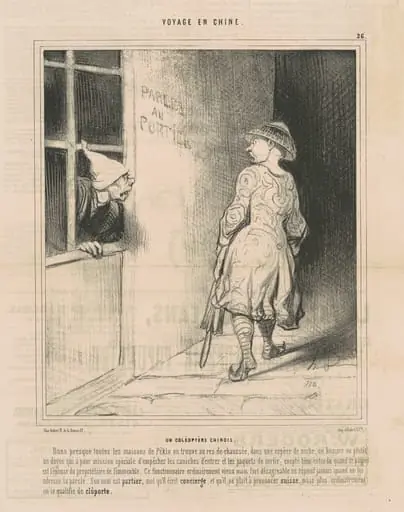 Un coléoptère chinois
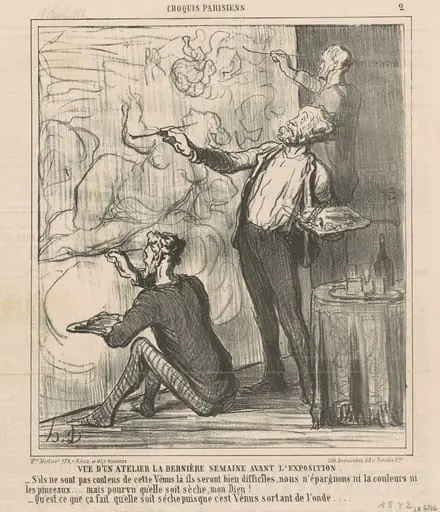 Vue d'un atelier ...
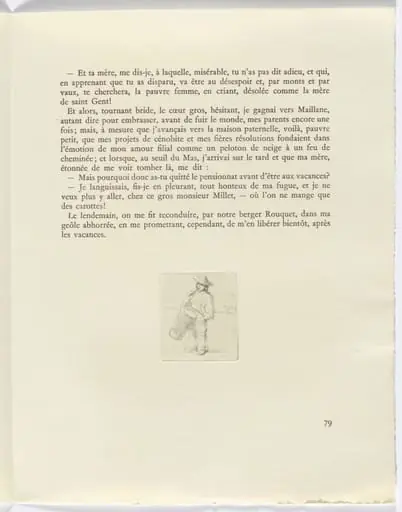 Frédéric Mistral: Mémoires et Recits by Frédéric Mistral: boy playing drum (page 79)