Artwork
Si tu veux, je t'achète deux cents billes ...
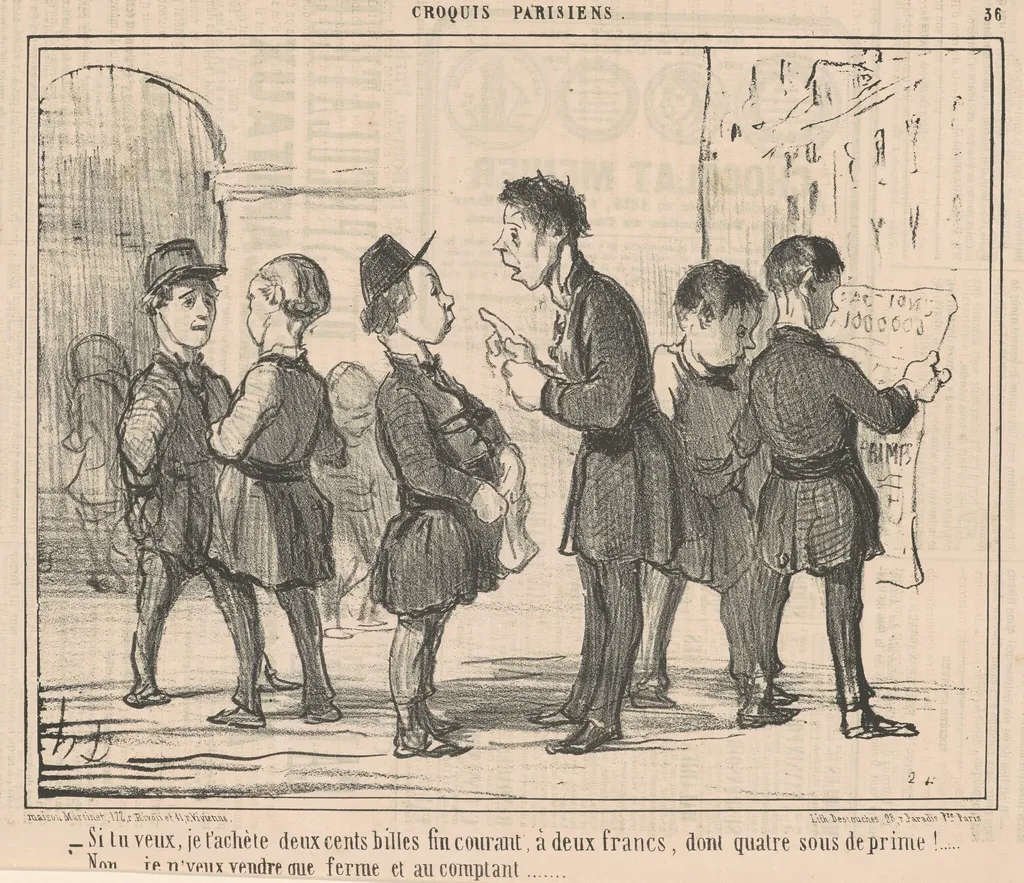
Si tu veux, je t'achète deux cents billes ... is an ink print by the Impressionist artist Honoré Daumier. It dates from 1857 and is held in the collection of the National Gallery of Art.
About this work
Overview
Created in 1857, this lithograph by Honoré Daumier captures a moment of intense focus between two men engaged in a game of marbles. Rendered in ink on paper, the work belongs to a series of prints that observe ordinary Parisian life with sharp wit. Daumier’s use of lithography allowed for rapid, expressive lines that convey movement and tension without elaborate detail.
Subject & Meaning
The scene portrays two men absorbed in a trivial contest, their postures and expressions magnifying the absurdity of their concentration. Daumier frames their interaction as a microcosm of social pretense—where minor stakes are treated with the gravity of high-stakes drama. The title, a playful offer to buy two hundred marbles, underscores the irony of human obsession with insignificant things.
Technique & Style
Daumier employed bold, fluid linework typical of his lithographic practice, using minimal tonal variation to suggest form and motion. The figures are rendered with exaggerated gestures and simplified features, evoking caricature without losing psychological nuance. The rough, sketch-like quality lends immediacy, as if the scene were caught mid-action, unposed and unfiltered.
History & Provenance
No specific early ownership records are documented, but its inclusion in major museum collections confirms its early recognition within print circles.
Produced during Daumier’s prolific period of social commentary prints, this work was likely published in a periodical or collected in an album meant for a broad audience. It circulated among middle-class Parisians who recognized the satire in everyday behavior. No specific early ownership records are documented, but its inclusion in major museum collections confirms its early recognition within print circles.
Context
In mid-19th century France, lithography became a vital medium for political and social critique, especially after press restrictions eased. Daumier, long associated with satirical journals, used such prints to observe class behavior without overt politics. This scene reflects a broader cultural interest in the rituals of daily life, where leisure activities revealed deeper social tensions and pretensions.
Legacy
The work exemplifies Daumier’s enduring influence on modern graphic art and caricature. His ability to distill human folly into a single, vivid moment inspired later artists in both fine art and illustration. Though not widely exhibited as a standalone piece, its aesthetic and thematic concerns echo in 20th-century observational drawing and satirical comics.
Artist & collection

Artist
Honoré-Victorin Daumier was a French painter, sculptor, and printmaker, whose many works offer commentary on the social and political life in France, from the Revolution of 1830 to the fall of the Second French Empire in 1870.









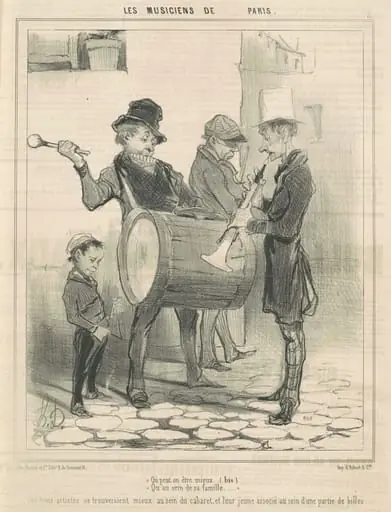 Ou peut on être mieux ...
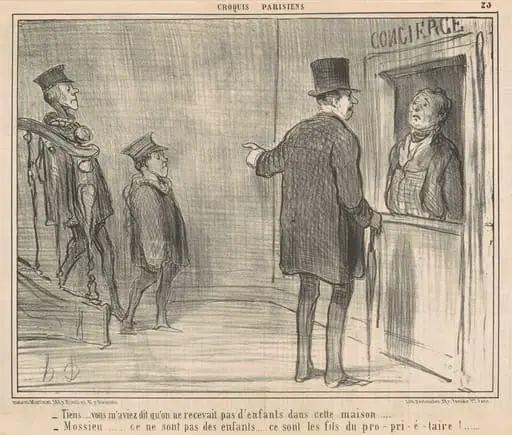 Tiens ... vous m'aviez dit ...
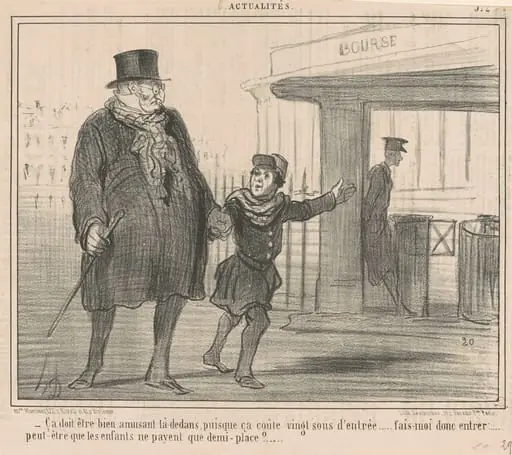 Ca doit être bien amusant la-dedans ...
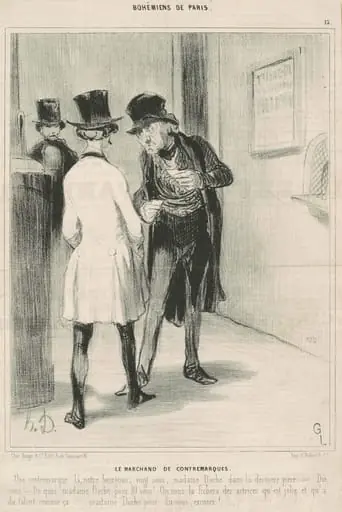 Le marchand de contremarques
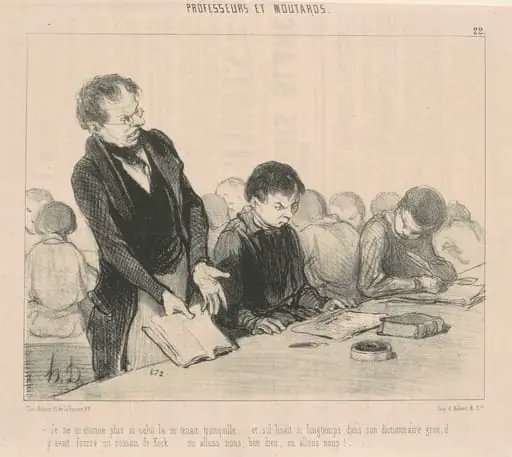 Je ne m'étonne plus si celui-la se tentaint tranquille ...
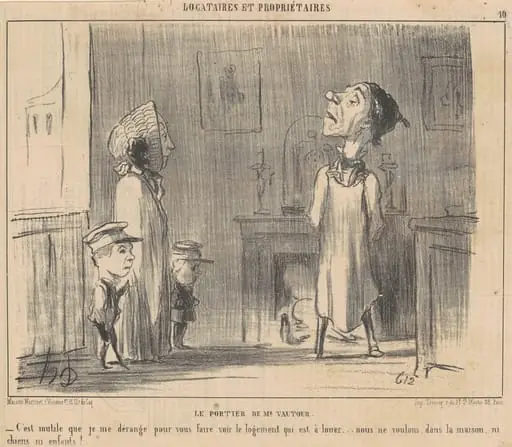 Le portier de Mr Vautour
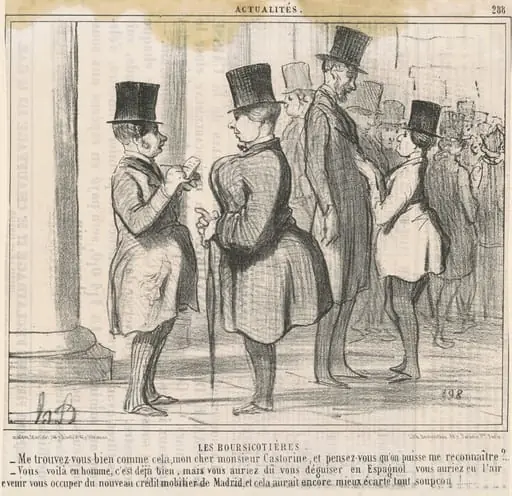 Les boursicotières. Me trouvez-vous bien ...
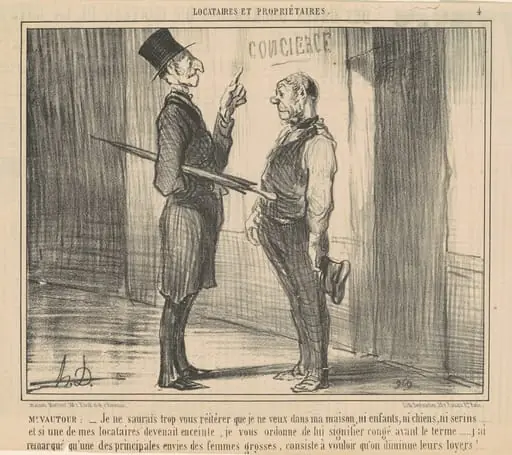 M. Vautour: Je ne saurais trop ...
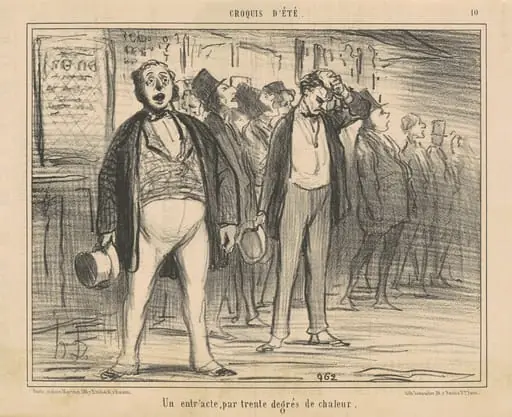 Un entr'acte, par trente degrés de chaleur
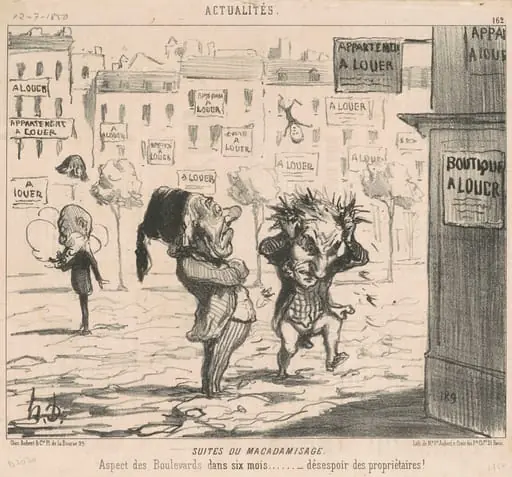 Suites du macadamisage