Artwork
Untitled
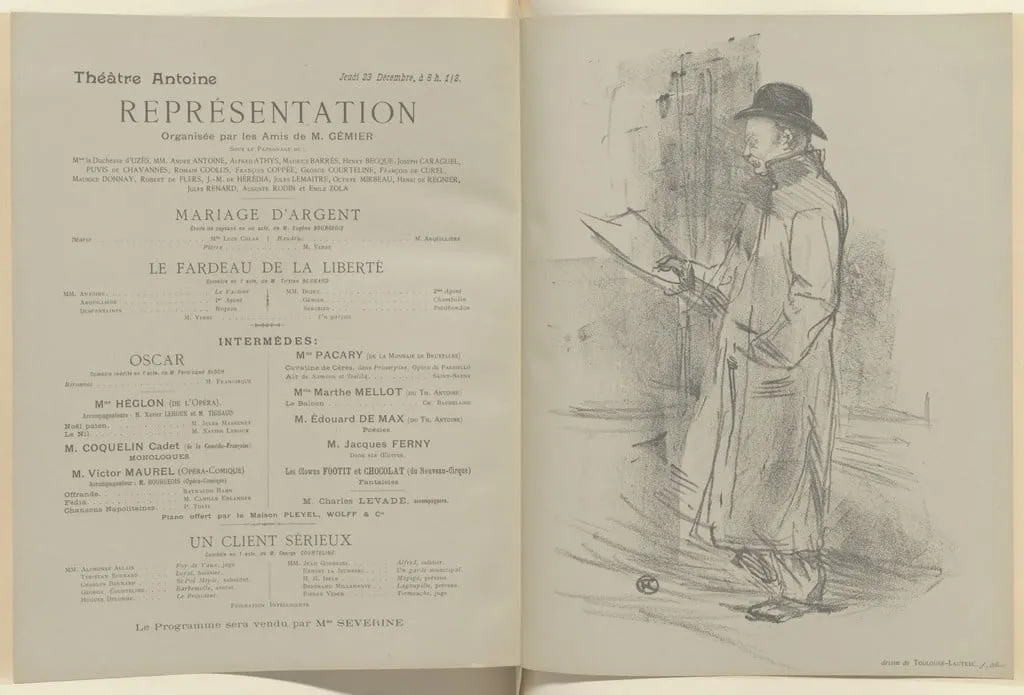
Untitled is an ink print by the Impressionist artist Louis Anquetin Henri de Toulouse-Lautrec. It dates from 1897 and is held in the collection of the Museum of Modern Art. This lithograph is one of fifty images in a bound album created in 1897 by Henri de Toulouse-Lautrec and Louis Anquetin.
About this work
Overview
This lithograph is one of fifty images in a bound album created in 1897 by Henri de Toulouse-Lautrec and Louis Anquetin. Executed in black ink on paper, it belongs to a series produced for a theatrical publication. The work is part of The Museum of Modern Art’s collection, preserved as a single page from a larger, cohesive set designed to accompany performance-related content.
Subject & Meaning
His stillness contrasts with the dynamic energy of the performances referenced in the adjacent text, suggesting observation rather than participation.
The image depicts a man in formal attire—hat, coat, cane—standing in a poised, slightly detached stance, his gaze directed away from the viewer. The figure evokes the archetype of the theatergoer or urban dandy, a recurring presence in late 19th-century Parisian culture. His stillness contrasts with the dynamic energy of the performances referenced in the adjacent text, suggesting observation rather than participation.
Technique & Style
Rendered in lithography, the image relies on the tonal range achievable through stone-based printing. The artist used fine, controlled lines to define form and texture, with minimal shading to suggest volume. The stark black-and-white contrast and deliberate simplicity reflect a graphic sensibility aligned with poster art and illustrated periodicals of the era, prioritizing clarity over detail.
History & Provenance
The album was produced in 1897 as a companion to theatrical programming, likely distributed to subscribers or patrons of Parisian stage productions. The inclusion of *Mariage d’Argent*, a play by Eugène Labiche, anchors the set in contemporary cultural life. The lithographs were not sold individually but as a unified collection, and the MoMA holding preserves one of the few complete sets known to survive.
Context
In the 1890s, lithography became a favored medium for artists seeking to bridge fine art and popular culture. Toulouse-Lautrec and Anquetin, both associated with Montmartre’s avant-garde circles, used this technique to document the theater-going public. The album reflects a broader trend of artists engaging with performance as subject and medium, merging visual art with the ephemeral world of live entertainment.
Legacy
Though not individually famous, this lithograph contributes to a significant body of work that redefined printmaking’s role in modern visual culture. The album stands as a rare example of collaborative artistic documentation of Parisian theater life. Its preservation allows study of how artists captured social rituals through restrained, observational imagery rather than spectacle.
Artist & collection
Artist
Louis Anquetin Henri de Toulouse-Lautrec
Louis Anquetin Henri de Toulouse-Lautrec (1864–1901) was a French artist.

![Mariage d'argent; Le Fardeau de la liberté; Un Client sérieux [recto], by Henri de Toulouse-Lautrec](https://artifactworldgallery.com/img/henri-de-toulouse-lautrec--mariage-d-argent-le-fardeau-de-la-liberte-un-client-serieux--a315ef4a50771215-w320.webp) Mariage d'argent; Le Fardeau de la liberté; Un Client sérieux [recto]
Mariage d'argent; Le Fardeau de la liberté; Un Client sérieux [recto]![Mariage d'argent; Le Fardeau de la liberté; Un Client sérieux [recto], by Henri de Toulouse-Lautrec](https://artifactworldgallery.com/img/henri-de-toulouse-lautrec--mariage-d-argent-le-fardeau-de-la-liberte-un-client-serieux--1a2c6f77da89ba3b-w320.webp) Mariage d'argent; Le Fardeau de la liberté; Un Client sérieux [recto]
Mariage d'argent; Le Fardeau de la liberté; Un Client sérieux [recto]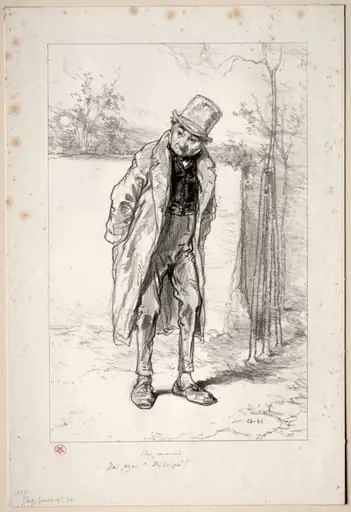 Physionomies Parisiennes: Au Marais. Ici, Azor! ici!
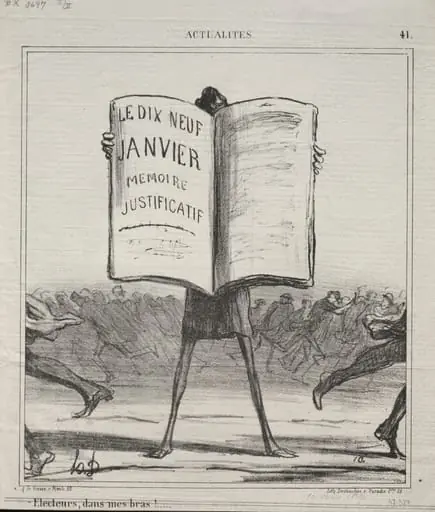 Voters, into my arms!...
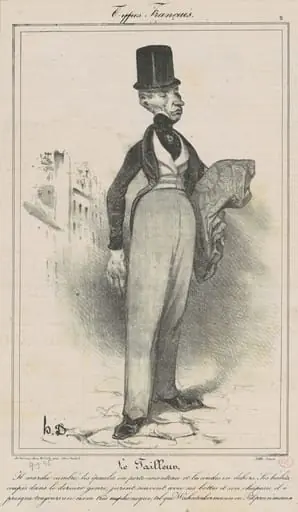 Le Tailleur
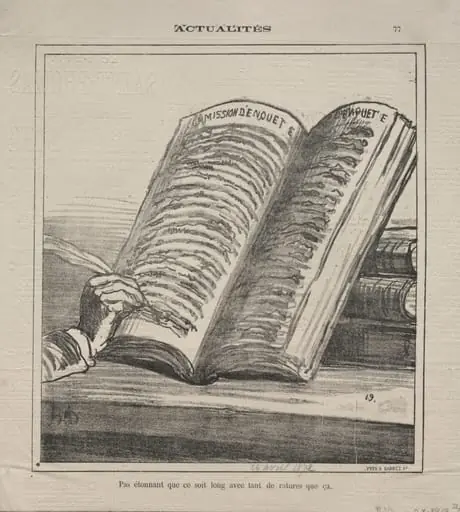 It is not surprising that it is long with so many corrections.
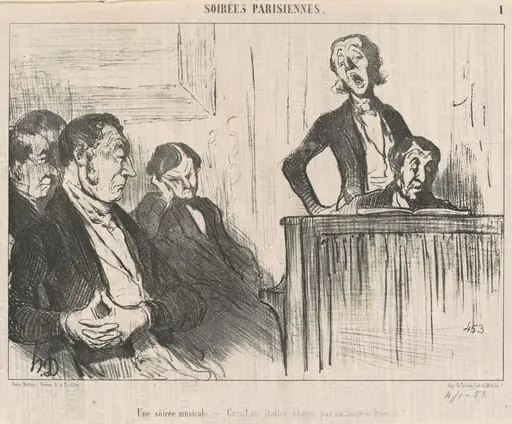 Une soirées musicale
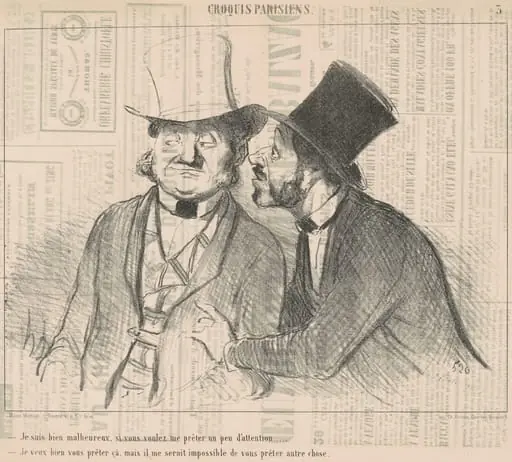 Je suis bien malheureux, si vous voulez ...
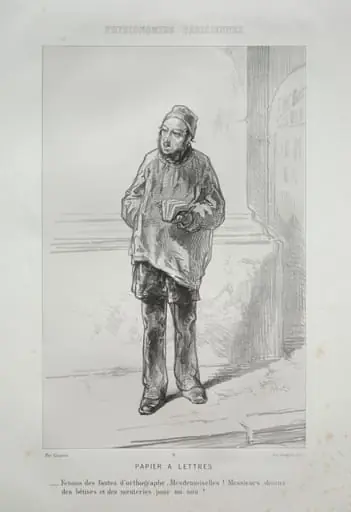 Papier à Lettres
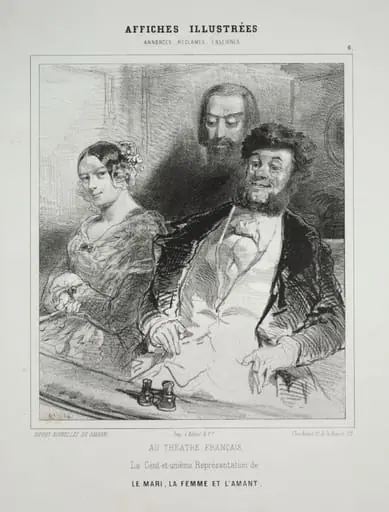 Affiches Illustées
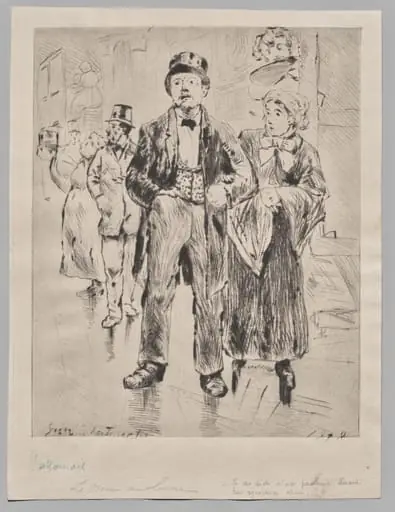 Wedding at the Louvre
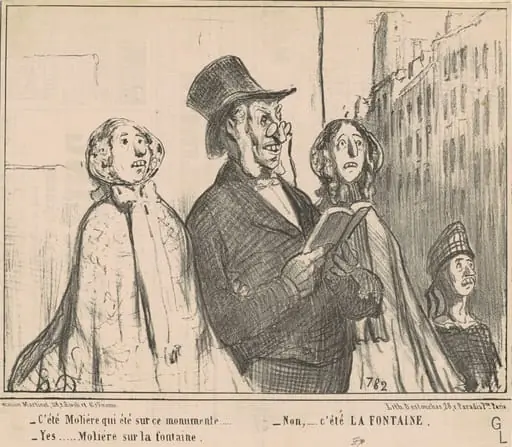 C'été Molière que été sur ce monumente ...