Artwork
Miss May Belfort Bare-Headed (Miss May Belfort en cheveux)
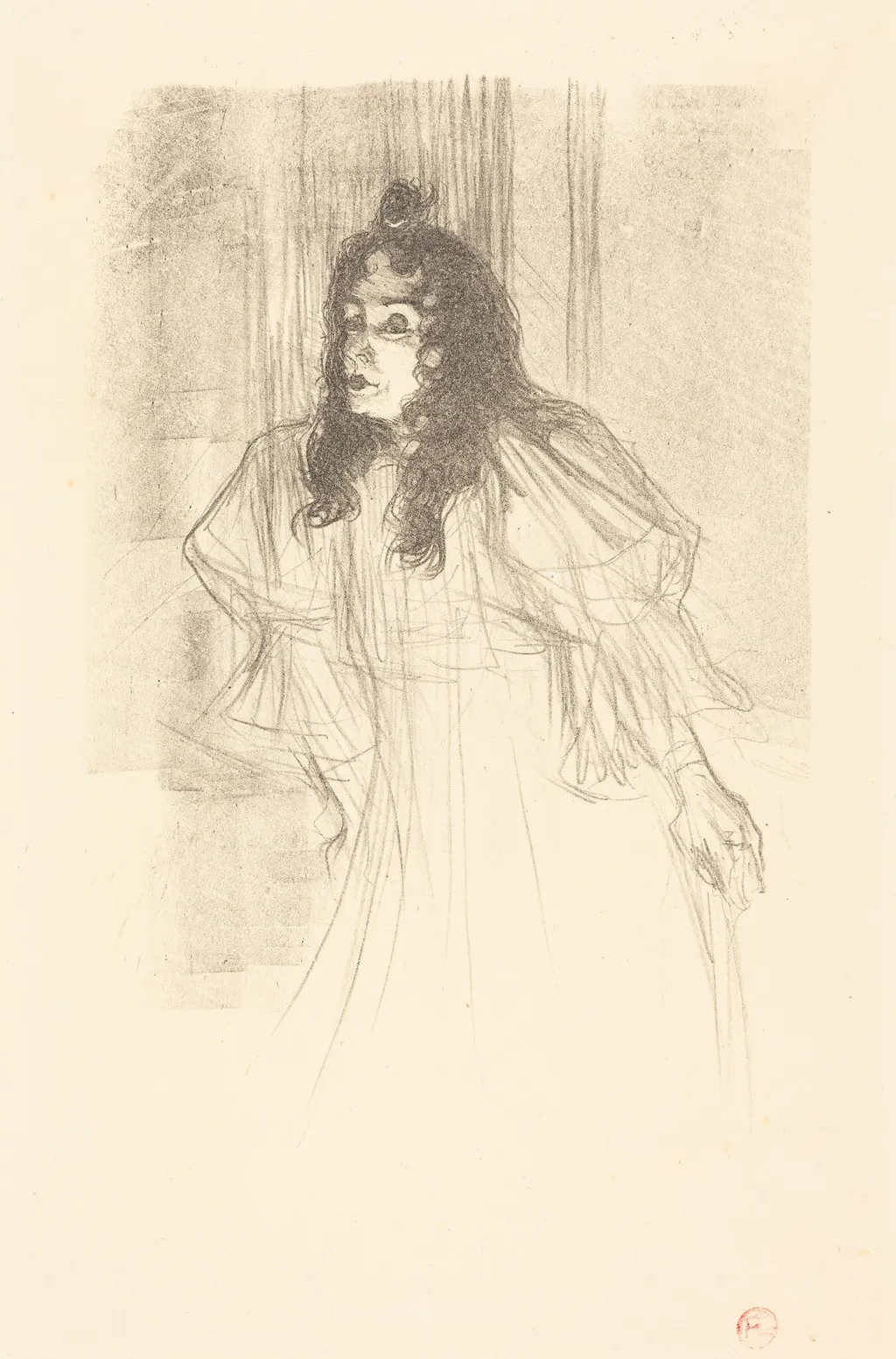
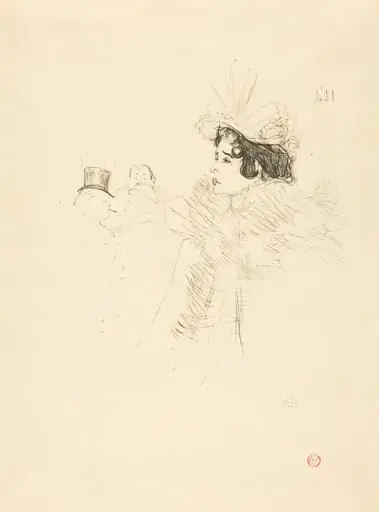
Miss May Belfort Bare-Headed (Miss May Belfort en cheveux) is an ink print by the Impressionist artist Henri de Toulouse-Lautrec. It dates from 1895 and is held in the collection of the National Gallery of Art.
About this work
Overview
Created in 1895, this lithograph by Henri de Toulouse-Lautrec depicts the performer May Belfort without her hat, a rare moment of informality. Executed in ink on stone, the print belongs to a series capturing Parisian entertainers outside the glare of stage lighting. Toulouse-Lautrec’s focus on unguarded moments reveals his interest in the private lives of those who inhabited the city’s margins.
Subject & Meaning
May Belfort, a British-born singer active in Parisian cabarets, is shown in a private, unposed state—hair loose, hands folded, dressed simply.
May Belfort, a British-born singer active in Parisian cabarets, is shown in a private, unposed state—hair loose, hands folded, dressed simply. The absence of theatrical costume or makeup shifts attention from performance to presence. The image suggests intimacy and vulnerability, contrasting with the exaggerated personas she adopted onstage. Toulouse-Lautrec treats her not as a spectacle but as a person in repose.
Technique & Style
The lithograph employs rapid, expressive lines that convey movement and immediacy. Toulouse-Lautrec used coarse, uneven strokes to define form, avoiding refinement in favor of emotional resonance. The background dissolves into shadow, while soft tonal gradations highlight the face and hair. The rough texture and lack of detail reflect a spontaneous, almost sketch-like approach, as if drawn from observation or memory.
History & Provenance
The print was made during a period when Toulouse-Lautrec was deeply embedded in Montmartre’s entertainment scene. It was likely produced for private circulation or limited publication, not mass distribution. Though the exact provenance of early impressions is unclear, the work entered museum collections in the 20th century as interest grew in his graphic work beyond posters and commercial prints.
Context
In 1890s Paris, lithography became a favored medium for artists seeking to document urban life with speed and authenticity. Toulouse-Lautrec’s prints of performers like Belfort emerged alongside a broader cultural fascination with the lives of those on the fringes of polite society. His work contributed to a shift in artistic subject matter, valuing candid realism over idealized representation.
Legacy
This lithograph exemplifies Toulouse-Lautrec’s influence on modern printmaking and portraiture. By elevating everyday moments of performers to the level of art, he challenged traditional hierarchies of subject matter. His direct, unembellished style inspired later generations of artists to explore psychological depth through informal, quickly rendered imagery.
Artist & collection
Artist
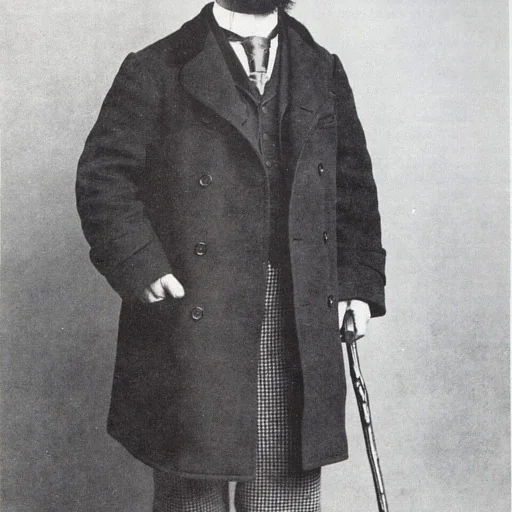
Comte Henri Marie Raymond de Toulouse-Lautrec-Montfa (24 November 1864 – 9 September 1901), known as Toulouse-Lautrec (French: ), was a French painter, printmaker, draughtsman, caricaturist, and illustrator.

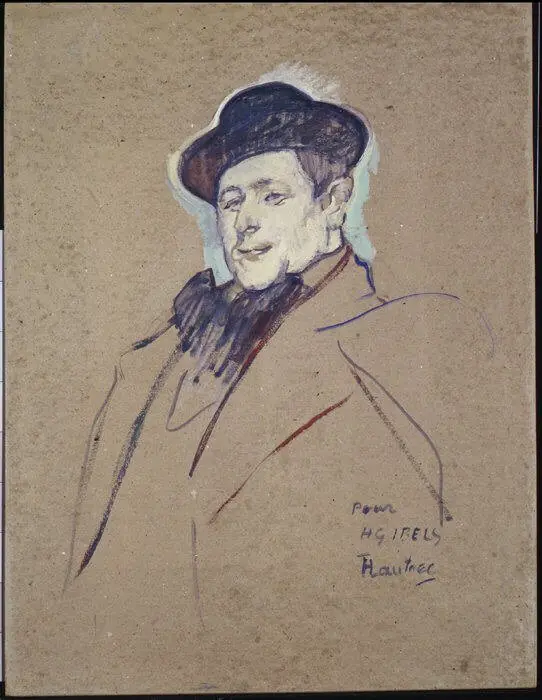
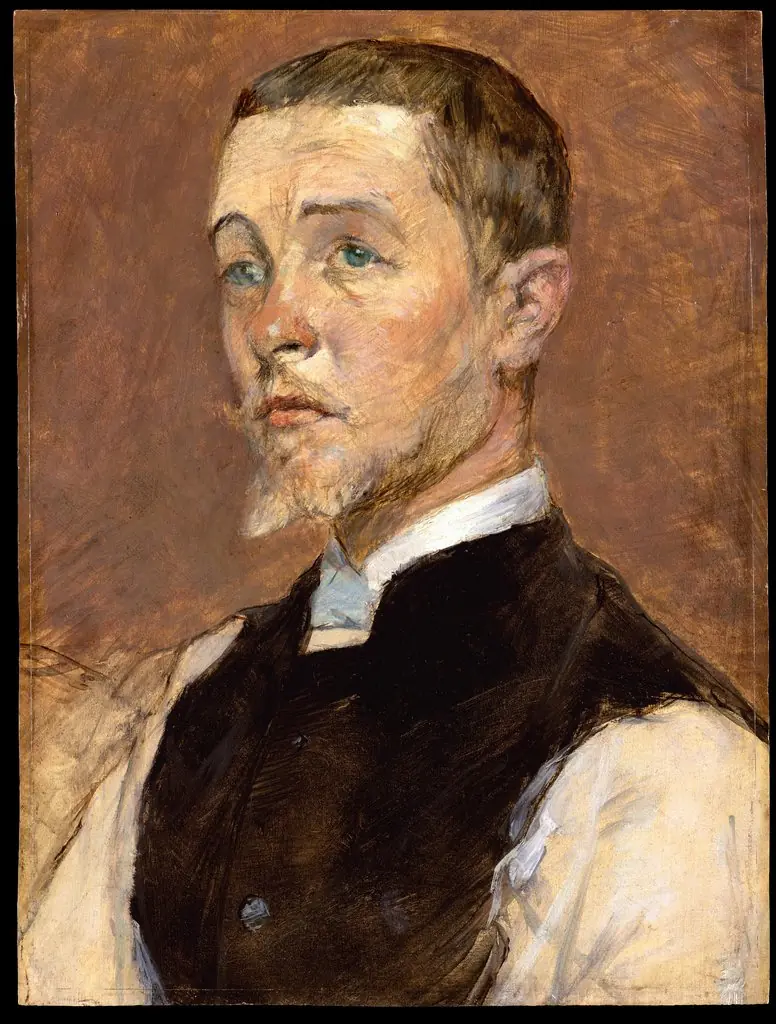
 Miss May Belfort in the Irish and American Bar, rue Royale (Miss Belfort Belfort au Irish and American Bar, Rue Royale)
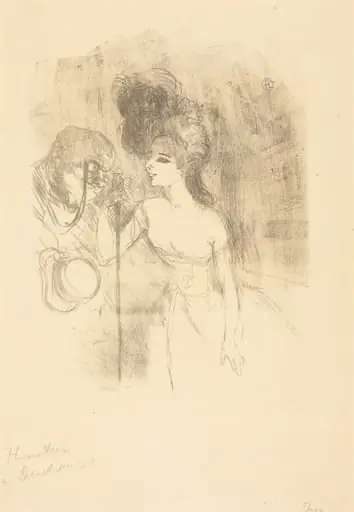 Anna Held and Baldy (Anna Held et Baldy)
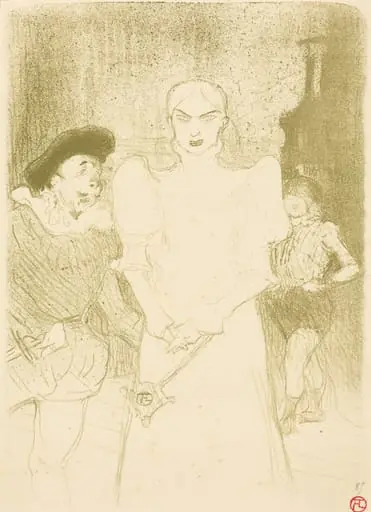 At the Opera: Mme. Caron in "Faust" (A l'opéra: Mme. Caron dans "Faust")
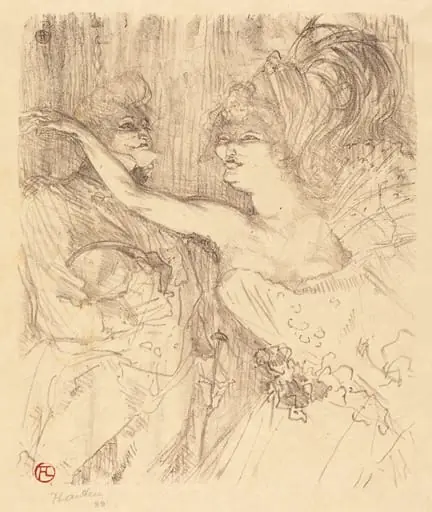 Guy and Mealy in "Paris qui marche" (Guy et Mealy dans "Paris qui marche")
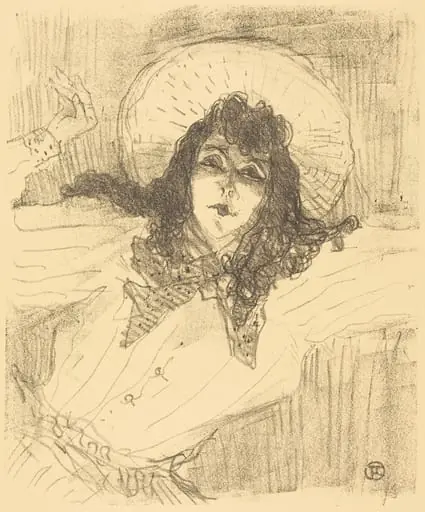 Eva Lavallière
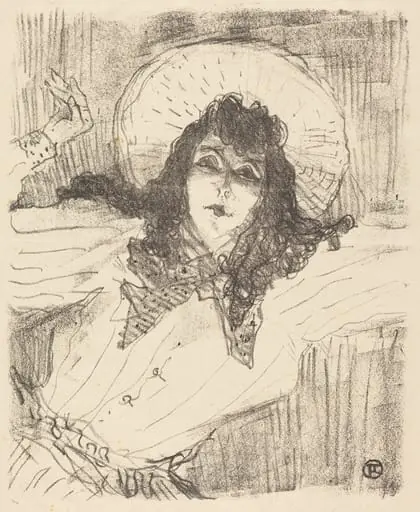 Eva Lavallière
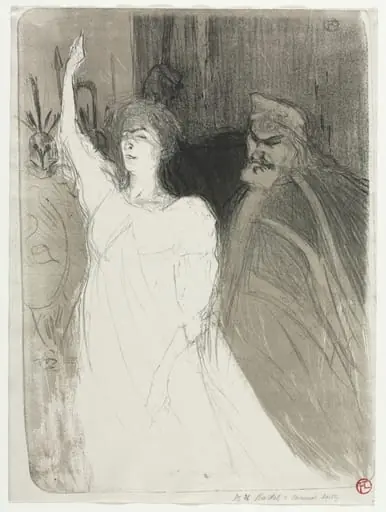 A Princely Idyl, Clara Ward
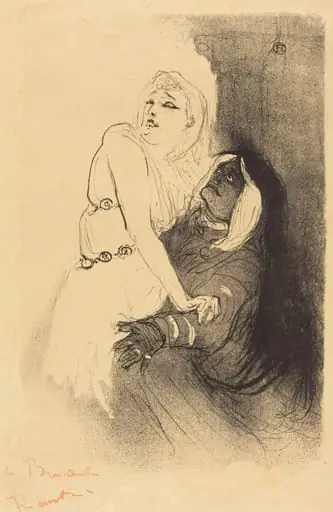 At the Renaissance: Sarah Bernhardt in "Phedre" (A la Renaissance: Sarah Bernhardt dans "Phèdre")
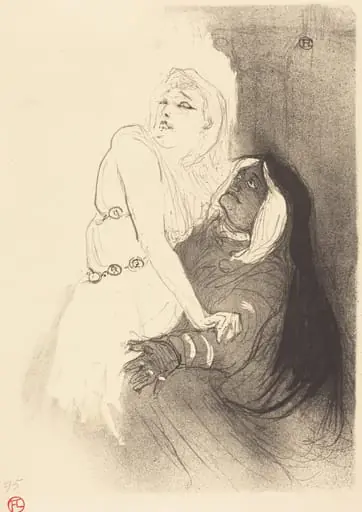 At the Renaissance: Sarah Bernhardt in "Phedre" (A la Renaissance: Sarah Bernhardt dans "Phèdre")
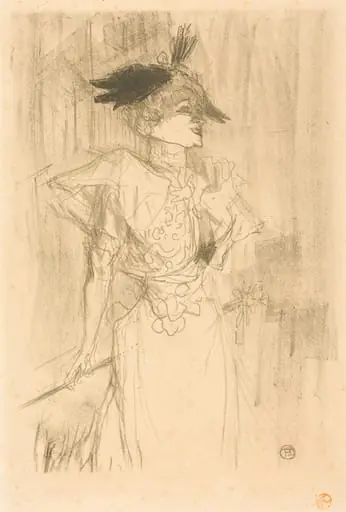 Mlle. Marcelle Lender, Standing (Mlle. Marcelle Lender, debout)