Artwork
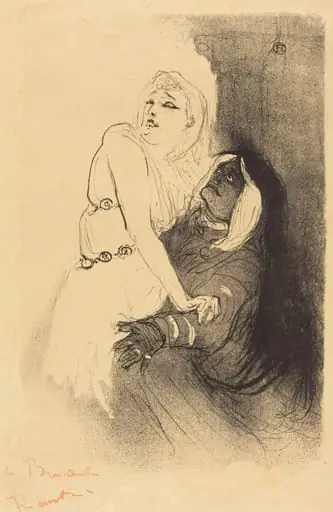
At the Renaissance: Sarah Bernhardt in "Phedre" (A la Renaissance: Sarah Bernhardt dans "Phèdre")
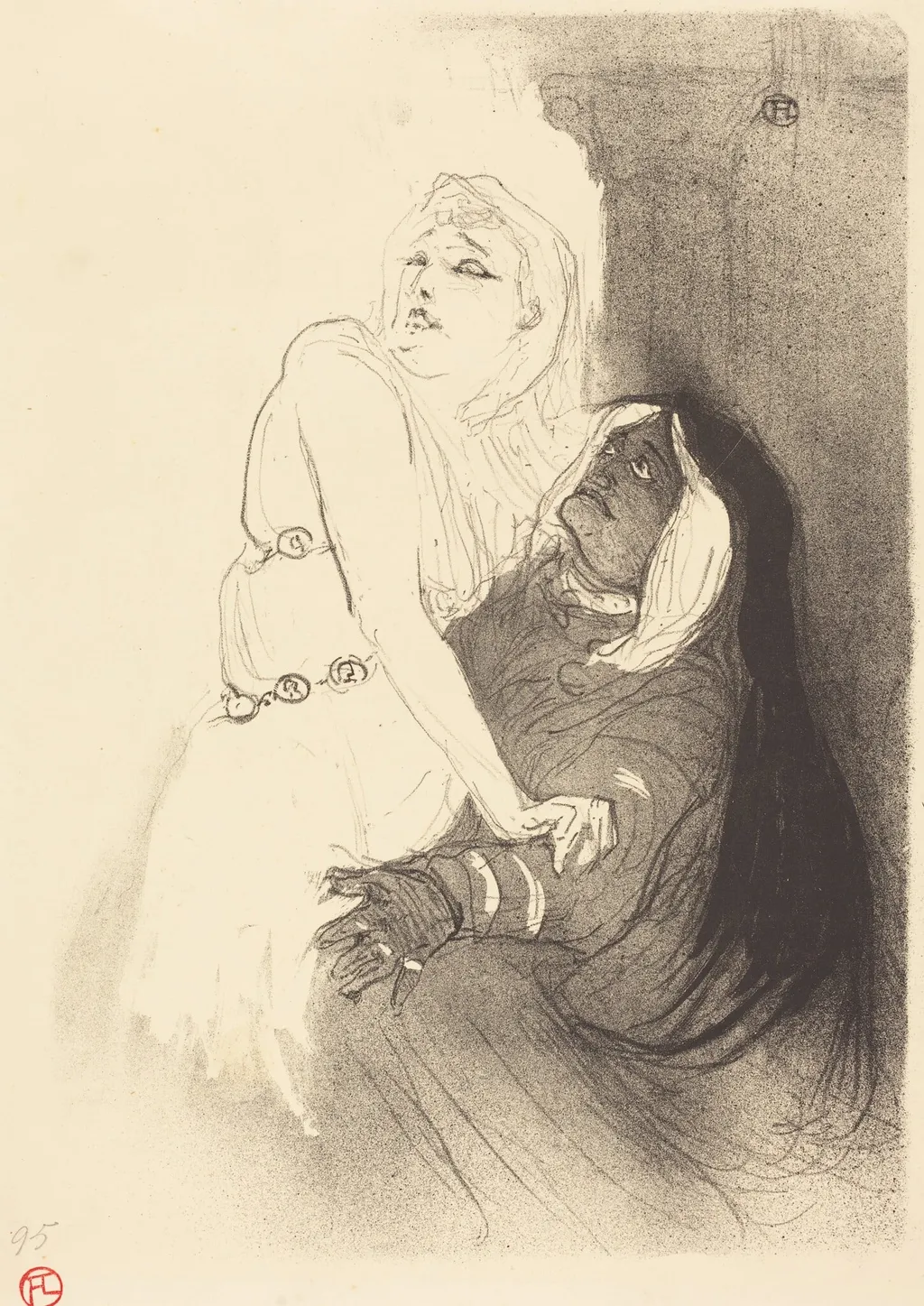
At the Renaissance: Sarah Bernhardt in "Phedre" (A la Renaissance: Sarah Bernhardt dans "Phèdre") is an ink print by the Impressionist artist Henri de Toulouse-Lautrec. It dates from 1893 and is held in the collection of the National Gallery of Art.
About this work
Overview
Created in 1893, this lithograph by Henri de Toulouse-Lautrec captures Sarah Bernhardt in character as Phèdre, a role she famously portrayed on stage.
Created in 1893, this lithograph by Henri de Toulouse-Lautrec captures Sarah Bernhardt in character as Phèdre, a role she famously portrayed on stage. Executed in black ink on velin paper, the print reflects Lautrec’s mastery of lithography and his focus on theatrical subjects. The composition isolates the performer against a dark field, emphasizing her gesture and expression without contextual detail.
Subject & Meaning
The image depicts Bernhardt as the tragic Greek queen Phèdre, consumed by forbidden desire and guilt. Her head thrown back, eyes shut, and arms raised in a gesture of anguish, the pose conveys inner torment rather than narrative action. Lautrec distills the essence of her performance, translating theatrical intensity into a single, resonant moment that speaks to the character’s psychological depth.
Technique & Style
Lautrec employed lithography to achieve bold, fluid lines and strong tonal contrasts. The dark background absorbs light, making the pale fabric of Phèdre’s gown and her illuminated face appear to glow. His simplification of form and emphasis on contour reflect his interest in Japanese prints and modern graphic design, stripping away ornament to heighten emotional impact.
History & Provenance
The print was produced during Bernhardt’s 1893 revival of Racine’s Phèdre at the Théâtre de la Renaissance. Lautrec, a regular theatergoer and friend of performers, created multiple portraits of her during this period. This particular lithograph was likely part of a limited edition, distributed to promote the production or collected by patrons of the arts in fin-de-siècle Paris.
Context
In late 19th-century Paris, theater was a central cultural arena, and actors like Bernhardt were celebrated as public figures. Lautrec’s focus on performers aligned with a broader interest in modern life and celebrity. His prints documented the intersection of art, spectacle, and identity, offering intimate glimpses into the lives of those who inhabited the stage.
Legacy
This lithograph remains a significant example of how printmaking captured the spirit of theatrical performance before photography dominated visual documentation. Lautrec’s ability to convey emotion through minimal means influenced later artists working in graphic arts and portraiture. The image endures as a testament to Bernhardt’s commanding presence and Lautrec’s keen eye for psychological expression.
Artist & collection
Artist
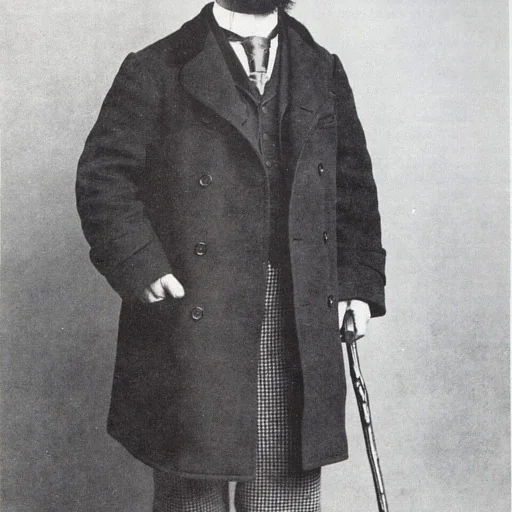
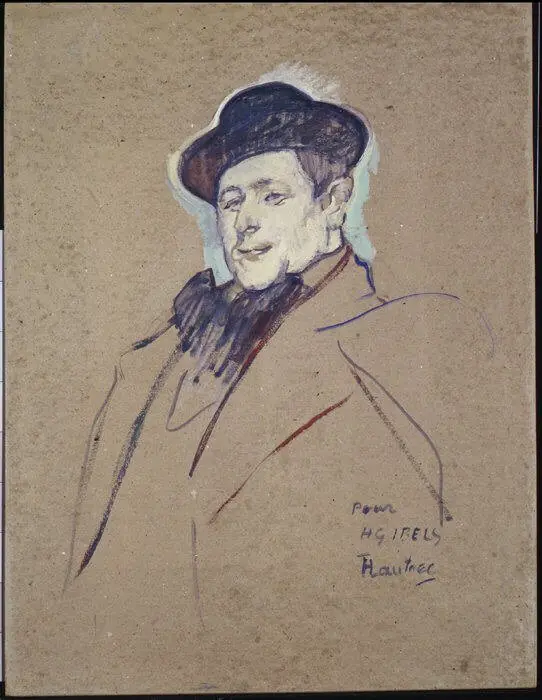
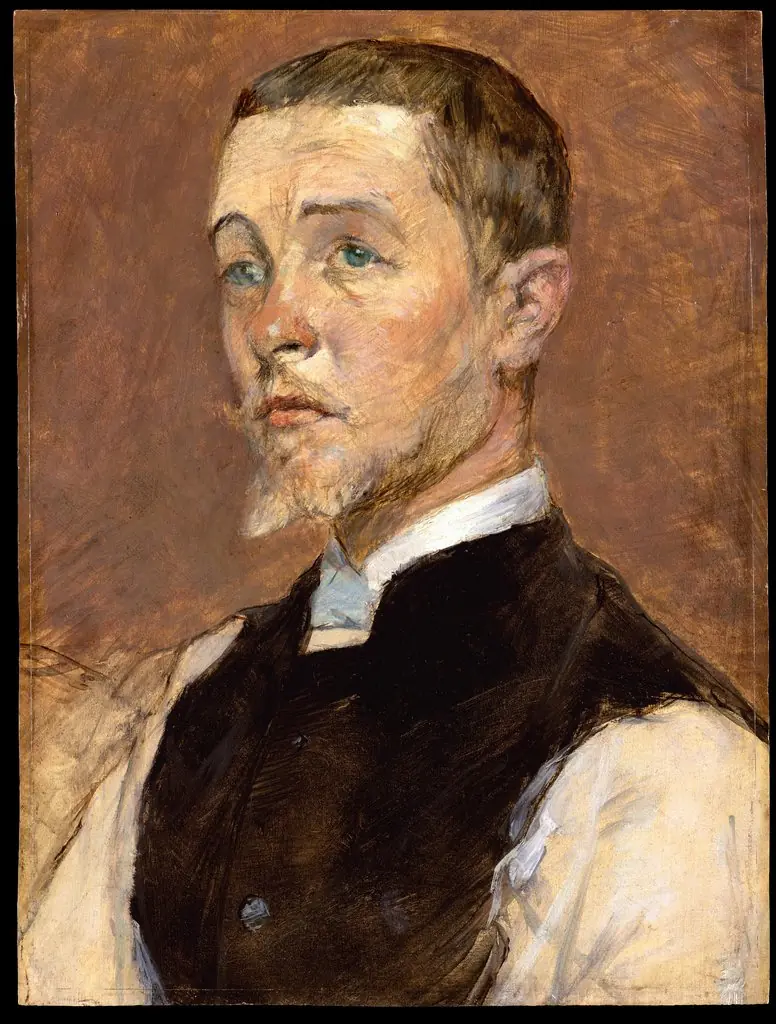
Comte Henri Marie Raymond de Toulouse-Lautrec-Montfa (24 November 1864 – 9 September 1901), known as Toulouse-Lautrec (French: ), was a French painter, printmaker, draughtsman, caricaturist, and illustrator.

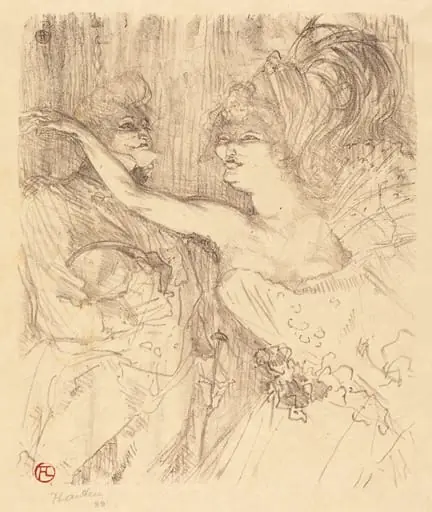 Guy and Mealy in "Paris qui marche" (Guy et Mealy dans "Paris qui marche")
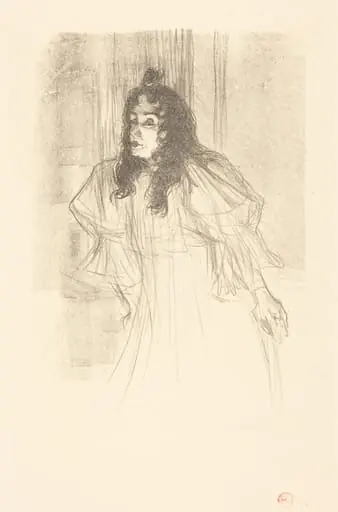 Miss May Belfort Bare-Headed (Miss May Belfort en cheveux)
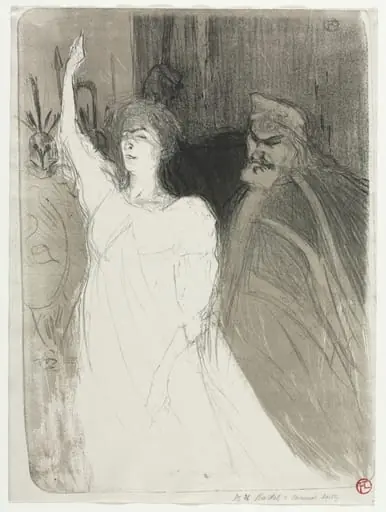 A Princely Idyl, Clara Ward
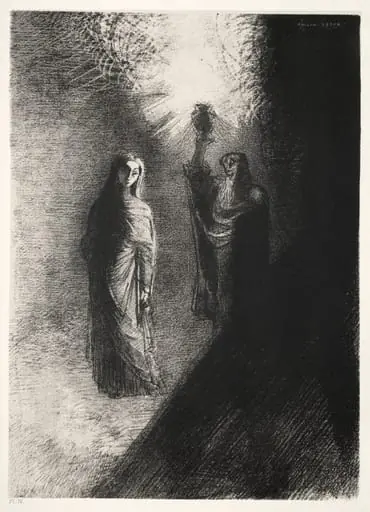 He Raises the Bronze Urn
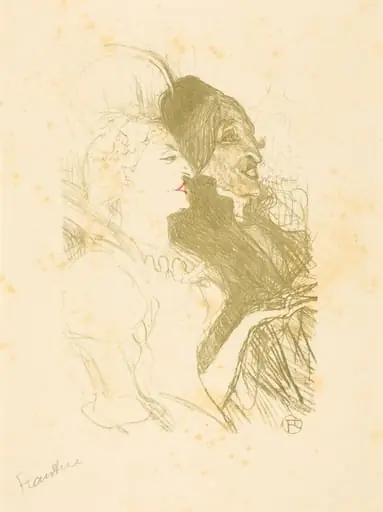 Carnival (Carnaval)
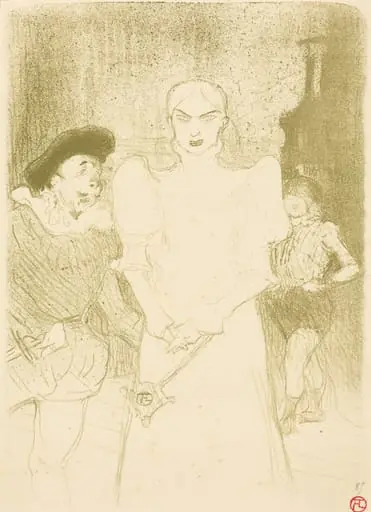 At the Opera: Mme. Caron in "Faust" (A l'opéra: Mme. Caron dans "Faust")
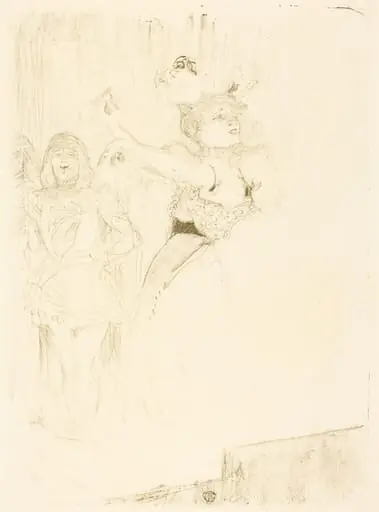 Lender Dancing the Bolero in "Chilperic" (Lender dansant le pas du boléro dans "Chilpéric")
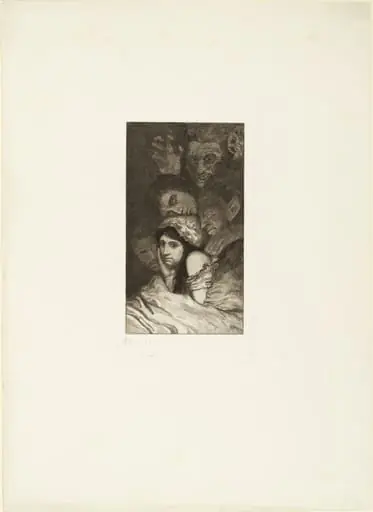 Untitled
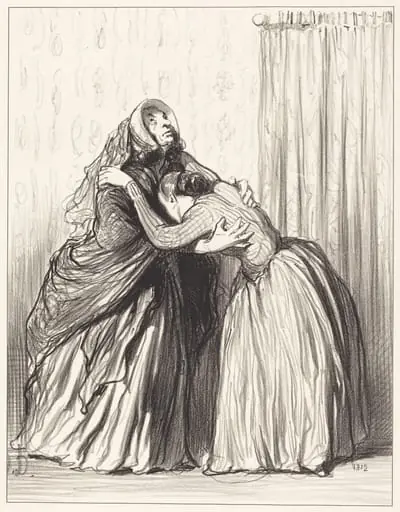 Oui, ma chère, mon mari a ravalé ma dignité...
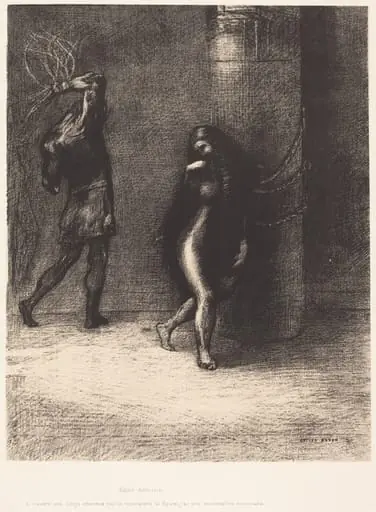 Saint-Antoine...A travers ses longs cheveux qui lui couvraient la figure, j'ai cru reconnaitre Ammonaria (Saint Anthony: "Beneathe her long hair , which covered her face, I thought I recognized Ammonaria)
 At the Renaissance: Sarah Bernhardt in "Phedre" (A la Renaissance: Sarah Bernhardt dans "Phèdre")
 Rejane and Galipaux in "Madame Sans-Gêne" (Réjane et Galipaux dans "Madame Sans-Gêne")