Artwork
Miss May Belfort, Large Plate (Miss May Belfort, grande planche)
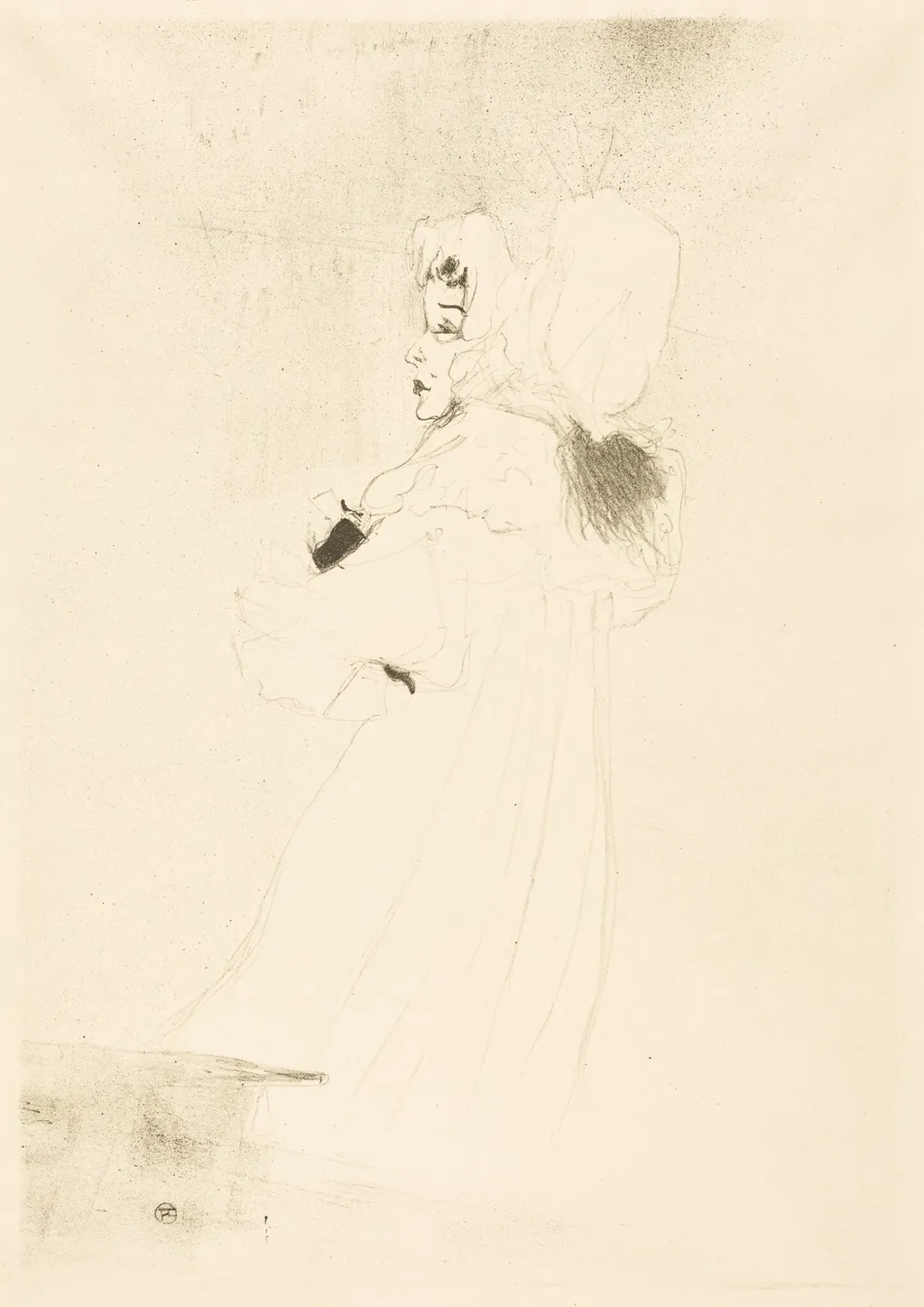
Miss May Belfort, Large Plate (Miss May Belfort, grande planche) is an ink print by the Impressionist artist Henri de Toulouse-Lautrec. It dates from 1895 and is held in the collection of the National Gallery of Art.
About this work
Overview
Part of a broader series documenting Montmartre’s entertainment figures, the work reflects Lautrec’s focus on individuals rather than idealized scenes.
Created in 1895, this lithograph by Henri de Toulouse-Lautrec portrays May Belfort, an American performer active in Parisian cabarets. Part of a broader series documenting Montmartre’s entertainment figures, the work reflects Lautrec’s focus on individuals rather than idealized scenes. The print’s modest scale and spontaneous quality align with his interest in capturing fleeting moments of everyday life in the city’s nightlife.
Subject & Meaning
May Belfort, a singer and dancer of British and American descent, was known for her sharp wit and intimate performances in Parisian venues. Lautrec depicts her seated, holding a glass, her posture relaxed yet alert. The absence of elaborate setting or theatrical props suggests an unguarded moment, emphasizing her presence as a person rather than a stage persona. Her direct gaze and composed demeanor convey quiet confidence amid the chaos of the cabaret world.
Technique & Style
Lautrec employed lithography to achieve a rapid, sketch-like aesthetic. The lines are fluid and uneven, suggesting urgency and observation in real time. Minimal background detail directs attention entirely to the figure, while the high collar and dark dress contrast with the pale paper, enhancing her silhouette. The technique mimics the immediacy of a drawn note, rejecting polish in favor of expressive truth, characteristic of his printmaking approach.
History & Provenance
The print was produced during Lautrec’s most active period in Montmartre, when he collaborated with printers to create affordable, widely distributed images of performers. This particular plate was likely issued in a limited run for collectors and patrons of the avant-garde. Its survival in museum collections today reflects its early recognition as a significant example of late 19th-century graphic art, though it was never intended as a high-art object at the time.
Context
In 1890s Paris, cabarets like the Moulin Rouge and Chat Noir were hubs of artistic and social experimentation. Lautrec, an outsider by virtue of his physical condition and aristocratic background, found kinship with performers who lived on society’s margins. His depictions of Belfort and others were not caricatures but intimate records of individuals navigating public and private identities in a rapidly changing urban landscape.
Legacy
Lautrec’s lithographs, including this one, helped redefine printmaking as a medium for modern subject matter. His ability to convey psychological depth through minimal means influenced later generations of illustrators and expressionist artists. Though not widely celebrated in his lifetime beyond artistic circles, these works now stand as essential documents of Parisian cultural life at the turn of the century.
Artist & collection
Artist
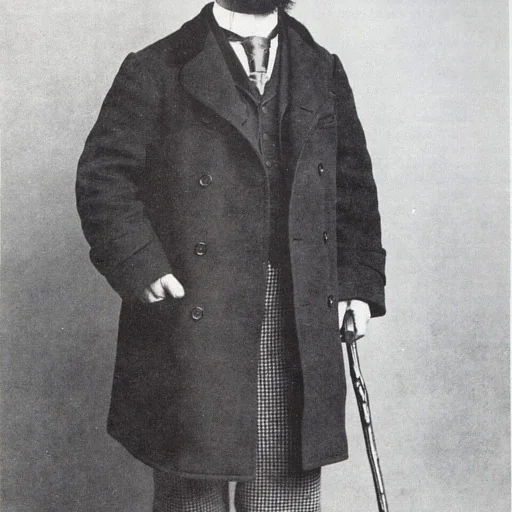
Comte Henri Marie Raymond de Toulouse-Lautrec-Montfa (24 November 1864 – 9 September 1901), known as Toulouse-Lautrec (French: ), was a French painter, printmaker, draughtsman, caricaturist, and illustrator.

 Lender Full Face in "Chilperic" (Lender de face dans "Chilpéric")
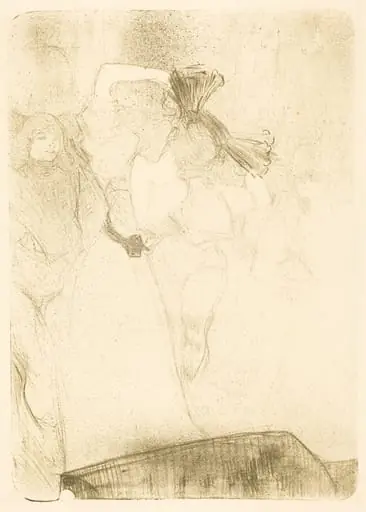 Lender from the Back Dancing the Bolero in "Chilperic" (Lender de dos, dansant le boléro dans "Chilpéric")
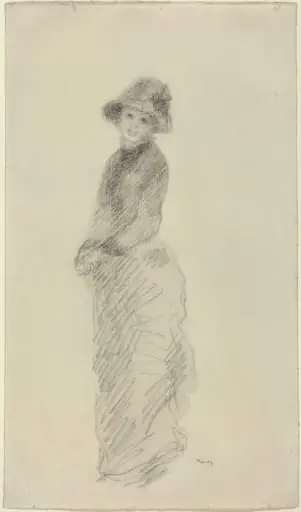 Young Woman Standing
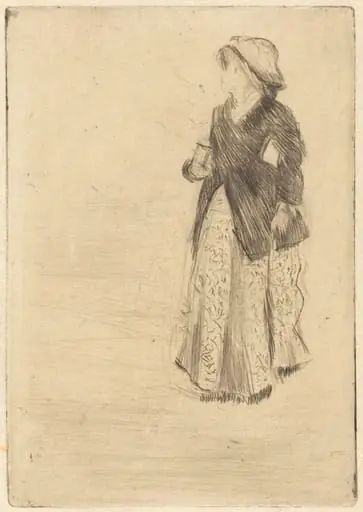 The Actress Ellen Andrée
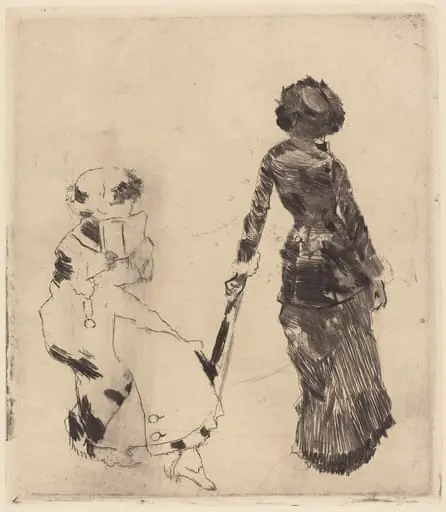 Mary Cassatt at the Louvre: The Etruscan Gallery
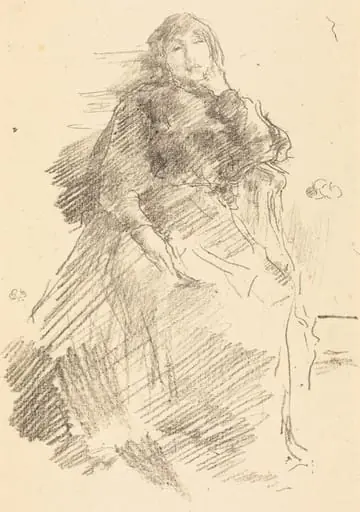 La Belle Dame Paresseuse
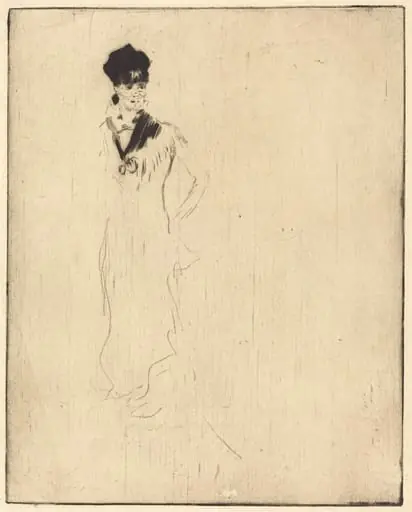 Sketch of a Young Lady in Violet (Esquisse de jeune femme a la violette)
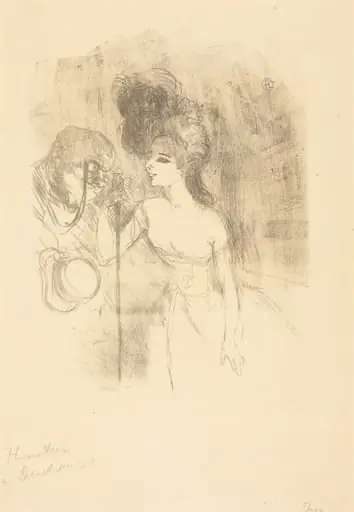 Anna Held and Baldy (Anna Held et Baldy)