Artwork
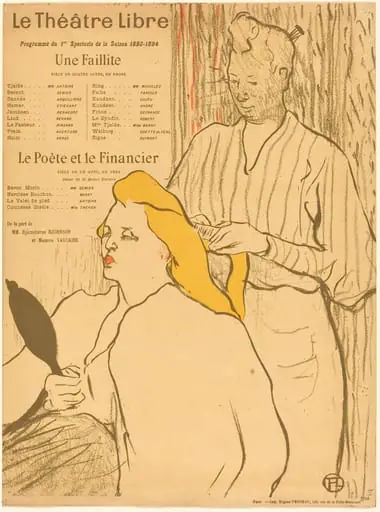
The Hairdresser - Program for the Théâtre Libre (Le coiffeur - Programme du Théâtre Libre)
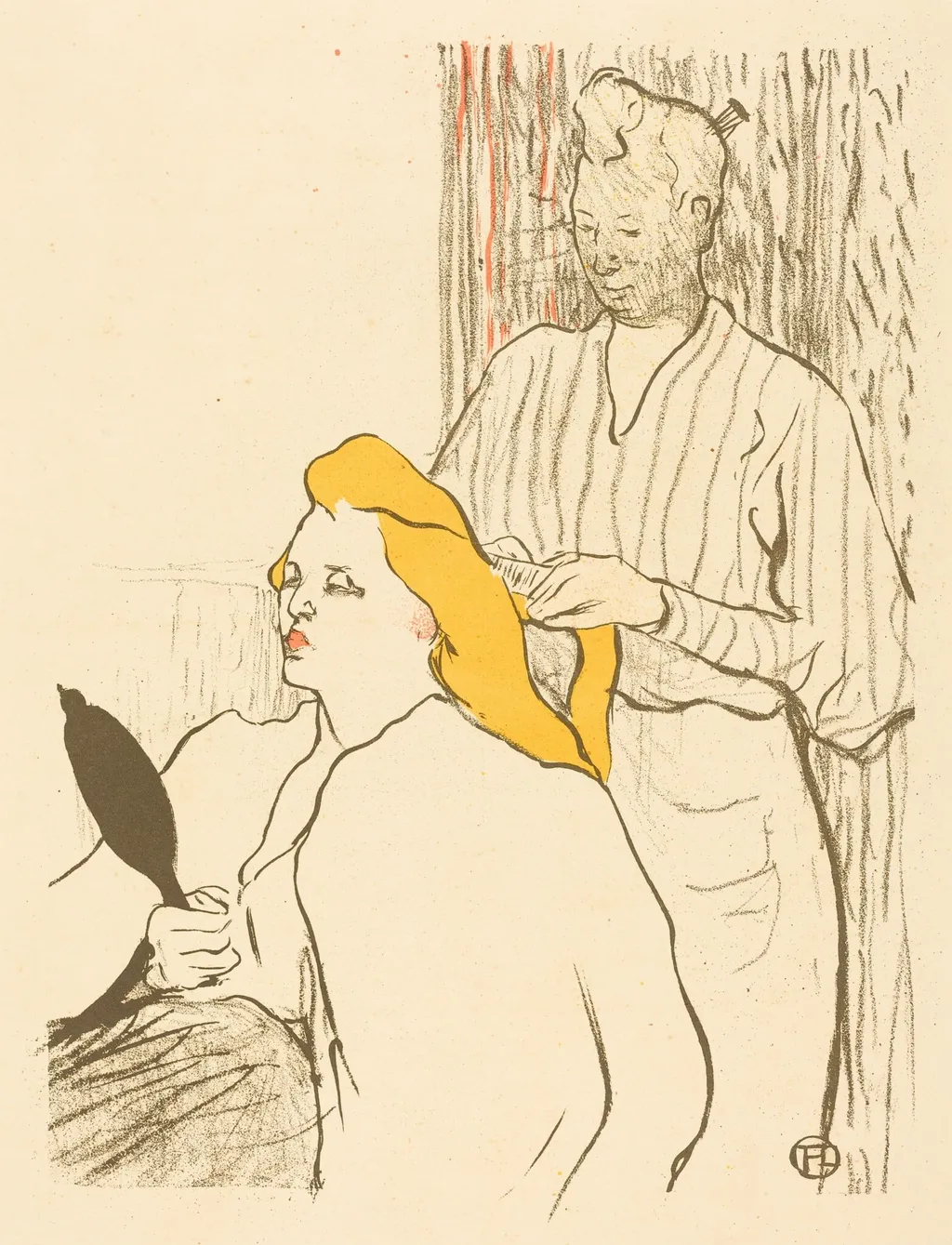
The Hairdresser - Program for the Théâtre Libre (Le coiffeur - Programme du Théâtre Libre) is an ink print by the Impressionist artist Henri de Toulouse-Lautrec. It dates from 1893 and is held in the collection of the National Gallery of Art. Created in 1893, this lithograph served as a program cover for the Théâtre Libre, a Parisian theater known for avant-garde productions.
About this work
This lithograph shows a bald man in a white coat trimming another man’s hair. The background is bright green with bold red and yellow stripes.
It was made for a play’s program in 1893. Toulouse-Lautrec used flat colors and strong lines, a style he often chose for posters and prints.
Look for his other theater work at the National Gallery of Art, Washington.
Overview
Henri de Toulouse-Lautrec, born into nobility but physically altered by adolescent injuries, turned to graphic art as a means of engaging with urban life.
Created in 1893, this lithograph served as a program cover for the Théâtre Libre, a Parisian theater known for avant-garde productions. Henri de Toulouse-Lautrec, born into nobility but physically altered by adolescent injuries, turned to graphic art as a means of engaging with urban life. The print combines bold, flat colors—green-black, yellow, and red—to capture a quiet moment in a barbershop, reflecting his interest in ordinary, unidealized scenes.
Subject & Meaning
The image depicts a bald barber in a white coat trimming the hair of a seated client, both rendered with minimal detail and no emotional flourish. The scene lacks theatricality, instead emphasizing routine labor. This quiet intimacy aligns with the Théâtre Libre’s mission to portray everyday reality over melodrama. The absence of spectacle underscores a broader artistic interest in the dignity of mundane work within Parisian society.
Technique & Style
Toulouse-Lautrec employed lithography to achieve sharp outlines and unmodulated planes of color. The background’s stark red and yellow stripes contrast with the muted green, creating a graphic rhythm that draws attention to the figures. His use of flat tones and simplified forms reflects the influence of Japanese woodcuts and contemporary poster design, prioritizing visual impact over illusionistic depth.
History & Provenance
Commissioned for a 1893 Théâtre Libre performance, the print was part of a series of program covers Lautrec produced for the theater between 1892 and 1895. These works were distributed to audiences as ephemeral materials, not intended for long-term preservation. Few original impressions survive, making this print a rare artifact of the theater’s experimental phase and Lautrec’s early graphic output.
Context
The Théâtre Libre, founded by André Antoine, rejected commercial theater conventions in favor of naturalistic plays. Lautrec’s association with the venue placed him among artists and writers challenging artistic norms. His prints for the theater mirrored its ethos: unembellished, socially observant, and formally inventive. This work sits at the intersection of avant-garde theater and the rise of modern graphic design in fin-de-siècle Paris.
Legacy
Though created as disposable theater material, this lithograph exemplifies Lautrec’s role in transforming commercial print into a respected art form. His integration of everyday subjects with bold graphic language influenced later poster artists and modern illustrators. Collections such as the National Gallery of Art preserve these works as key documents in the evolution of 19th-century visual culture.
Artist & collection
Artist
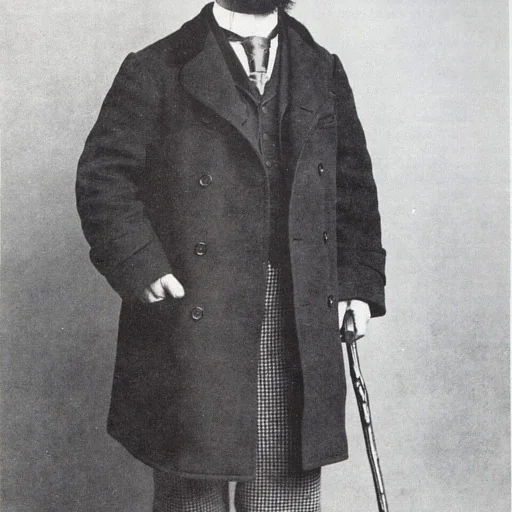
Comte Henri Marie Raymond de Toulouse-Lautrec-Montfa (24 November 1864 – 9 September 1901), known as Toulouse-Lautrec (French: ), was a French painter, printmaker, draughtsman, caricaturist, and illustrator.