Artwork
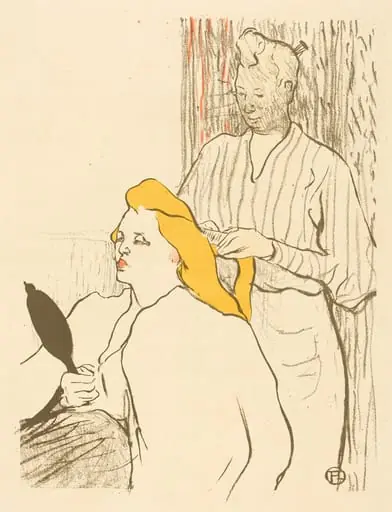
The Hairdresser - Program for the Theatre-Libre (Le coiffeur - Programme du Théatre-Libre)
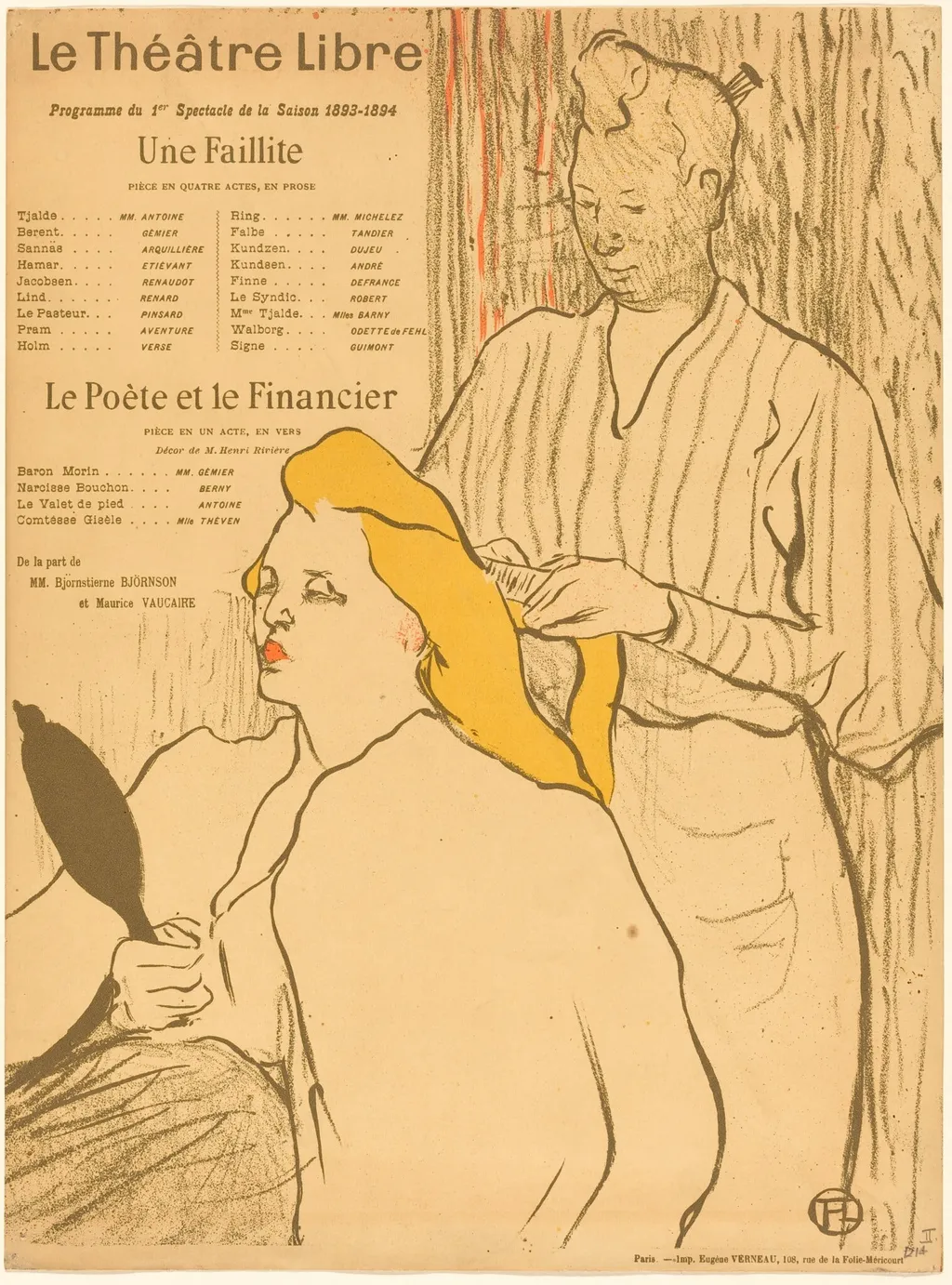
The Hairdresser - Program for the Theatre-Libre (Le coiffeur - Programme du Théatre-Libre) is an ink print by the Impressionist artist Henri de Toulouse-Lautrec. It dates from 1893 and is held in the collection of the National Gallery of Art. Created in 1893, this lithograph served as a program cover for the Théâtre-Libre, a Parisian venue known for avant-garde performances.
About this work
Overview
Created in 1893, this lithograph served as a program cover for the Théâtre-Libre, a Parisian venue known for avant-garde performances.
Created in 1893, this lithograph served as a program cover for the Théâtre-Libre, a Parisian venue known for avant-garde performances. Henri de Toulouse-Lautrec, an aristocrat turned chronicler of urban life, used simple yet forceful lines and a restrained palette of green-black, yellow, and red to capture an unassuming moment. The work reflects his interest in everyday rituals, elevated through the lens of graphic design rather than grand narrative.
Subject & Meaning
The scene portrays a quiet interaction between a woman receiving a hairdressing service and the stylist behind her. Neither figure is named or dramatized; their focus is entirely on the act of grooming. The woman gazes away, lost in thought, while the hairdresser, marked by a small object in their hair, attends with quiet precision. The image suggests intimacy without sentimentality, revealing the private rhythms of urban labor and personal care.
Technique & Style
Toulouse-Lautrec employed lithography to achieve sharp contours and flat, overlapping planes of color. The composition relies on bold outlines and minimal shading, reducing detail to essential forms. The muted tones—green-black, yellow, and red—are applied with restraint, avoiding decorative excess. This approach aligns with his broader graphic work, where clarity and emotional nuance emerge through economy of line and color rather than elaborate rendering.
History & Provenance
Commissioned for the Théâtre-Libre, a progressive theater founded by André Antoine, the print was part of a series of program covers designed to reflect the institution’s modernist ethos. Toulouse-Lautrec, already known for his posters and illustrations of cabarets, extended his visual language to theatrical contexts. The work was produced in limited quantities and distributed to audiences, grounding art in the ephemeral experience of live performance.
Context
In 1890s Paris, the boundaries between fine art and commercial design were blurring. Toulouse-Lautrec’s engagement with theater programs, cabaret posters, and illustrated journals reflected a broader cultural shift toward visual storytelling in public spaces. His focus on ordinary figures—hairdressers, dancers, patrons—challenged traditional hierarchies in art, privileging observation over idealization and the mundane over the monumental.
Legacy
This lithograph exemplifies Toulouse-Lautrec’s role in redefining printmaking as a vehicle for social observation. His ability to convey psychological presence through minimal means influenced later generations of illustrators and graphic designers. Though created for a transient purpose—a theater program—it endures as a quiet testament to the dignity of everyday moments in modern urban life.
Artist & collection
Artist
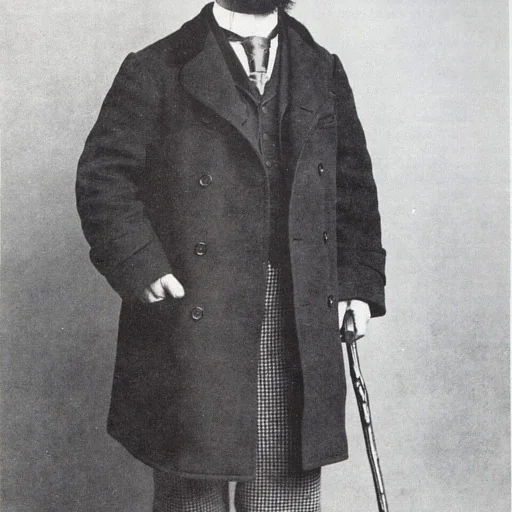
Comte Henri Marie Raymond de Toulouse-Lautrec-Montfa (24 November 1864 – 9 September 1901), known as Toulouse-Lautrec (French: ), was a French painter, printmaker, draughtsman, caricaturist, and illustrator.