Artwork
The Small Pony from Calmese (Le petit poney de Calmèse)
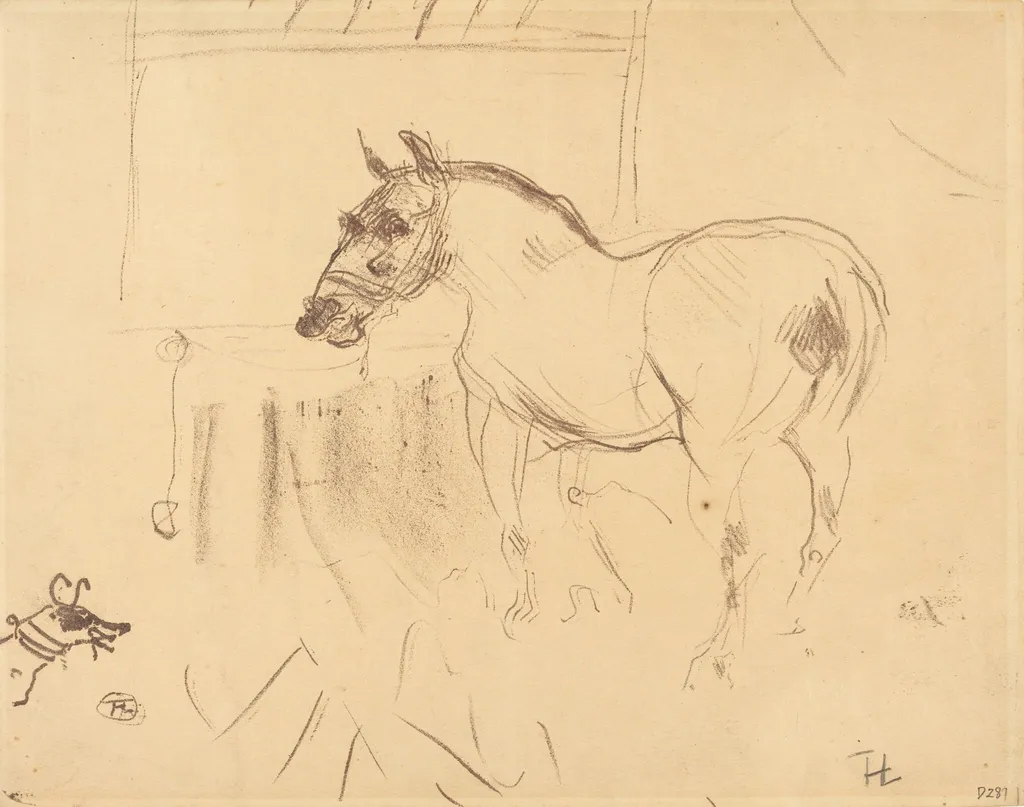
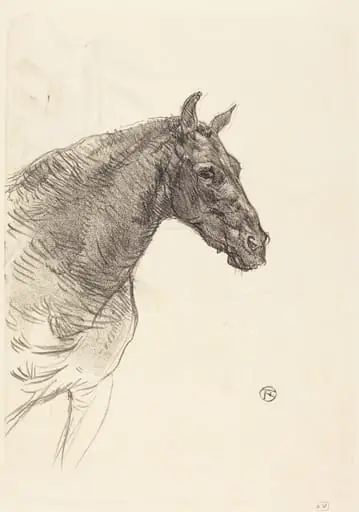
The Small Pony from Calmese (Le petit poney de Calmèse) is an ink print by the Impressionist artist Henri de Toulouse-Lautrec. It dates from 1899 and is held in the collection of the National Gallery of Art.
About this work
Overview
Unlike his famous nightlife scenes, this work captures a quiet, solitary animal, suggesting a moment of observation rather than performance.
Created in 1899, *The Small Pony from Calmese* is a lithograph in dark brown ink on velin paper by Henri de Toulouse-Lautrec. Unlike his famous nightlife scenes, this work captures a quiet, solitary animal, suggesting a moment of observation rather than performance. Its modest scale and informal execution mark it as a study, possibly made during a visit to the countryside near his family’s estate.
Subject & Meaning
The image depicts a small horse standing still, its head turned gently to the side, with minimal detail given to its form. A faint architectural outline and a tiny human figure in the background suggest a rural setting, perhaps the Calmèse estate. The absence of drama or motion shifts focus to stillness and presence, reflecting Toulouse-Lautrec’s interest in unguarded, everyday moments beyond the cabarets of Paris.
Technique & Style
Toulouse-Lautrec employed lithography with loose, rapid linework, creating a sketchlike quality that emphasizes spontaneity over finish. The dark brown ink on light paper enhances the sense of immediacy, with minimal shading and no color. The composition’s simplicity and lack of refinement align with his practice of using prints as observational tools, capturing form through gesture rather than detail.
History & Provenance
The work dates from the final years of Toulouse-Lautrec’s life, when he spent increasing time away from Paris at his family’s estate in the south. Though little is documented about its original commission or early ownership, its intimate scale and subject suggest it was made for personal use or as a study, not for public exhibition or commercial sale.
Context
While Toulouse-Lautrec is best known for scenes of Montmartre’s nightlife, this print reveals a quieter facet of his practice. In the late 1890s, he increasingly turned to rural subjects, possibly as a retreat from urban excess and declining health. The horse, a recurring motif in his work, appears here not as a symbol of spectacle but as a quiet, grounded presence.
Legacy
This lithograph exemplifies Toulouse-Lautrec’s ability to find significance in unassuming subjects. Its raw, unpolished aesthetic influenced later artists who valued immediacy over finish. Though not widely exhibited during his lifetime, it remains a testament to his broader observational practice—beyond the stage, beyond the crowd, into the stillness of ordinary life.
Artist & collection
Artist
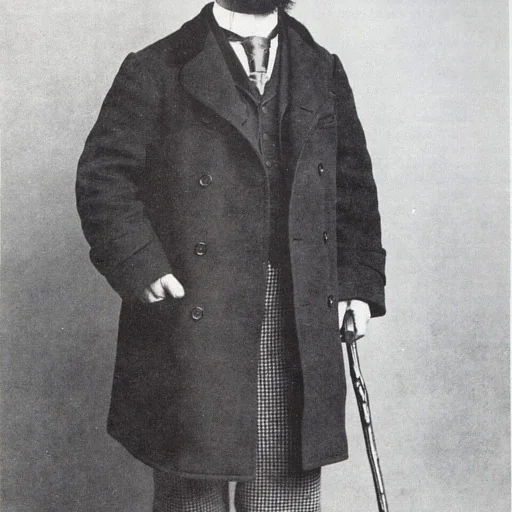
Comte Henri Marie Raymond de Toulouse-Lautrec-Montfa (24 November 1864 – 9 September 1901), known as Toulouse-Lautrec (French: ), was a French painter, printmaker, draughtsman, caricaturist, and illustrator.

 Old Horse (Le vieux cheval)
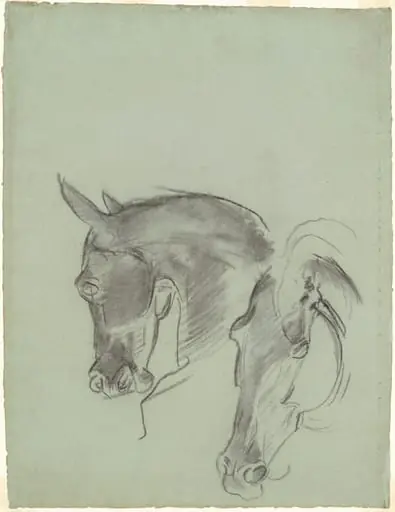 Studies for "The Fall of Gog and Magog"
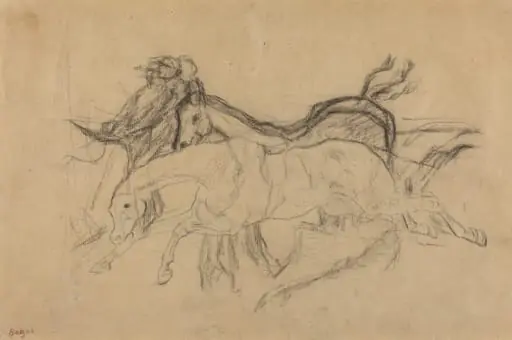 Racehorses (study for "Scene from the Steeplechase: The Fallen Jockey")
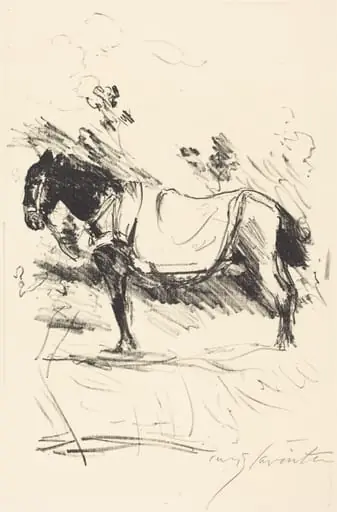 Reitpferd (Riding-Horse)
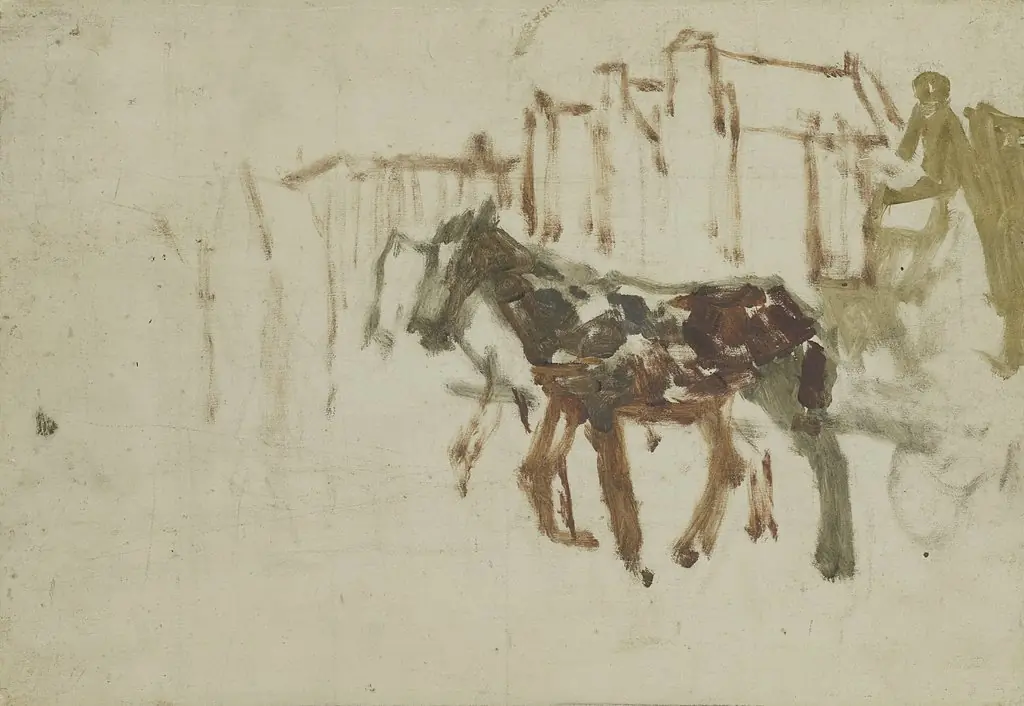 View of Rokin, Amsterdam
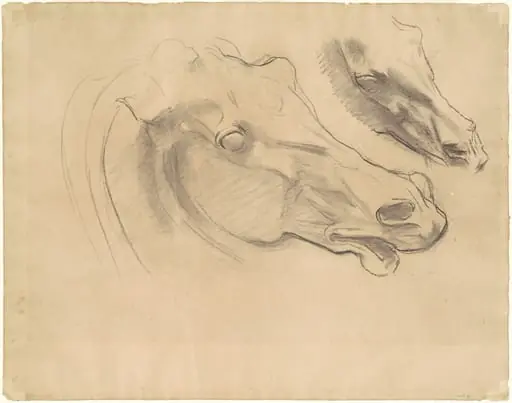 Studies for "Apollo in His Chariot with the Hours"
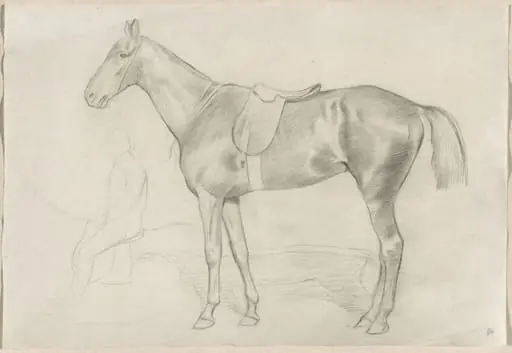 Saddled Horse with a Study of a Rider
![Studies of a Cow [verso], by Paul Gauguin](https://artifactworldgallery.com/img/paul-gauguin--studies-of-a-cow-verso--80694066ae3cfdb3-w320.webp) Studies of a Cow [verso]
Studies of a Cow [verso]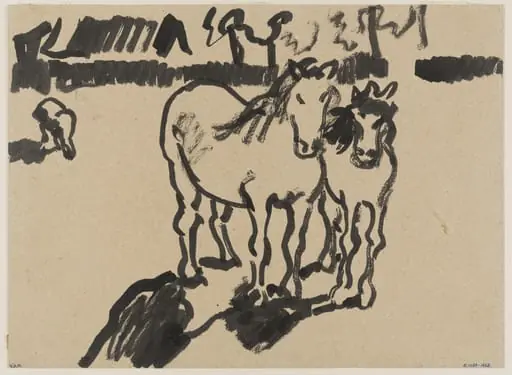 Untitled