Artwork
Femeie cu copil și un ostaș
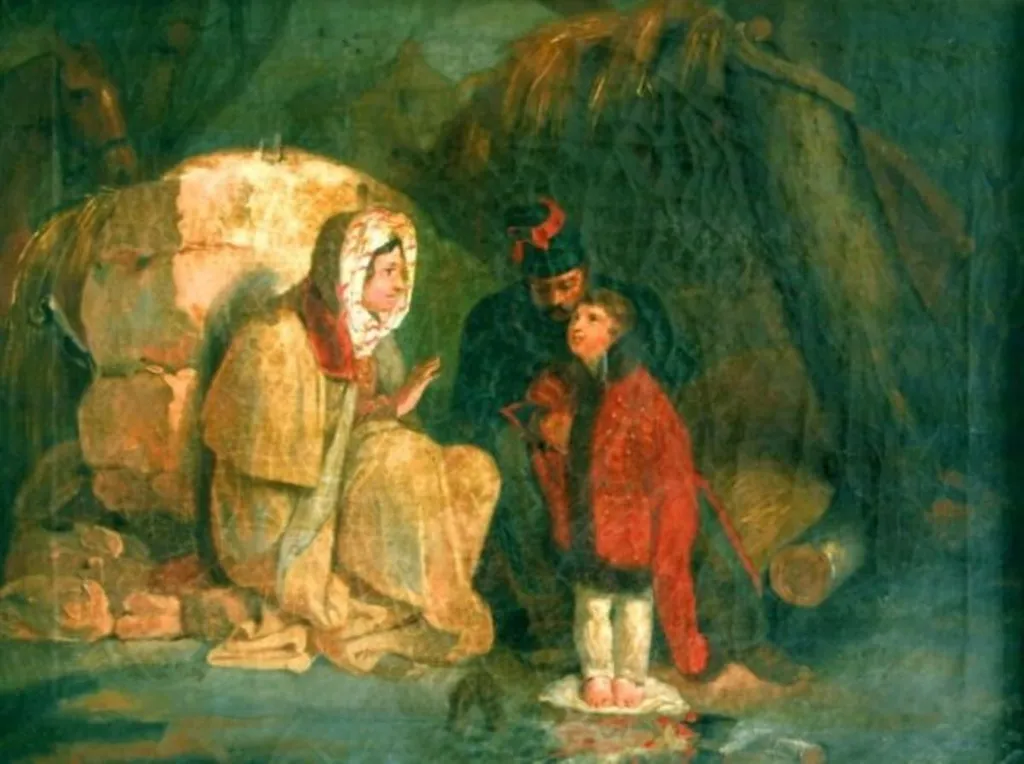
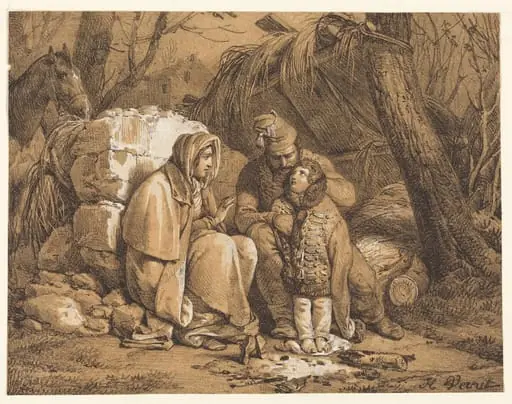
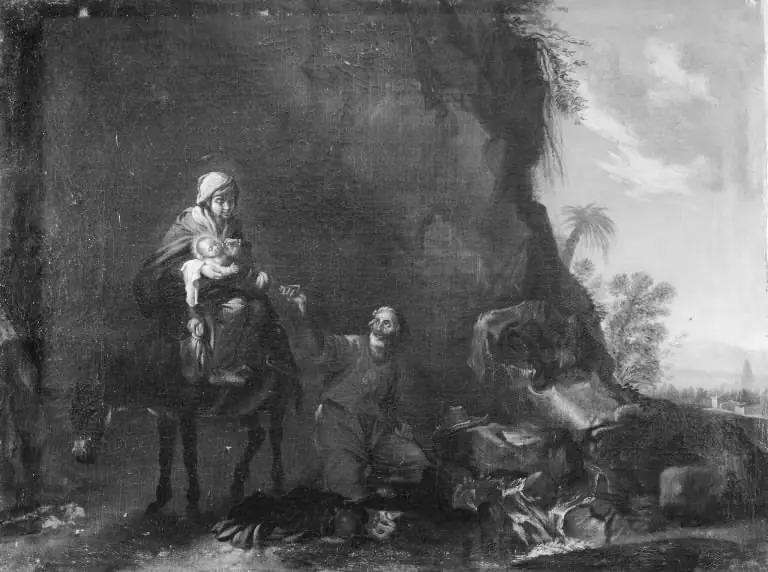
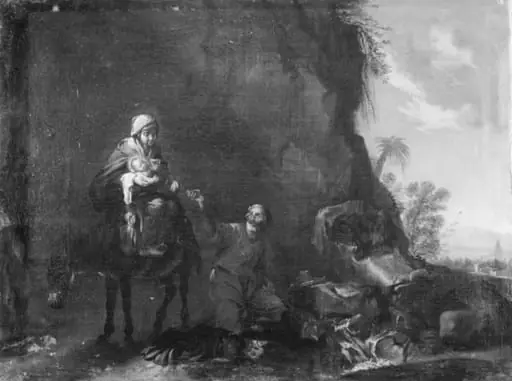
Femeie cu copil și un ostaș is an unspecified painting by Charlet Nicholas Toussaint. It is held in the collection of the Romanian Academy in Bucharest. This painting presents a quiet domestic moment involving a woman, a child, and a soldier in a rural environment.
About this work
Overview
The scene unfolds against a sparse natural backdrop of rocks and rudimentary shelter materials, emphasizing stillness and restraint.
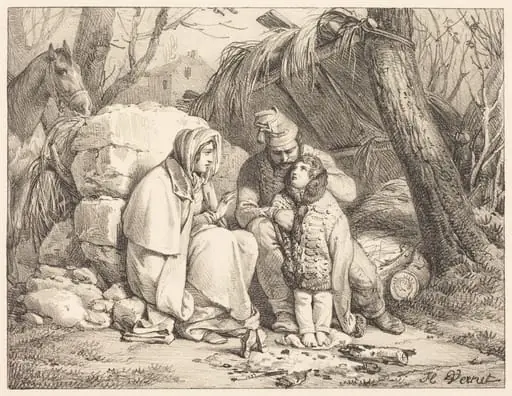
This painting presents a quiet domestic moment involving a woman, a child, and a soldier in a rural environment. The figures are arranged in a grounded, intimate composition, with no dramatic action or narrative climax. The scene unfolds against a sparse natural backdrop of rocks and rudimentary shelter materials, emphasizing stillness and restraint. The palette favors muted earth tones, softened by gentle light, reinforcing a tone of quiet reflection.
Subject & Meaning
The woman, seated with outstretched hands, and the child beside her, suggest vulnerability or supplication. The soldier, dressed in a dark uniform with a red feathered hat, observes without intervention, creating a tension between presence and distance. The absence of clear context invites interpretation: perhaps a moment of pause after conflict, or a gesture of care amid hardship. The scene resists explicit storytelling, favoring emotional ambiguity.
Technique & Style
The artist employs a restrained brushwork and a limited, earthy color scheme dominated by ochres, browns, and muted reds. Light falls softly across the figures, modeling forms without harsh contrast. The background remains indistinct, keeping focus on the trio. Textures are rendered with subtle variation—fabric folds, rough stone, and tangled wood—adding tactile realism without embellishment.
History & Provenance
The painting’s origin and early ownership are undocumented in available records. It has not been linked to major collections or exhibitions prior to recent cataloging. No signatures, inscriptions, or dated markings are noted on the surface. Its attribution remains tentative, with stylistic similarities suggesting late 19th or early 20th-century regional practice, though no specific artist or school has been confirmed.
Context
The depiction aligns with broader 19th-century European traditions that portrayed rural life with sentimental realism, often highlighting resilience or quiet dignity. The soldier’s uniform hints at recent or ongoing conflict, common in post-war imagery from the Balkans or Eastern Europe. Yet the absence of overt political symbols or destruction suggests a focus on personal, rather than national, experience.
Legacy
The work has not been widely reproduced or studied in academic literature. It remains largely unknown outside private or regional collections. Its quiet composition and lack of overt drama have limited its inclusion in major surveys, though it continues to be noted for its understated emotional resonance and restrained visual language.
Artist & collection
Artist
Charlet Nicholas Toussaint painted everyday moments with a quiet warmth you’d miss if you blinked.