Artwork
Harbour
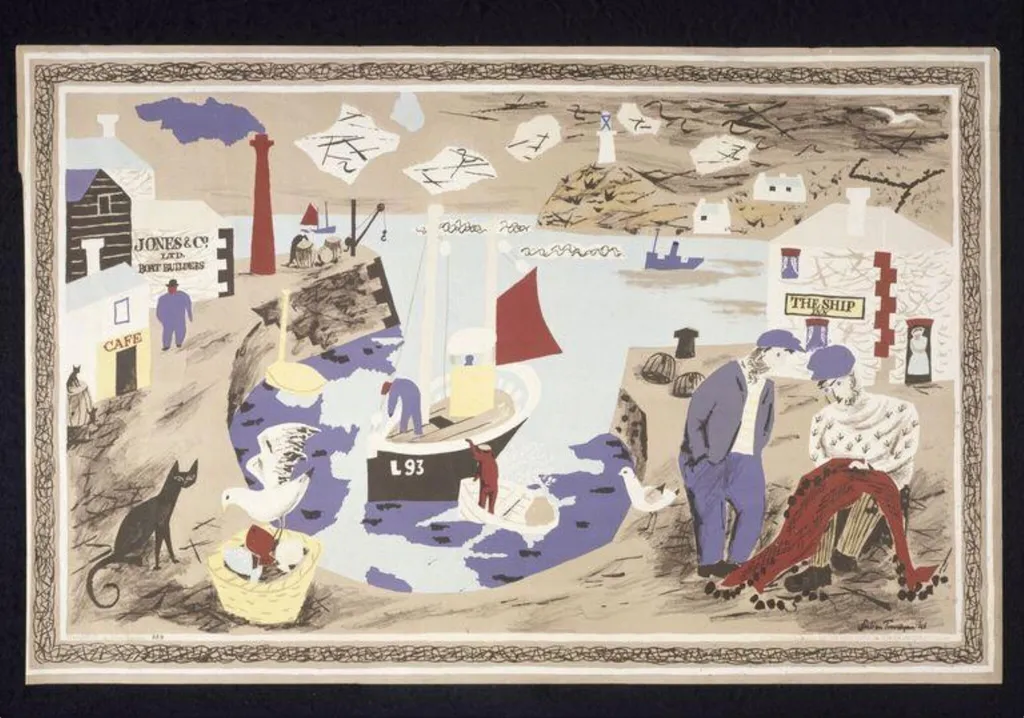
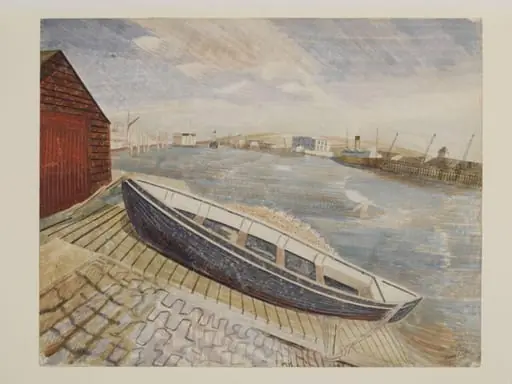
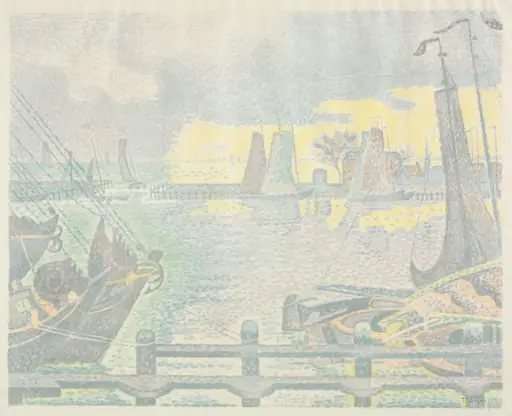
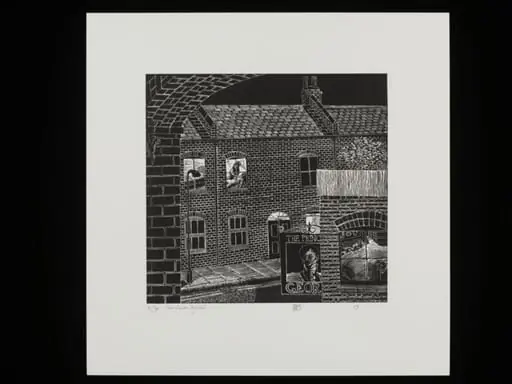
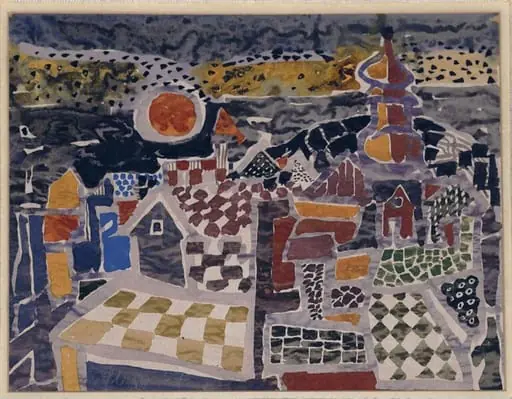
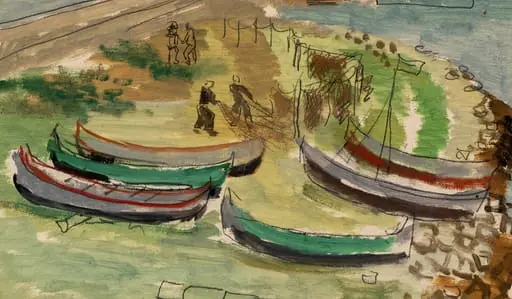
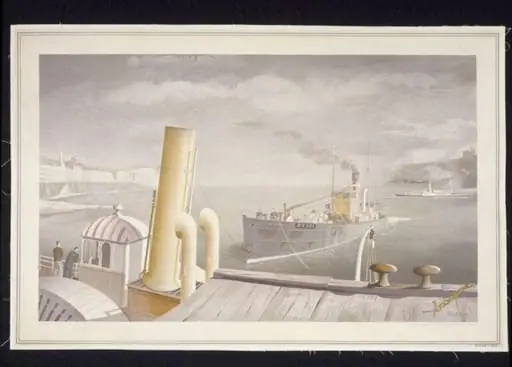
Harbour is a print by Julian Trevelyan. It dates from 1946 and is held in the collection of the Victoria and Albert Museum.
About this work
This print is called Harbour by Julian Trevelyan.
It was created in 1946 as part of the School Prints scheme.
The scheme was set up to give school children an understanding of contemporary art, and this print is now held at the Victoria and Albert Museum.
You can learn more about this style by looking up the work of artist Julian Trevelyan.
Overview
It was his first lithographic work, created after his early training at Stanley William Hayter’s Atelier 17 in Paris.
Harbour is a 1946 lithograph by Julian Trevelyan, produced as part of the School Prints initiative. It was his first lithographic work, created after his early training at Stanley William Hayter’s Atelier 17 in Paris. The print was commissioned to be distributed widely in British schools, offering students direct exposure to contemporary art during a time of post-war economic constraint. Its simple frame was designed for easy wall mounting in classrooms.
Subject & Meaning
The image depicts a quiet coastal harbor, rendered with calm precision. Boats rest at moorings, figures move subtly along the shore, and the horizon suggests a still, overcast sky. Rather than dramatizing the scene, Trevelyan captures the ordinary rhythm of maritime life. The composition reflects the School Prints’ goal of presenting accessible, relatable imagery—neither idealized nor industrial, but grounded in everyday observation.
Technique & Style
Trevelyan employed lithography, a medium he began exploring in the early 1930s. His technique favors clean lines, subtle tonal gradations, and restrained detail, avoiding overt expressionism. The print’s clarity and balance reflect his training in Paris and his interest in observational realism. The drawn border, a hallmark of the School Prints series, frames the scene without intrusion, reinforcing its function as an educational object.
History & Provenance
Commissioned in 1946 under the School Prints scheme founded by Brenda Rawnsley, the work was one of over 100 lithographs produced between 1945 and 1949. The project aimed to democratize art access in schools amid post-war austerity. Though the scheme ended due to funding shortages, many prints, including Harbour, were preserved. This example is now held in the Victoria and Albert Museum’s collection, documenting a significant moment in British art education.
Context
The School Prints initiative emerged from a broader cultural effort to rebuild public engagement with the arts after World War II. Inspired by the Mass Observation movement, which documented ordinary life, artists like Trevelyan focused on familiar, non-heroic scenes. This print aligns with a wider trend of post-war realism, prioritizing quiet dignity over spectacle, and reflects a national desire to cultivate aesthetic awareness in the next generation.
Legacy
Though the School Prints scheme was short-lived, it left a lasting imprint on British art education. Trevelyan’s Harbour exemplifies how fine art could be adapted for public use without losing its integrity. The print remains a reference point for understanding mid-century efforts to integrate contemporary art into civic life, and its survival in museum collections underscores its historical value as both artwork and educational artifact.
Artist & collection
Artist
Julian Trevelyan made prints and watercolors of ports and harbors, often in layered prints or translucent washes.