Artwork
Saint-Tropez
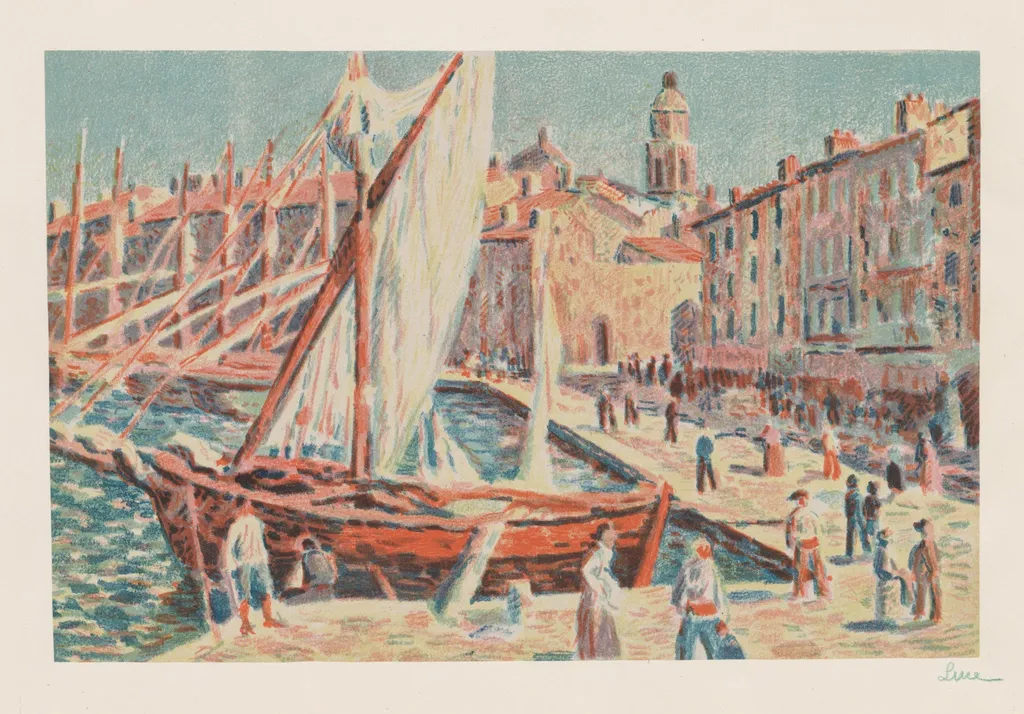
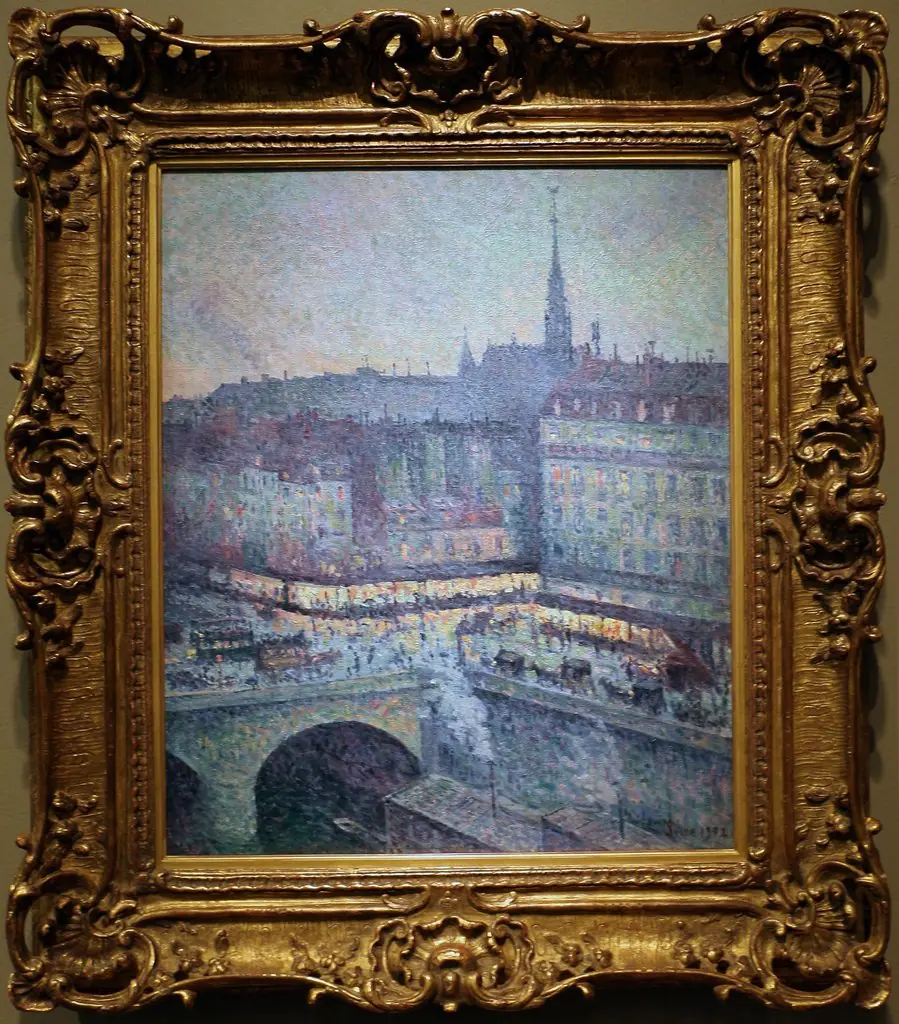
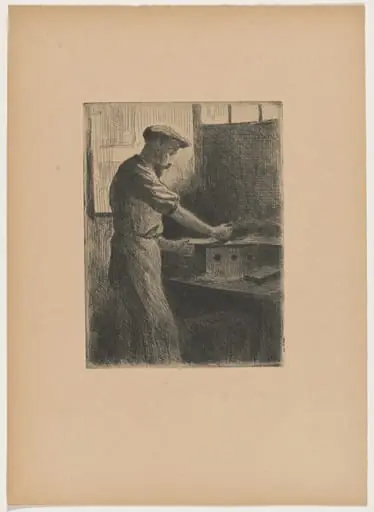
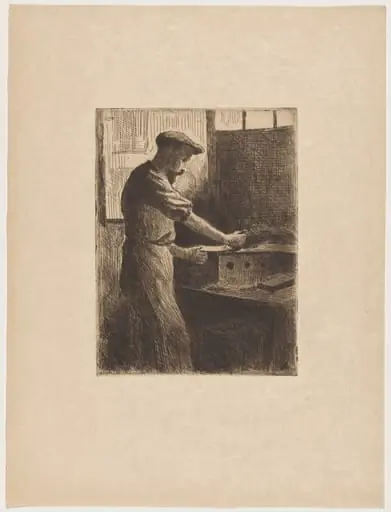
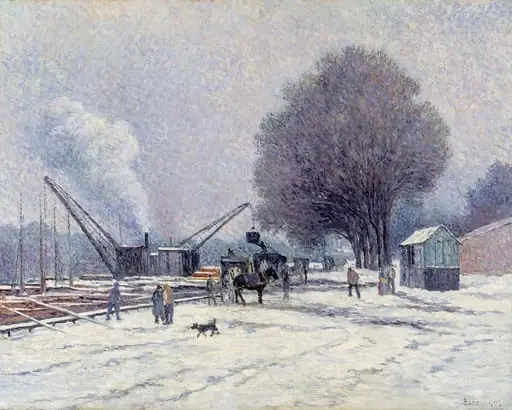
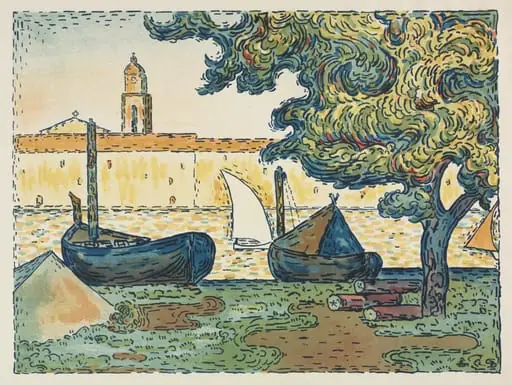
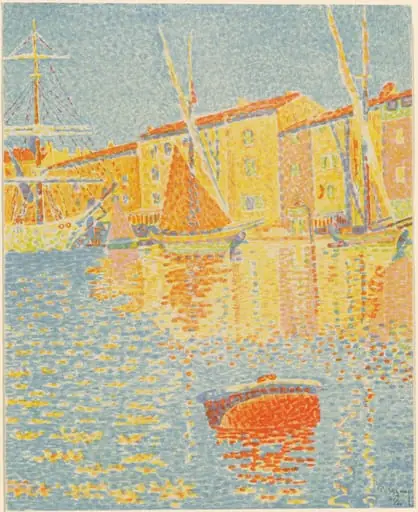
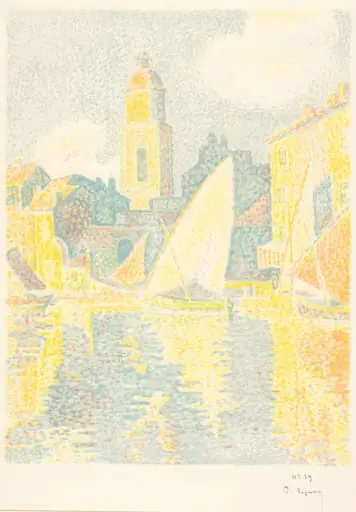
Saint-Tropez is a print by the Impressionist artist Maximilien Luce. It dates from 1897 and is held in the collection of the Cleveland Museum of Art.
About this work
Overview
Unlike traditional lithography, which often used flat tints, Luce applied distinct dashes of pure pigment side by side, allowing the viewer’s eye to blend them.
This color lithograph by Henri-Edmond Luce depicts the harbor of Saint-Tropez, rendered through layered ink applications that rely on optical color mixing. Unlike traditional lithography, which often used flat tints, Luce applied distinct dashes of pure pigment side by side, allowing the viewer’s eye to blend them. The result is a luminous, vibrating surface that captures the intensity of Mediterranean light without blending pigments on the plate.
Subject & Meaning
The scene portrays a quiet harbor at midday, with masts rising above anchored sails and small figures scattered along the dock. There is no narrative drama—only the stillness of a coastal moment. Luce’s focus on everyday maritime life reflects his interest in capturing the sensory experience of place rather than storytelling. The composition emphasizes light and atmosphere, aligning with the broader Neo-Impressionist pursuit of visual harmony.
Technique & Style
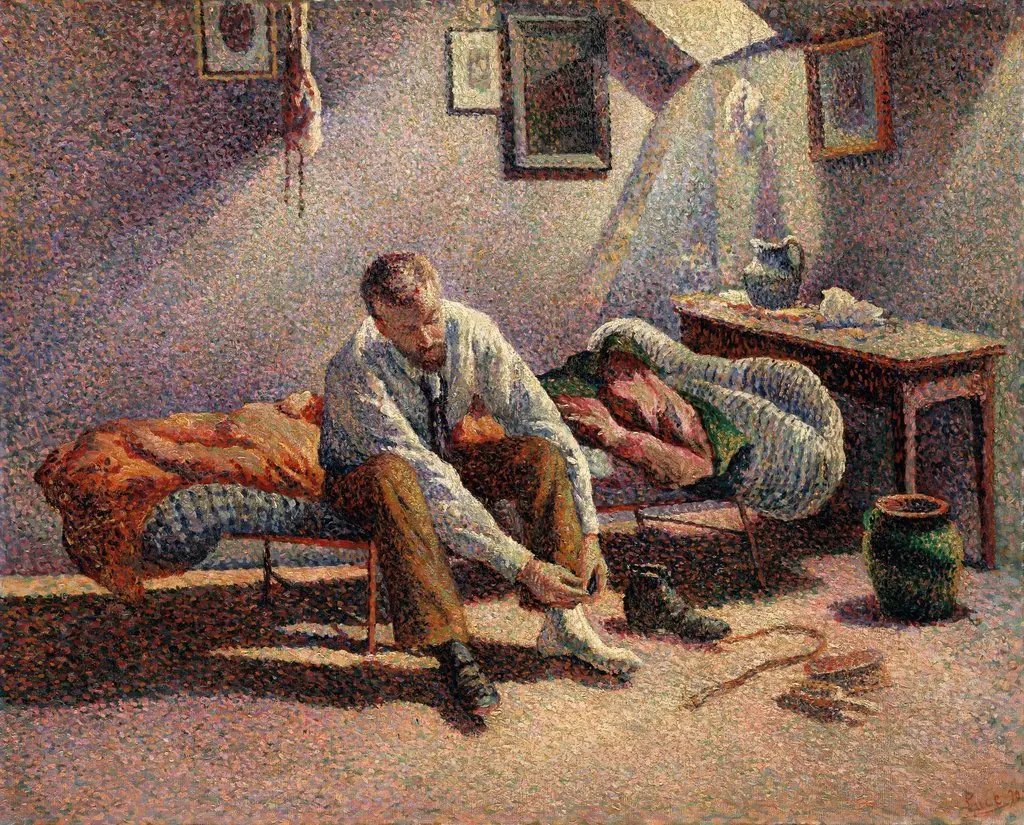
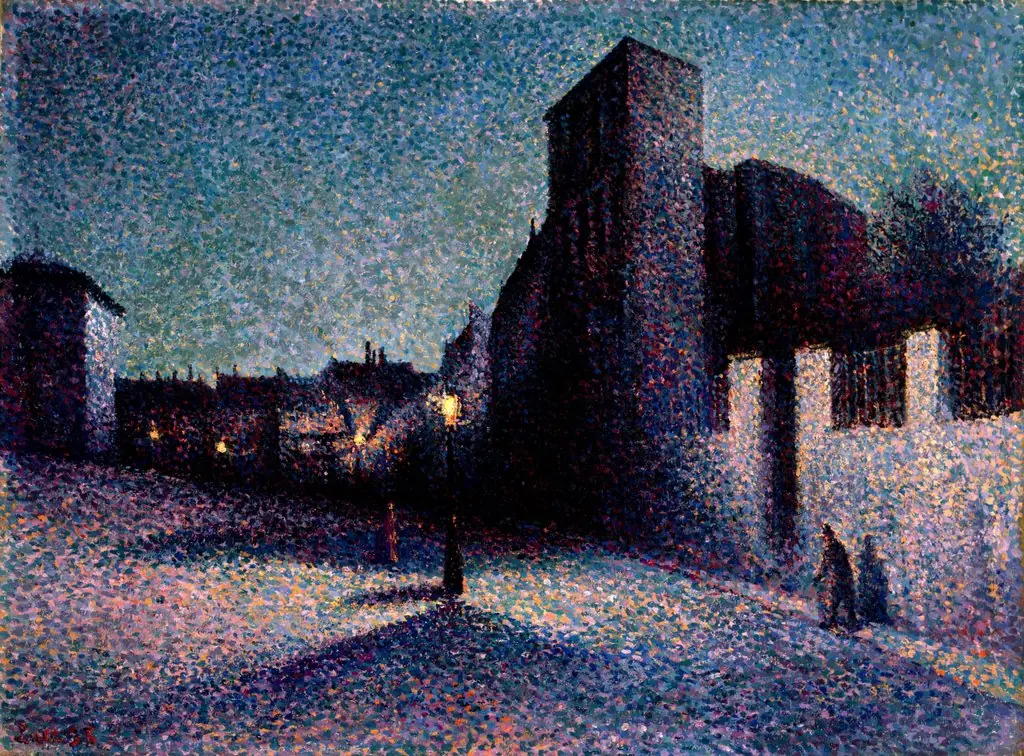
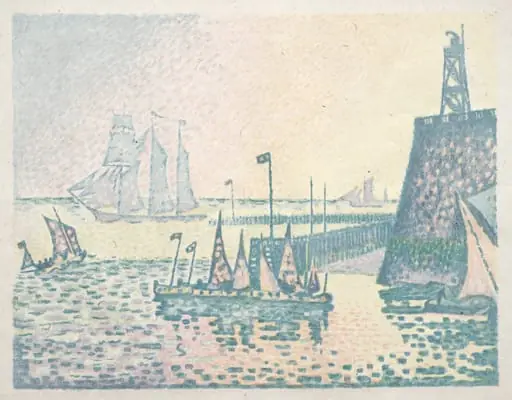
Luce adapted the principles of Divisionism to lithography by placing small, separate strokes of red, blue, and yellow ink adjacent to one another. Unlike pointillist painters who used dots, he employed linear dashes, a choice suited to the lithographic stone’s surface. The technique avoids physical mixing of inks, instead generating chromatic vibrancy through optical fusion, a method derived from scientific color theory and refined through his association with Signac.
History & Provenance
Created in the late 1890s, this print emerged during Luce’s most active period in lithography, following his engagement with the Neo-Impressionist circle. It was likely produced in a small, controlled edition, typical of artist-printmakers of the time. The work remained within private collections in France before entering institutional holdings, where its technical innovation has been recognized as a significant contribution to modern printmaking.
Context
Luce worked alongside Paul Signac and other Neo-Impressionists who sought to apply scientific color theory to art. While Seurat used dots, Luce and others experimented with linear strokes in painting and print. Lithography offered a new medium to extend these ideas beyond canvas, allowing artists to reach broader audiences. Saint-Tropez, a growing coastal town, became a favored subject for its clarity of light and tranquil rhythms, embodying the movement’s ideals of harmony and observation.
Legacy
Luce’s color lithographs influenced later printmakers seeking to merge painterly effects with print techniques. His approach demonstrated that lithography could achieve the luminosity of oil painting without direct pigment mixing. Though less widely known than his contemporaries, his work remains a key example of how scientific color theory was adapted across media, bridging painting and print in the transition from 19th-century to modernist aesthetics.
Own this work as a print
Artist & collection
Artist
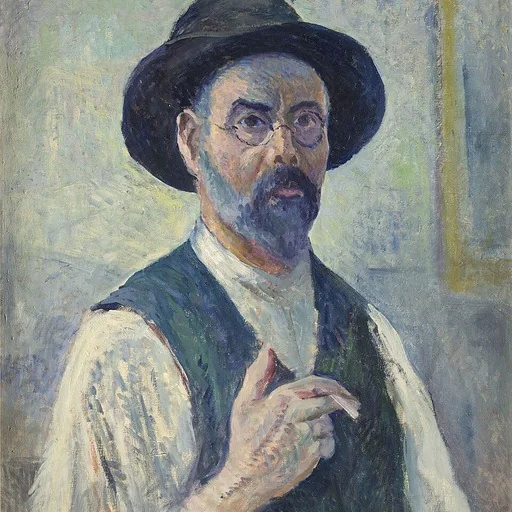
Maximilien Luce was a French Neo-impressionist artist known for his paintings, graphic art, and his anarchist activism.