Artwork
Untitled
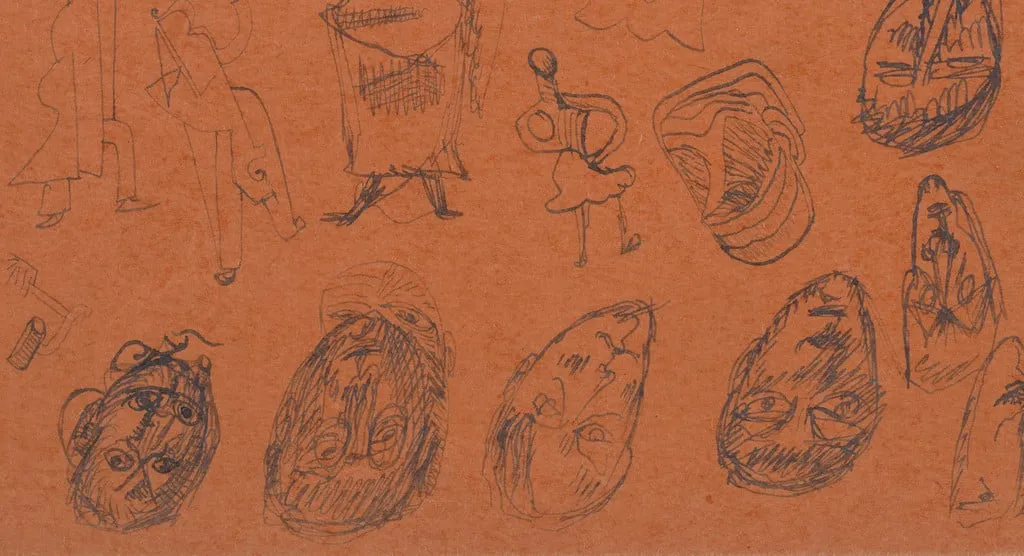
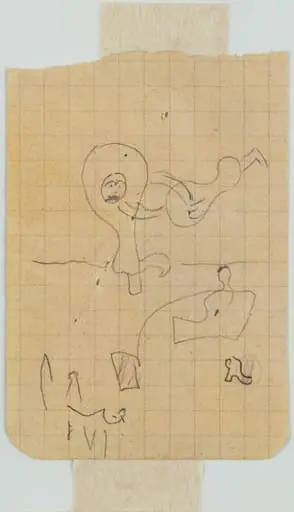
Untitled is an ink drawing by Tristan Tzara. It dates from 1936 and is held in the collection of the Museum of Modern Art.
About this work
Overview
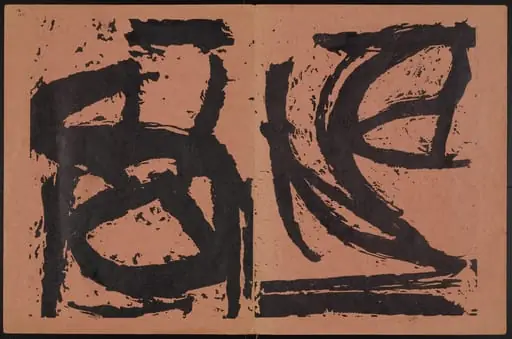
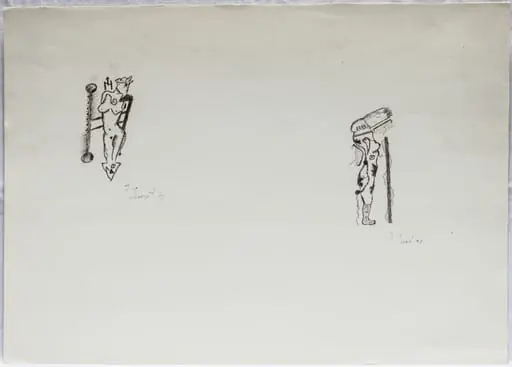
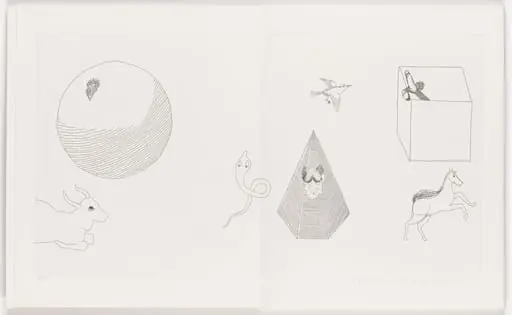
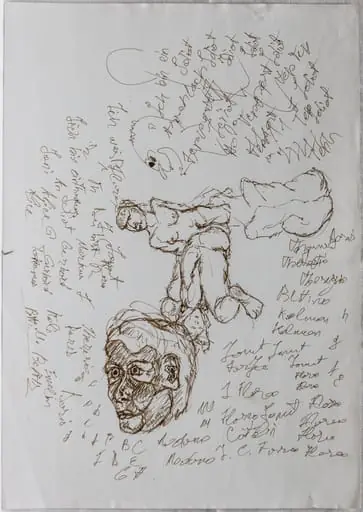
The work presents a spontaneous arrangement of figures and objects rendered in fluid, unrefined lines.
Created in 1936, this ink drawing on colored paper is attributed to Tristan Tzara. It resides in the collection of The Museum of Modern Art. The work presents a spontaneous arrangement of figures and objects rendered in fluid, unrefined lines. The orange-brown paper provides a warm, muted ground that enhances the immediacy of the marks, suggesting a private, rapid exercise rather than a polished composition.
Subject & Meaning
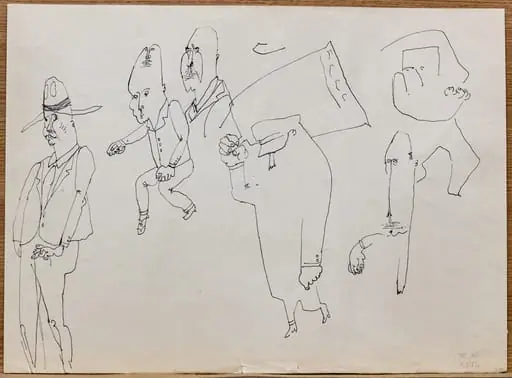
The drawing features fragmented human forms—figures standing, dancing, walking with a basket—alongside isolated objects like a bottle and a mask. Faces are distorted with exaggerated features: wide eyes, prominent noses, expressions hovering between surprise and melancholy. These elements suggest a theatrical or absurdist sensibility, reflecting Tzara’s engagement with Dadaist themes of fragmentation and emotional dislocation.
Technique & Style
Tzara employed swift, unhesitating ink strokes to capture motion and mood rather than anatomical accuracy. The lines are loose and gestural, avoiding contour or shading, relying instead on the energy of the mark to convey presence. The absence of detail and the improvisational quality align with Dada’s rejection of traditional artistic discipline, favoring intuitive expression over formal technique.
History & Provenance
The work was produced in 1936 during Tzara’s active years in Paris, a period when he continued to explore visual art alongside his literary and performance practices. It entered The Museum of Modern Art’s collection through documented acquisition, though its earlier ownership history remains unrecorded in public sources. Its preservation reflects institutional recognition of Dada’s influence on modern drawing.
Context
Created in the interwar years, the piece emerges from a cultural moment when Dada’s radical energy had evolved into Surrealist experimentation. Tzara, though no longer leading the Dada movement, retained its ethos of spontaneity and anti-art gesture. This drawing aligns with contemporaneous works by artists using sketch-like forms to challenge conventional representation and embrace the irrational.
Legacy
As a modest, unassuming work, it exemplifies how Dadaist principles extended beyond manifestos into everyday artistic practice. Its presence in a major museum underscores the institutional reevaluation of ephemeral, non-traditional forms. The drawing invites viewers to consider the value of imperfection and the expressive potential of the unrefined mark in modern art.
Artist & collection

![Studies for Jewelry Designs [verso], by Beatrix Godwin Whistler](https://artifactworldgallery.com/img/beatrix-godwin-whistler--studies-for-jewelry-designs-verso--4abe0c1de3cebca0-w320.webp)