Artwork
A Windmill against a Cloudy Sky
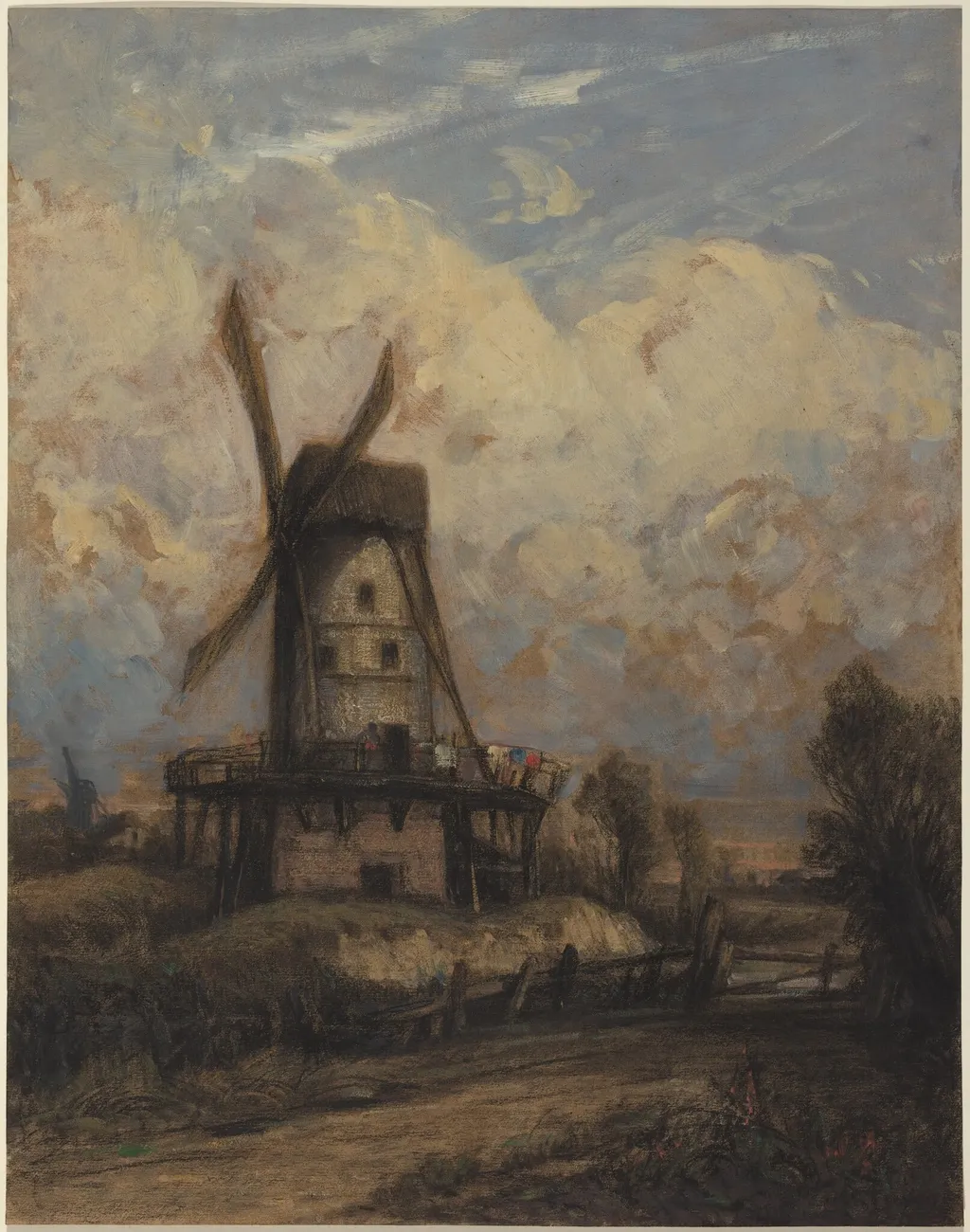
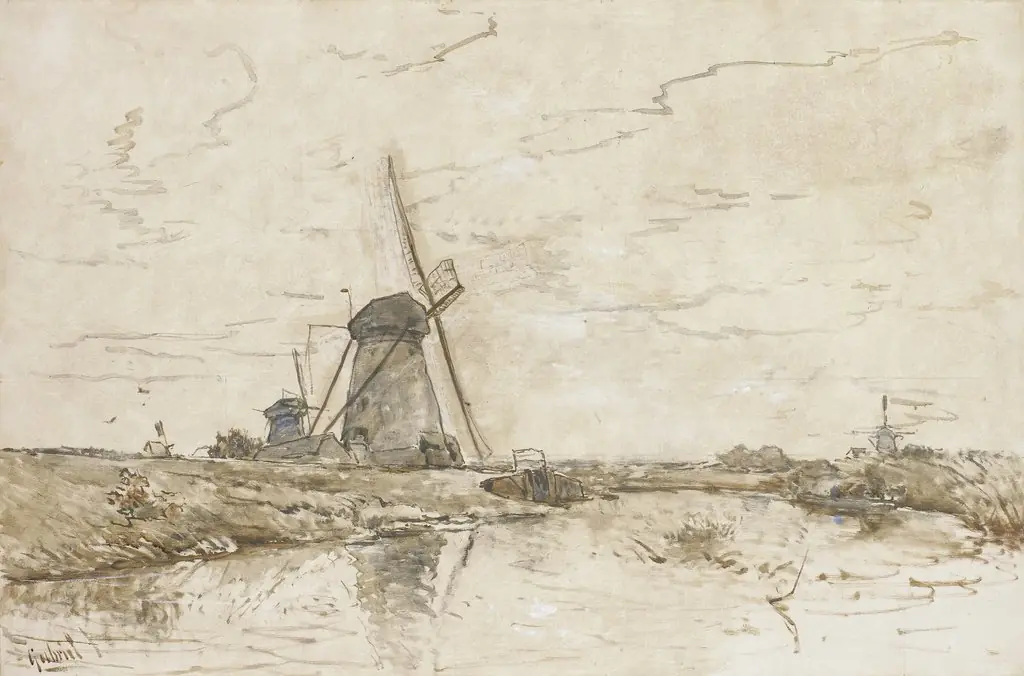
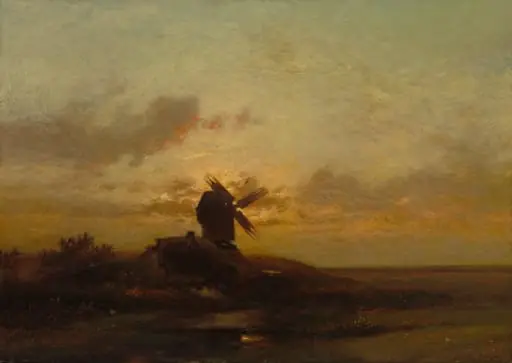
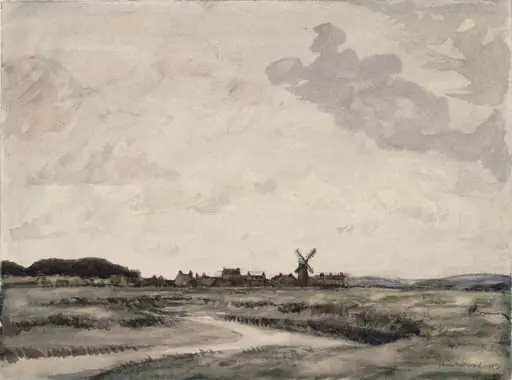
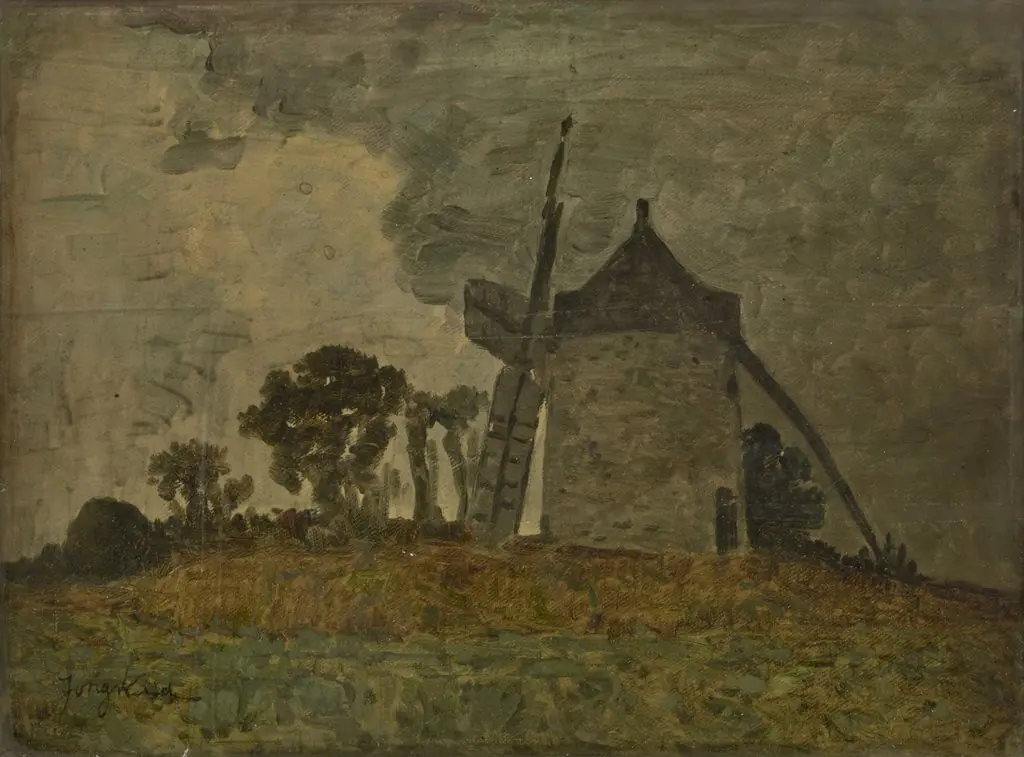
A Windmill against a Cloudy Sky is a chalk drawing by the Romanticist artist Constant Troyon. It dates from 1848 and is held in the collection of the National Gallery of Art.
About this work
Overview
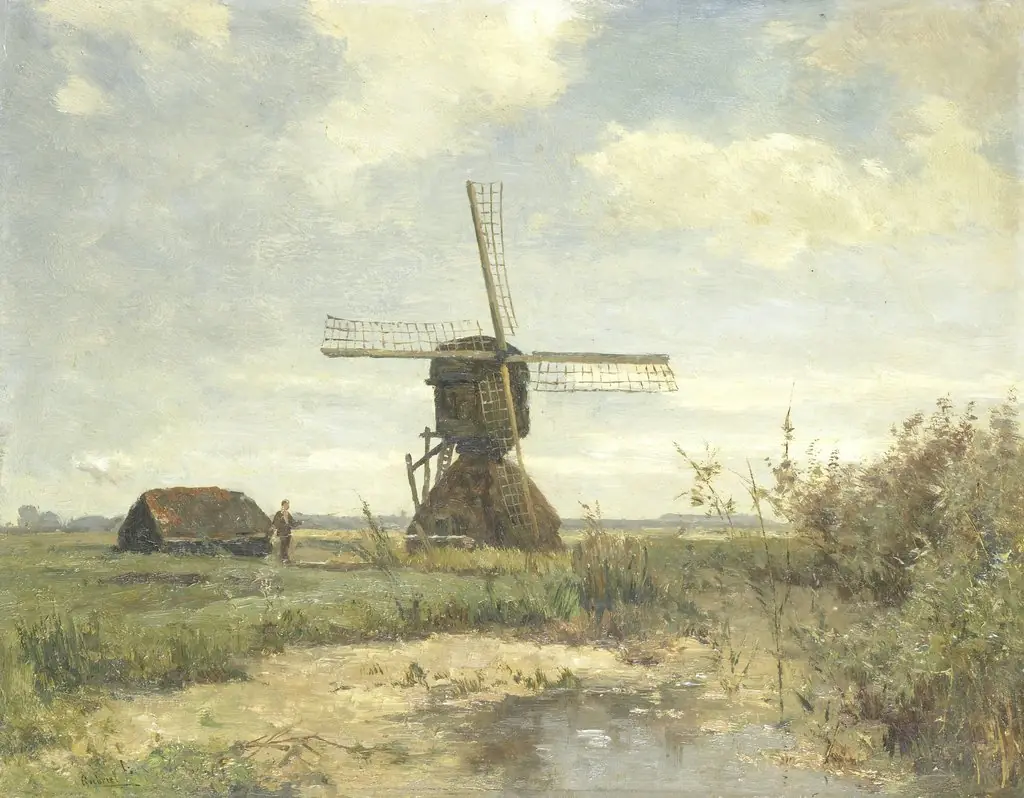
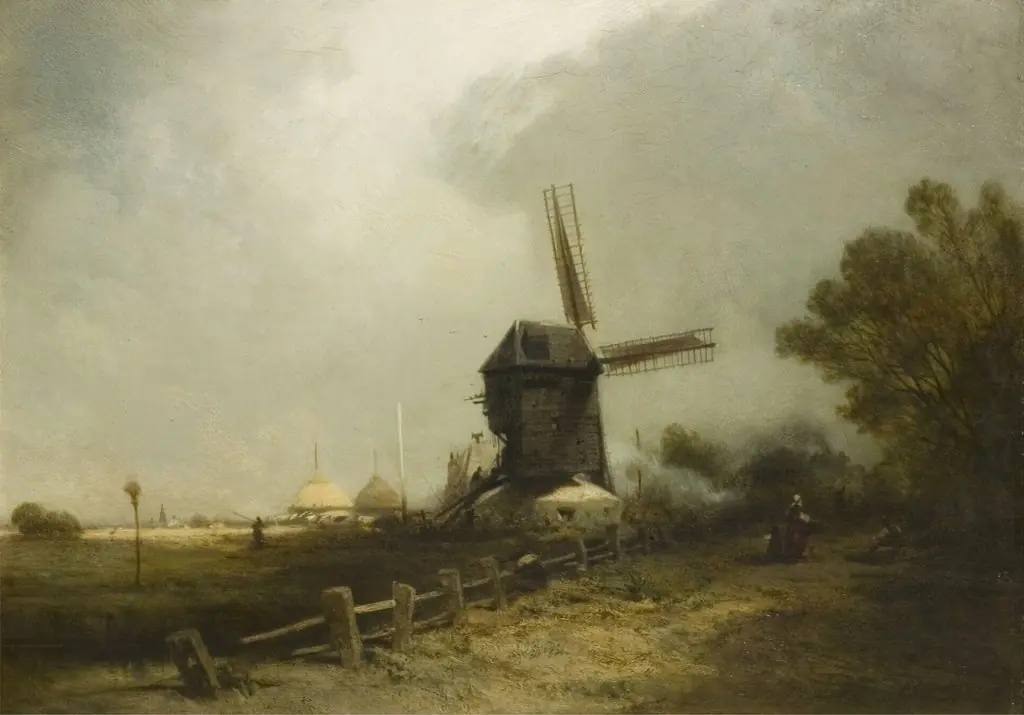
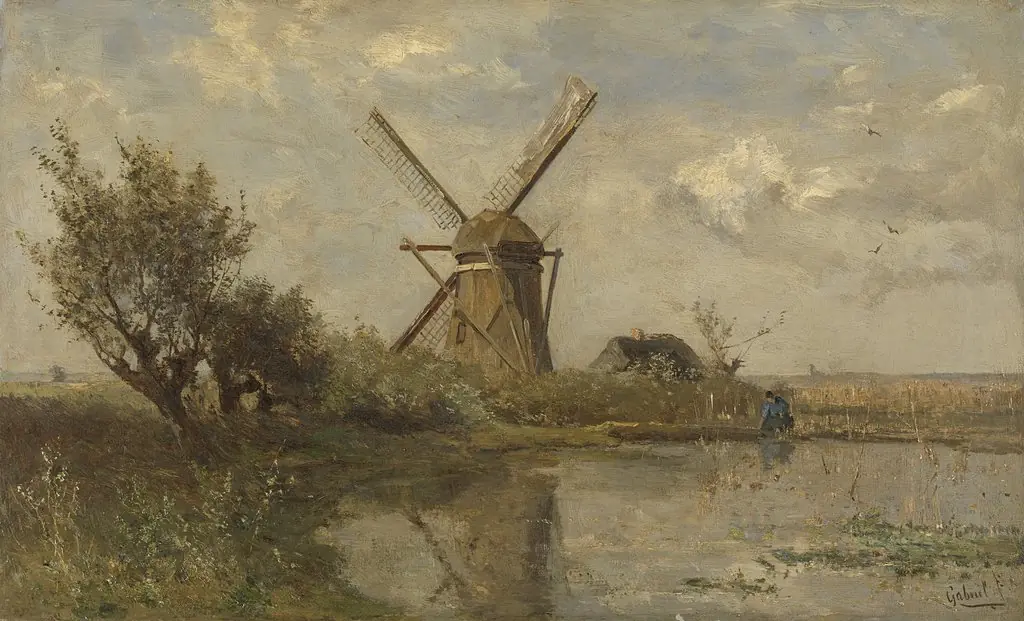
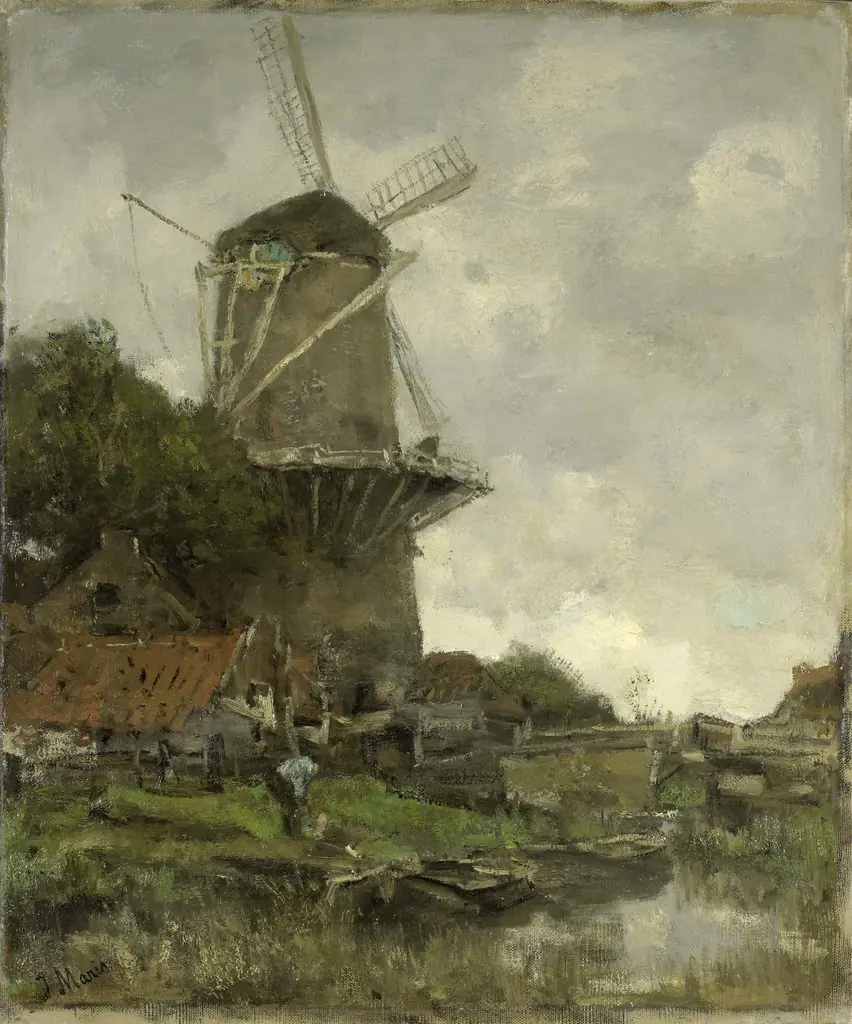
A Windmill against a Cloudy Sky is a drawing by Constant Troyon, created in 1848 on tan paper using a combination of oil paint, black chalk, and charcoal. The work depicts a simple yet contrast-rich scene of a windmill set beneath a cloudy sky.
Subject & Meaning
The subject, a solitary windmill under a cloudy sky, embodies Troyon's early focus on landscapes, characteristic of his association with the Barbizon school. The scene's simplicity underscores the artist's emphasis on capturing natural elements.
Technique & Style
Troyon employed a mixed-media approach, layering oil paint over charcoal and black chalk on tan paper. This technique, akin to chiaroscuro, leverages strong light-dark contrasts to imbue the composition with depth and volume, aligning with expressive qualities of Romanticism.
History & Provenance
Created in 1848, this work represents Troyon's mid-career engagement with landscape painting, a period preceding his later renown for animal subjects. Specific provenance details are not provided.
Context
Produced during the mid-19th century, A Windmill against a Cloudy Sky reflects the Barbizon school's influence, which emphasized naturalism and outdoor settings. The piece also touches on Romantic ideals through its dramatic sky and lighting effects.
Legacy
While the work's direct impact is not detailed, it contributes to understanding Troyon's artistic evolution from landscapes to animal painting, and the broader practices of the Barbizon school during this period.
Own this work as a print
Artist & collection

Artist
Constant Troyon (French pronunciation: ; August 28, 1810 – February 21, 1865) was a French painter of the Barbizon school.