Artwork
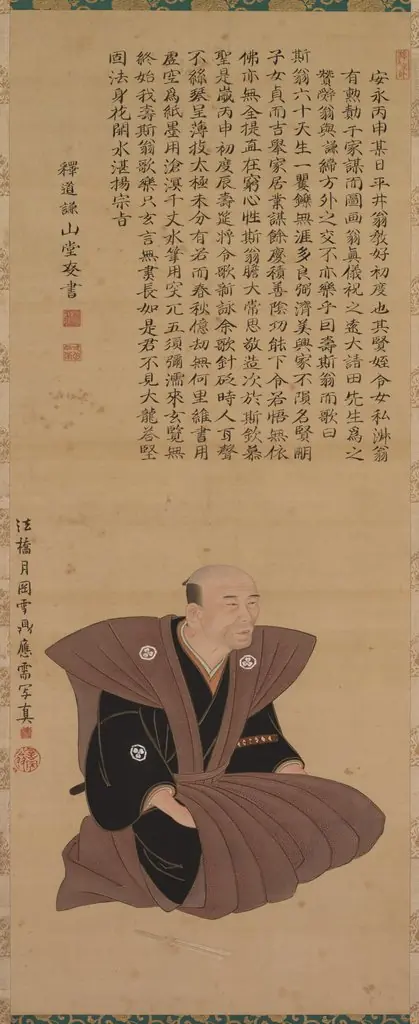
Portrait of Samurai-Official: Hirai KyoseiHirai Kyosei
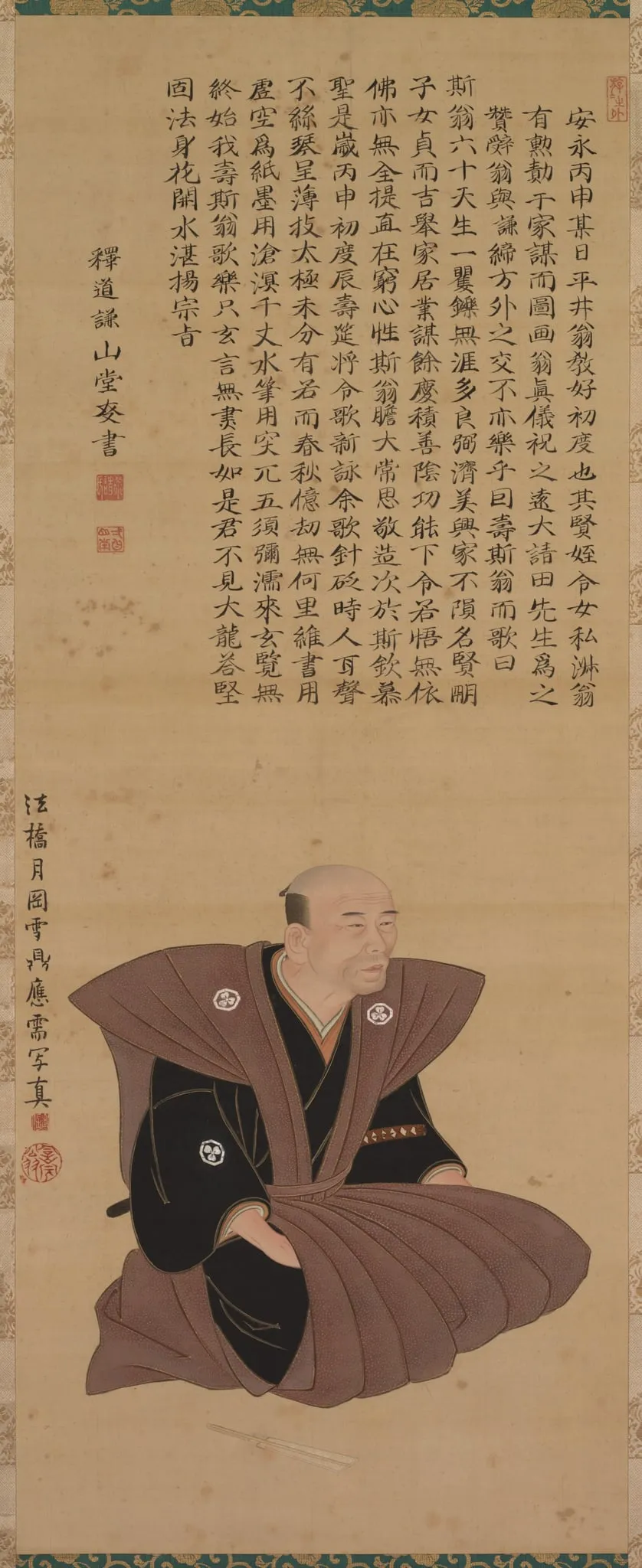
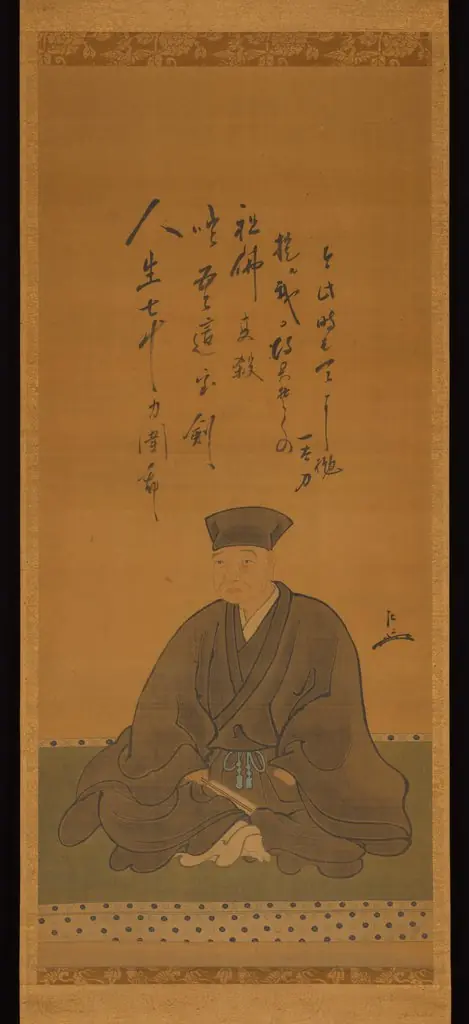
Portrait of Samurai-Official: Hirai KyoseiHirai Kyosei is an unspecified painting by the Romanticist artist Tsukioka Settei. It dates from 1776 and is held in the collection of the Cleveland Museum of Art.
About this work
If you like this style, check out Tsukioka Settei (Japanese, 1710–1786).
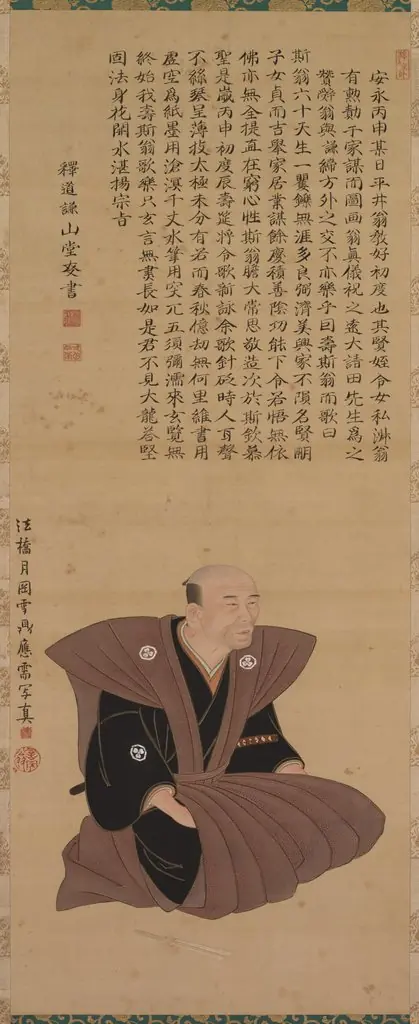
This portrait shows a samurai official from Japan’s Edo period. He sits straight in a dark robe with white underlayers. His face is calm but strong. One hand holds a fan. Calligraphy covers the top right corner in neat lines.
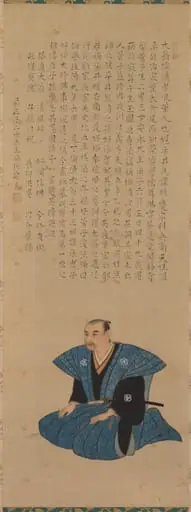
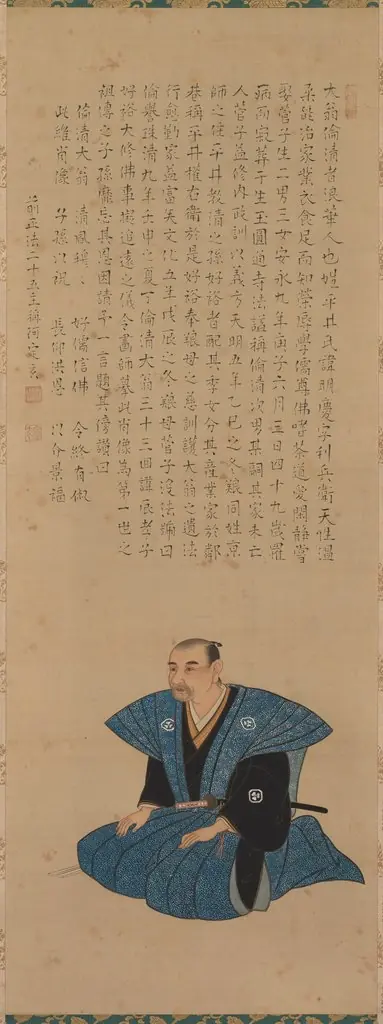
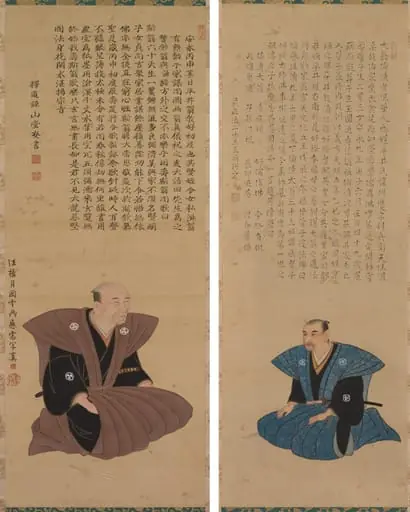
Settei painted this in 1776 as part of a pair. Each image comes with long notes from a scholar. Those words explain the man’s rank and family history.
If you like this style, check out Tsukioka Settei (Japanese, 1710–1786).
Overview
Created in 1776 by the Edo‑period painter Tsukioka Settei, this work is one of a paired set depicting successive heads of the Hirâi clan. Each portrait presents a single figure in a formal pose, accompanied by extensive scholarly inscriptions that identify the subject’s rank and lineage.
Subject & Meaning
The figure is a samurai official, seated upright in a dark outer robe over a white under‑garment. His expression conveys a restrained authority, while the fan held in his hand signals his status and the ceremonial nature of his role within the clan hierarchy.
Technique & Style
Settei employs a precise brushwork characteristic of late‑Edo portraiture, rendering the fabrics and facial features with subtle gradations of tone. The composition is balanced by a block of calligraphic text in the upper right, executed in a distinctive, orderly script that complements the visual austerity of the painting.
History & Provenance
The two portraits were originally commissioned as a generational record for the Hirâi family, each accompanied by lengthy notes from contemporary scholar‑officials. The inscriptions, rendered in a unique calligraphic hand, serve both as biographical commentary and as a testament to the intellectual milieu of the period.
Context
During the mid‑18th century, Japanese clan leaders often commissioned formal likenesses to affirm lineage and social standing. Settei’s work reflects this practice, aligning with broader Edo‑era trends that valued precise, documentary portraiture over idealized or narrative scenes.
Legacy
While not widely reproduced, the Hirâi portraits exemplify Settei’s contribution to the genre of official portraiture, illustrating the interplay between visual representation and scholarly annotation that characterized many elite commissions of the era.
Artist & collection