Artwork
'63 of the Knight's moves in chess covering each of the chessboard's squares in turn'
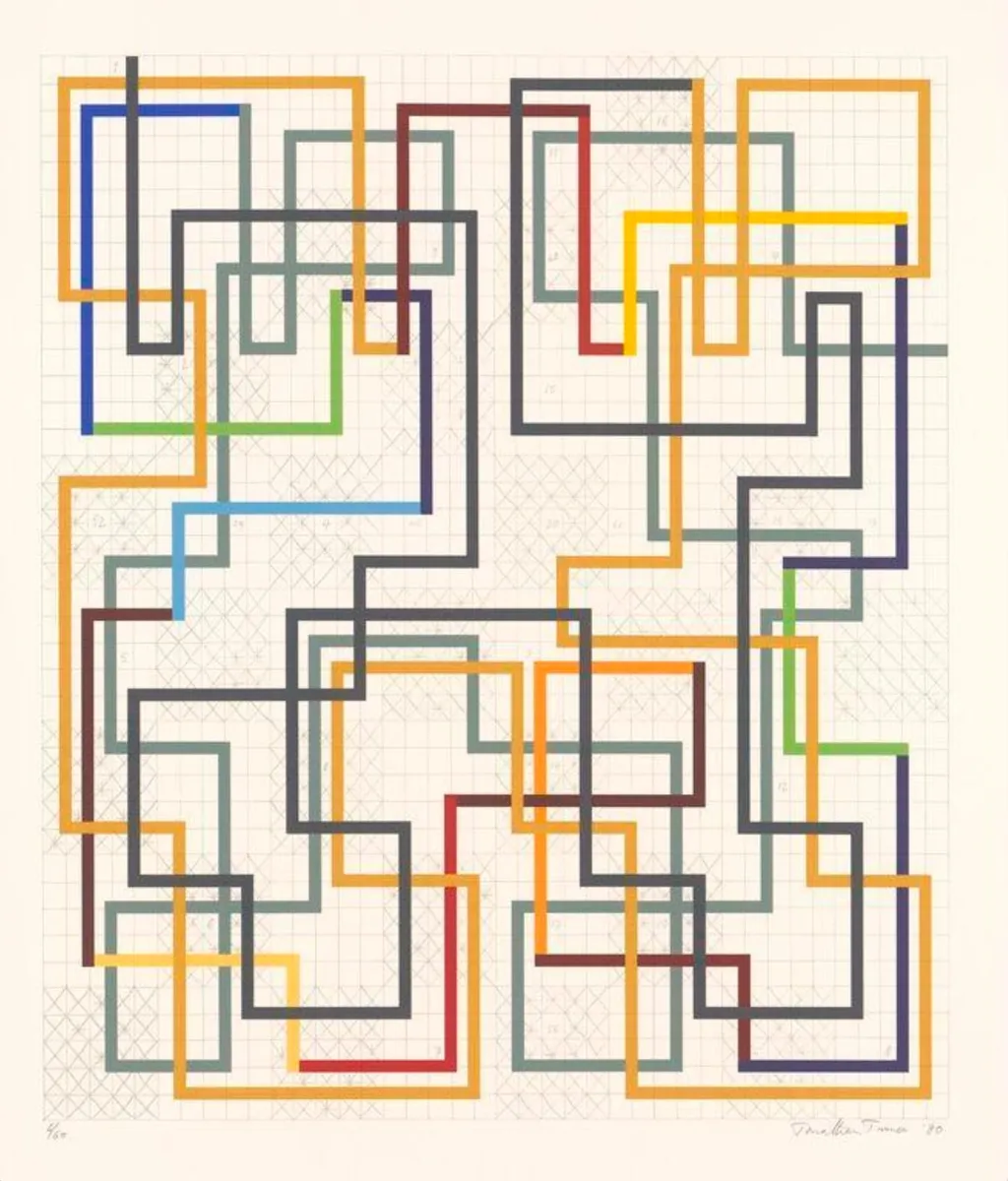
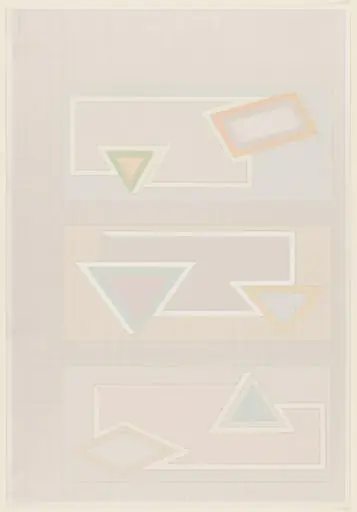
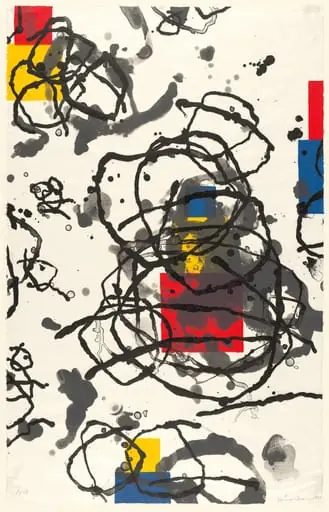
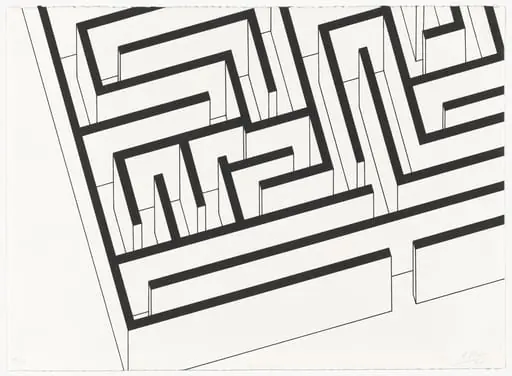
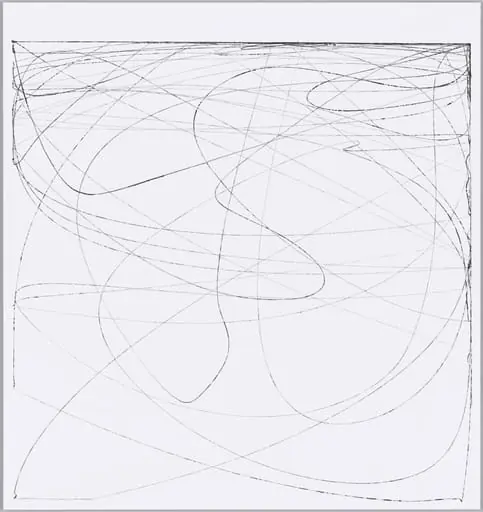
'63 of the Knight's moves in chess covering each of the chessboard's squares in turn' is a print by Jonathan Turner. It dates from 1980 and is held in the collection of the Victoria and Albert Museum.
About this work
The design borrows from Euler’s 1770 “magic square,” a grid where rows, columns, and diagonals add up the same.
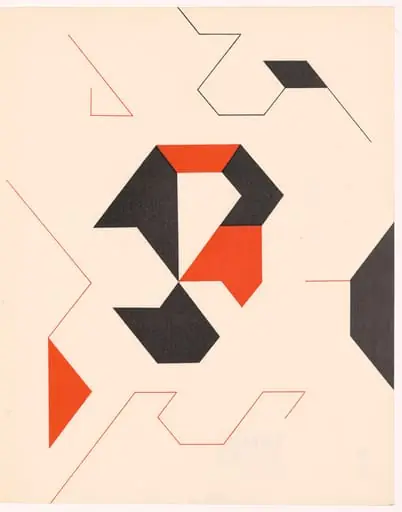
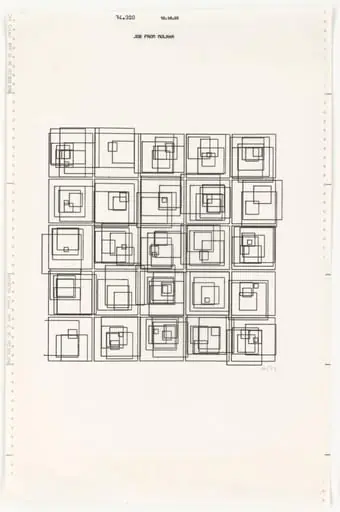
This print turns chess into art. It maps 63 knight moves that cover every square on the board exactly once. The design borrows from Euler’s 1770 “magic square,” a grid where rows, columns, and diagonals add up the same.
Turner used a simple rule: each square on the chessboard got one move. No jumps were missed or repeated. The piece is more puzzle than painting—logic made visual.
Next door, look up the Victoria and Albert Museum.
Overview
This print visually represents a sequence of 63 knight moves in chess, systematically covering each of the 64 squares on the board exactly once.
Subject & Meaning
The artwork transforms a chess puzzle into a visual form, emphasizing logic and systematic movement rather than traditional aesthetics.
Technique & Style
The print's design is based on a mathematical principle, specifically Leonhard Euler's 1770 'magic square' concept, adapted to the knight's unique movements in chess.
History & Provenance
Inspired by Euler's 18th-century mathematical discovery, the print was created using a self-described method of 'motor-lanes' to map the knight's moves, as explained by the artist.
Context
While rooted in 18th-century mathematics (Euler's magic square), the piece reflects a contemporary intersection of art, mathematics, and puzzle-solving.
Legacy
The artwork's legacy lies in its innovative visualization of a mathematical and puzzle concept, though specific influences or subsequent works inspired by it are not detailed here.
Artist & collection
Artist
Jonathan Turner mapped the invisible moves of a chess knight across every square on the board, printing each path in 1980.