Artwork
Untitled
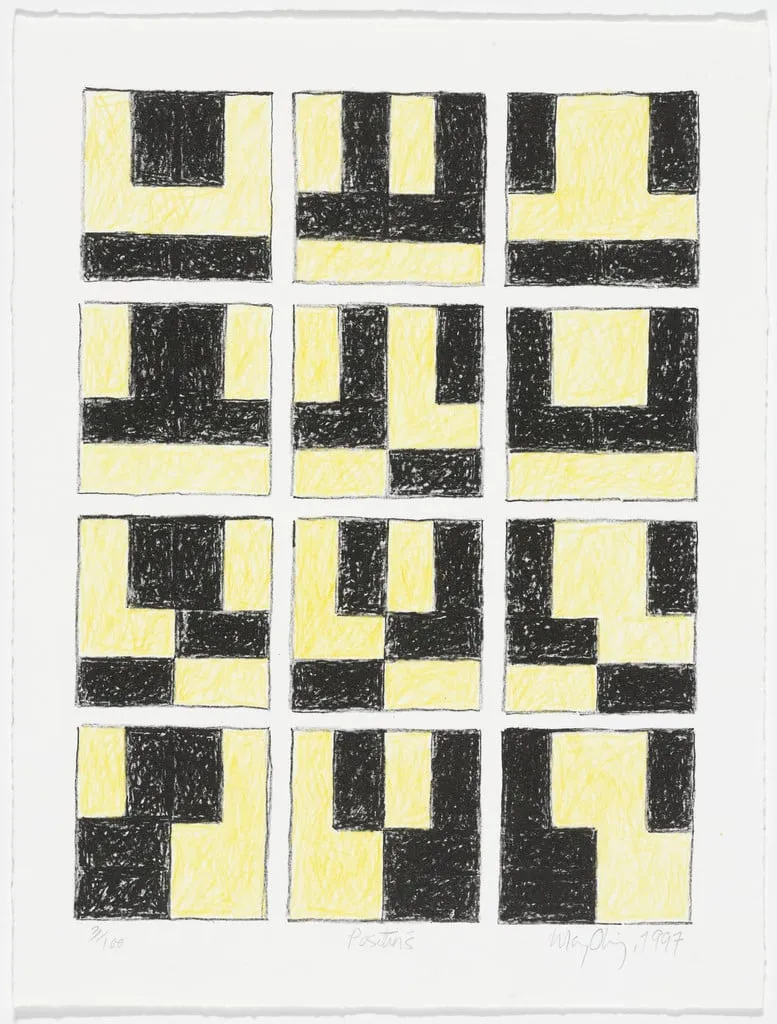
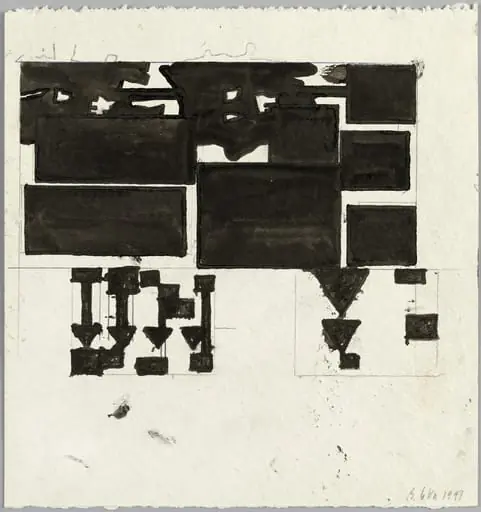
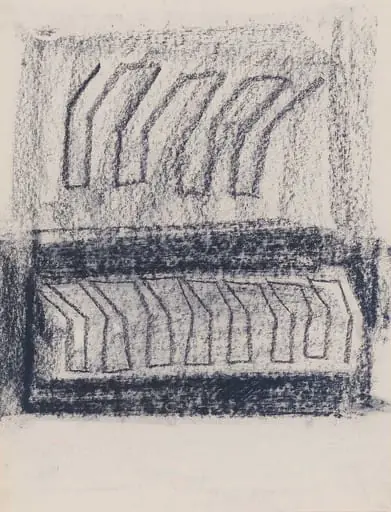
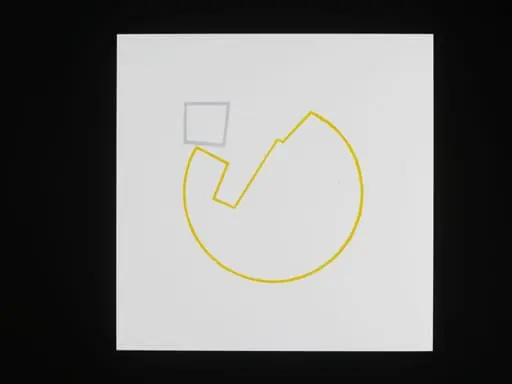
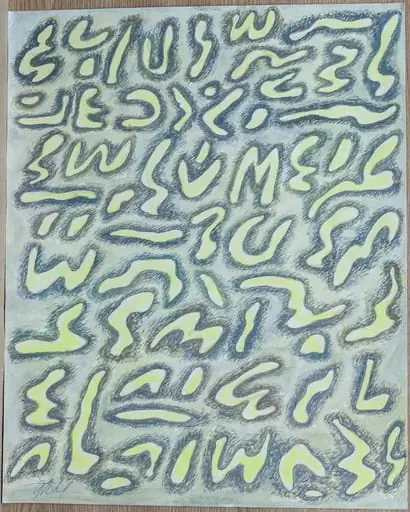
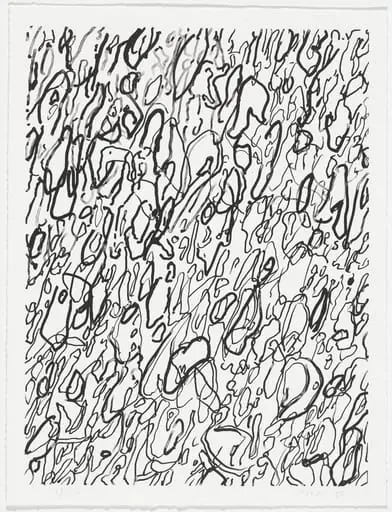
Untitled is an ink print by Mary Obering. It dates from 1997 and is held in the collection of the Museum of Modern Art.
About this work
Overview
The composition consists of twelve rectangular fields arranged in a single horizontal row.
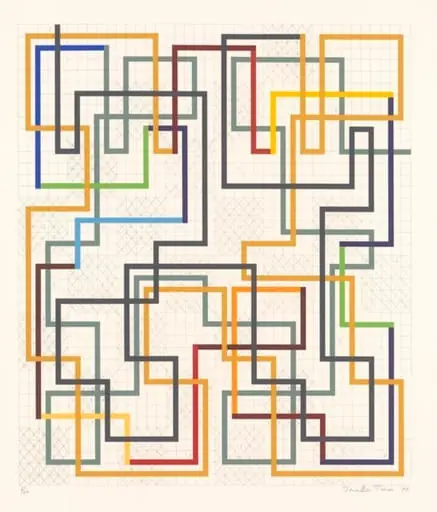
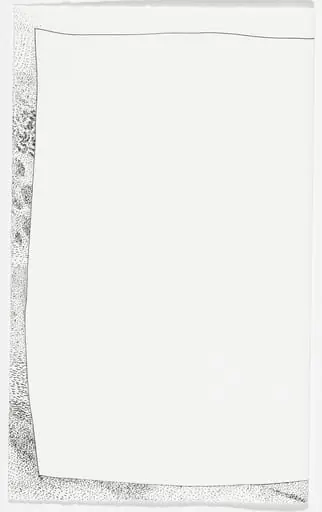
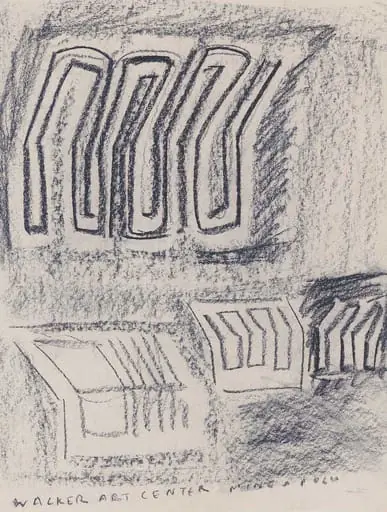
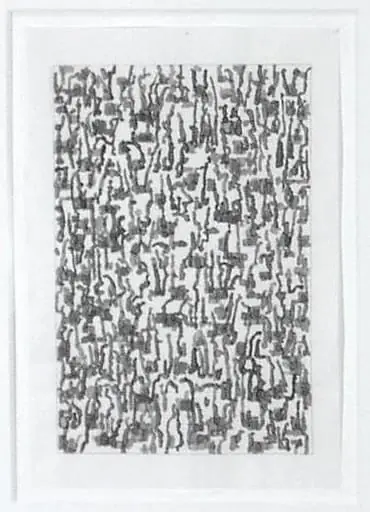
Created in 1997, this lithograph is one of forty works in a portfolio by Mary Obering. It is part of The Museum of Modern Art’s collection. The composition consists of twelve rectangular fields arranged in a single horizontal row. Each contains abstract forms in black and yellow, rendered with deliberate irregularity. The work belongs to a series exploring geometric structure through hand-printed processes.
Subject & Meaning
The piece avoids literal representation, instead suggesting architectural fragments—doorways, windows, or panels—without resolving them into coherent structures. The asymmetrical placement and uneven alignment of shapes imply disruption or incompleteness. This tension between order and disorder reflects an interest in how systems of form can appear familiar yet remain unresolved.
Technique & Style
Obering employed hand-pulled lithography, emphasizing the physicality of the printmaking process. Thick, uneven lines and textured surfaces reveal the artist’s direct engagement with the stone. The contrast between deep black and saturated yellow is stark yet restrained, avoiding gradient or blending. The irregular edges and misaligned forms suggest intentional imperfection, grounding the work in tactile, manual execution.
History & Provenance
The lithograph was produced in 1997 as part of a limited portfolio of forty prints. It entered The Museum of Modern Art’s collection shortly after its creation, acquired as an example of late 20th-century printmaking that engages with minimalism and abstraction. No prior ownership history is publicly documented beyond its immediate production and institutional acquisition.
Context
Obering’s work emerged within a broader post-minimalist movement that questioned the purity of geometric abstraction. Her use of hand-printed techniques and deliberate asymmetry distinguished her from more mechanized approaches. The portfolio reflects a dialogue with artists exploring the limits of form, repetition, and material presence in print media during the 1990s.
Legacy
Though not widely exhibited outside institutional contexts, the portfolio contributes to ongoing discussions about the role of craft in abstract art. Obering’s insistence on manual processes and subtle formal disruption has influenced later printmakers interested in the imperfections of handmade systems. The work remains a quiet but persistent example of material inquiry in contemporary printmaking.
Artist & collection