Artwork
A Waterfall
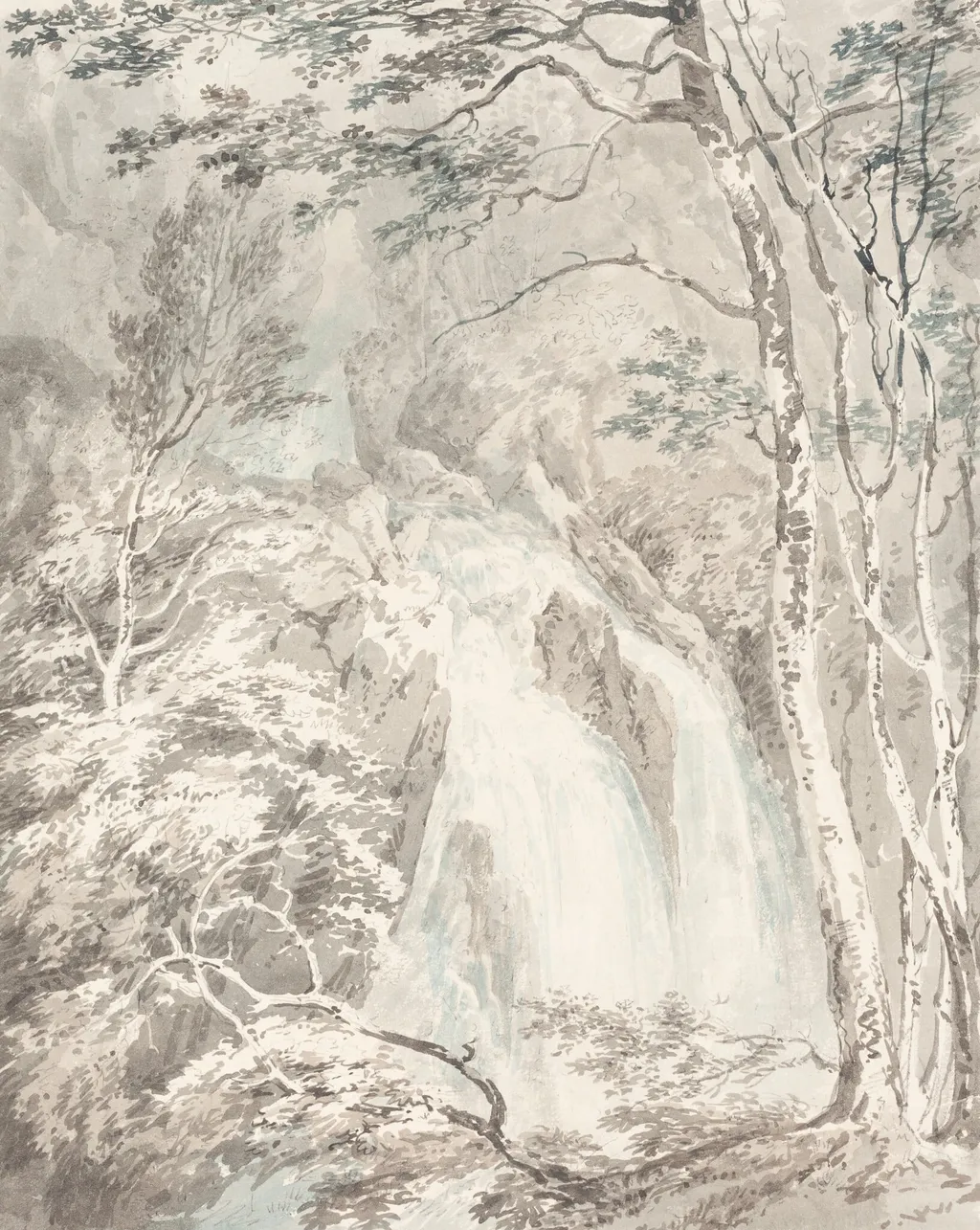
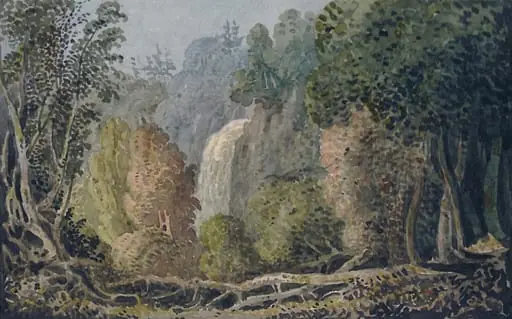
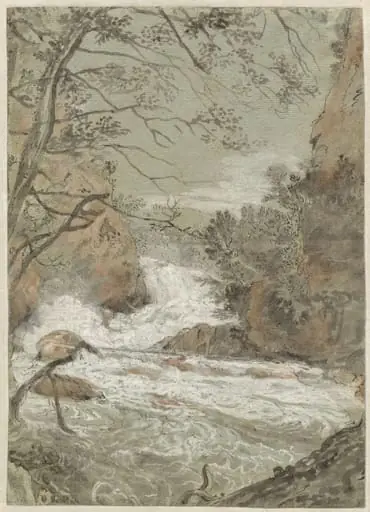
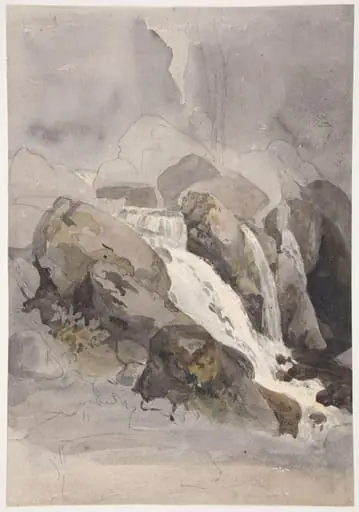
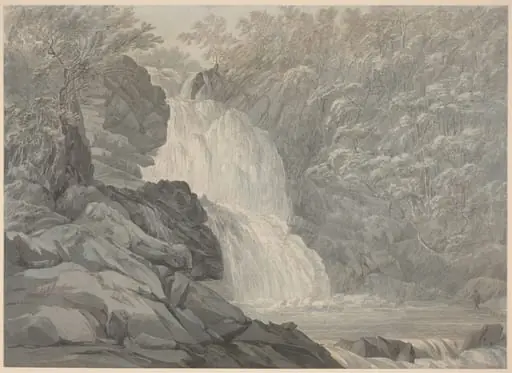
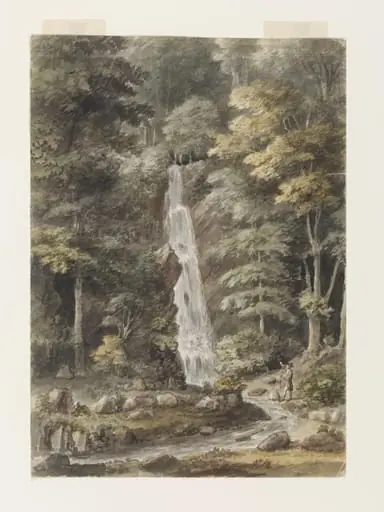
A Waterfall is a graphite drawing by the Romanticist artist Joseph Mallord William Turner. It dates from 1796 and is held in the collection of the National Gallery of Art.
About this work
Overview
"A Waterfall" is a drawing executed by J. M. W. Turner in 1796. Rendered on an aged album sheet, the work measures a modest size and presents a single natural motif—a cascade descending over craggy stone. Though modest in scale, the piece offers insight into Turner’s formative period and his early engagement with landscape drawing.
Subject & Meaning
The composition captures a waterfall in motion, the water rendered as a series of flowing lines that suggest both movement and the play of light upon the surface. By focusing on a solitary element of nature, Turner emphasizes the transient qualities of water and the atmospheric effects that would later dominate his larger paintings.
Technique & Style
Turner employed graphite for the structural outlines and applied a blue‑gray wash to suggest depth and tonal variation. The limited palette underscores a chiaroscuro approach, using stark contrasts between dark graphite shadows and lighter washes to model form and convey the illusion of three‑dimensional space within a two‑dimensional medium.
History & Provenance
Created when Turner was still in his early twenties, the drawing reflects his experimental phase before his rise to prominence as a painter of luminous landscapes. The work remains on paper, preserved on the original album sheet, and has been documented in several catalogues of Turner’s early drawings, illustrating his developmental trajectory.
Own this work as a print
Artist & collection
Artist
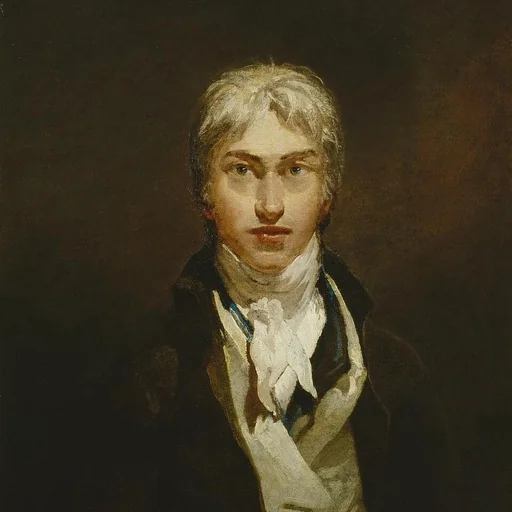
Joseph Mallord William Turner was born in 1775 at Maiden Lane, Covent Garden, where his father kept a barber and wig-making shop.