Artwork
Sketches at Home and Abroad: Falls of Terni
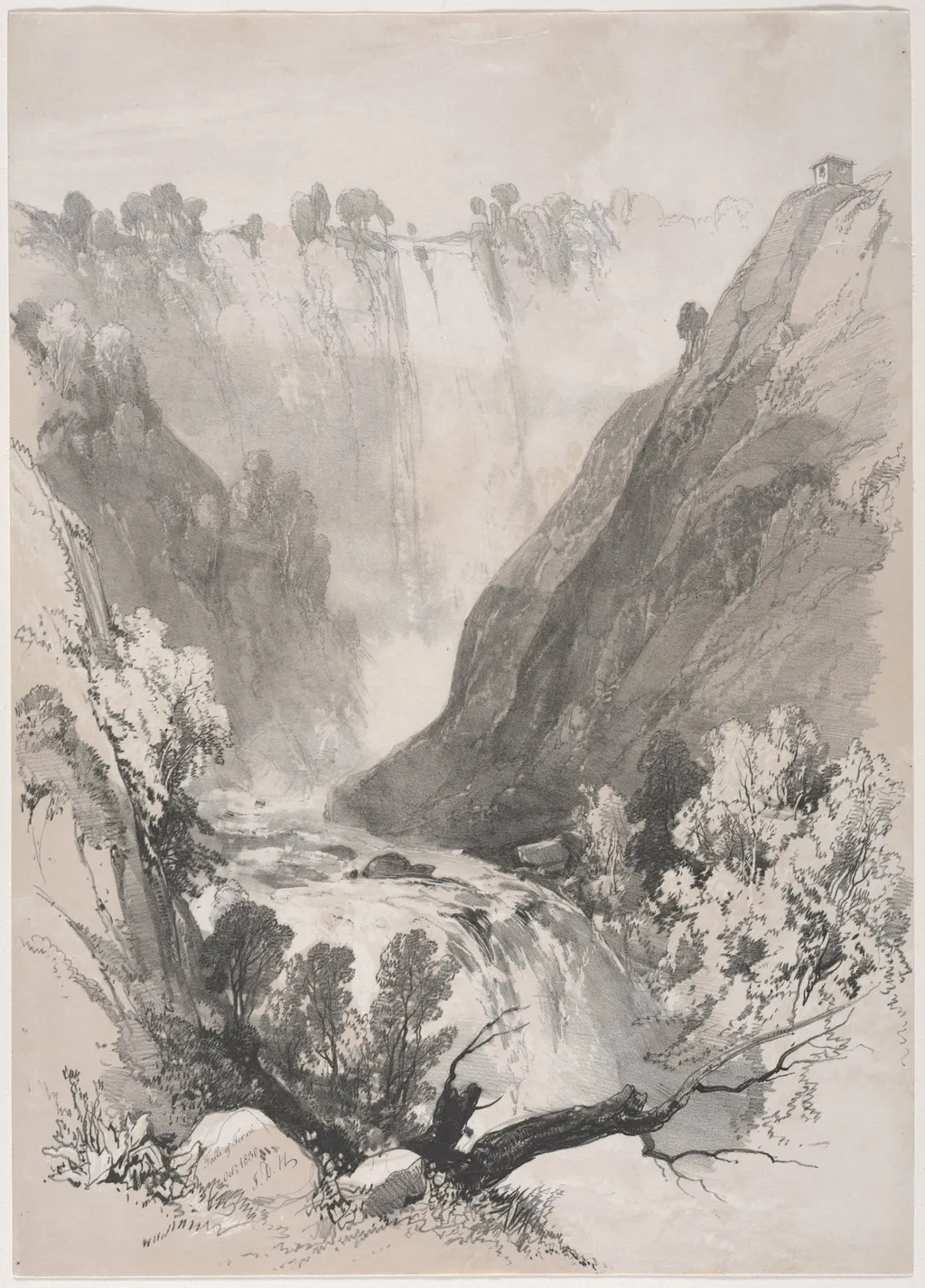
Sketches at Home and Abroad: Falls of Terni is a print by the Romanticist artist James Duffield Harding. It dates from 1830 and is held in the collection of the Cleveland Museum of Art.
About this work
Overview
He pioneered techniques in lithography to mimic the subtleties of watercolor, collaborating closely with master printer Charles Hullmandel.
James Duffield Harding was a prominent English artist known for his watercolors and lithographs, particularly landscapes featuring natural phenomena like waterfalls. Active in the early to mid-19th century, he gained recognition both as a practitioner and educator. His work bridged direct observation with emotional resonance, emphasizing the artist’s internal response to nature over mere replication. He pioneered techniques in lithography to mimic the subtleties of watercolor, collaborating closely with master printer Charles Hullmandel.
Subject & Meaning
The subject, Falls of Terni, depicts a dramatic cascade in central Italy, a site popular with Romantic-era travelers. Harding’s treatment avoids topographical precision in favor of evoking atmosphere—mist, light, and movement convey the site’s emotional weight. The scene invites contemplation rather than documentation, aligning with his belief that art should revive the feelings stirred by nature. The waterfall becomes a symbol of nature’s enduring power, not merely a geographic feature.
Technique & Style
Harding adapted watercolor’s luminous washes to lithography by using two stones: one for line work, another for a pale gray or ochre tone. Unlike earlier color prints where hue served only as background, his color actively shaped mood and depth. He exploited the medium’s capacity for soft gradations, achieving effects akin to transparent washes. This innovation allowed lithographs to carry the intimacy of his sketches, transforming commercial printing into a vehicle for poetic expression.
History & Provenance
Created around 1835, this print emerged from Harding’s travels in Italy and his subsequent efforts to translate field studies into reproducible forms. He worked with Charles Hullmandel, London’s foremost lithographic printer, who refined techniques to accommodate Harding’s nuanced tonal demands. The print was part of a broader series documenting European landscapes, intended for a middle-class audience eager for accessible art that evoked travel and nature. Its production reflected the era’s growing market for illustrated travel literature.
Context
Harding’s work arose during a period when landscape art shifted from idealized compositions toward direct engagement with nature. His teachings aligned with Romantic ideals, valuing personal feeling over academic convention. As a popular instructor, he influenced a generation of amateur artists through manuals and lectures. His prints made these sensibilities widely available, contributing to a cultural appetite for nature as a source of moral and aesthetic reflection beyond elite circles.
Legacy
Harding’s integration of watercolor aesthetics into lithography expanded the expressive potential of printmaking in Britain. His emphasis on emotional authenticity over literal representation influenced later artists and educators. Though less celebrated today, his technical innovations helped democratize landscape art, making nuanced naturalism accessible through affordable prints. His writings on art education remain a record of 19th-century artistic philosophy, prioritizing inner experience over technical mimicry.
Artist & collection
Artist
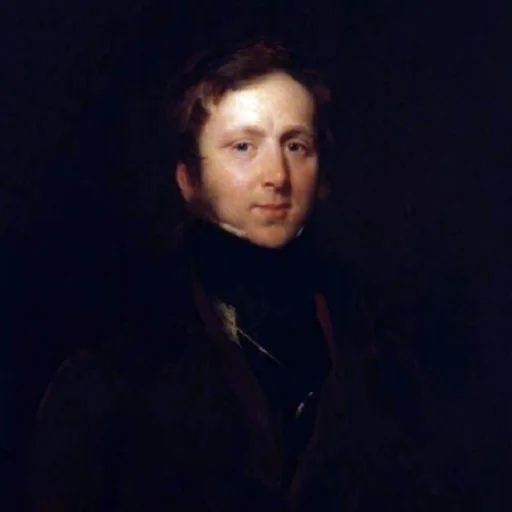
James Duffield Harding (1798 – 4 December 1863) was a British landscape painter, lithographer and author of drawing manuals. His use of tinted papers and opaque paints in watercolour proved influential.

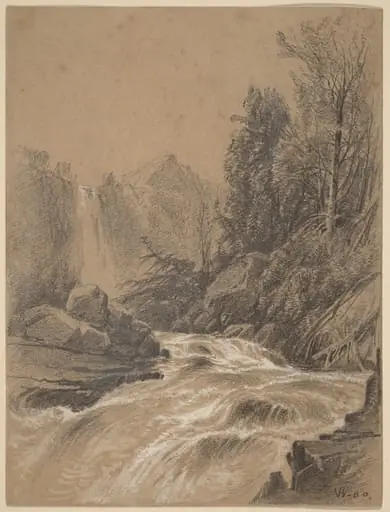 Mountain Landscape, Stream and Waterfall
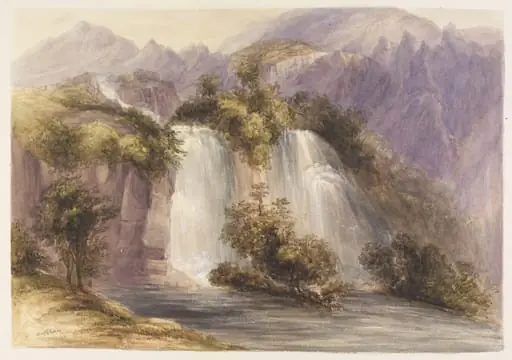 The Beit el-ma Falls, near Antioch
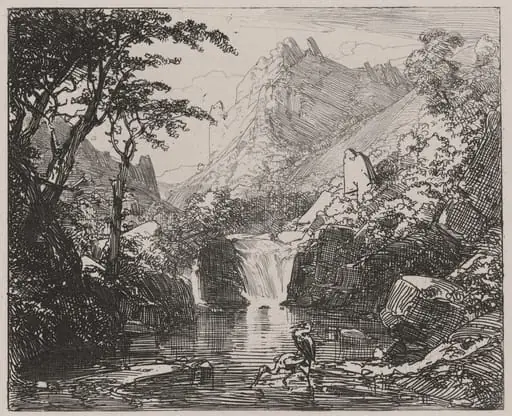 Mountain View with Waterfall and Water Birds
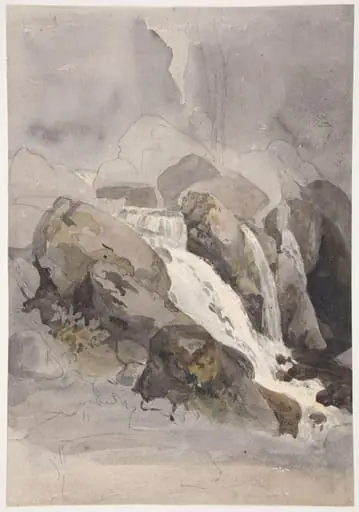 Waterfall in Borrowdale, Cumberland, 1805.
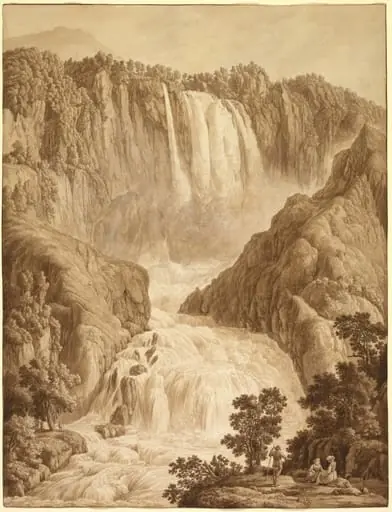 The Waterfall of Marmore at Terni
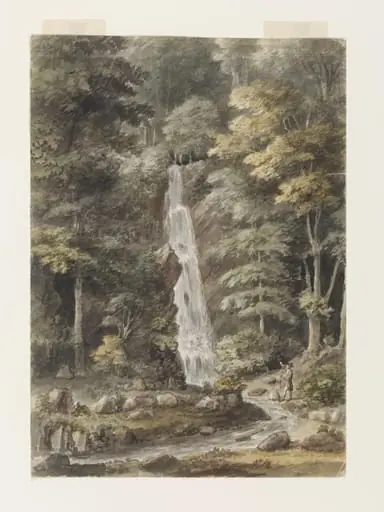 The Cascade at Hestercombe
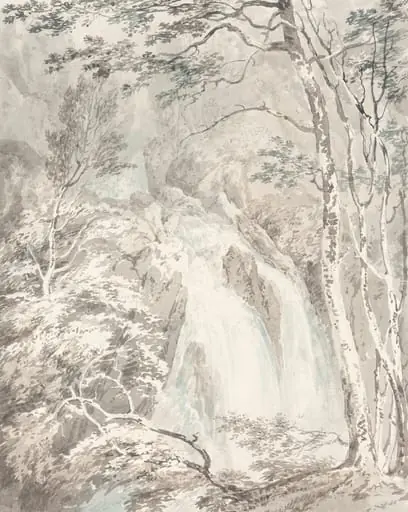 A Waterfall
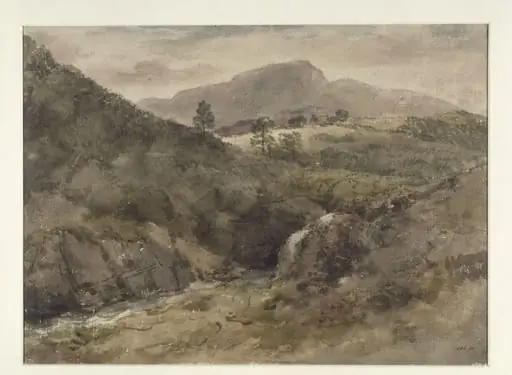 View in the Lake District
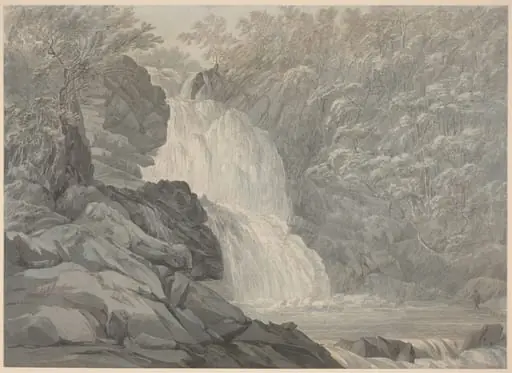 Mawddach Falls near Dolgelly
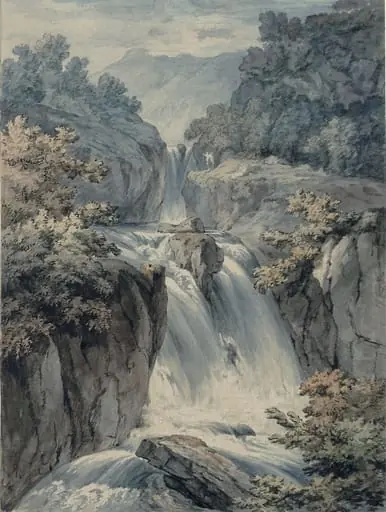 The Waterfall
 Mountain Stream
 Waterfall