Artwork
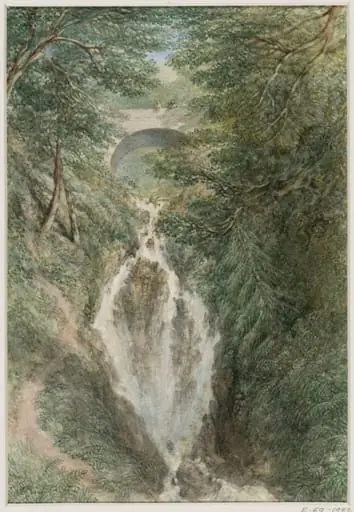
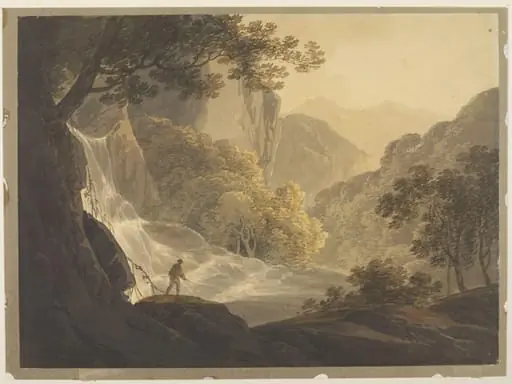
The Cascade at Hestercombe
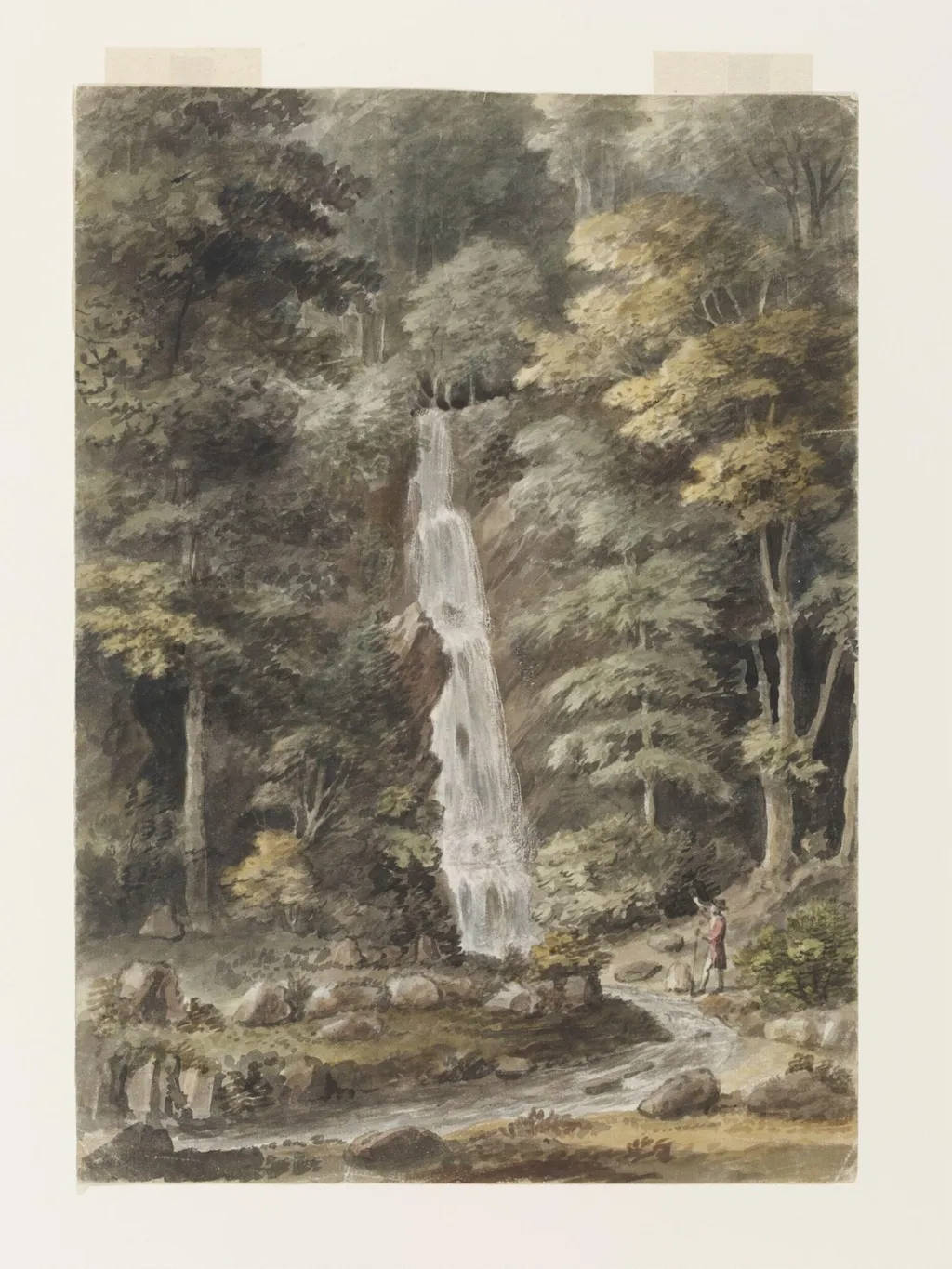
The Cascade at Hestercombe is a watercolor work on paper by the Rococo painting artist Coplestone Warre Bampfylde. It dates from 1770 and is held in the collection of the Victoria and Albert Museum.
About this work
Overview
The Cascade at Hestercombe is a 1770 watercolour by Coplestone Warre Bampfylde, depicting a serene natural scene at Hestercombe, near Taunton.
Subject & Meaning
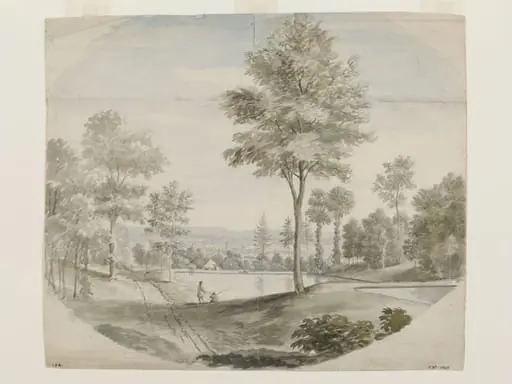
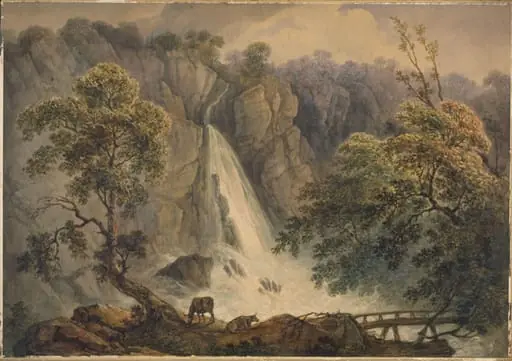
The painting captures a moment of tranquility, focusing on a waterfall cascading into a shallow stream, surrounded by tall trees and a solitary figure contemplating the scene from the water’s edge.
Technique & Style
Bampfylde employed soft watercolour techniques to convey the interplay of light with water and rock, achieving a sense of naturalism and temporal suspension.
History & Provenance
Created in 1770, the work’s provenance is traced to its current holding, with notable exhibition or collection history highlighted by its presence in the Victoria and Albert Museum.
Context
The piece reflects 18th-century British interest in landscape and the sublime, though its calm tone suggests a more intimate, observational approach than dramatic grandeur.
Legacy
While not widely discussed in broad art historical narratives, it contributes to the understanding of watercolour development and landscape tastes of late 18th-century Britain.
Artist & collection
Artist
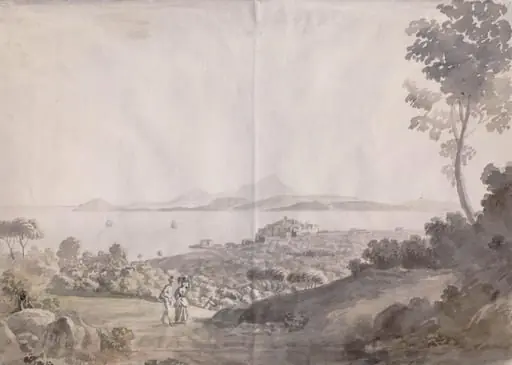
An English watercolor artist in the late 1700s, Bampfylde captured sweeping vistas and studied light across soft hills and Italian shores.