Artwork
Hedging and Ditching
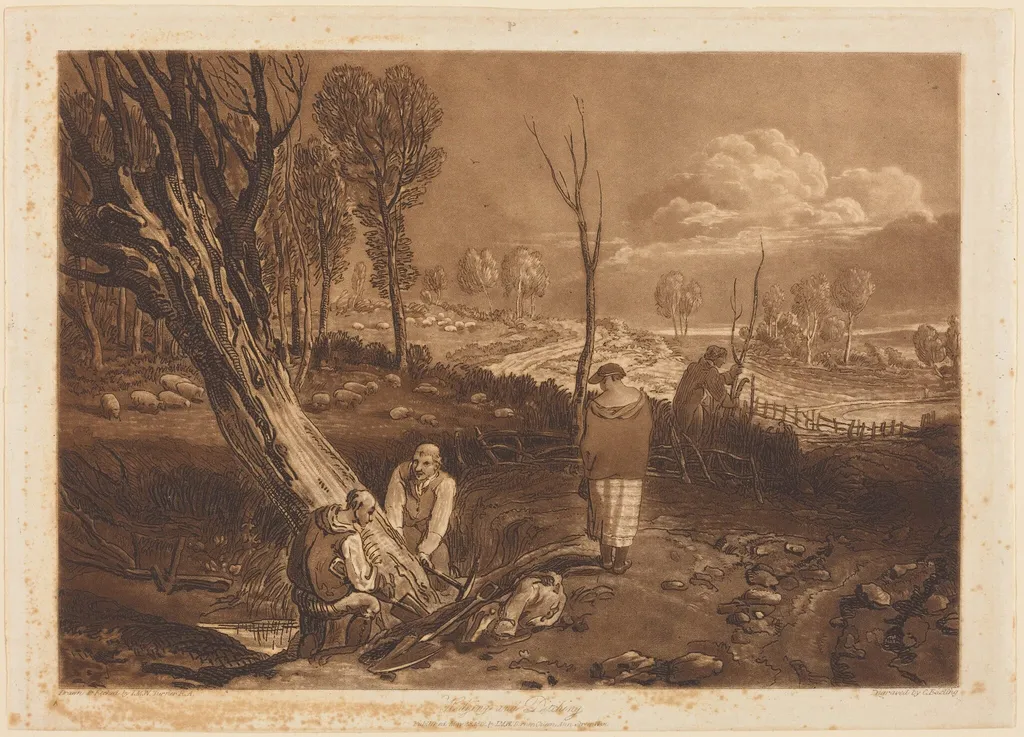
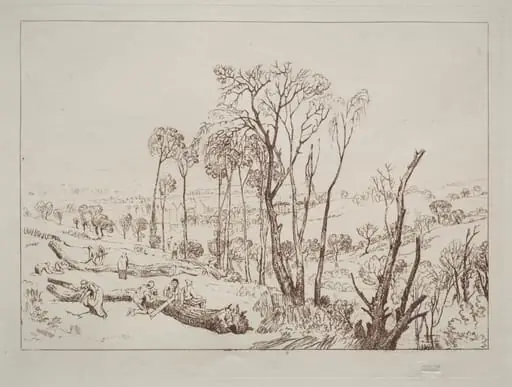
Hedging and Ditching is an ink print by the Romanticist artist Joseph Mallord William Turner. It dates from 1812 and is held in the collection of the National Gallery of Art.
About this work
Overview
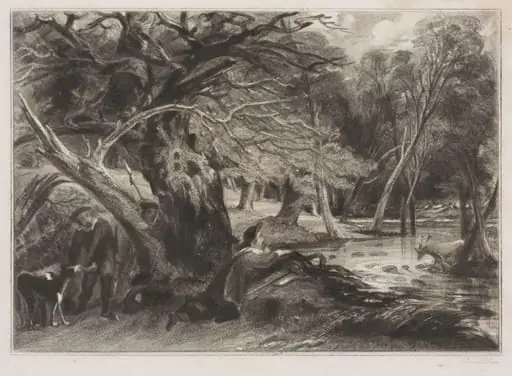
Hedging and Ditching is a print made by Joseph Mallord William Turner in 1812, combining etching and mezzotint techniques. It depicts a rural labor scene set in the English countryside, capturing workers engaged in land maintenance. The composition emphasizes quiet activity rather than dramatic action, with a subdued palette and atmospheric depth characteristic of Turner’s early graphic work.
Subject & Meaning
Figures are grouped in the foreground near a tree, while others toil at a distance, suggesting the scale and rhythm of rural work.
The scene portrays agricultural laborers repairing hedges and ditches, essential tasks for managing farmland. Figures are grouped in the foreground near a tree, while others toil at a distance, suggesting the scale and rhythm of rural work. The image conveys dignity in everyday toil, aligning with Romantic-era interest in the relationship between humans and the natural world, without overt sentimentality.
Technique & Style
Turner employed etching for fine linear detail and mezzotint for rich tonal gradations, creating a moody, atmospheric effect. Dark, earthy tones dominate the foreground, contrasting with a pale, cloud-filled sky that recedes into soft haze. The interplay of light and shadow enhances spatial depth, demonstrating Turner’s mastery in translating landscape emotion into print media.
History & Provenance
Created during Turner’s early career, the print was likely made for private circulation or as part of a series documenting rural life. It was not widely published at the time and remained relatively obscure until later scholarly attention to his graphic oeuvre. Its survival in institutional collections reflects its significance as a study in landscape and labor.
Context
In early 19th-century England, agricultural reforms and enclosure acts transformed rural landscapes and labor patterns. Turner’s image quietly reflects these changes, portraying work that was becoming increasingly mechanized or displaced. The print aligns with broader cultural interest in the countryside, not as idealized pastoral, but as a site of practical, enduring human effort.
Legacy
Hedging and Ditching contributes to the understanding of Turner’s range beyond his luminous seascapes. It reveals his engagement with social and environmental themes through printmaking, influencing later artists who sought to depict labor and landscape with nuance. The work remains a key example of how Romantic sensibility could be expressed through restraint rather than spectacle.
Artist & collection
Artist
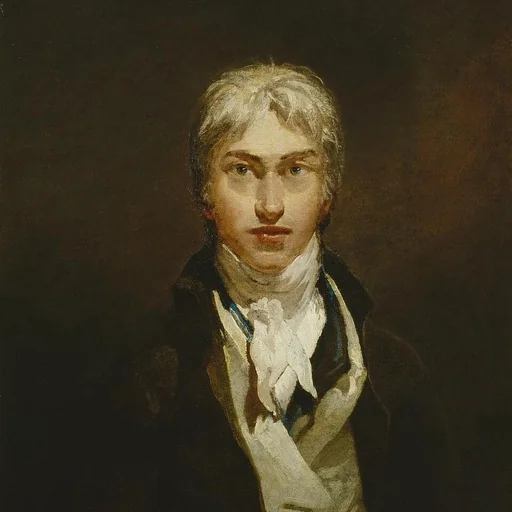
Joseph Mallord William Turner was born in 1775 at Maiden Lane, Covent Garden, where his father kept a barber and wig-making shop.