Artwork
Holy Island Cathedral
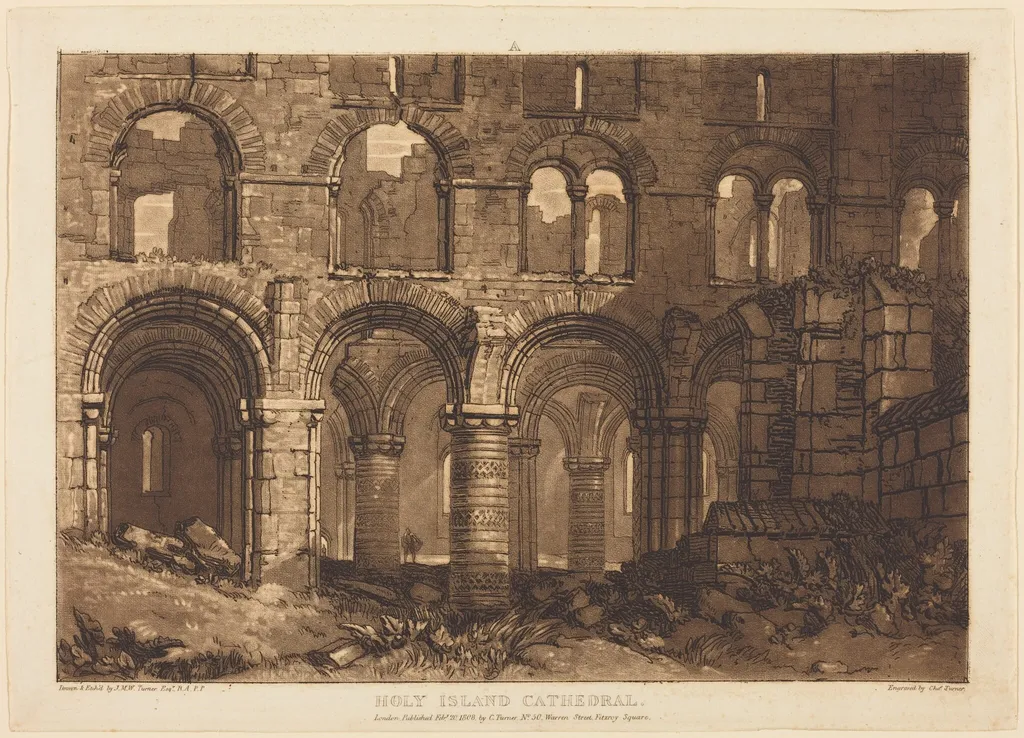
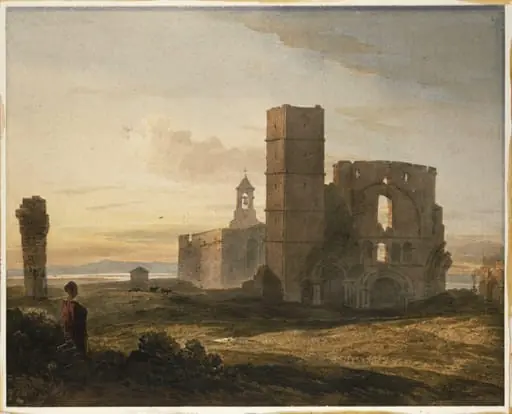
Holy Island Cathedral is an ink print by the Romanticist artist Joseph Mallord William Turner. It dates from 1808 and is held in the collection of the National Gallery of Art. Created in 1808, this print by J.
About this work
Overview
Created in 1808, this print by J. M. W. Turner depicts a cathedral perched on a modest island amid water and trees. The composition centers on the ecclesiastical structure while still rendering the surrounding landscape with careful detail, inviting the viewer to contemplate both architecture and nature within a single frame.
Subject & Meaning
The work presents a solitary cathedral isolated by sea, suggesting themes of spiritual refuge and the interplay between human construction and the natural world. The surrounding foliage and water frame the building, emphasizing its prominence yet also its vulnerability within a mutable environment.
Technique & Style
Turner employed a combination of etching and mezzotint, exploiting the latter’s capacity for rich tonal gradations. By contrasting deep shadows with luminous highlights, he creates a dramatic chiaroscuro that heightens the sense of depth and atmosphere, characteristic of his early printmaking experiments.
History & Provenance
The print was produced during Turner’s early career, a period when he was exploring print techniques to disseminate his landscapes more widely. It entered several private collections in the 19th century before being acquired by a public institution, where it remains part of the museum’s Turner holdings.
Artist & collection
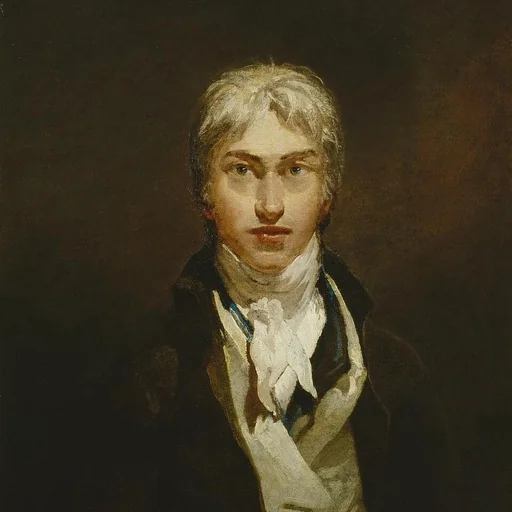
Artist
Joseph Mallord William Turner was born in 1775 at Maiden Lane, Covent Garden, where his father kept a barber and wig-making shop.

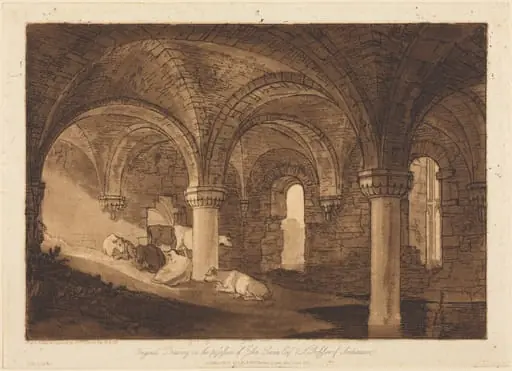 Crypt of Kirkstall Abbey
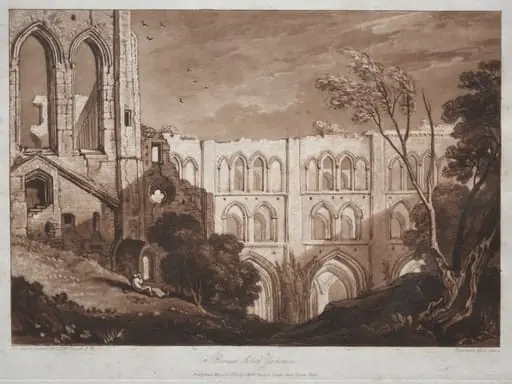 Liber Studiorum: Rivaux Abbey, Yorkshire
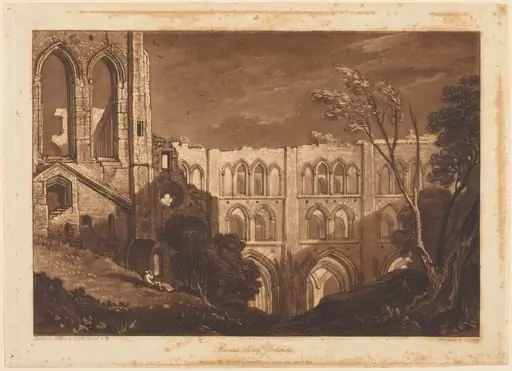 Rivaux Abbey
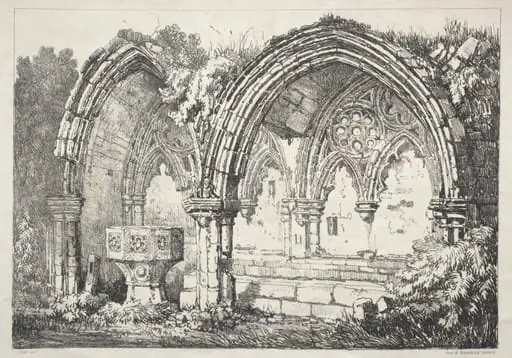 A Series of Ancient Buildings and Rural Cottages in the North of England: Part of Kirkham Abbey
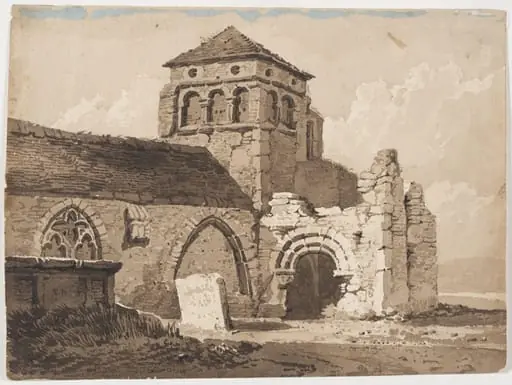 Old Shoreham Church, Sussex
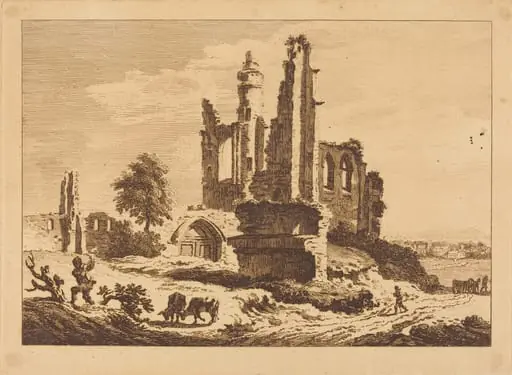 Ruined Abbey with Cattle and a Man Chopping Wood
 Interior of the Temple Church
 Rievaulx Abbey, Yorkshire
 Ruins of the Priory Church, Holy Island
 Lindisfarne Abbey, Northumberland