Artwork
Ruined Abbey with Cattle and a Man Chopping Wood
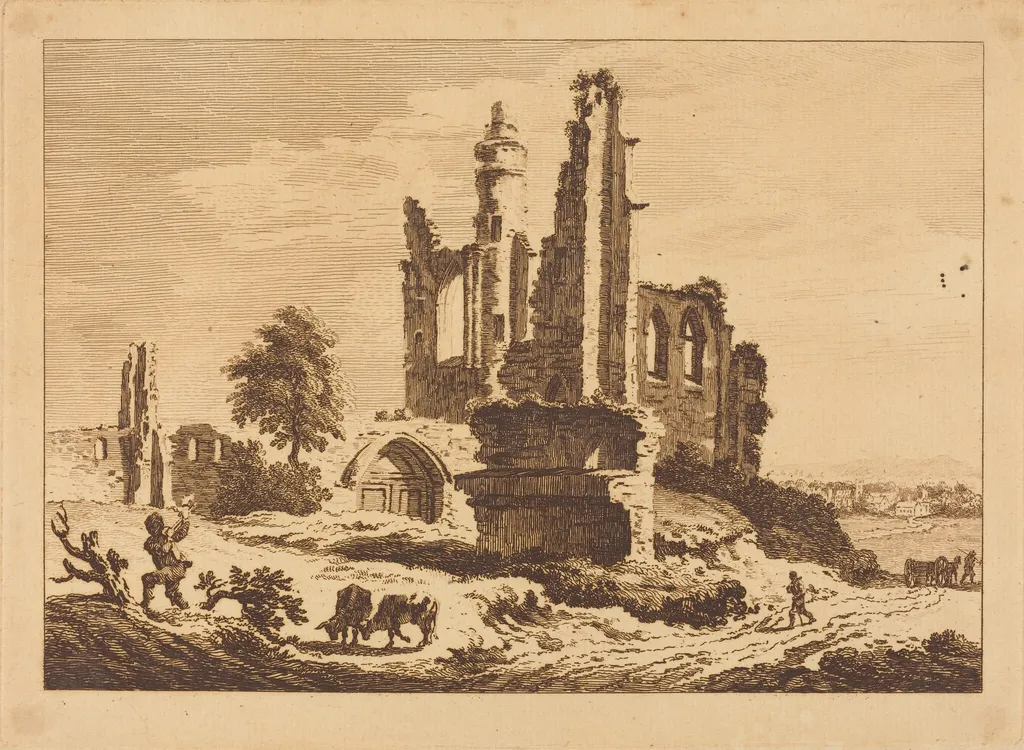
Ruined Abbey with Cattle and a Man Chopping Wood is an ink print by the Romanticist artist Paul Sandby. It dates from 1758 and is held in the collection of the National Gallery of Art.
About this work
Overview
As a trained mapmaker, he brought cartographic clarity to his prints, blending observation with subtle idealization.
Paul Sandby’s 1758 etching captures a quiet rural scene centered on the remnants of a medieval abbey. The composition integrates human labor and animal presence within a decaying architectural setting, reflecting Sandby’s interest in documenting the English landscape with precision and restraint. As a trained mapmaker, he brought cartographic clarity to his prints, blending observation with subtle idealization.
Subject & Meaning
The scene portrays everyday rural activity—cattle grazing and a woodcutter at work—amidst the ruins of a once-sacred structure. The juxtaposition suggests the passage of time and the quiet reclamation of nature over human endeavor. There is no overt narrative or moralizing; instead, the image conveys a sense of continuity between labor, land, and decay.
Technique & Style
Executed in etching, the work demonstrates Sandby’s mastery of fine line and tonal gradation. Delicate hatching defines architectural fragments and foliage, while soft contrasts in light suggest early morning or late afternoon. The technique allows for both precision in detail and atmospheric nuance, characteristic of topographical prints of the period.
History & Provenance
Created in 1758, the print predates Sandby’s role in founding the Royal Academy in 1768 but aligns with his growing reputation as a landscape artist. It was likely produced for a private or scholarly audience interested in antiquities and rural life. The work survives in several institutional collections, testament to its early recognition within British print culture.
Context
In mid-18th-century Britain, interest in ruins and pastoral scenes grew alongside antiquarian studies and the rise of the picturesque aesthetic. Sandby’s work contributed to this trend by presenting ruins not as mere relics, but as integrated elements of an evolving countryside, valued for their quiet harmony with daily life.
Legacy
Sandby’s etchings helped shape a distinctly British approach to landscape printmaking, emphasizing observation over romanticism. His focus on vernacular scenes and architectural detail influenced later topographical artists and contributed to the development of landscape as a legitimate subject in academic art.
Artist & collection
Artist
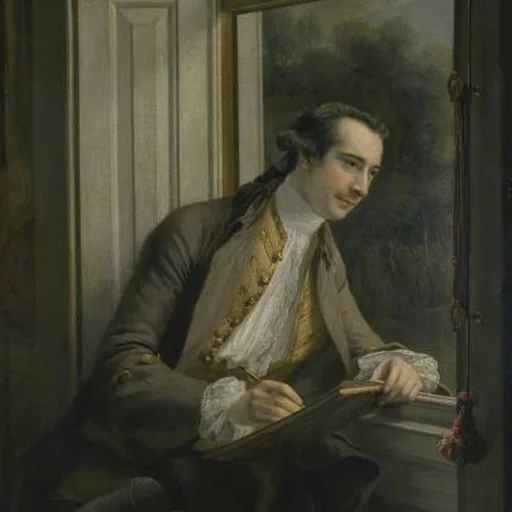
Paul Sandby, (1731 – 7 November 1809) was an English mapmaker and painter who specialised in landscape art. Along with his older brother Thomas Sandby, he was one of the founding members of the Royal Academy in 1768.

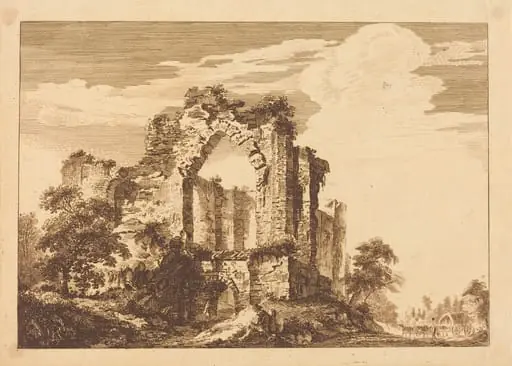 Ruins with a Seated Man, and a Covered Wagon in the Distance
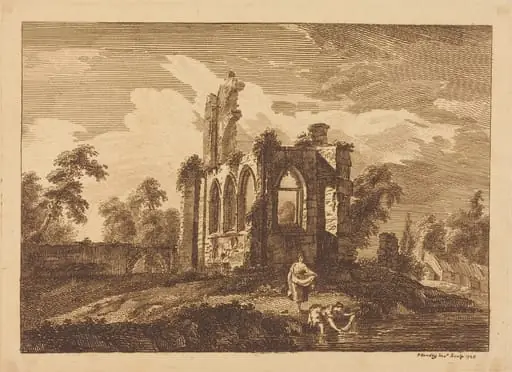 Ruins with Two Women Washing Clothes in a River
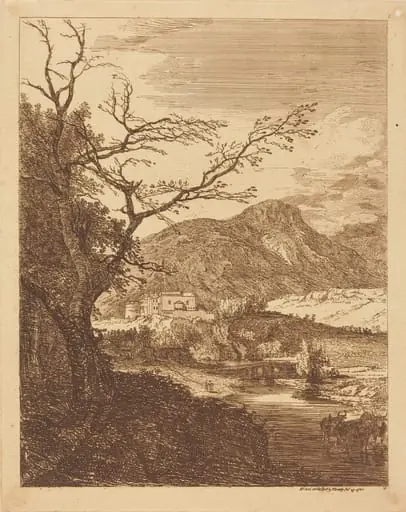
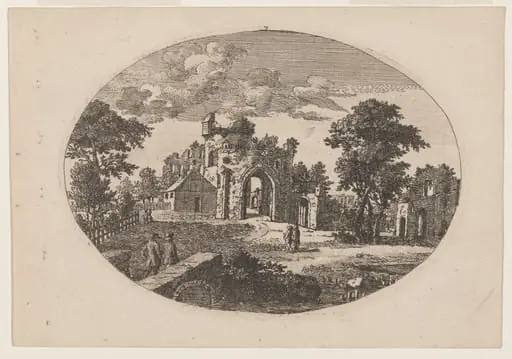 Ruins near a Stream, a Distant Building at the Foot of a Mountain
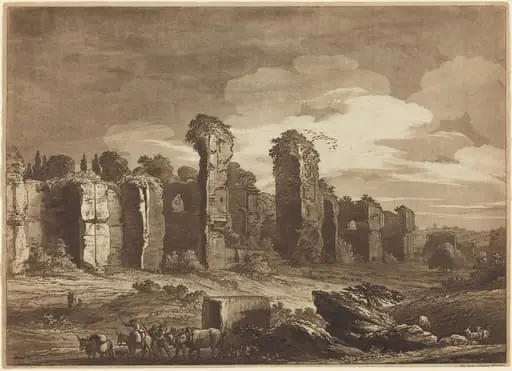 View of the Remains of Caracalla's Baths, Taken from the Jesuits Gardens at Rome
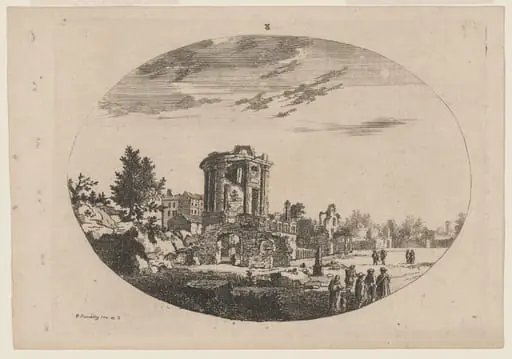 Ruined Circular Temple
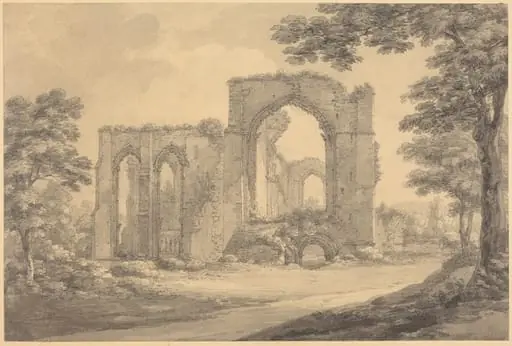 Furness Abbey
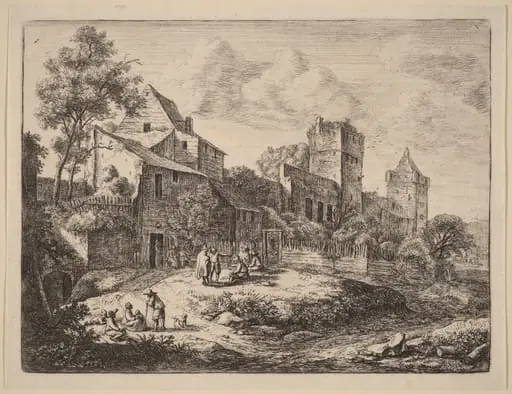 Square in Front of an Inn
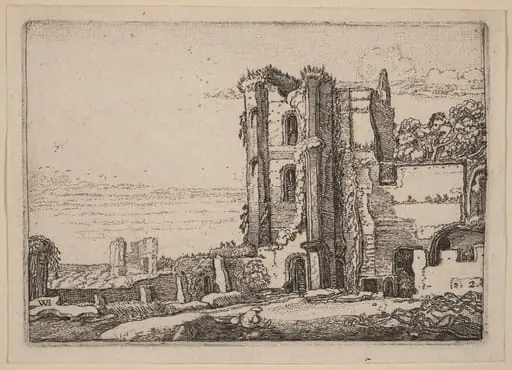 Ruined Tower Right of Center