Artwork
Junction of Severn and Wye
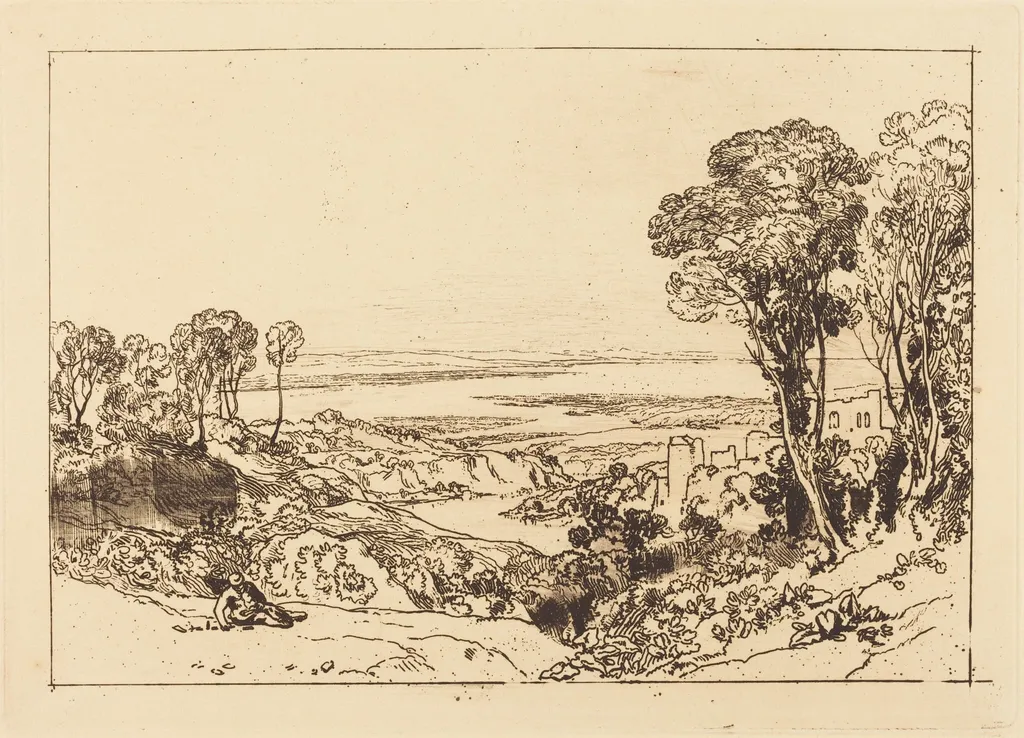
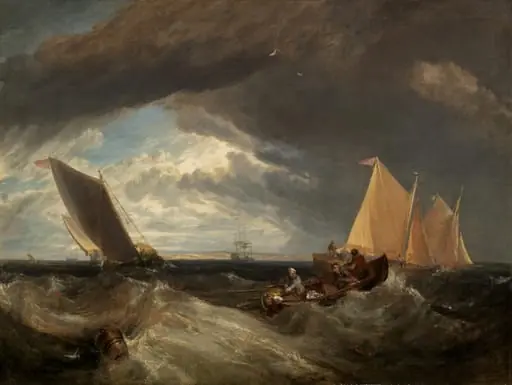
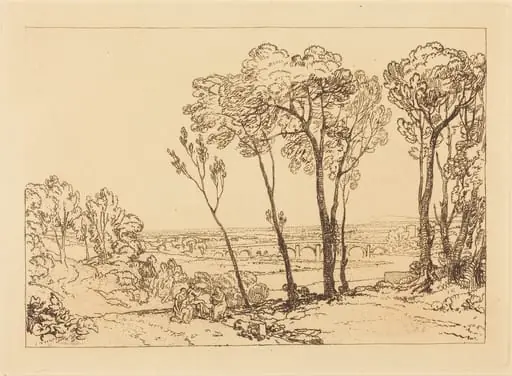
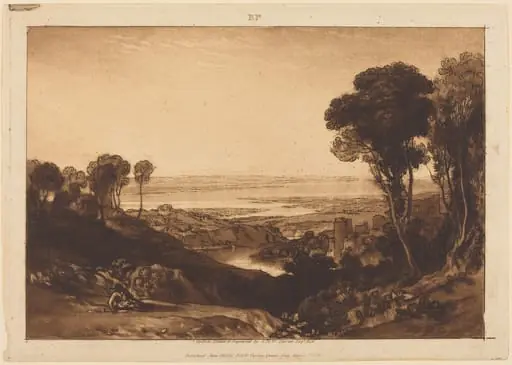
Junction of Severn and Wye is an ink print by the Romanticist artist Joseph Mallord William Turner. It dates from 1811 and is held in the collection of the National Gallery of Art.
About this work
Overview
Junction of Severn and Wye is an 1811 etching by the British landscape artist J. M. W. Turner. Executed as a single‑plate print, the work captures a tranquil stretch of river flanked by gentle hills and scattered trees, with a few modest structures perched along the water’s edge.
Subject & Meaning
The composition presents a serene river scene where the water winds through a pastoral landscape, suggesting a quiet moment in the English countryside. The modest buildings hint at human presence without dominating the natural setting, emphasizing the harmony between land, water, and sky.
Technique & Style
Turner employed the etching process, incising lines into a copper plate and then applying ink to create tonal variation. The drawing‑like quality of the lines, combined with subtle shading, gives the hills and foliage a soft solidity, while the sky is rendered with faint, almost impressionistic strokes that suggest ambient light.
History & Provenance
Created in 1811, the print belongs to the early period of Turner’s printmaking experiments, when he was exploring the possibilities of etching to complement his oil paintings. It has since been held in several public collections, reflecting the artist’s ongoing interest in disseminating his landscape visions through reproducible media.
Artist & collection
Artist
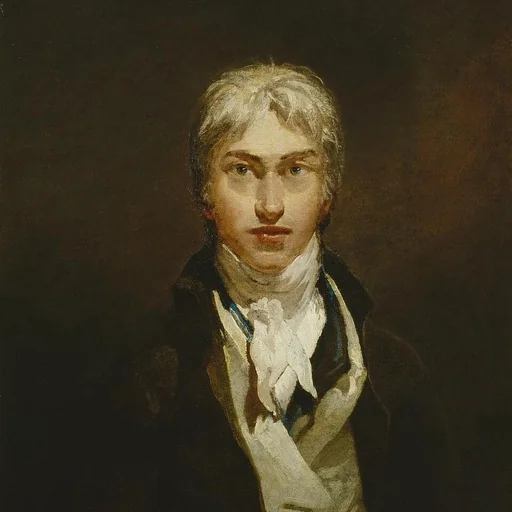
Joseph Mallord William Turner was born in 1775 at Maiden Lane, Covent Garden, where his father kept a barber and wig-making shop.

 The Bridge in Middle Distance
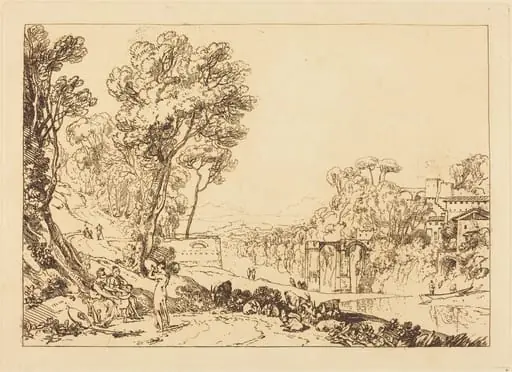 The Woman and Tambourine
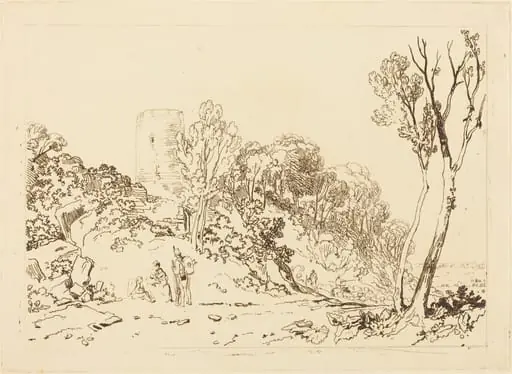 Winchelsea, Sussex
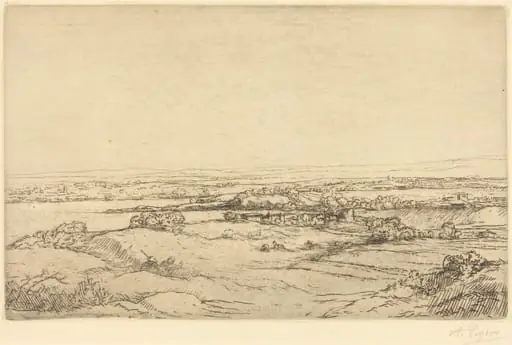 Plain near a Lake (La plaine pres du lac)
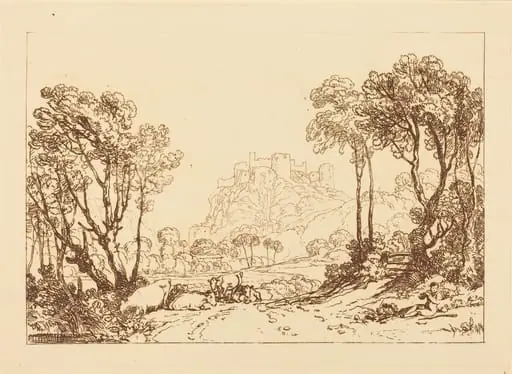 The Castle Above the Meadows
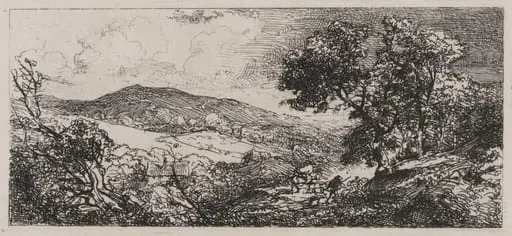 Valley View, Man with a Donkey and a Dog
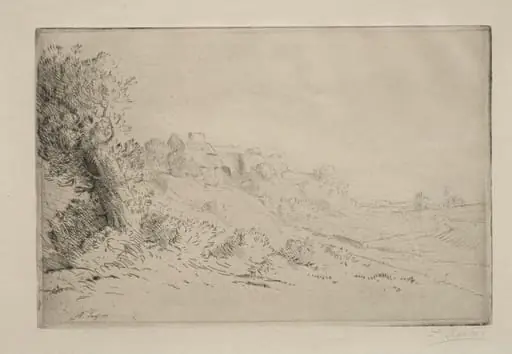 My Farm
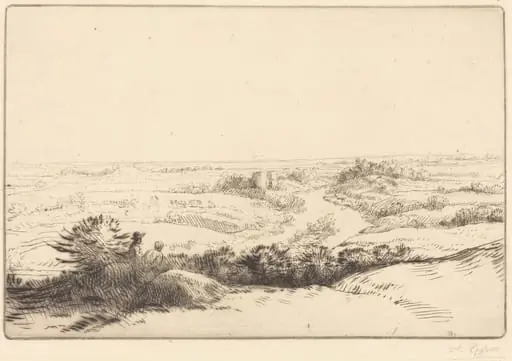 Prospect (Le point de vue)
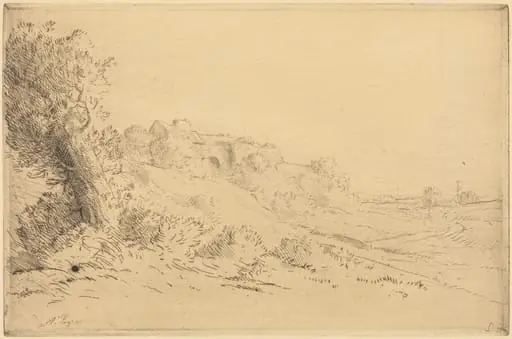 My Farm (Ma ferme)
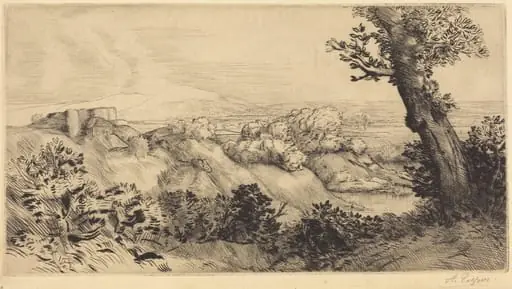 Top of the Hill (Le haut de la colline)
 A Souvenir of Ostia
 Junction of Severn and Wye