Artwork
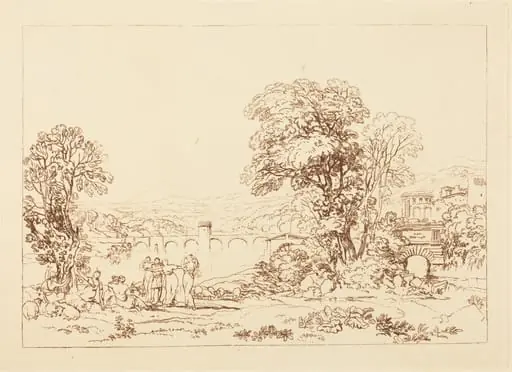
The Bridge in Middle Distance
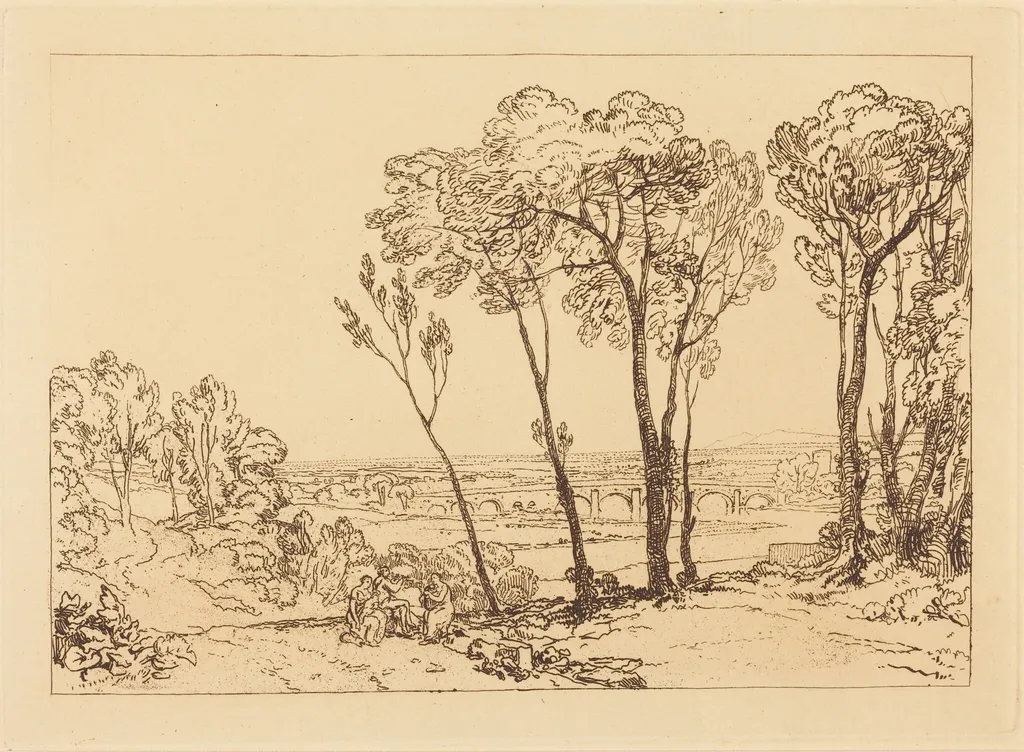
The Bridge in Middle Distance is an ink print by the Romanticist artist Joseph Mallord William Turner. It dates from 1808 and is held in the collection of the National Gallery of Art.
About this work
Overview
Joseph Mallord William Turner produced the etching titled The Bridge in Middle Distance in 1808. Executed as a print, the work portrays a tranquil riverside setting where a modest bridge spans the water, framed by a line of tall trees that guide the eye toward the distant horizon.
Subject & Meaning
The composition captures a serene moment along a riverbank, with figures leisurely seated or strolling near the shore. The gentle arch of the bridge and the surrounding foliage suggest a quiet passage through nature, inviting contemplation of the landscape’s calm atmosphere.
Technique & Style
Turner employed the etching process, using acid to incise lines into a metal plate before applying ink. The artist allowed the ink to flow and soften on the plate, producing a hazy, atmospheric quality that was characteristic of early‑nineteenth‑century attempts to render light and mood.
History & Provenance
Created in the early phase of Turner’s printmaking career, the piece reflects his interest in exploring the possibilities of the medium. While specific ownership details are scarce, the work is documented among Turner’s 1808 etchings and has been referenced in studies of his early print output.
Context
During the 1800s, British artists increasingly turned to etching to capture fleeting effects of weather and illumination. Turner’s approach aligns with this trend, emphasizing tonal variation and the suggestion of depth over precise detail.
Own this work as a print
Artist & collection
Artist
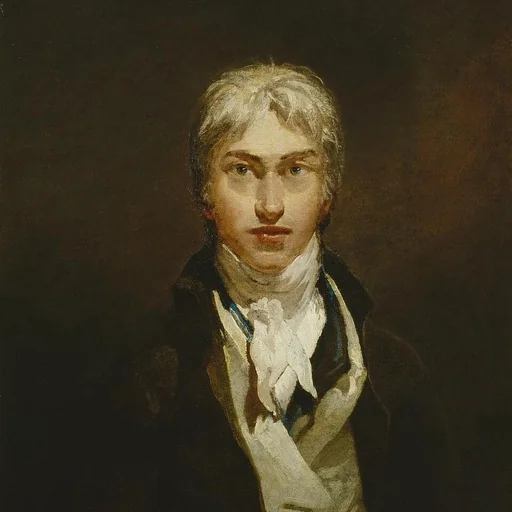
Joseph Mallord William Turner was born in 1775 at Maiden Lane, Covent Garden, where his father kept a barber and wig-making shop.

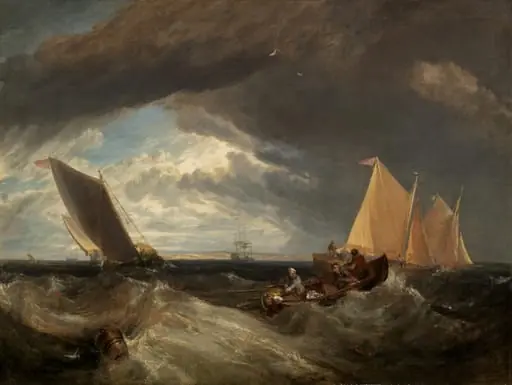
 Junction of Severn and Wye
 Winchelsea, Sussex
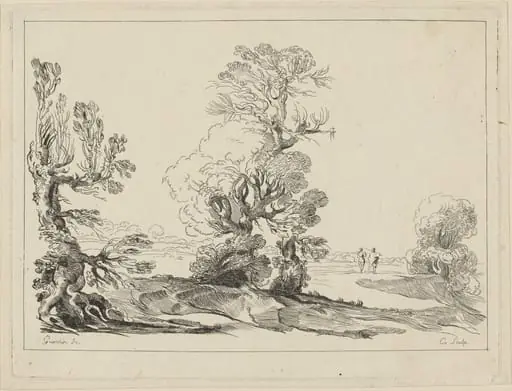 Landscape
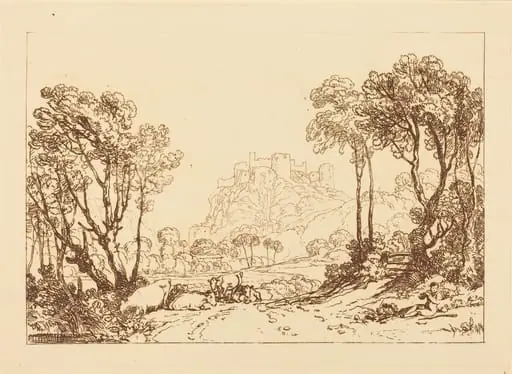 The Castle Above the Meadows
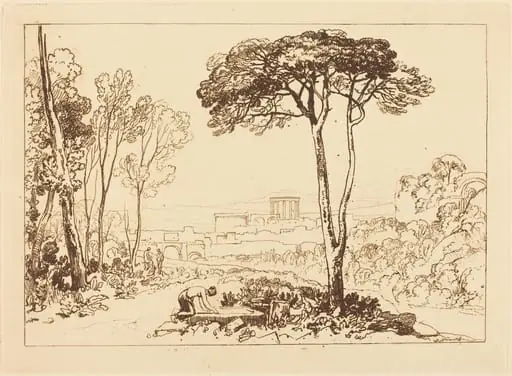 Scene in the Campagna
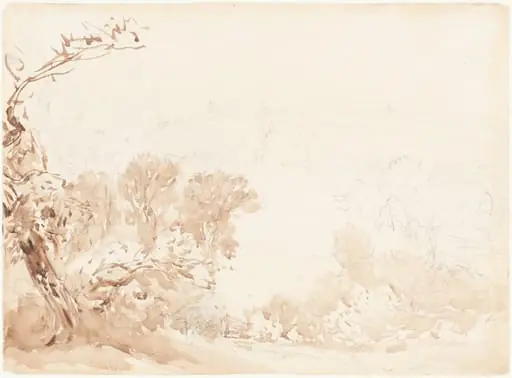 Hillside and Trees
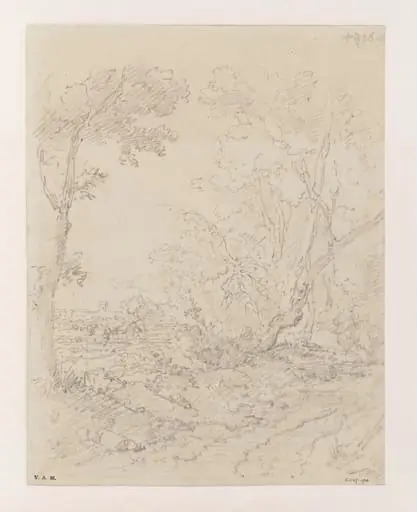 The buildings of Macau seen across fields from a tree-lined lane
 Apuleia in Search of Apuleius
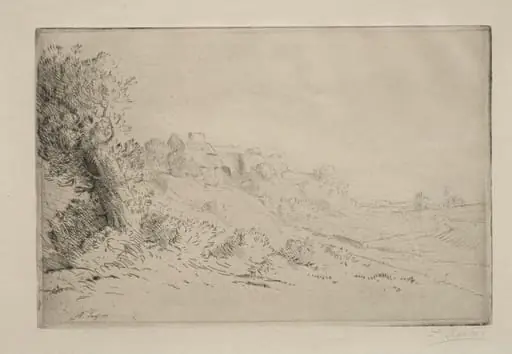 My Farm
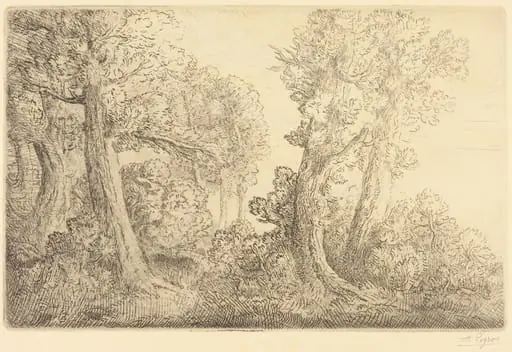 Near the Woods, Veronne (Pres du bois, Veronne)
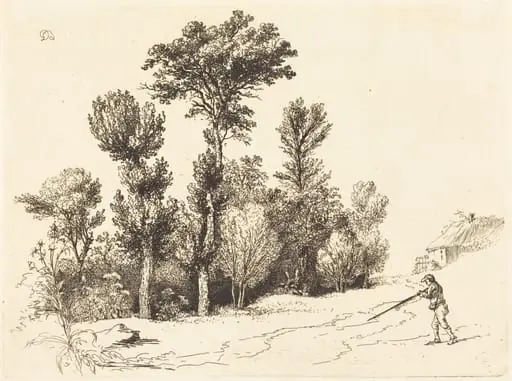 Petit Bosquet au Chasseur
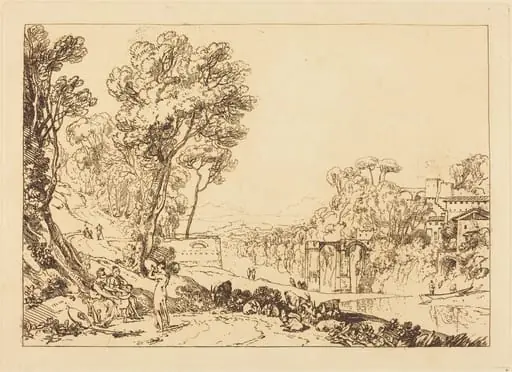 The Woman and Tambourine