Artwork
Apuleia in Search of Apuleius
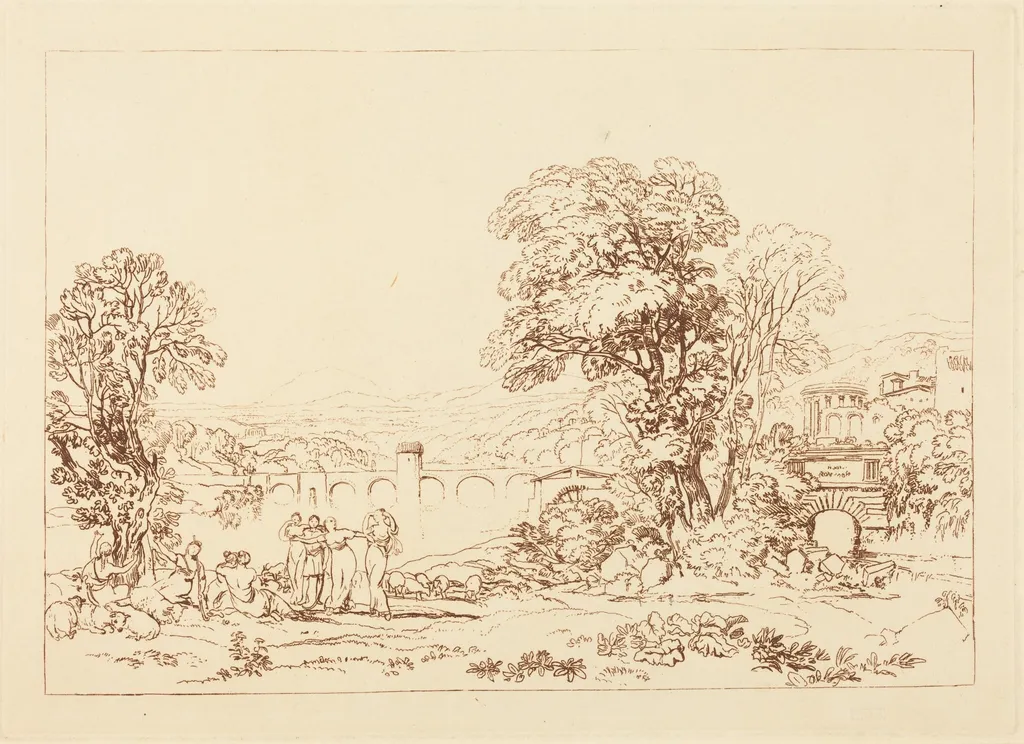
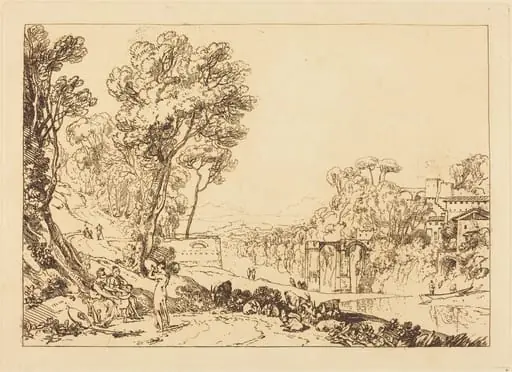
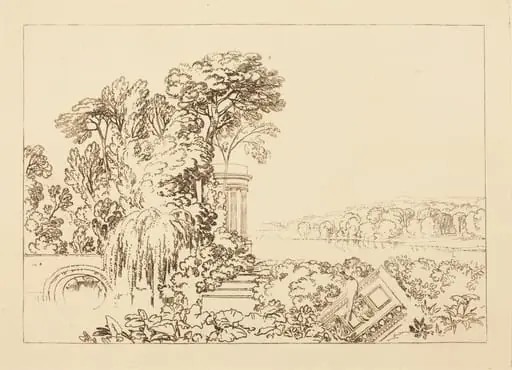
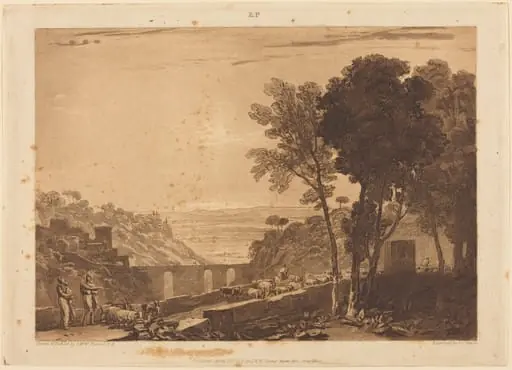
Apuleia in Search of Apuleius is an ink print by the Romanticist artist Joseph Mallord William Turner. It dates from 1813 and is held in the collection of the National Gallery of Art.
About this work
Overview
Etching allowed him to achieve subtle tonal variations by incising lines into a metal plate, then inked and pressed onto paper.
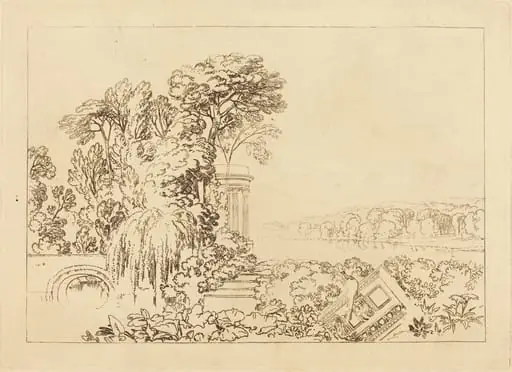
Created in 1813, this etching by Joseph Mallord William Turner depicts a tranquil landscape featuring a bridge, scattered figures, and a small classical structure amid trees. The work belongs to Turner’s early printmaking period, where he explored atmospheric effects through delicate line work. Etching allowed him to achieve subtle tonal variations by incising lines into a metal plate, then inked and pressed onto paper.
Subject & Meaning
The title references Apuleius, the ancient Roman writer, though the scene offers no literal narrative. Instead, it evokes a contemplative mood, suggesting a literary or philosophical reverie within a pastoral setting. The temple-like building and quiet figures imply a space for reflection, aligning with Romantic-era ideals that linked nature with intellectual or emotional introspection.
Technique & Style
Turner employed etching to render soft, fluid lines that suggest light and movement rather than rigid form. The plate was coated with wax, then scratched with a needle to expose the metal, which was later bitten by acid. The resulting print shows delicate gradations of tone, with minimal contrast, emphasizing atmosphere over detail — a hallmark of Turner’s graphic work during this phase.
History & Provenance
This print was produced during Turner’s early career, when he was actively contributing to illustrated publications and expanding his reputation beyond painting. It likely circulated among collectors and patrons interested in his graphic output. No specific early ownership records are widely documented, but it remains part of institutional collections that preserve his printed oeuvre.
Context
In the early 1810s, Turner was refining his approach to landscape as a vehicle for mood rather than topographical accuracy. Etching offered him a medium to experiment with light and texture outside the constraints of oil painting. This work reflects broader Romantic trends in British art, where nature served as a vessel for contemplation and literary allusion.
Legacy
Though less known than his large-scale watercolors and oils, this etching exemplifies Turner’s mastery of graphic media and his ability to convey emotion through minimal means. It contributed to the growing appreciation of printmaking as a serious artistic form in early 19th-century Britain and remains a quiet testament to his evolving visual language.
Own this work as a print
Artist & collection
Artist
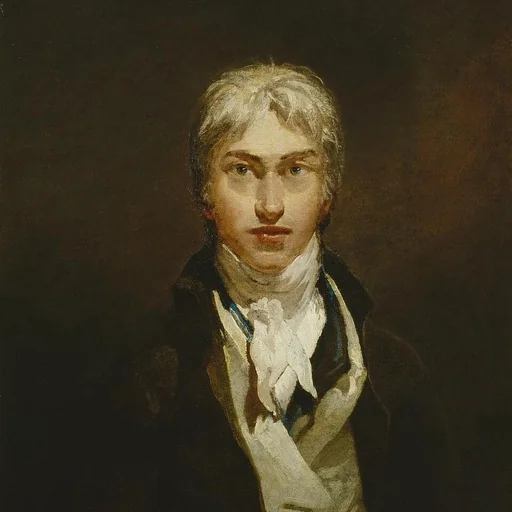
Joseph Mallord William Turner was born in 1775 at Maiden Lane, Covent Garden, where his father kept a barber and wig-making shop.