Artwork
Former Dolmabahçe Palace and Mosque
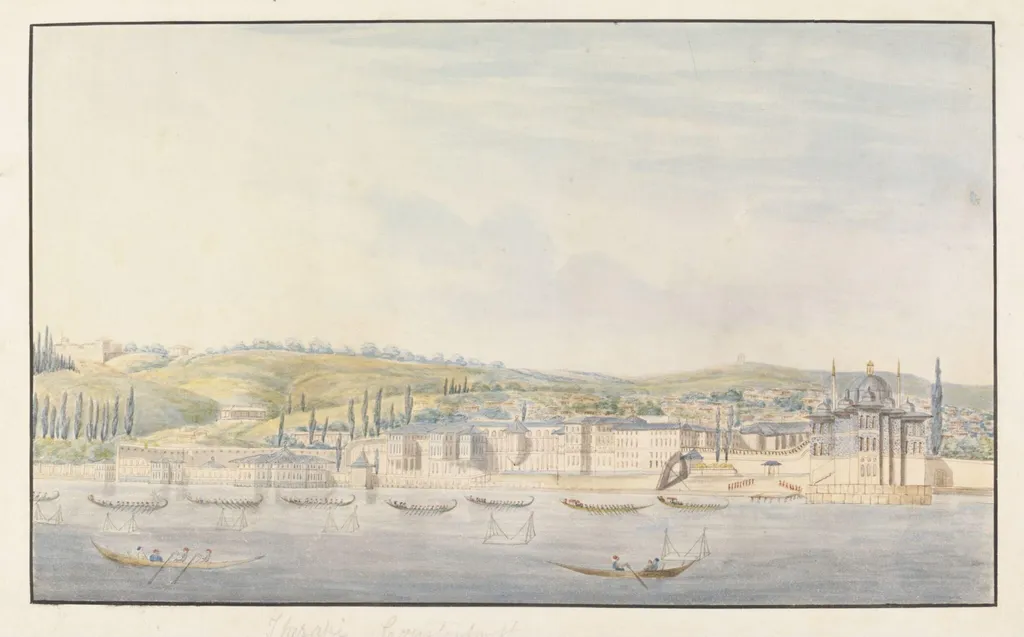
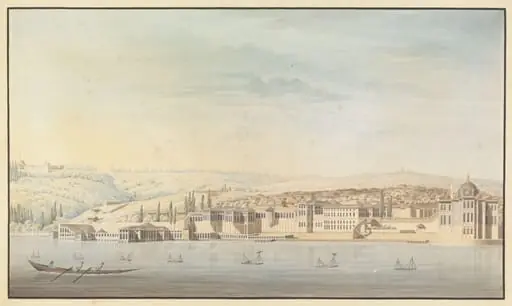
Former Dolmabahçe Palace and Mosque is a watercolor work on paper by the British Romanticist artist Mary Anne Turner. It dates from 1826 and is held in the collection of the Victoria and Albert Museum.
About this work
Overview
Executed in delicate washes, the work captures a serene waterfront vista with modest boats in the foreground and larger vessels farther out.
This 1826 watercolour by Mary Anne Turner depicts the Dolmabahçe Palace and adjacent mosque along the Bosphorus shoreline. Executed in delicate washes, the work captures a serene waterfront vista with modest boats in the foreground and larger vessels farther out. The composition reflects a quiet observational approach, likely based on an earlier visual source, and was acquired in 1972 alongside a related piece from the dealer Holder.
Subject & Meaning
The scene centers on two prominent Ottoman structures—the palace and mosque—elevated on a gentle slope above the water. Their placement suggests both political and spiritual authority, while the presence of everyday maritime activity grounds the image in lived reality. The absence of human figures amplifies a sense of stillness, inviting contemplation rather than narrative.
Technique & Style
Turner employed soft, translucent watercolour washes to render the architecture and landscape with subtle gradations of tone. Brushwork is restrained, favoring gentle contours over sharp detail, creating an atmospheric effect. The muted palette and hazy horizon align with early 19th-century British watercolour traditions, emphasizing mood over topographical precision.
History & Provenance
The work was purchased in October 1972 for £14 from the dealer Holder, alongside a companion piece. Its origin traces to Turner’s travels in the Ottoman Empire, though the exact circumstances of its creation remain undocumented. The image likely derives from an earlier composition, possibly SD.1263, indicating a practice of reworking visual material from sketchbooks or published sources.
Context
In 1826, the Dolmabahçe complex was still under construction, serving as a symbol of Ottoman modernization. European artists often documented such sites during increasing diplomatic and commercial engagement with the empire. Turner’s quiet depiction contrasts with more dramatic Orientalist portrayals, reflecting a personal, intimate engagement with the landscape.
Legacy
Though not widely exhibited, the watercolour contributes to a modest corpus of early 19th-century British female artists documenting the Ottoman world. Its understated aesthetic offers a counterpoint to grander imperial narratives, preserving a moment of calm observation amid political transformation.
Artist & collection
Artist
Mary Anne Turner painted crisp watercolors of 19th-century Istanbul. In 1826 she stood at the Galata waterfront and recorded Üsküdar and Saray Burnu from Galata, with the Sea of Marmara in the distance, then turned…

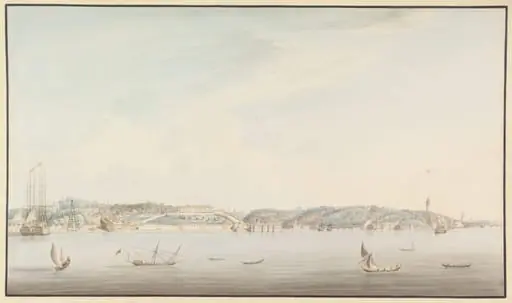 Kasim Pasa, the former Ottoman Naval Arsenal, from the Golden Horn
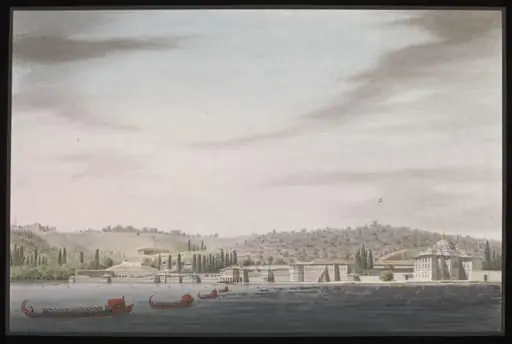 Besiktas on the Bosphorus
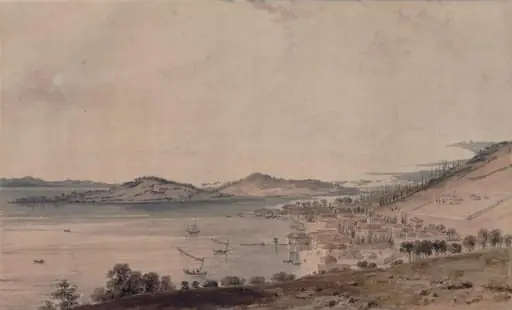 Islands Khalxi and Prinkipos, Sea of Marmora
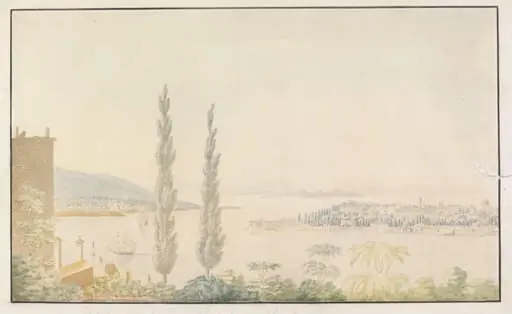 Üsküdar and Saray Burnu from Galata, with the Sea of Marmara in the distance
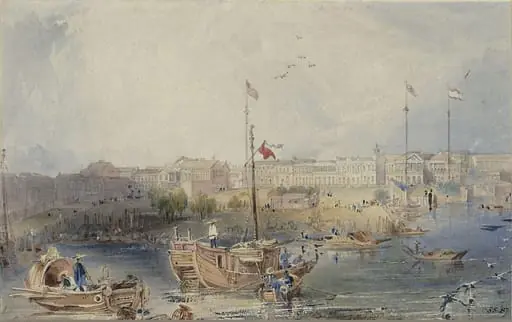 View in Guangzhou (Canton), China
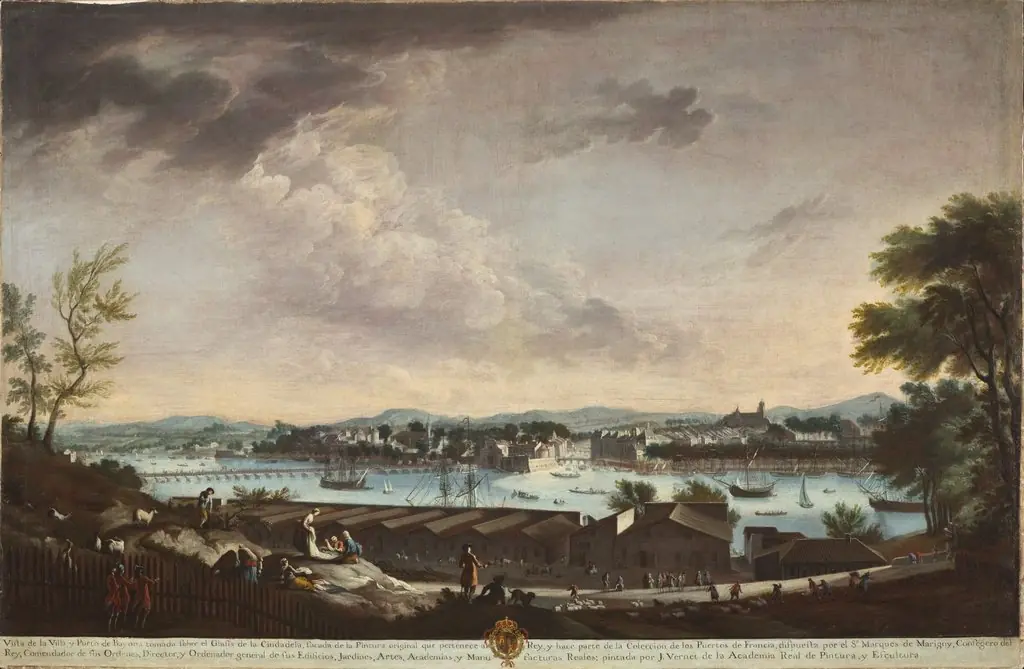 View of the Town and Port of Bayonne (La villa y puerto de Bayona)
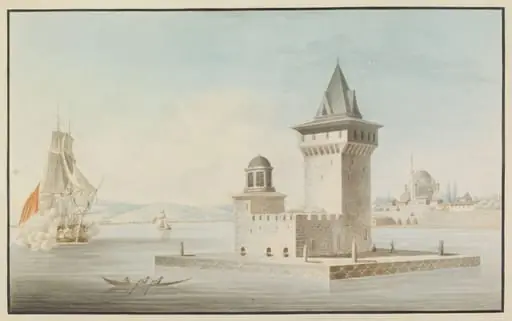 Kiz Kulesi (Leander's or Maiden's Tower) in the Bosphorus with Ayazma Camii near the shore at Üsküdar (Scutari)
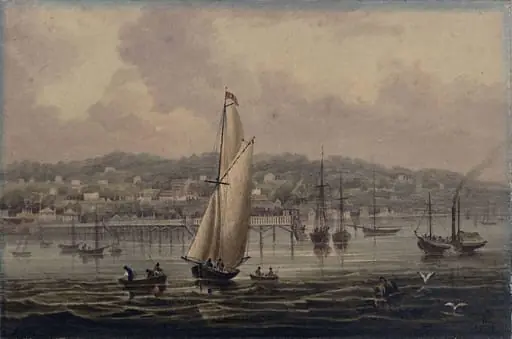 Ryde, Isle of Wight
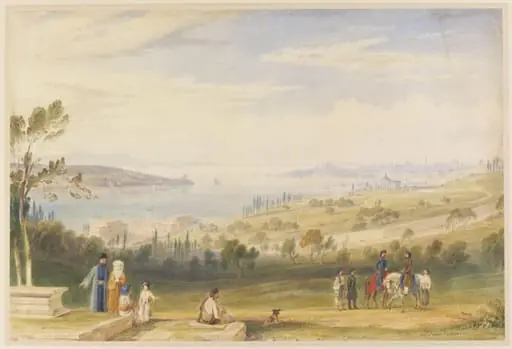 View of the Bosphorus from above Dolmabahçe, looking towards the Sea of Marmara
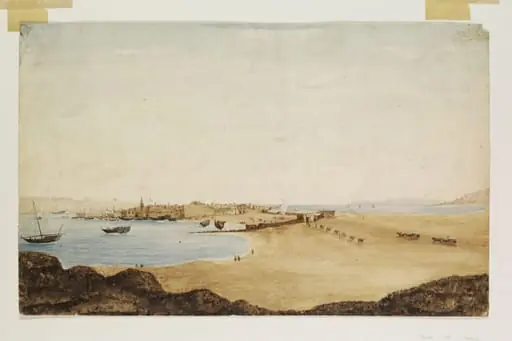 Suez from the Ruins of Colsum
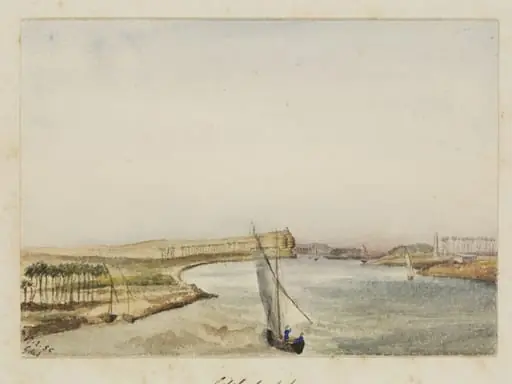 `Gibel-el-dab'
 Former Dolmabahçe Palace and Mosque