Artwork
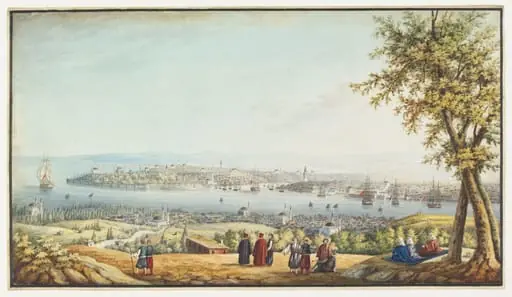
View of the Bosphorus from above Dolmabahçe, looking towards the Sea of Marmara
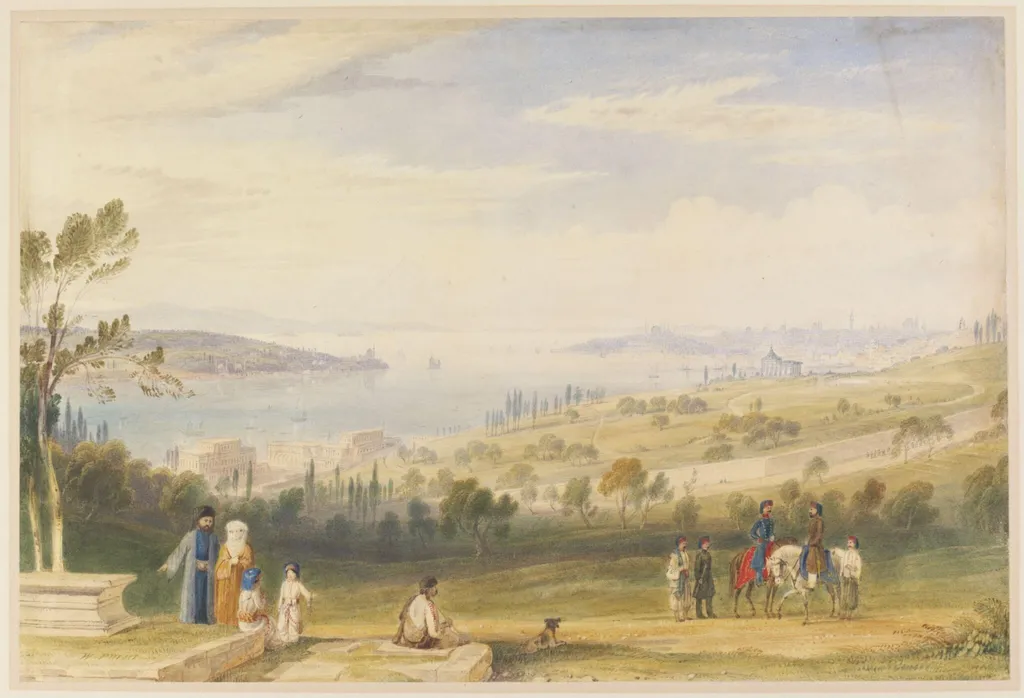
View of the Bosphorus from above Dolmabahçe, looking towards the Sea of Marmara is a watercolor work on paper by the Romanticist artist William Purser. It dates from 1825 and is held in the collection of the Victoria and Albert Museum.
About this work
Overview
William Purser's watercolour captures a tranquil vantage point above Dolmabahçe, overlooking the Bosphorus toward the Sea of Marmara.
William Purser's watercolour captures a tranquil vantage point above Dolmabahçe, overlooking the Bosphorus toward the Sea of Marmara. Executed in delicate washes, the work records the landscape before the full construction of Dolmabahçe Palace, preserving a transitional moment in the area’s topography. The piece was acquired in London in the 19th century from bookseller H. Sotheran for £10, reflecting its modest status as a personal sketch rather than a formal commission.
Subject & Meaning
The scene portrays everyday life along the shoreline: figures rest on a grassy slope, riders move along a path, and a man sits with his dog near rocks. These quiet human elements contrast with the expansive water and distant cityscape, suggesting a contemplative engagement with place. The composition avoids grandeur, instead emphasizing stillness and the subtle presence of people within a natural setting, aligning with Romantic-era sensibilities toward intimate observation.
Technique & Style
Purser employed light, transparent watercolour washes to suggest atmospheric depth and the soft contours of hills and water. Distant structures are rendered with minimal detail, while foreground elements—clothing, posture, and terrain—are more defined. The palette is restrained, favoring muted blues, greens, and earth tones, enhancing the sense of calm. The brushwork is loose yet deliberate, prioritizing mood over precision.
History & Provenance
The watercolour was acquired in London by an unknown collector from H. Sotheran, a noted bookseller and dealer in prints and drawings. Its purchase price of £10 indicates it was considered a modest work, likely intended for private rather than public display. The piece survives as a rare visual record of Dolmabahçe’s landscape prior to the palace’s completion in 1853, offering insight into the region’s pre-imperial character.
Context
In the mid-19th century, the Bosphorus coast was undergoing transformation as Ottoman elites shifted from traditional waterfront pavilions to monumental palace complexes. Purser’s view captures this liminal phase, when the land still bore traces of earlier royal structures. His perspective—elevated, observational, and unidealized—reflects a broader European interest in documenting the Ottoman landscape with documentary rather than exoticizing intent.
Legacy
Though not widely exhibited, the work contributes to a small corpus of 19th-century British watercolours documenting Ottoman topography. Its value lies in its unembellished depiction of a landscape in flux, preserving details of terrain, attire, and activity that later imperial architecture would obscure. It remains a quiet testament to the everyday rhythms of a changing coastline.
Artist & collection

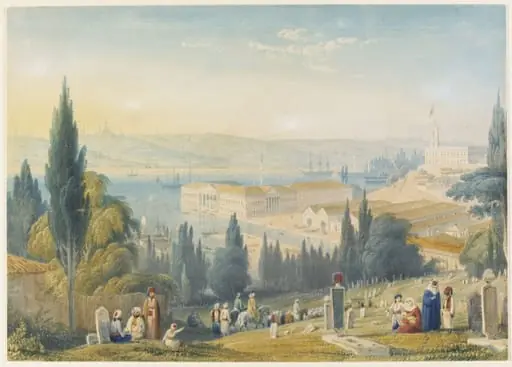 A view of the new Turkish Naval Buildings and Dockyards on the Golden Horn: Constantinople in the background
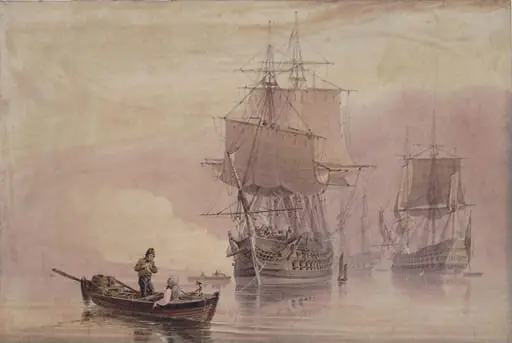 The Morning Gun
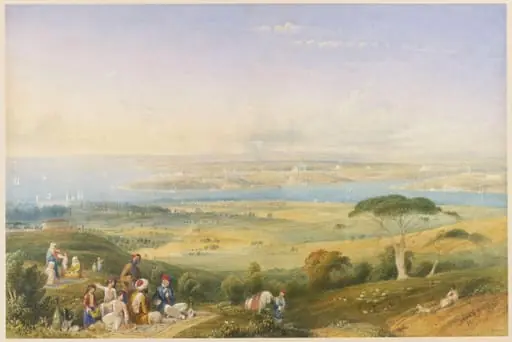 Turks picnicing in fields outside Scutari with a view of Constantinople in the distance
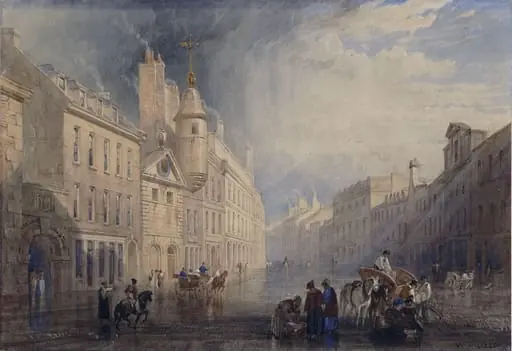 Broad Street, Aberdeen
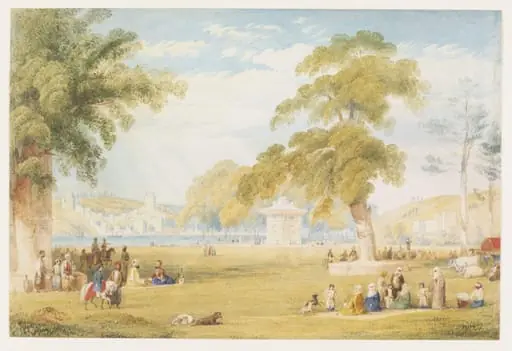 Meadow of the Sweet Waters of Asia, Constantinople
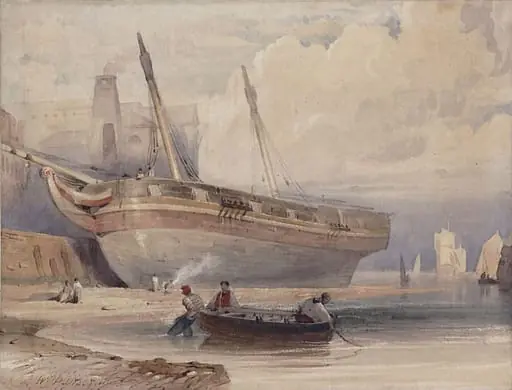 A Vessel Careened by a Wharf