Artwork
Extensive Landscape with a Pond
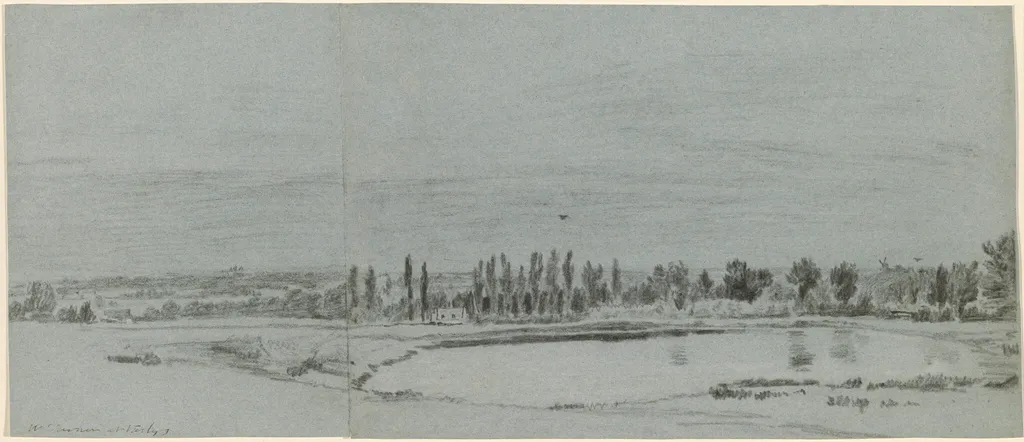
Extensive Landscape with a Pond is a charcoal drawing by the Romanticist artist William Turner of Oxford. It dates from 1826 and is held in the collection of the National Gallery of Art.
About this work
Overview
Created in 1826 by William Turner of Oxford, this work is a charcoal drawing on two adjoining sheets of blue wove paper, accented with occasional touches of white. The piece measures a modest size and presents a tranquil rural scene centered on a pond, framed by distant trees and a modest structure near its middle.
Subject & Meaning
The composition depicts a peaceful landscape where a still pond occupies the central space, its surface hinted at by light charcoal washes. Beyond the water, a line of trees recedes into the horizon, while a small building—perhaps a cottage or barn—anchors the scene, suggesting a quiet, inhabited countryside.
Technique & Style
Turner employs swift, gestural strokes that resemble scribbles, allowing the charcoal to suggest foliage, water, and ground without precise delineation. The blue paper serves as a tonal underlayer, while selective white highlights create the impression of reflected light on water and sky, aligning the work with the loose, emotive approach of early Romantic drawing.
History & Provenance
The drawing was executed during Turner’s early career, a period when he was exploring atmospheric effects in landscape studies. It remains documented as part of his 1820s output, though its subsequent ownership history is limited to private collections, with no record of exhibition beyond occasional scholarly references.
Context
Produced amid the rise of Romanticism, the piece reflects the movement’s emphasis on mood, nature’s sublimity, and the artist’s personal response to the environment. Turner’s use of blue paper and minimal coloration anticipates later experiments with monochrome media that sought to capture the fleeting qualities of light and atmosphere.
Artist & collection


 A View near Lowther
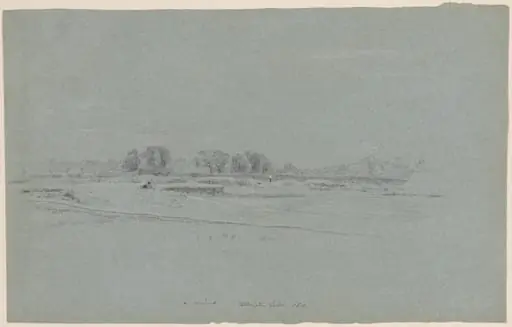 Paddington Fields, London
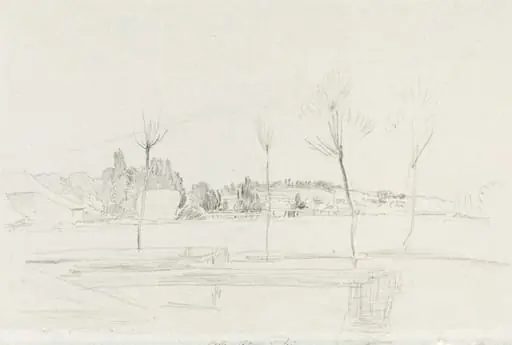 Landscape in Hertfordshire
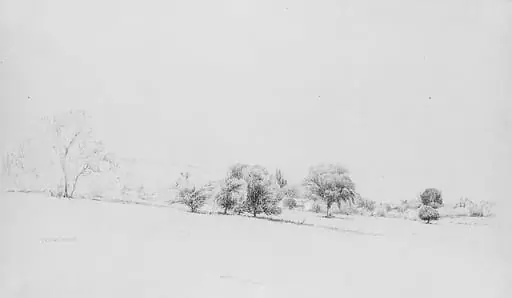 Aurora
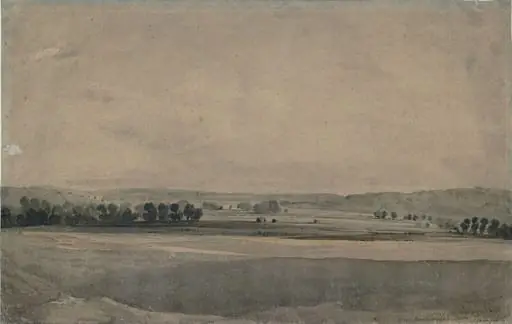 Study from nature near Handborough, Oxfordshire
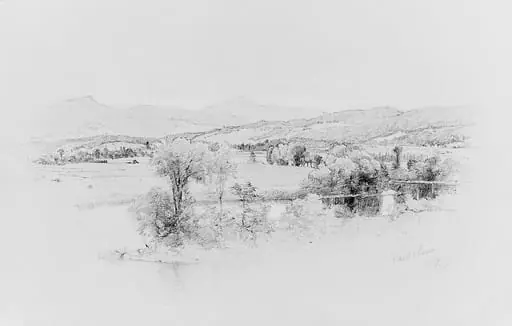 Maidstone, Vermont
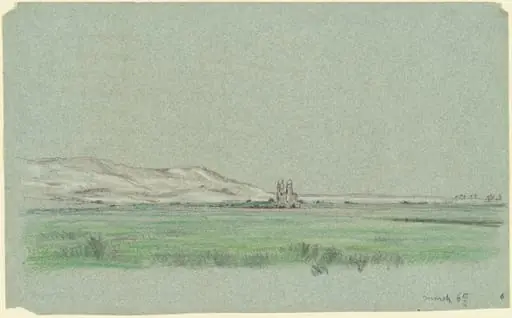 Nile Journey, Colossi of Memnon
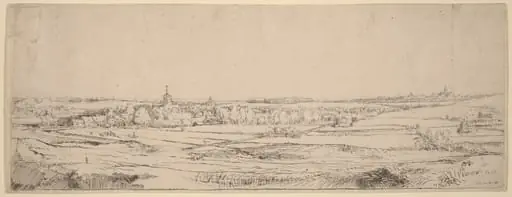 Landscape with a View Toward Haarlem (The Goldweigher's Field)
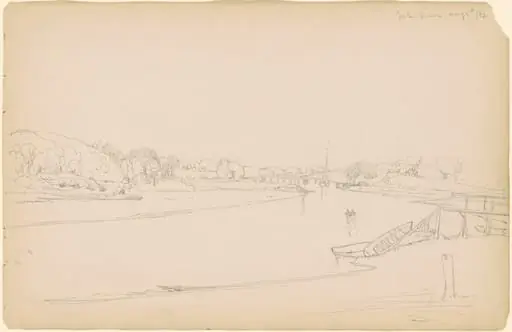 York River
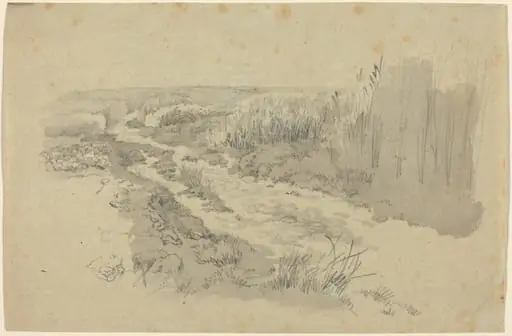 A Path through Fields near Leipzig
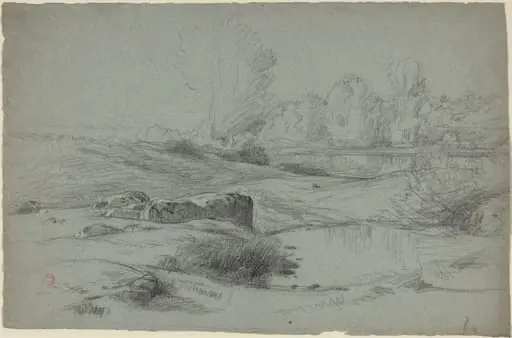 A Rocky Meadow by a River
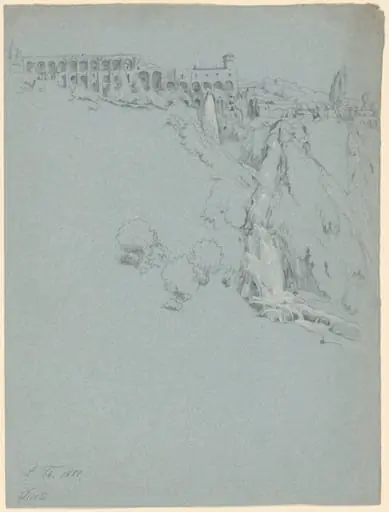 The Waterfall at Tivoli with the Villa of Maecenas