Artwork
Amada Nubia
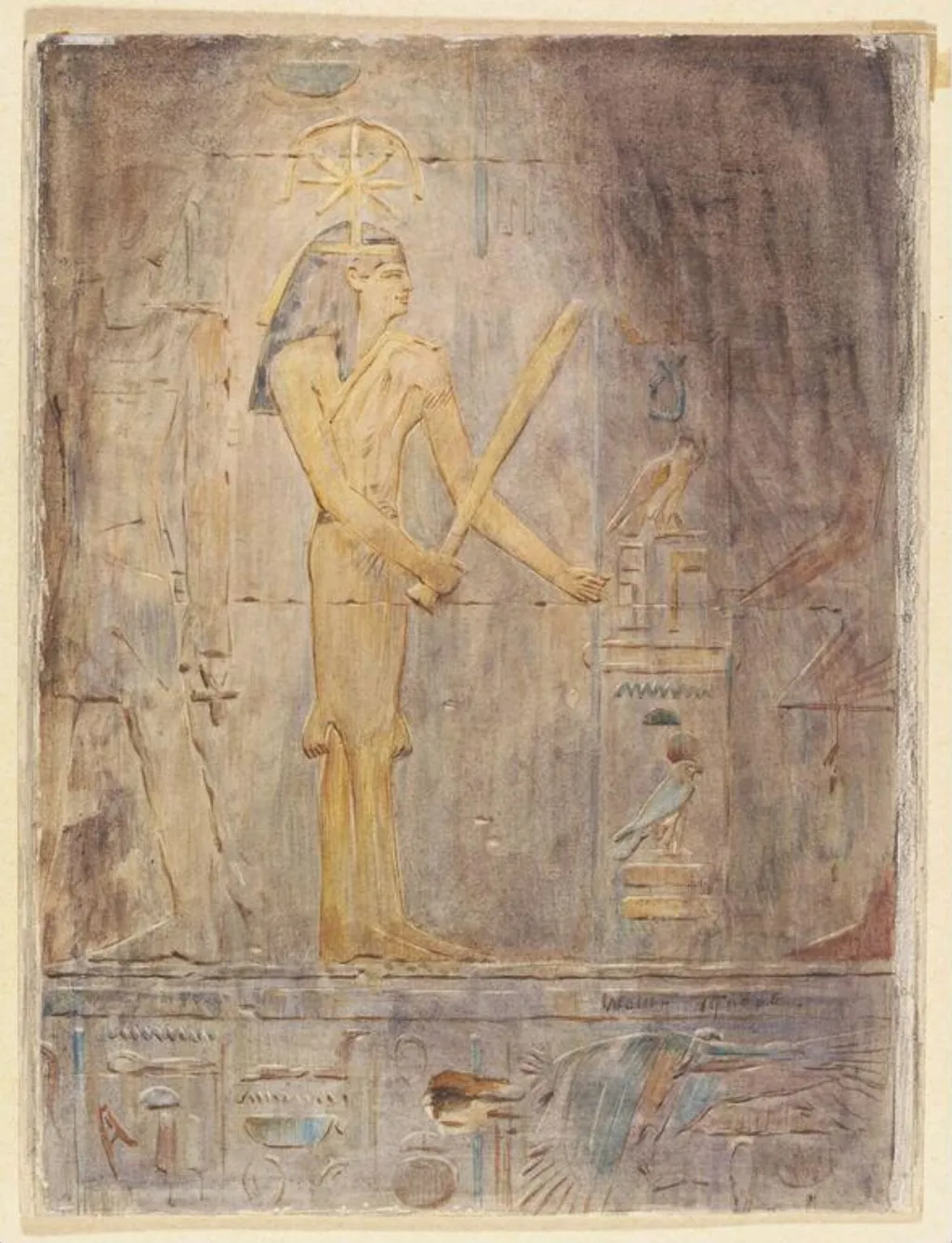
Amada Nubia is a watercolor work on paper by the Impressionist artist Walter Frederick Roofe Tyndale. It dates from 1908 and is held in the collection of the Victoria and Albert Museum.
About this work
Overview
Amada Nubia is a watercolour drawing created by Walter Frederick Tyndale in 1908, depicting an ancient Egyptian scene involving the goddess Seshat and Pharaoh Tuthmosis III in a temple foundation ceremony.
Subject & Meaning
The work illustrates Seshat, identifiable by her headdress with two feathers and a sun disk, alongside Pharaoh Tuthmosis III, engaging in the ritual marking of a temple's foundation. Surrounding elements, including hieroglyph-like symbols, animals, and a boat, contextualize the ceremonial scene.
Technique & Style
Executed in soft colors with precise lines, the watercolour exhibits a calm, subtly faded aesthetic. Tyndale's approach reflects a meticulous, observational style, characteristic of his renderings of Egyptian motifs.
History & Provenance
Originally intended as preparatory material for a follow-up to Tyndale's 1907 publication *Below the Cataracts*, *Amada Nubia* was later exhibited at the Leicester Galleries (1907, 1912) and sold at Sotheby’s in 1977, previously part of Timothy Tyndale Daniell's collection.
Context
Created during Tyndale's frequent travels to Egypt (1905-1911), this piece reflects his fascination with Egyptian antiquity, aligning with the early 20th-century interest in ancient cultures.
Artist & collection
Artist
Walter Frederick Roofe Tyndale
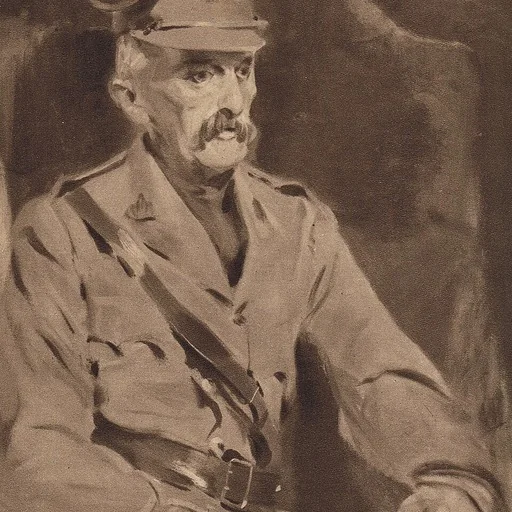
Walter Frederick Roope Tyndale (1855–1943) was a British watercolourist of landscapes, architecture and street scenes, book illustrator and travel writer.

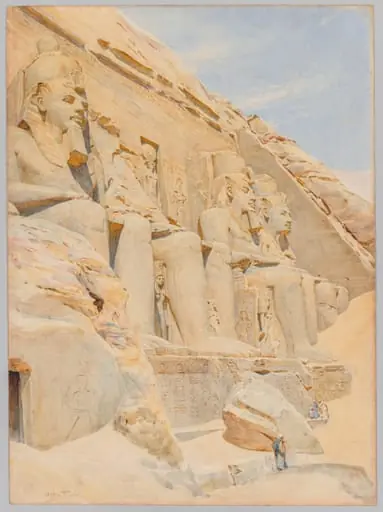
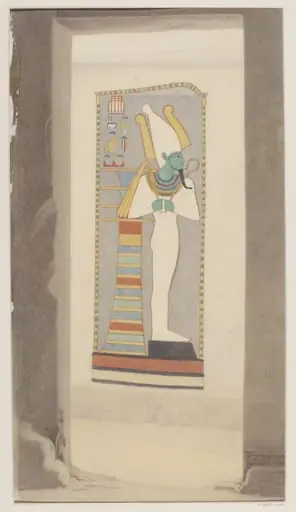 Osiris carrying a flail and crook
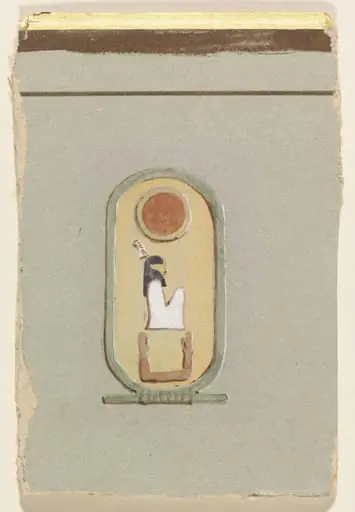 Royal Cartouche of Queen Makare Hatshepsut
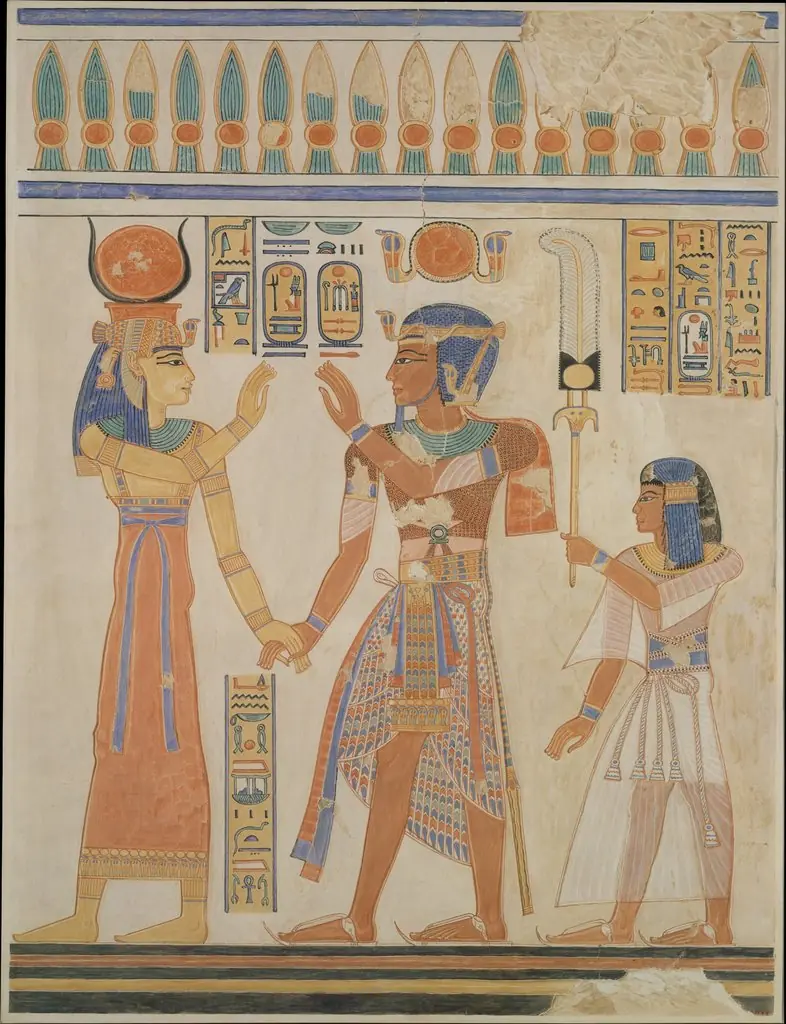 Ramesses III and Prince Amenherkhepeshef before Hathor
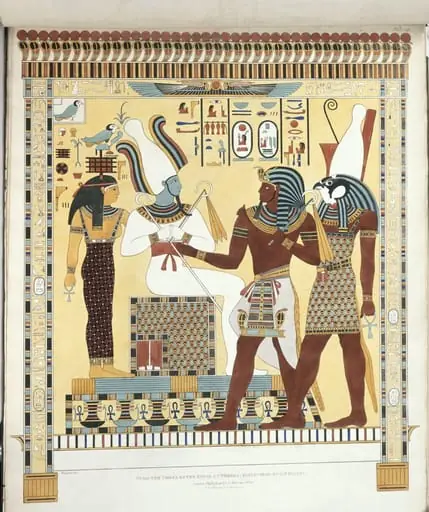 Plates Illustrative Of The Researches And Operations Of G. Belzoni In Egypt And Nubia
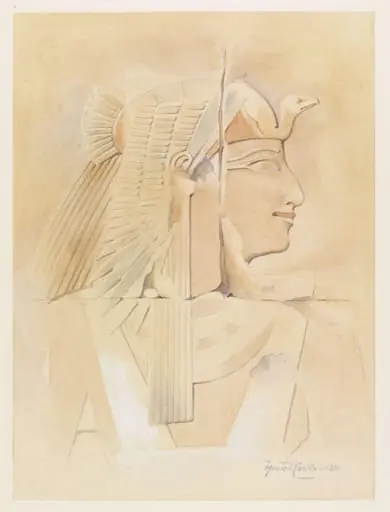 Head of Queen Aahmes Nefertari: copy of a painted low relief in the Mortuary Temple of Hatshepsut, Deir al-Bahri
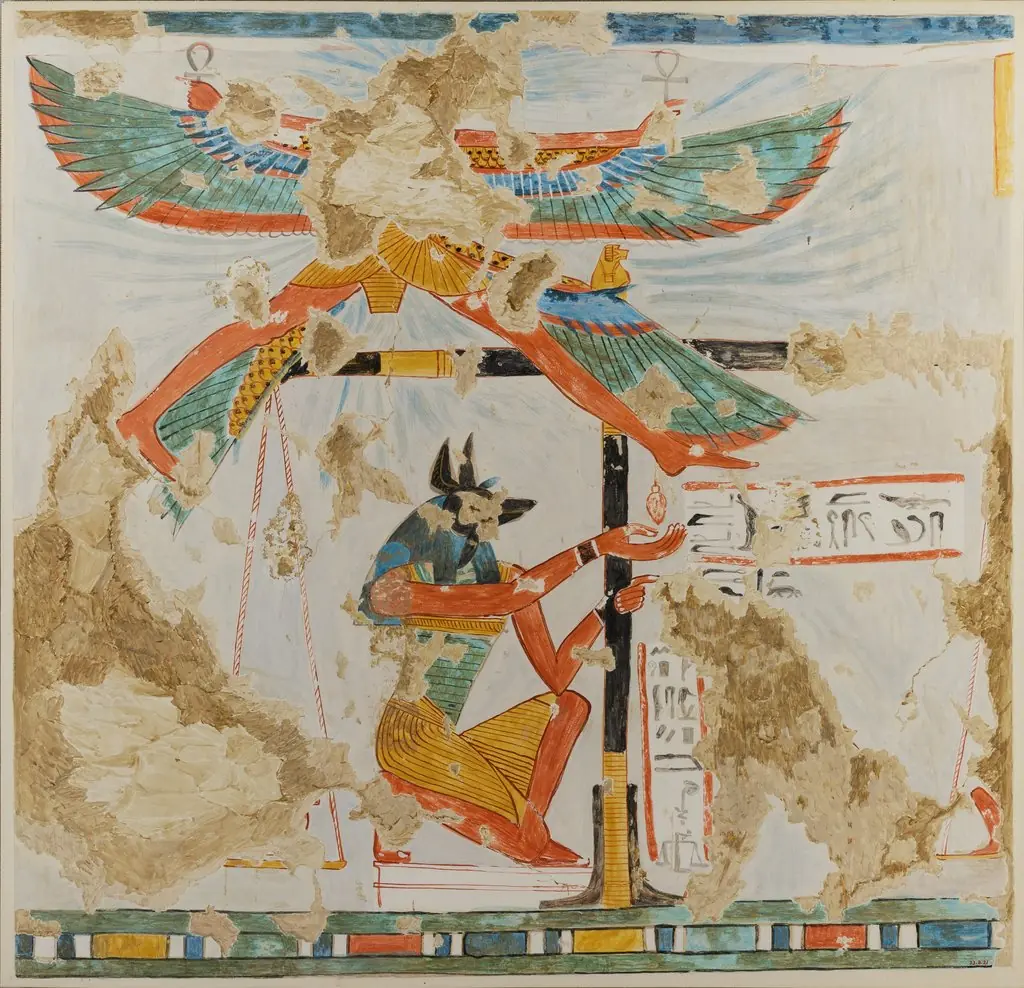 Anubis Weighing the Heart, Tomb of Nakhtamun
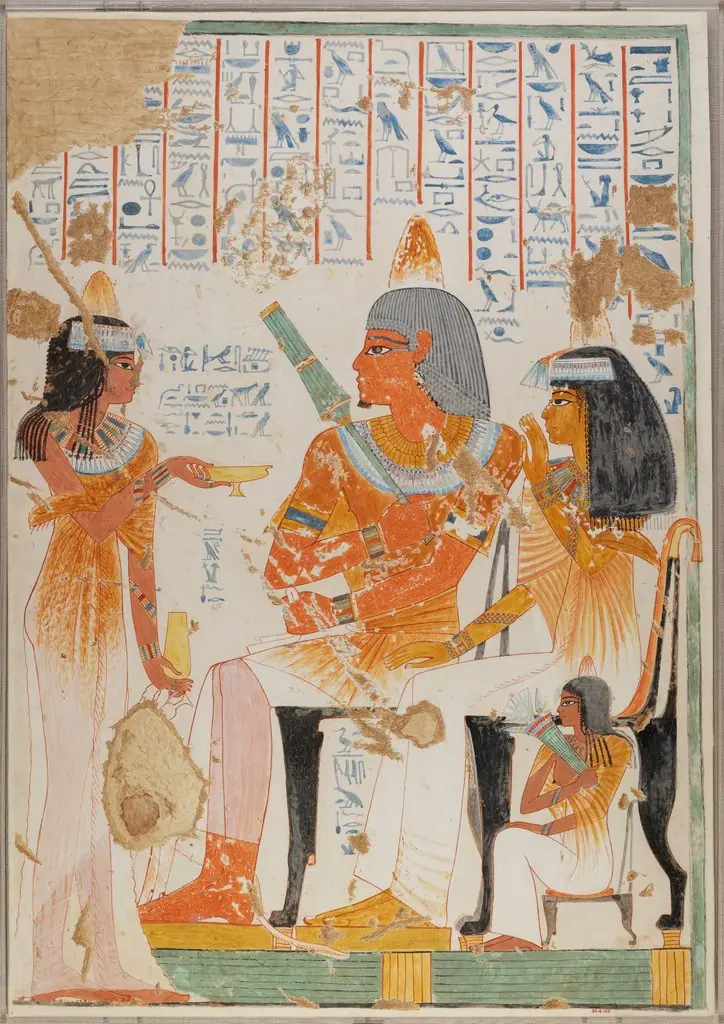 Nebamun Receiving Wine
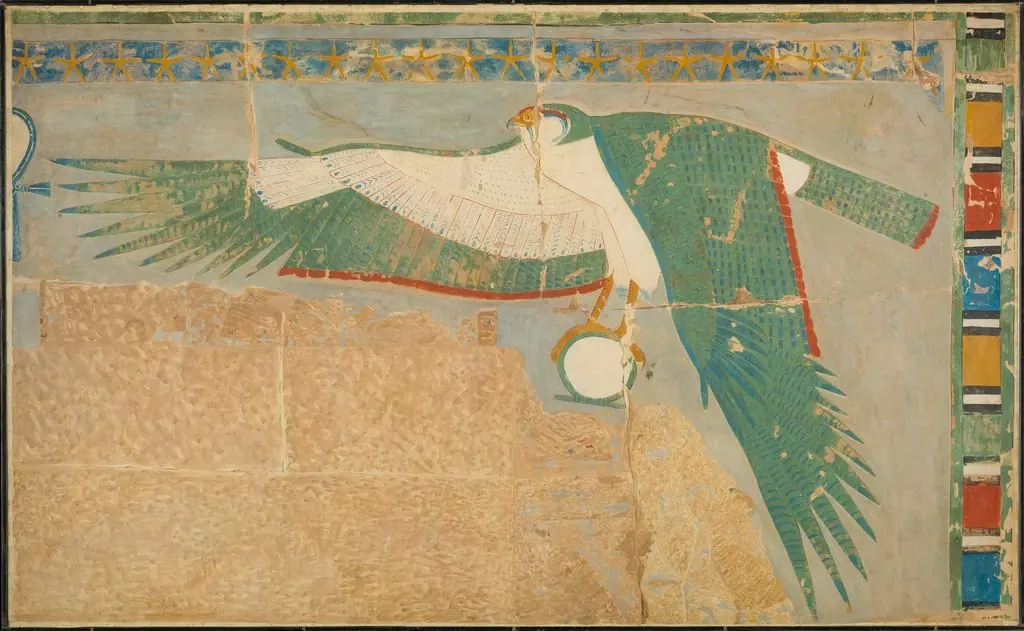 Facsimile of a falcon protecting the king
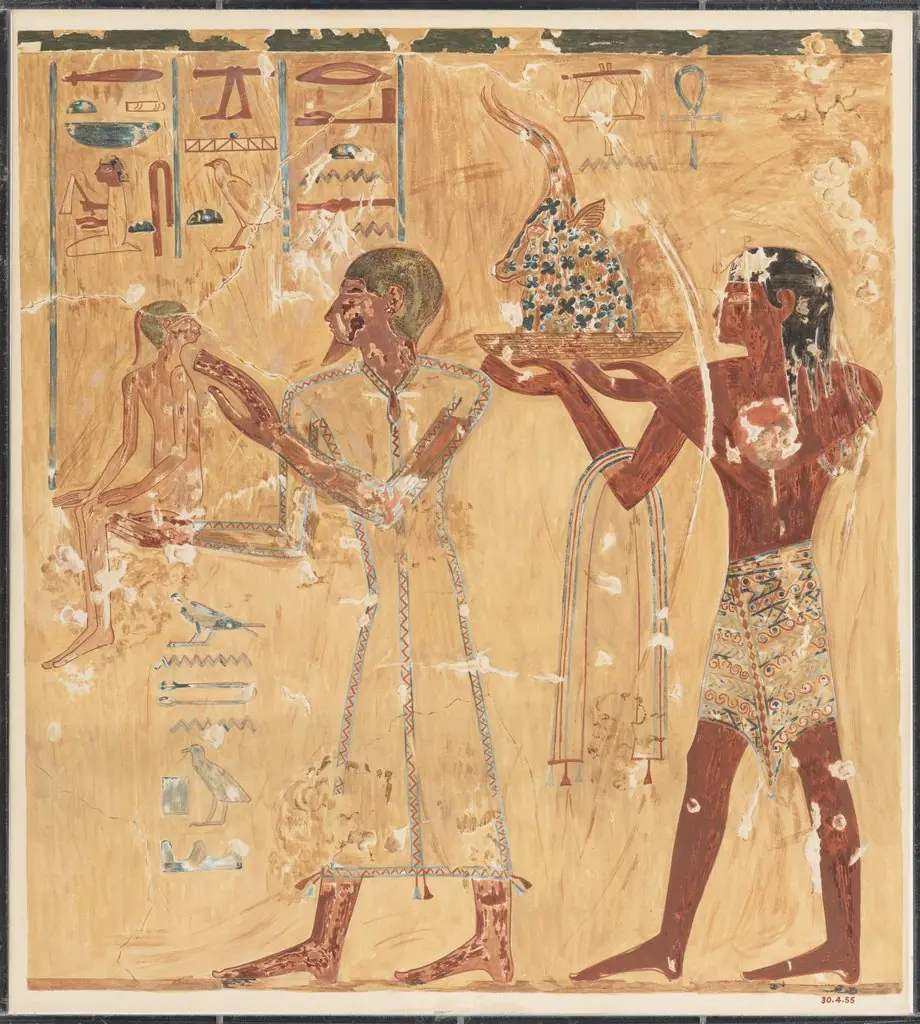 Foreigners, Tomb of Menkheperraseneb
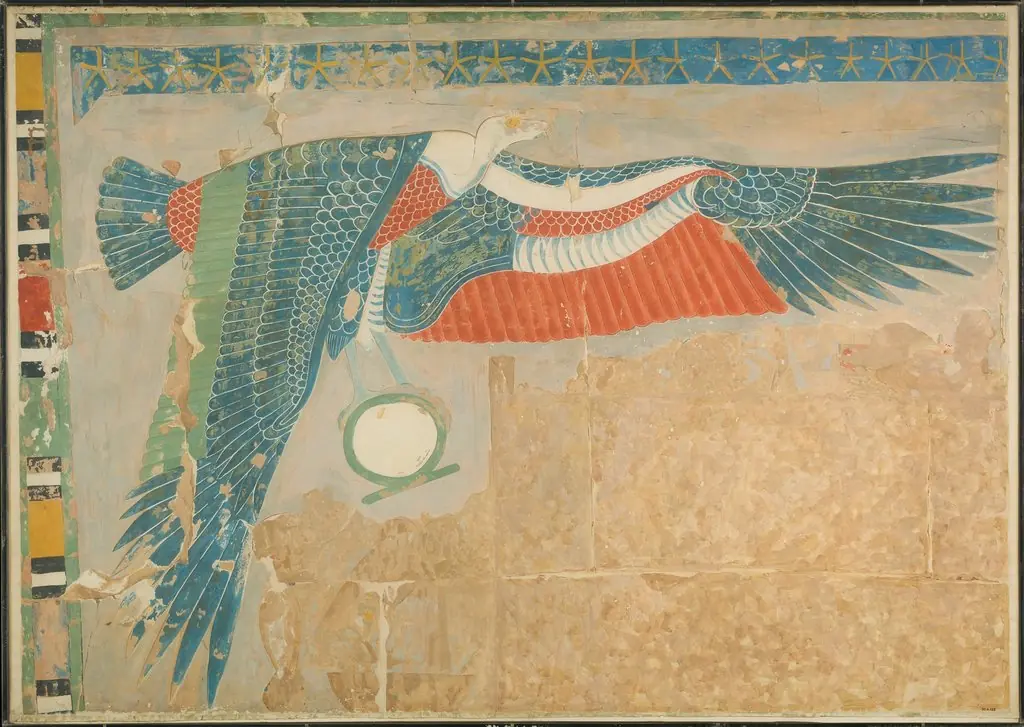 The Goddess Nekhbet, Temple of Hatshepsut
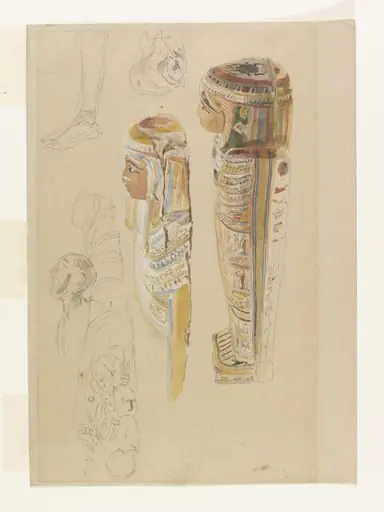 Studies of Mummy cases and Mummies