Artwork
Royal Cartouche of Queen Makare Hatshepsut
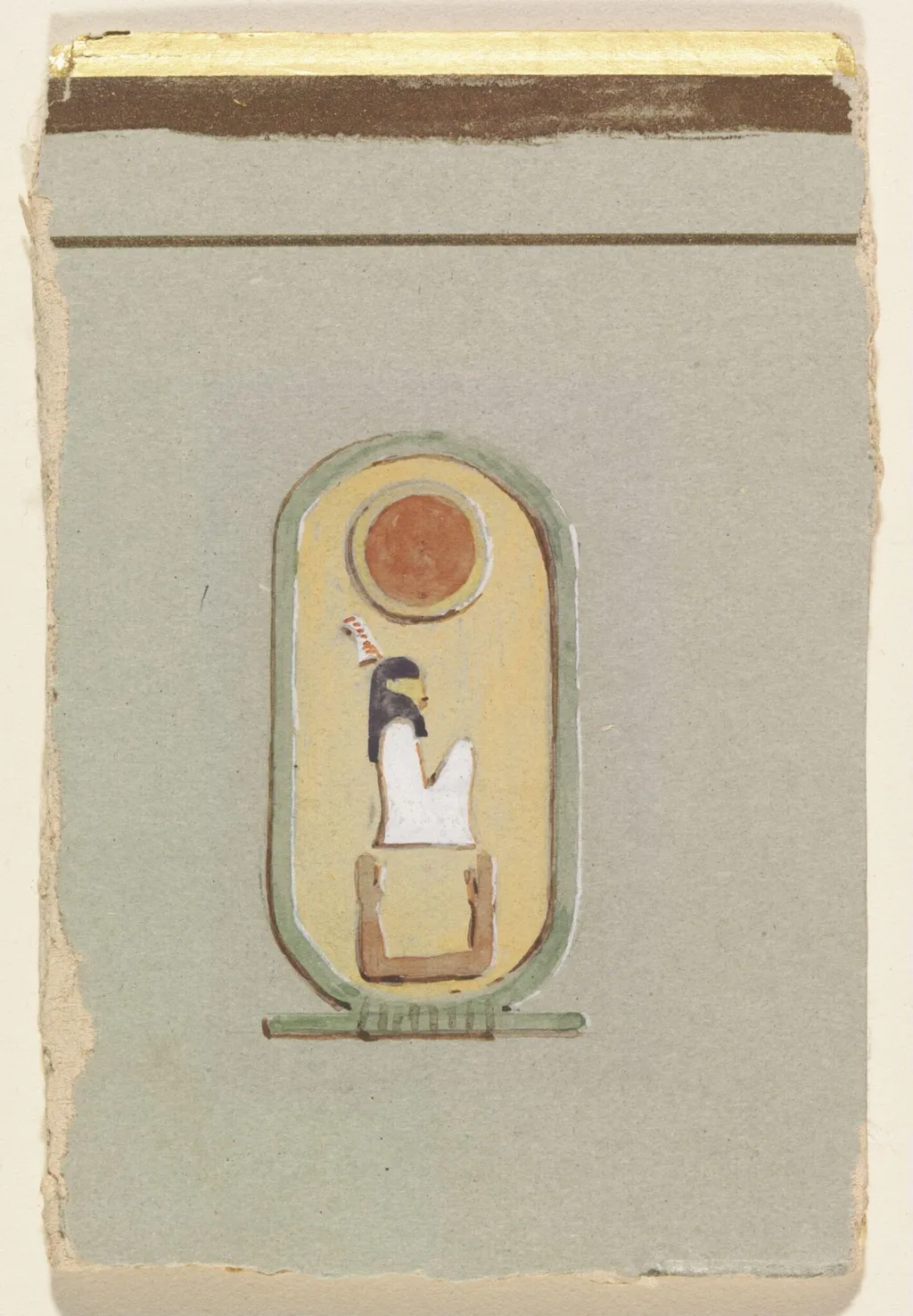
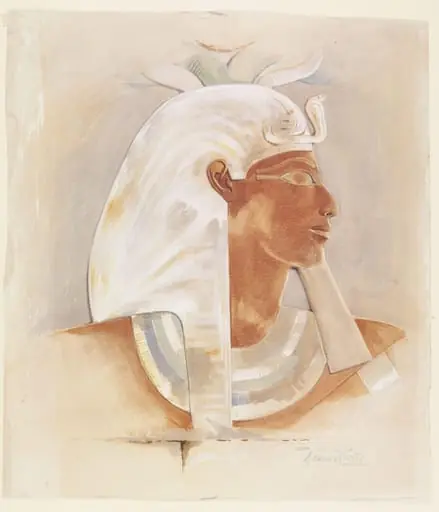
Royal Cartouche of Queen Makare Hatshepsut is a watercolor work on paper by the Impressionist artist Howard Carter. It dates from 1894 and is held in the collection of the Victoria and Albert Museum.
About this work
Overview
This watercolour, created between 1893 and 1899 by Howard Carter, depicts a detailed section of a ritual scene from the Temple of Hatshepsut at Deir al-Bahri, specifically focusing on a cartouche element.
Subject & Meaning
The artwork represents a symbolic, rather than literal, portrayal of Queen Hatshepsut (reigned 1503-1482 BC) in a ritual offering context, encapsulated within a cartouche—a ancient Egyptian device for encasing royal names.
Technique & Style
Executed in watercolour on paper, the piece appears faded, with a distinctive composition featuring green and yellow ovals and a red circle, translating the original carving's elements into Carter's illustrative style.
History & Provenance
Originally part of Édouard Naville's expedition project, the work was later reproduced in Naville's publication. It was once owned by Lady Loch before being sold at Christie's auction house in 1975.
Context
For more works by the artist in a similar context, the Victoria and Albert Museum holds a collection of Carter's sketches from this period.
Artist & collection
Artist
Howard Carter’s watercolours capture the sun-bleached walls of Deir al-Bahri, copying 3,500-year-old painted reliefs of queens and royal symbols.

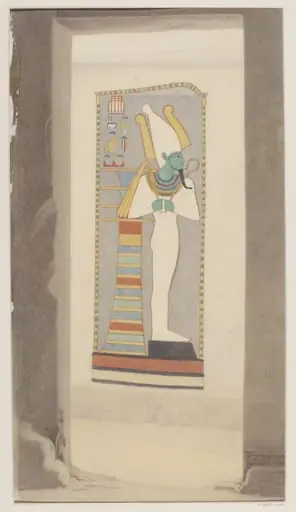 Osiris carrying a flail and crook
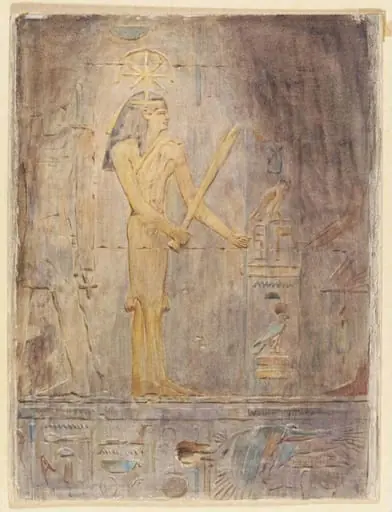 Amada Nubia
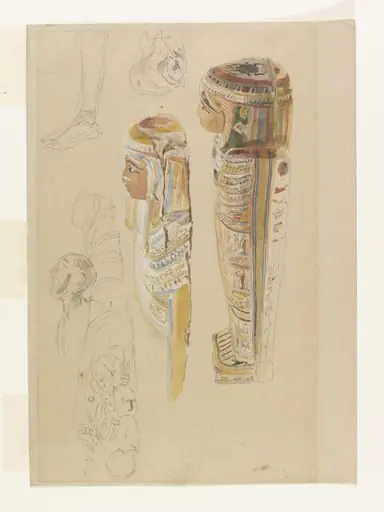 Studies of Mummy cases and Mummies
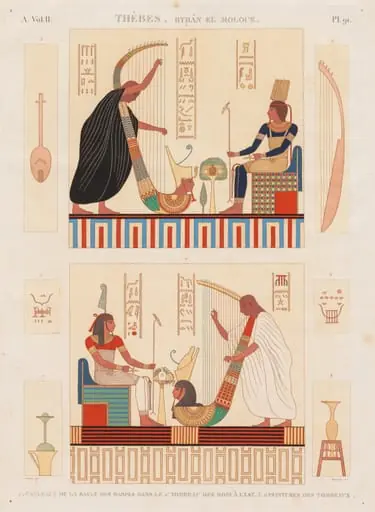 Description of Egypt: Thebes Byban el Molouk, Vol. II, Pl. 91
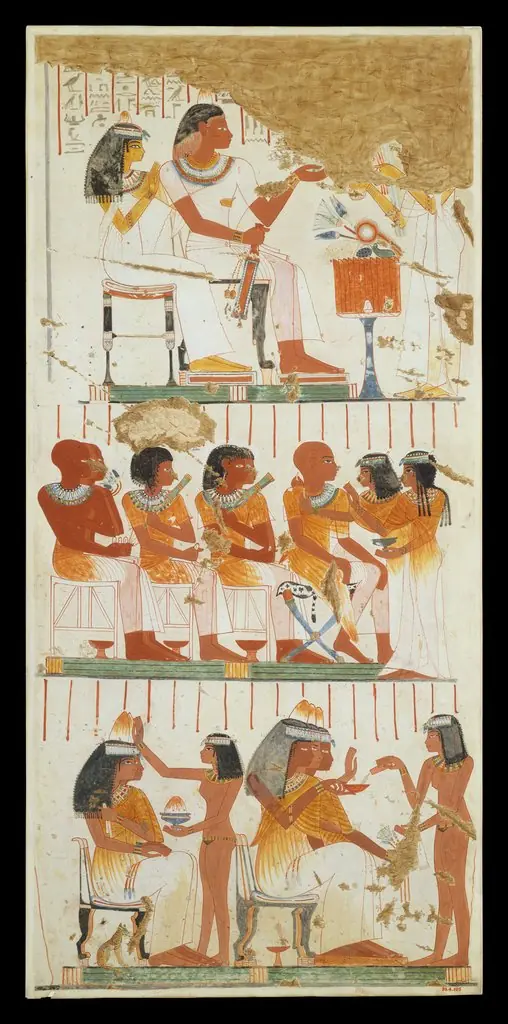 Guests at a Banquet
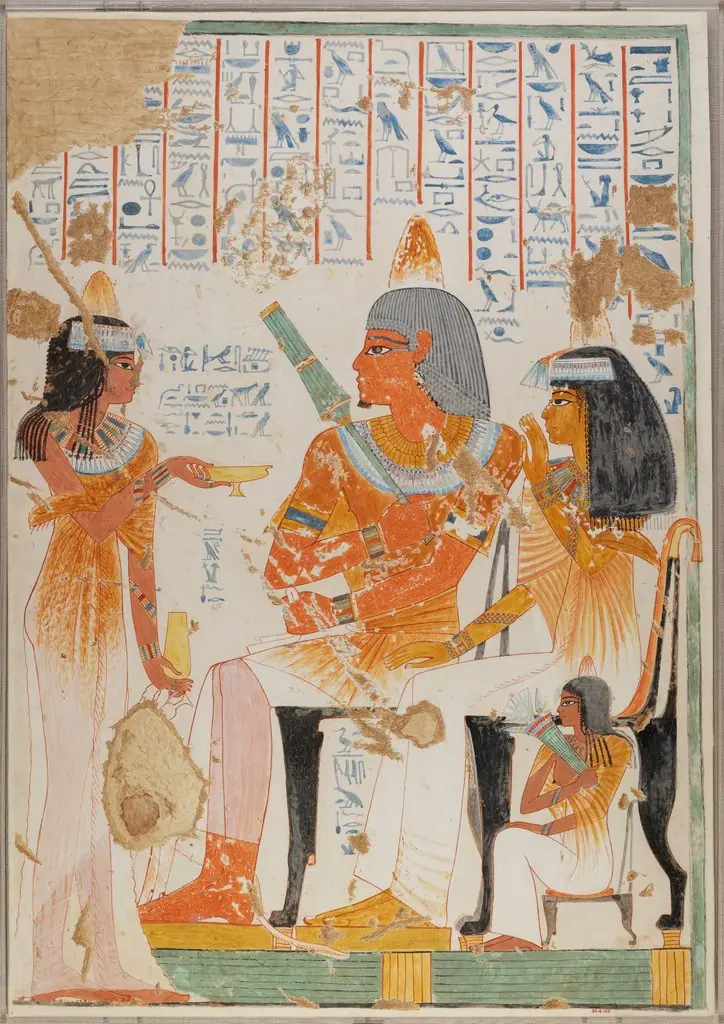 Nebamun Receiving Wine
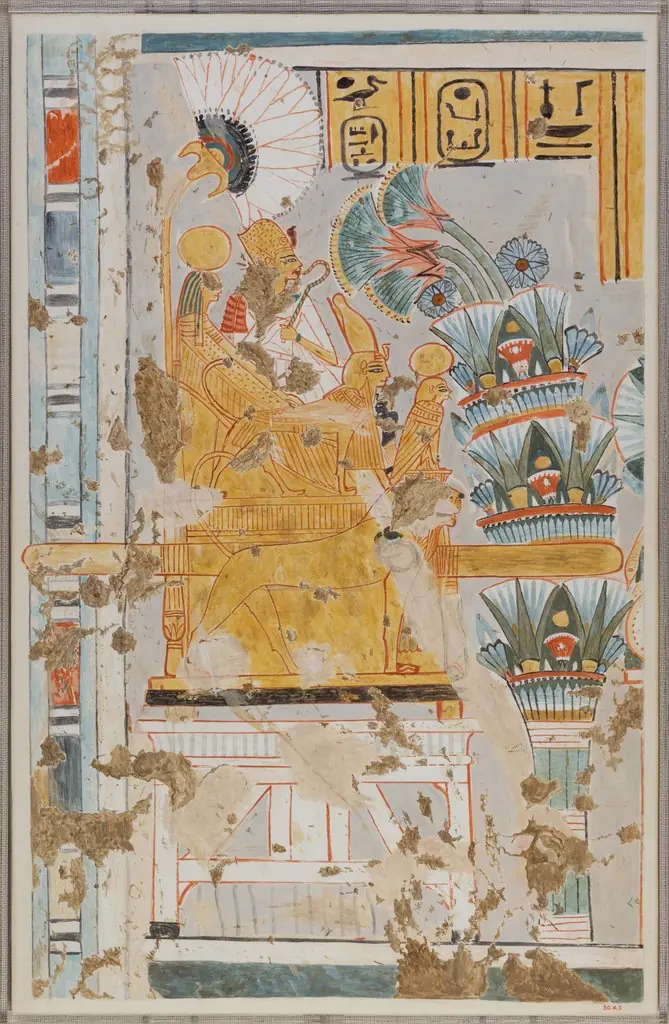 Statue of Deified Amenhotep I
 Plates Illustrative Of The Researches And Operations Of G. Belzoni In Egypt And Nubia
 Ceiling Fragment
 Menna's Daughter Offering to her Parents, Tomb of Menna