Artwork
Sinuciderea lui Varus
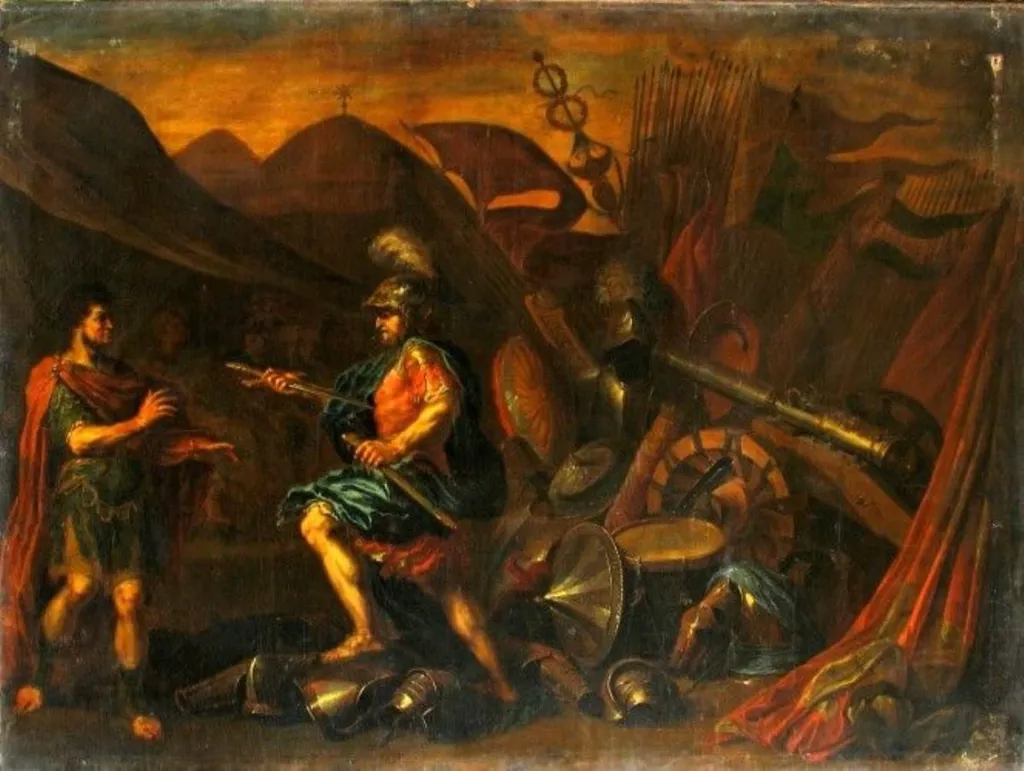
Sinuciderea lui Varus is an unspecified painting by the Baroque artist Jan Baptist Tyssens. It is held in the collection of the Brukenthal National Museum.
About this work
Overview
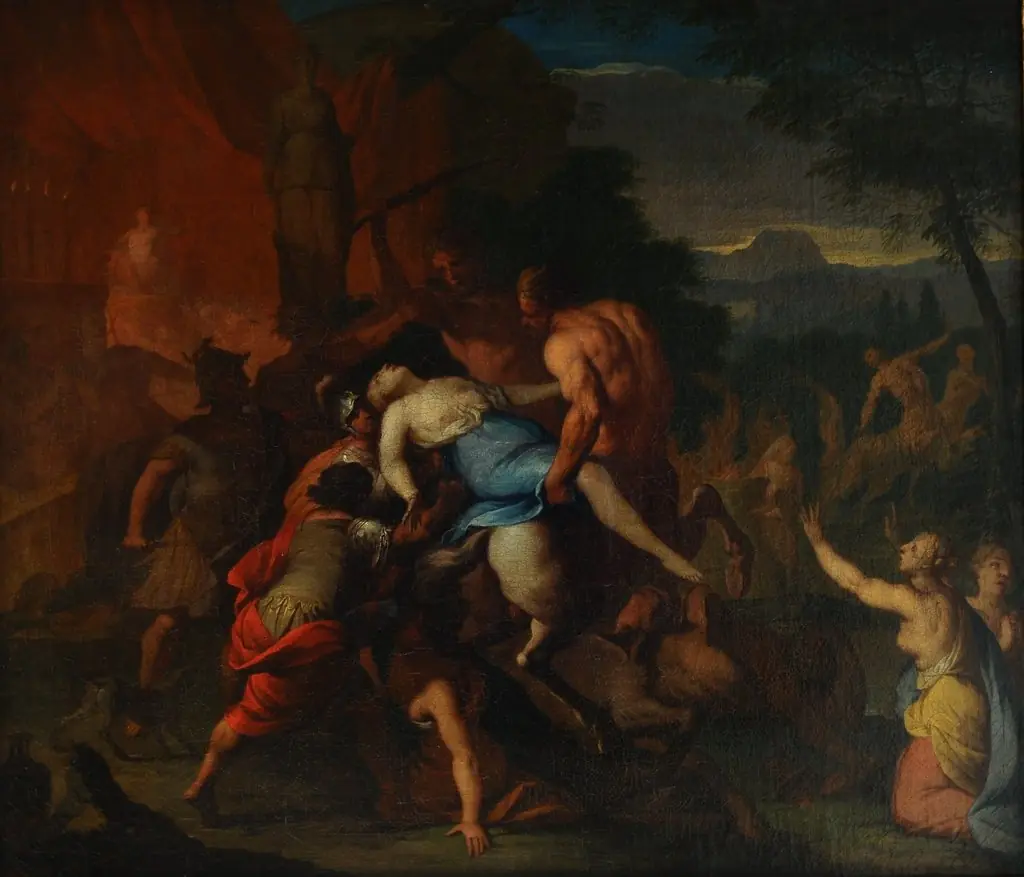
The work titled *Sinuciderea lui Varus* is an image created by the 17th‑century Flemish painter Jan Baptist Tyssens. It depicts a violent encounter in which the Roman commander Varus is shown kneeling amid a circle of Germanic fighters, while a soldier lifts a sword dripping with blood above his head.
Subject & Meaning
The composition dramatizes the historical defeat of Varus, emphasizing the vulnerability of the Roman leader surrounded by hostile warriors. The focus on the raised, blood‑stained sword underscores the fatal moment and the reversal of power between the conquered and the conquerors.
Technique & Style
Tyssens employs a palette dominated by dark tones, creating strong chiaroscuro that highlights the gleam of armor and the crimson of blood. The lighting is theatrical, casting deep shadows that drive the action forward and give the scene a stage‑like intensity.
History & Provenance
The painting originates from the Flemish Baroque tradition, where Tyssens was known for his battle scenes. While specific ownership details are not provided, the work is associated with collections that include similar 17th‑century Flemish representations of warfare.
Context
Within the broader context of 17th‑century European art, the piece reflects a fascination with classical and historical subjects rendered through dramatic, emotionally charged imagery. Tyssens’ preference for dark coloration and stark contrast aligns with contemporary trends in Flemish narrative painting.
Artist & collection
Artist
Jan Baptist Tyssens painted dramatic scenes from ancient myths and history. In the 17th century, artists often chose big moments—like gods visiting or tragic falls—to tell stories with rich colors and strong emotions.…

 Pustiirile războiului
 Choque de caballería
 Indische Könige huldigen Alexander dem Großen
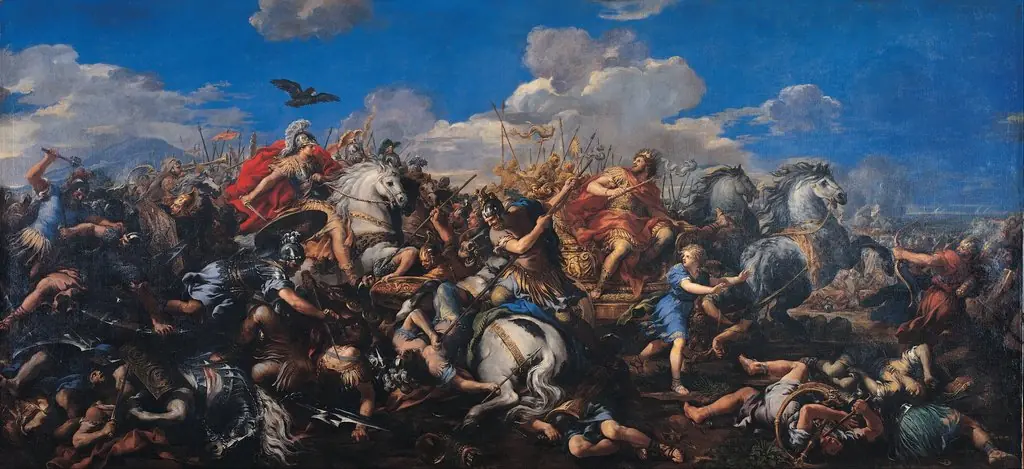 Battle of Alexander versus Darius
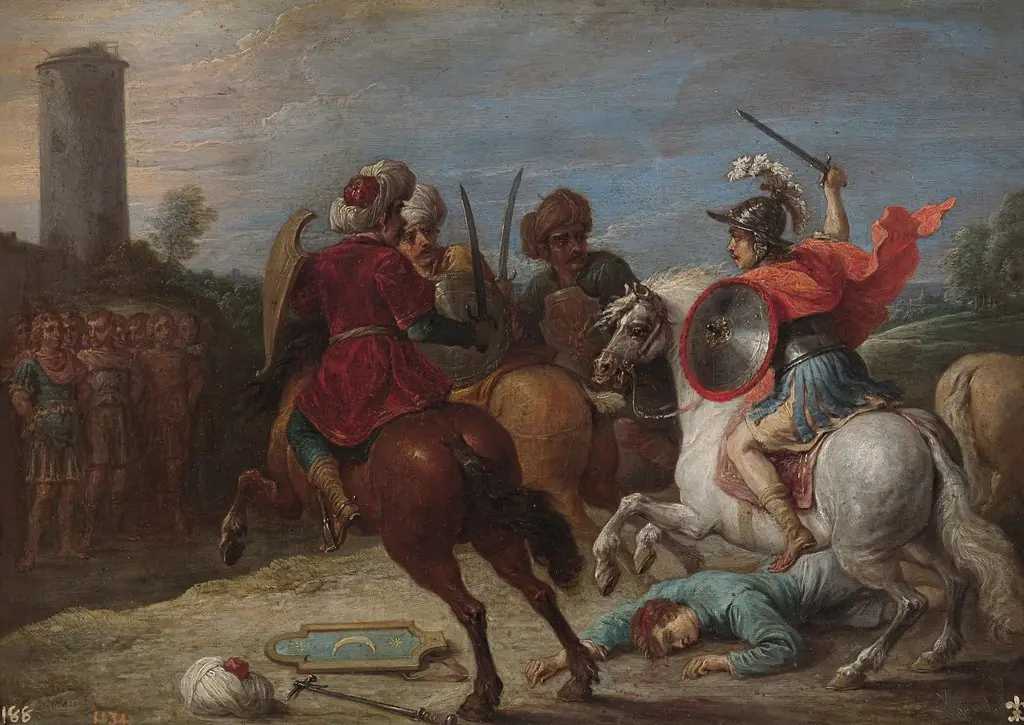 Proezas de Reinaldo frente a los egipcios
 Atac într-un defileu
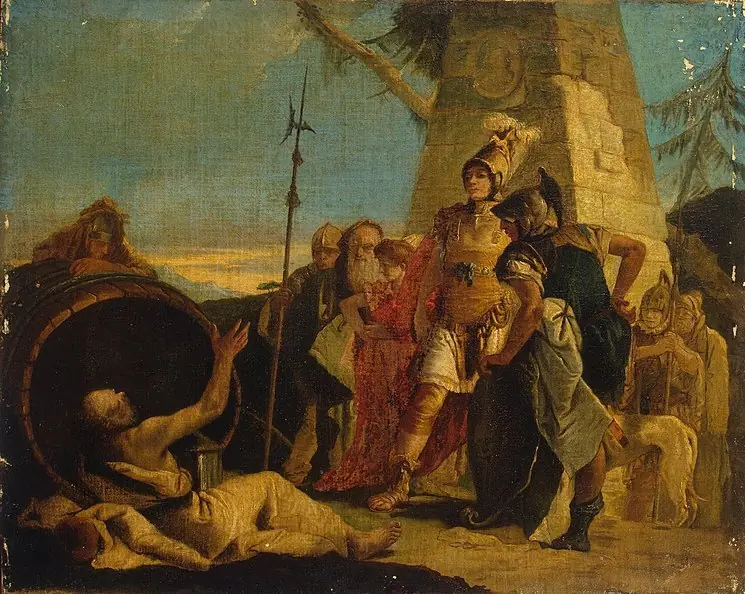 Alexander the Great and Diogenes
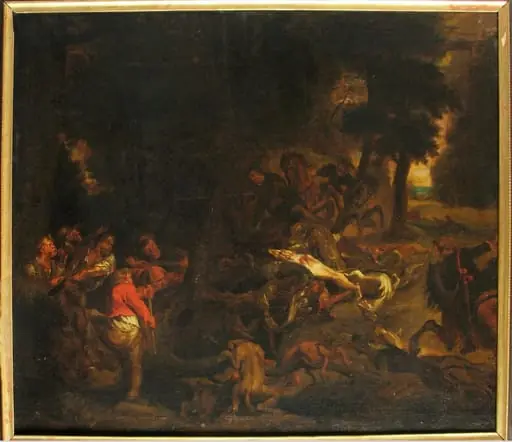 Vânătoare de mistreț
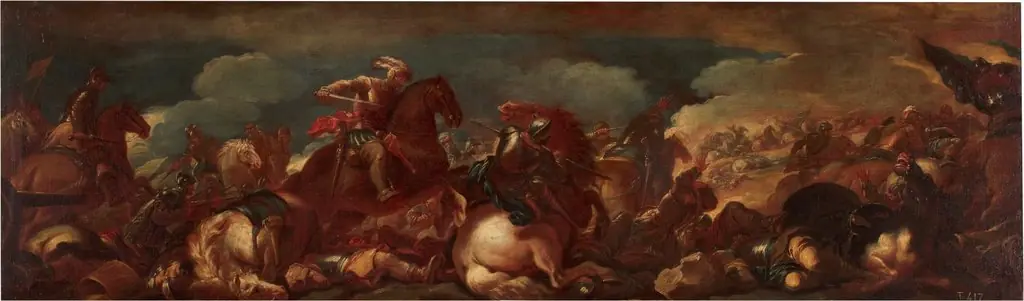 Batalla de San Quintín
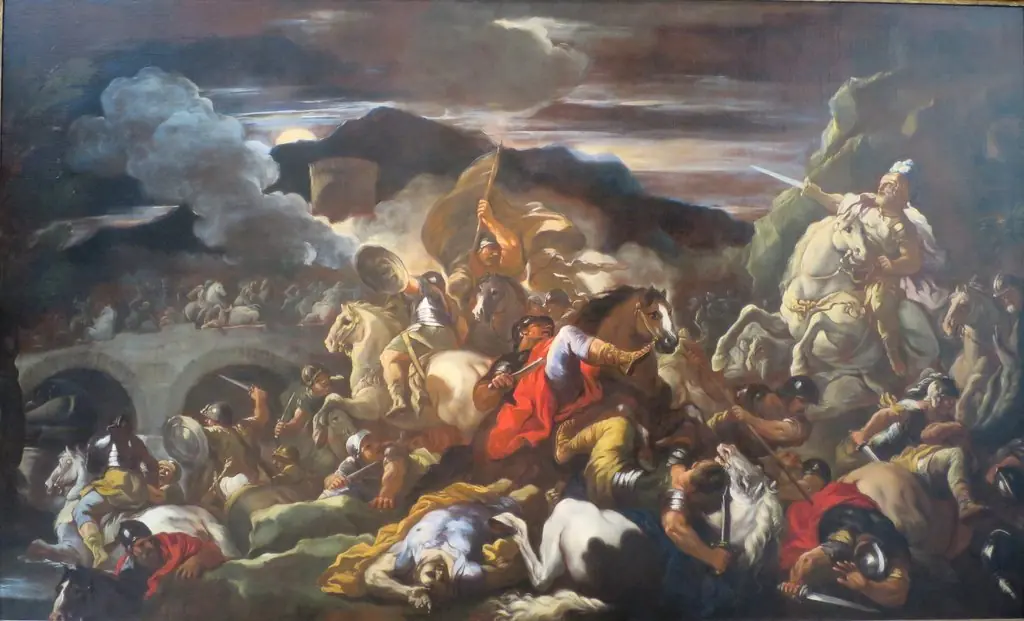 A Battle Scene
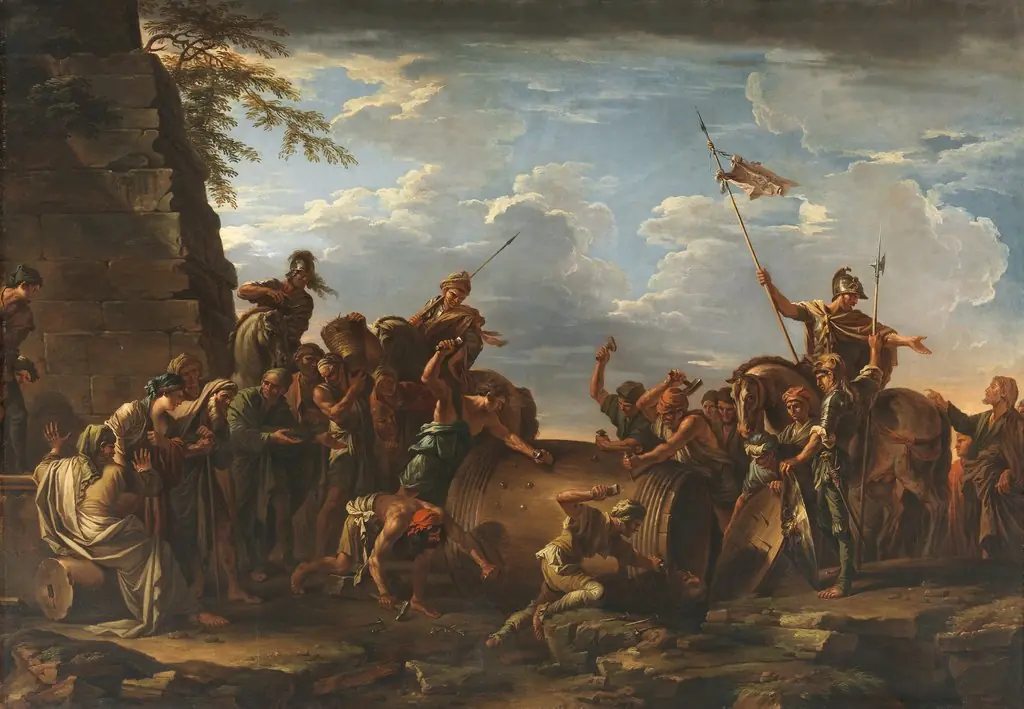 The Death of Regulus
 Combate de centauros y lapitas. (Tit. Ant.: Centauros e ilotas)