Artwork
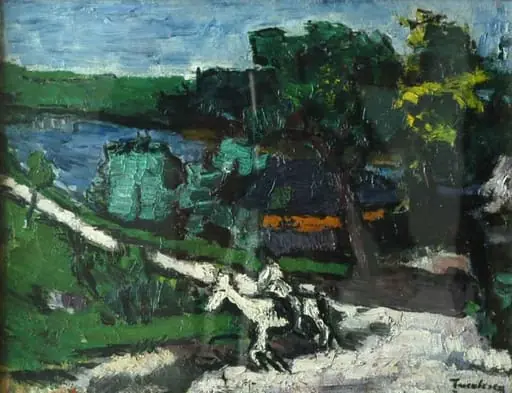
Golf (colț) la Balcic
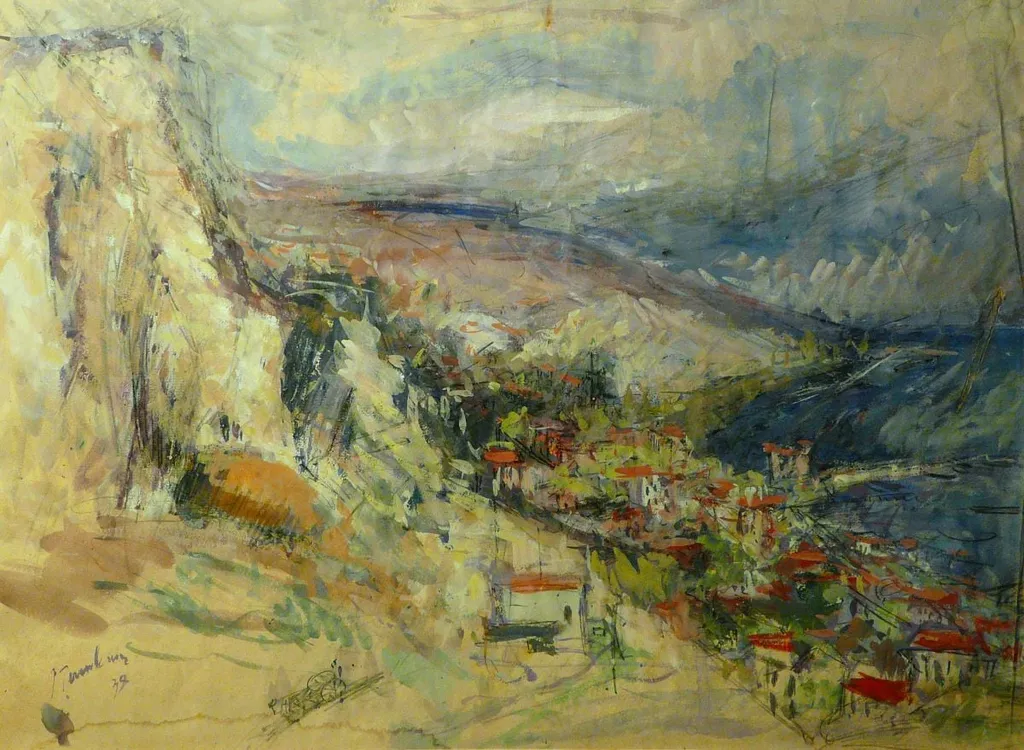
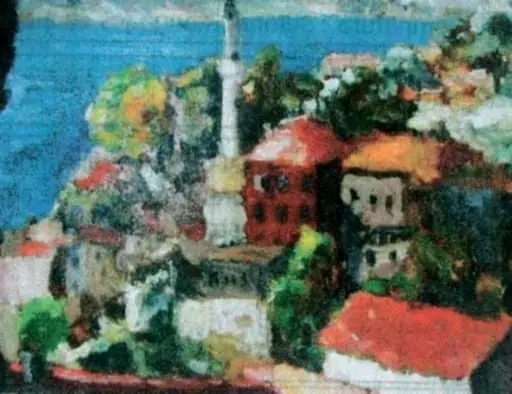
Golf (colț) la Balcic is a print by Ion Țuculescu. It dates from 1946 and is held in the collection of the Art museum of Craiova.
About this work
Overview
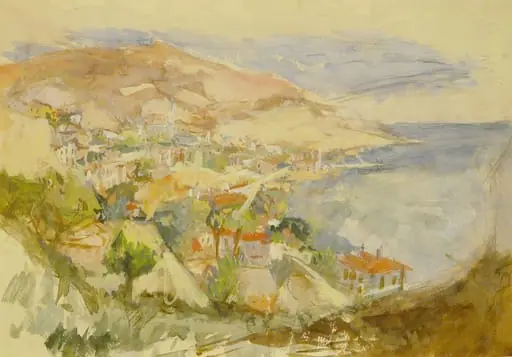
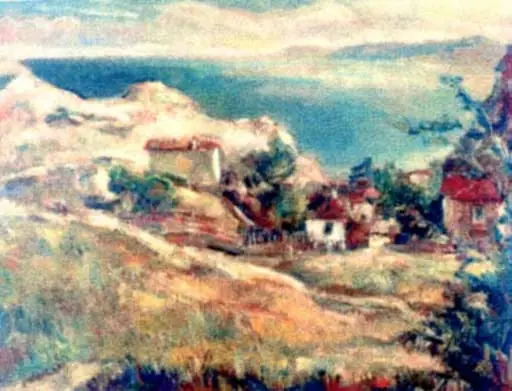
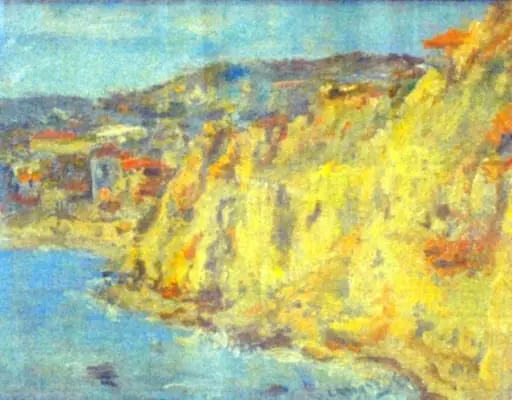
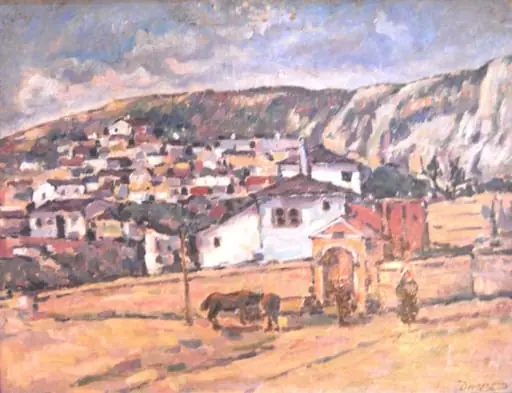
Painted around 1946 by Ion Țuculescu, Golf (colț) la Balcic captures a rural scene in Balcic, a Black Sea coastal village. Executed in oil, the work belongs to the collection of the Museum of Ethnography. Its spontaneous brushwork and unpolished surface suggest it was painted en plein air, reflecting the artist’s interest in direct observation rather than studio refinement.
Subject & Meaning
The painting depicts a quiet corner of a village nestled in a gentle valley, with modest dwellings and scattered trees. There is no human presence, yet the arrangement of structures implies daily life. The absence of narrative detail invites contemplation of place rather than story, emphasizing the quiet dignity of ordinary landscapes in postwar Romania.
Technique & Style
Țuculescu applied paint with thick, gestural strokes, creating a tactile surface that emphasizes texture over precision. Colors—ochres, olive greens, muted blues—are layered unevenly, allowing underlying tones to show through. The brushwork is rapid and unrefined, rejecting smooth finishes in favor of immediacy, aligning with a modernist impulse to capture perception over polished representation.
History & Provenance
Created shortly after World War II, the painting entered the Museum of Ethnography’s collection in the mid-20th century.
Created shortly after World War II, the painting entered the Museum of Ethnography’s collection in the mid-20th century. Its acquisition reflects institutional interest in documenting regional life during a period of cultural redefinition. Unlike formal portraits or historical scenes, this work was valued for its authentic depiction of vernacular landscapes, preserving a sense of place amid national transformation.
Context
In the mid-1940s, Romanian artists increasingly turned to local subjects as a counterpoint to imported styles. Țuculescu’s focus on rural Balcic aligns with a broader movement seeking identity in everyday environments. The painting’s informal approach contrasts with academic traditions, reflecting a shift toward personal expression and direct engagement with nature and community.
Legacy
Golf (colț) la Balcic remains a quiet example of postwar Romanian modernism, valued for its emotional honesty and technical candor. While not widely exhibited, it contributes to understanding how artists navigated tradition and innovation during a time of political and cultural change. Its rawness continues to resonate with viewers drawn to unembellished depictions of the natural world.
Artist & collection

Artist
Ion Țuculescu was a Romanian expressionist and abstract oil painter, although professionally he worked as a biologist and physician.