Artwork
Balcic
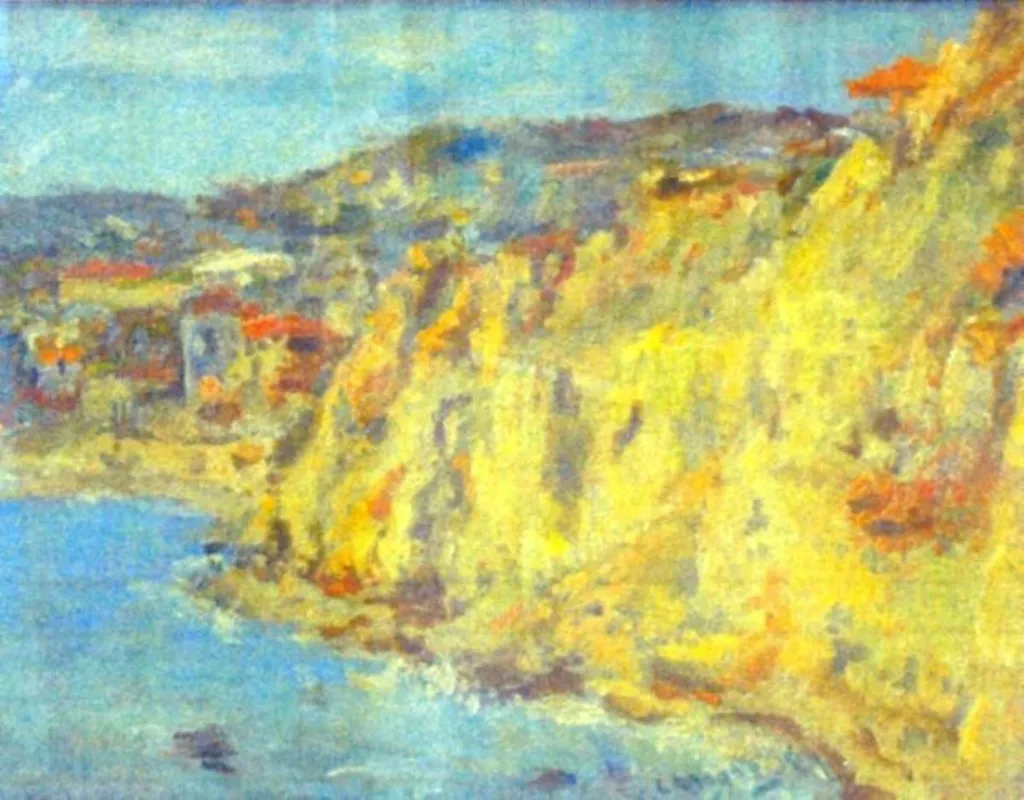
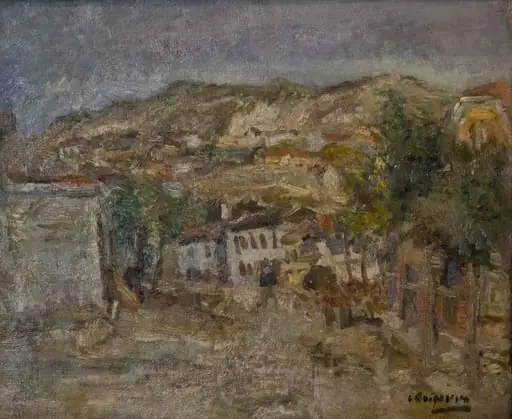
Balcic is an unspecified painting by Lucian Grigorescu. It is held in the collection of the Țării Crișurilor Museum.
About this work
Overview
The composition emphasizes texture over detail, using thick layers of paint to convey the ruggedness of the terrain.
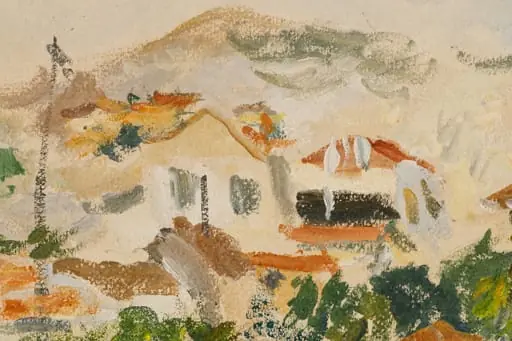
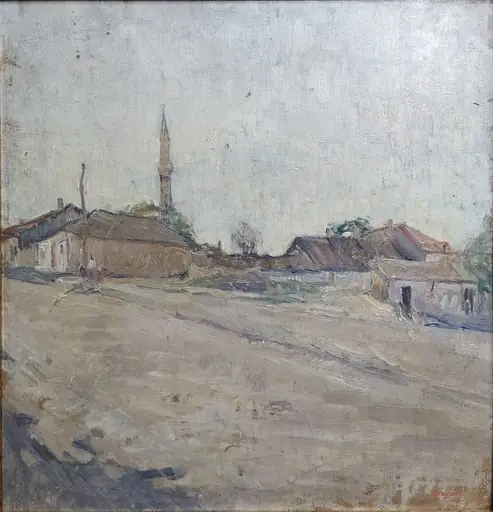
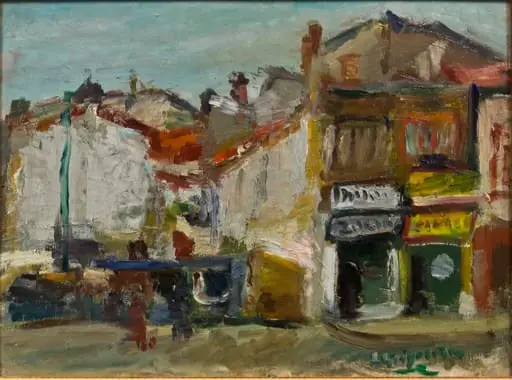
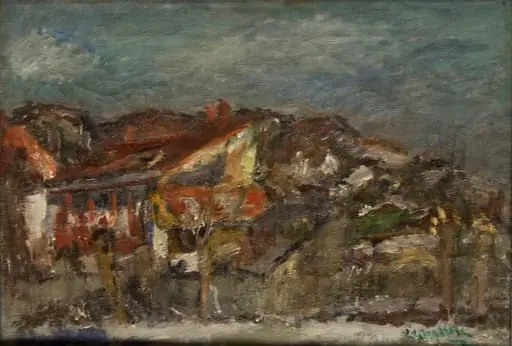
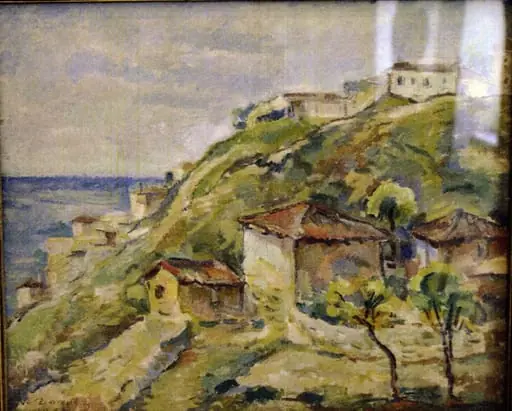
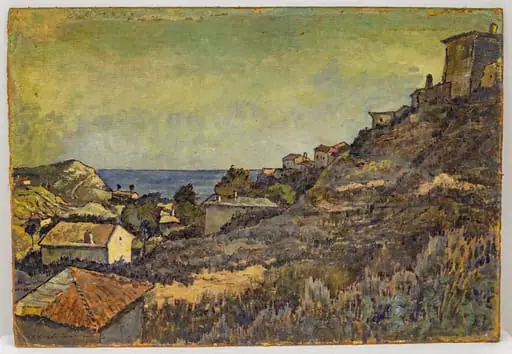
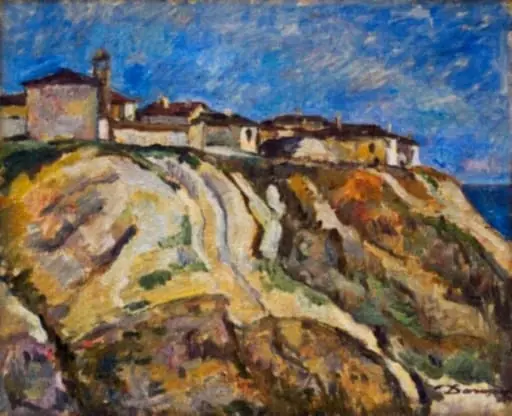
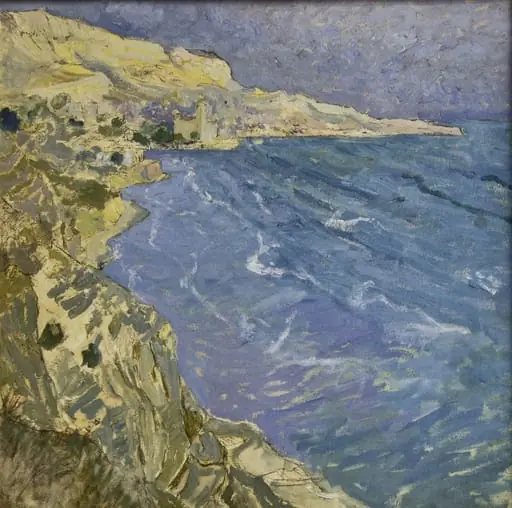
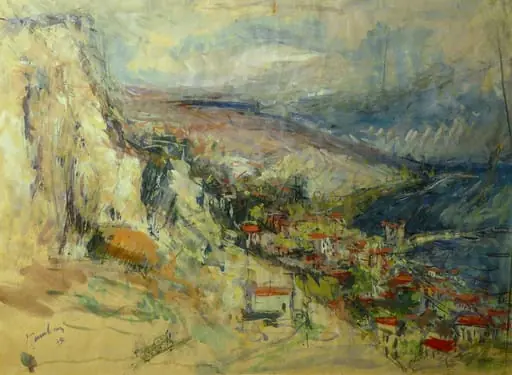
This painting depicts a rural landscape in Balcic, rendered with vigorous brushwork and unblended pigments. The composition emphasizes texture over detail, using thick layers of paint to convey the ruggedness of the terrain. Warm tones dominate the foreground, contrasting sharply with the cooler hues of the distant water and hills. The absence of smooth transitions heightens the sense of physicality in the surface.
Subject & Meaning
The scene captures a quiet coastal village in Balcic, with modest structures nestled near the shore. The emphasis is not on architectural precision but on the atmosphere of the place—its dry earth, open skies, and still waters. The lack of human figures and the simplified forms suggest a focus on the land itself, evoking a sense of solitude and enduring natural rhythms.
Technique & Style
The artist employs impasto to build the landscape in tangible layers, creating a tactile surface that catches light unevenly. Colors are applied directly from the tube, with no blending, resulting in sharp contrasts between ochres, oranges, and blues. The brushstrokes are directional and energetic, reinforcing the sense of movement across the hills and the stillness of the water.
History & Provenance
The work originates from the artist’s time in Balcic, a Black Sea resort town that attracted painters seeking light and unspoiled scenery. While exact dates and ownership records are limited, the style aligns with early 20th-century regional painters who favored direct observation over idealized composition. The painting likely remained in private hands until entering institutional collections.
Context
Created during a period when many artists turned away from urban subjects, this work reflects a broader interest in rural and coastal life across Eastern Europe. It shares affinities with post-impressionist approaches that prioritized emotional resonance and material presence over realism. The use of bold color and texture places it within a wider movement redefining landscape painting in the early 1900s.
Legacy
The painting contributes to a body of work that reimagined landscape as an expressive medium rather than a documentary one. Its emphasis on texture and unmodulated color influenced later regional artists who sought to capture the essence of place through physical paint application. It remains a quiet example of how ordinary scenes could be transformed through deliberate, tactile technique.
Artist & collection
Artist
Lucian Grigorescu painted quiet scenes of cities and coasts, mostly in oil on canvas.