Artwork
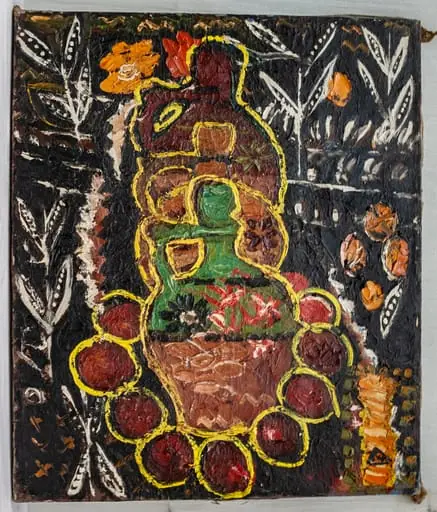
Natură statică cu obiecte populare
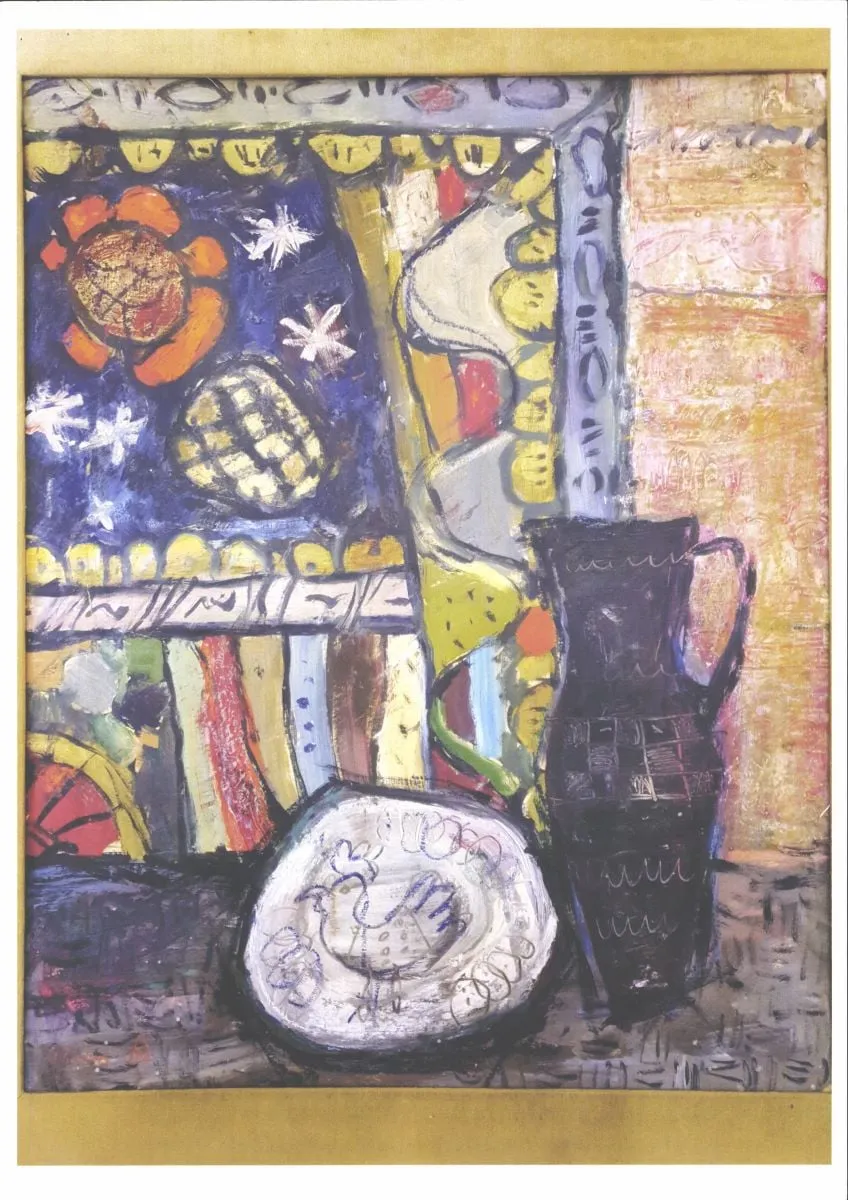
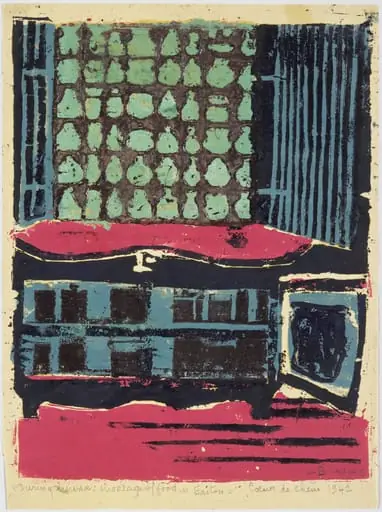
Natură statică cu obiecte populare is a print by Ion Țuculescu. It dates from 1942 and is held in the collection of the Colecție particulară - Cluj.
About this work
Overview
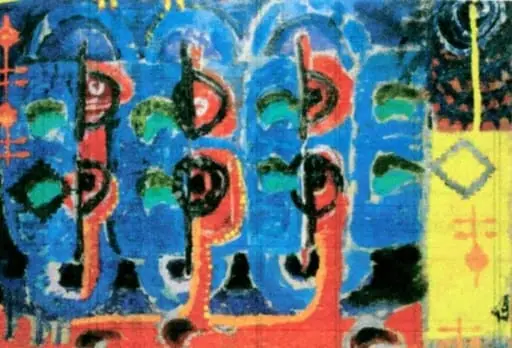
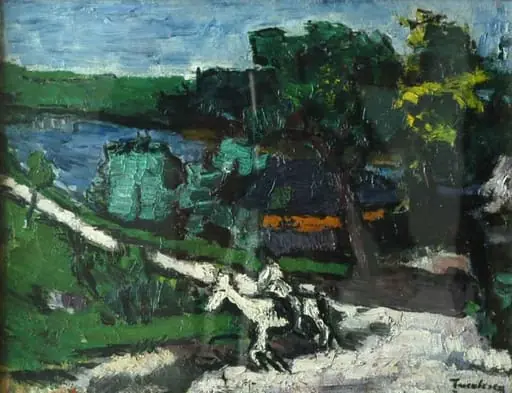
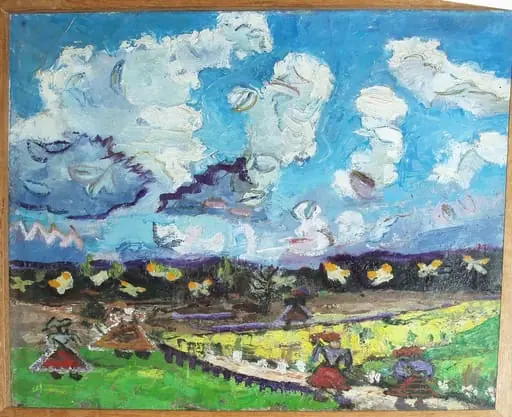
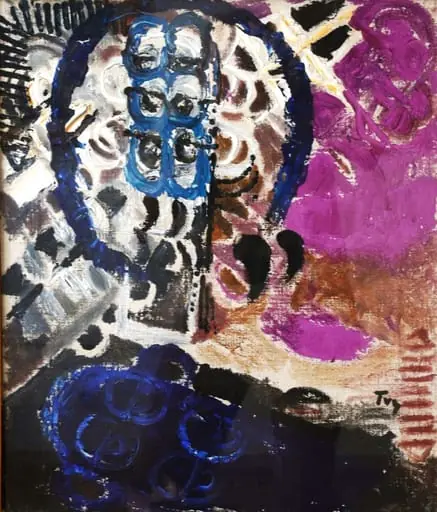
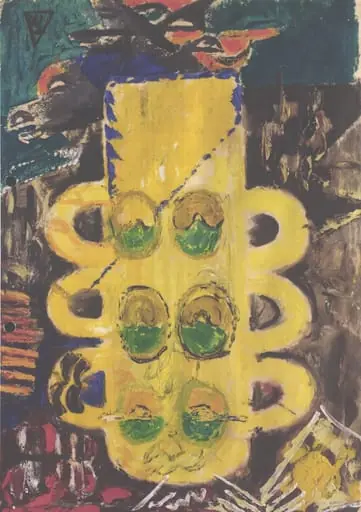
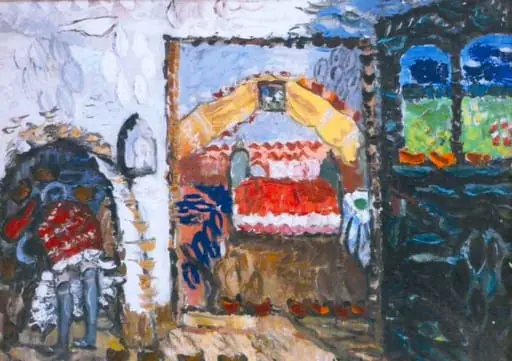
Painted around 1942 by Romanian artist Ion Țuculescu, this still life presents everyday domestic objects arranged with informal spontaneity. The work is part of the Museum of Ethnography’s collection, reflecting an interest in vernacular culture rather than traditional fine art subjects. Its composition avoids formal symmetry, favoring a sense of casual presence over staged arrangement.
Subject & Meaning
The painting features a white plate with decorative patterning and a dark vase, both common household items. These objects carry no overt symbolic meaning but instead evoke the quiet rhythms of daily life. Their selection suggests an appreciation for the ordinary, aligning with mid-20th century Romanian artistic tendencies to elevate the mundane through visual attention.
Technique & Style
Țuculescu employs flat, unmodulated areas of color—bright blue on the left, yellow on the right—to define the background, creating a stark contrast with the foreground objects. Brushwork is direct and unrefined, emphasizing form over texture. The palette is intentionally saturated, lending energy to the scene without relying on chiaroscuro or detailed rendering.
History & Provenance
The painting was created during a period when Romanian artists increasingly turned to local themes amid shifting cultural policies. It entered the Museum of Ethnography’s holdings shortly after its completion, likely chosen for its depiction of everyday material culture. Its preservation there underscores its role as a document of domestic life rather than a purely aesthetic object.
Context
In early 1940s Romania, many artists moved away from academic traditions to explore folk motifs and domestic scenes. Țuculescu’s work reflects this trend, aligning with broader efforts to define a national visual language rooted in common experience. The painting’s informal arrangement and bold colors distinguish it from more rigid European still-life conventions of the time.
Legacy
Though not widely exhibited outside Romania, the work remains a quiet example of how local artists reimagined still life through cultural specificity. Its presence in an ethnographic museum highlights its value as a record of material life, influencing later generations interested in the intersection of art and everyday objects.
Artist & collection

Artist
Ion Țuculescu was a Romanian expressionist and abstract oil painter, although professionally he worked as a biologist and physician.