Artwork
Peisaj cu case
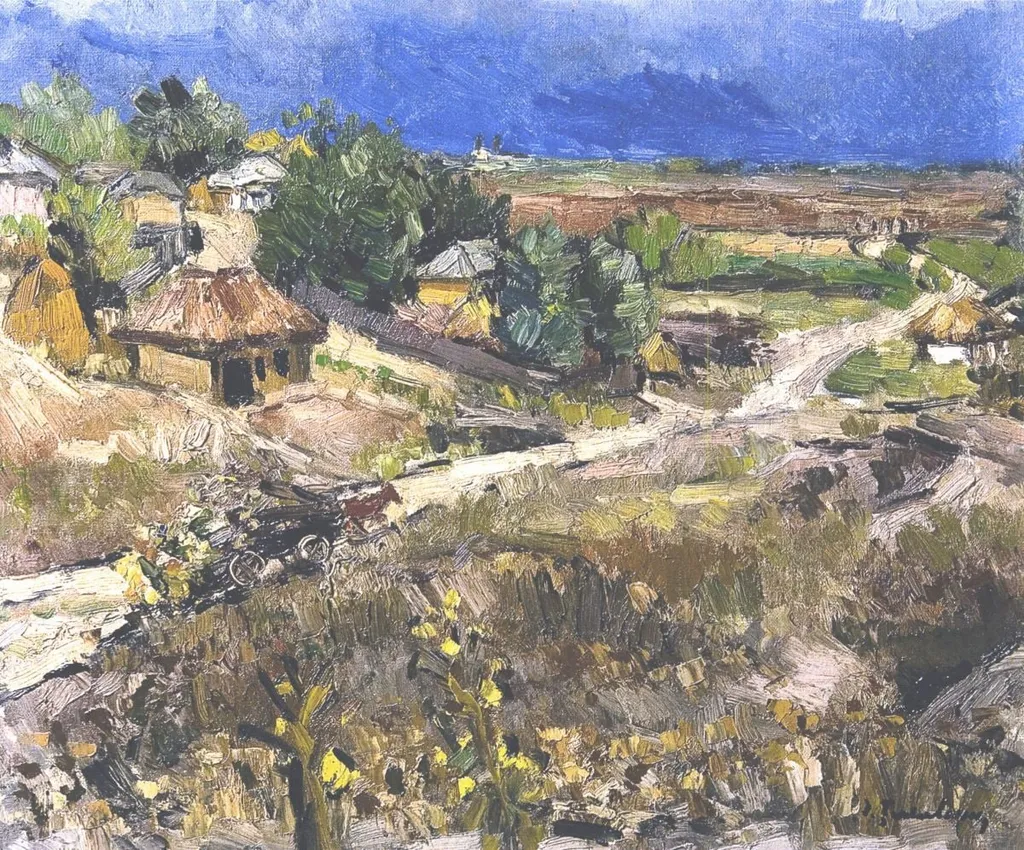
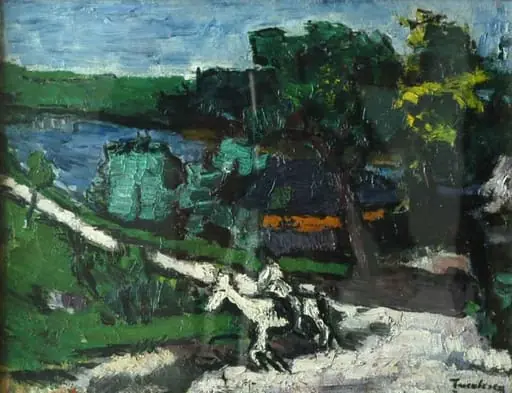
Peisaj cu case is a print by Ion Țuculescu. It dates from 1946 and is held in the collection of the National Museum of Art of Romania.
About this work
Overview
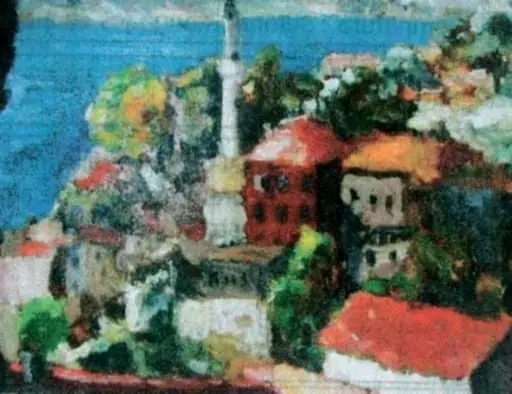
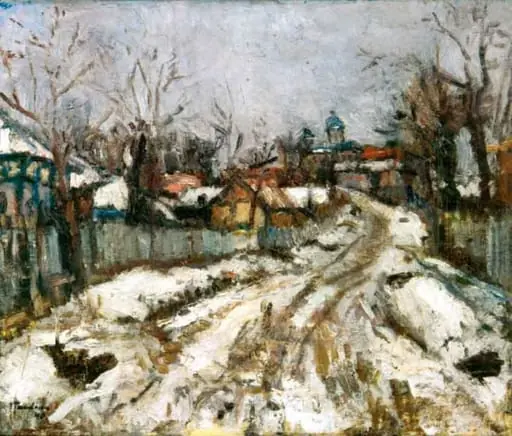
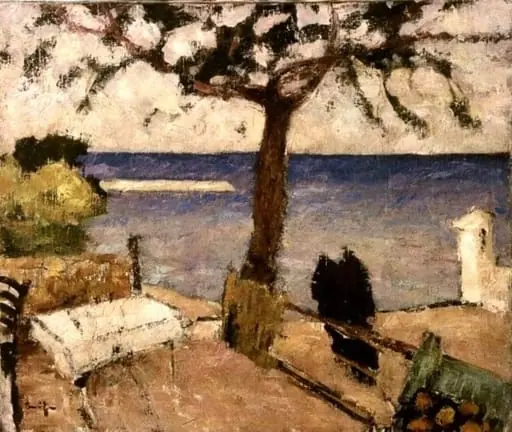
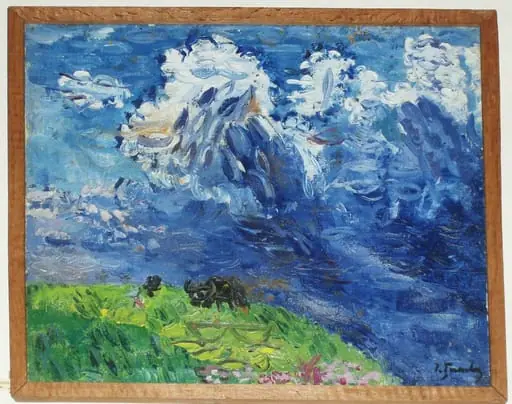
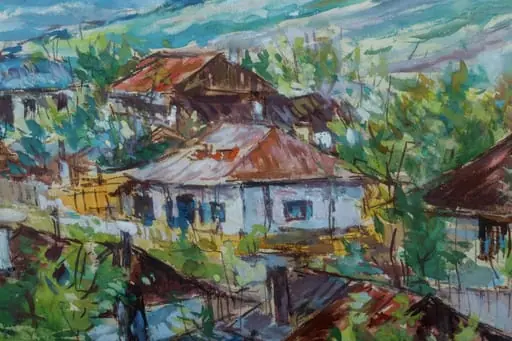
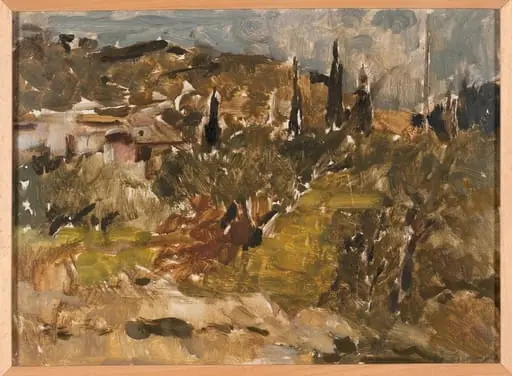
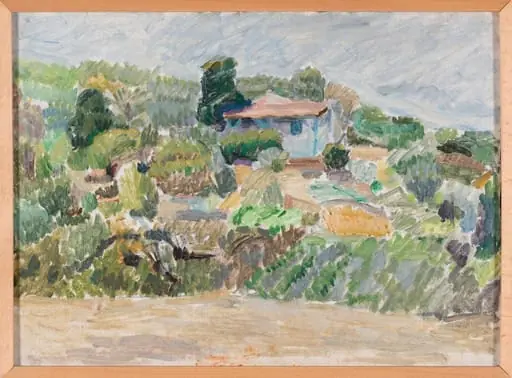
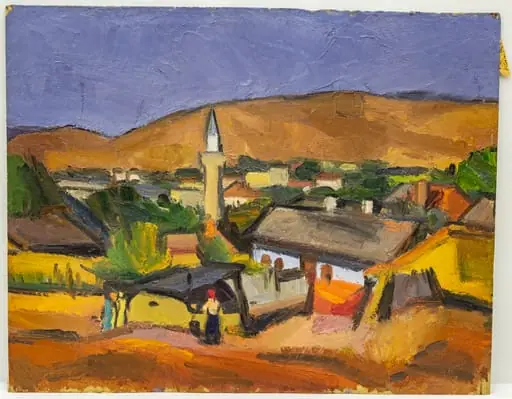
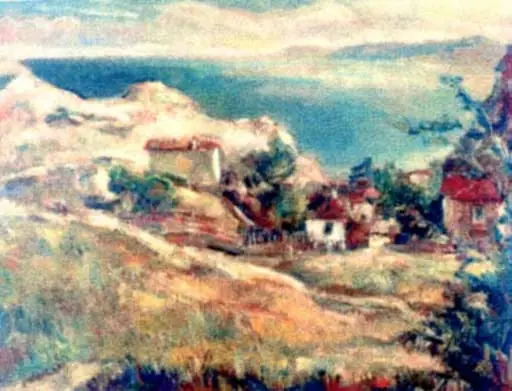
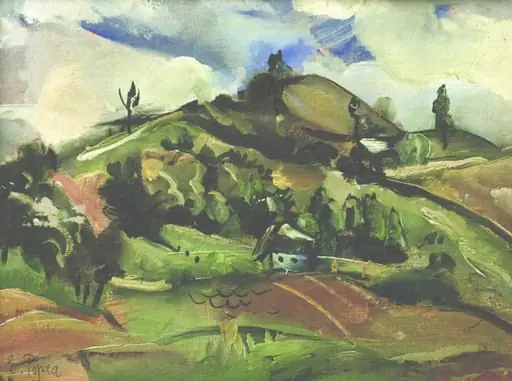
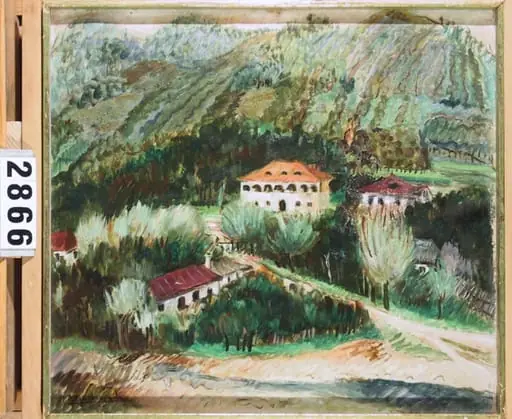
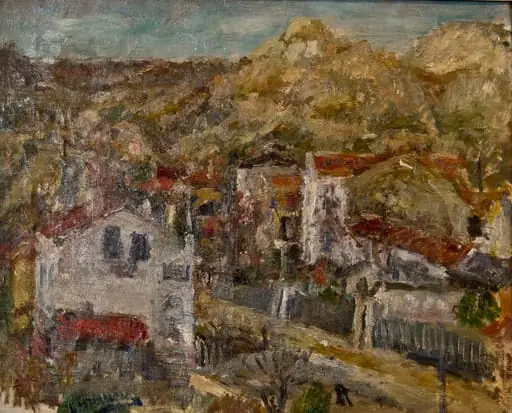
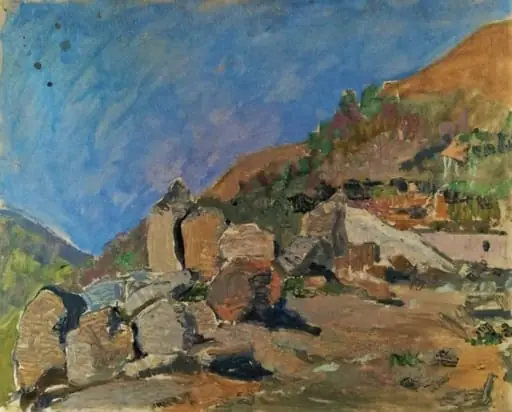
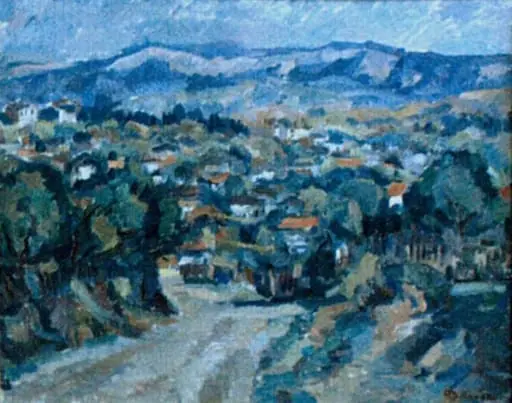
Painted around 1946 by Romanian artist Ion Țuculescu, this landscape depicts a quiet rural settlement nestled in rolling countryside.
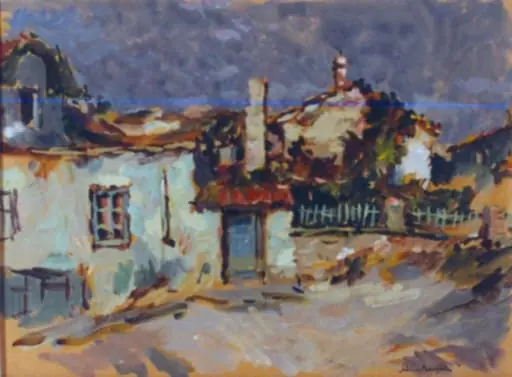
Painted around 1946 by Romanian artist Ion Țuculescu, this landscape depicts a quiet rural settlement nestled in rolling countryside. The composition centers on modest dwellings with thatched roofs, surrounded by fields and trees. A winding dirt path guides the viewer’s eye toward the cluster of homes, creating a sense of quiet movement through the scene. The work reflects a personal, intimate view of village life in postwar Romania.
Subject & Meaning
The painting portrays a humble village setting, emphasizing simplicity and harmony with nature. The absence of human figures invites contemplation rather than narrative, focusing instead on the enduring presence of domestic architecture within the land. The subdued palette and tranquil arrangement suggest a meditation on continuity, resilience, and the quiet rhythms of rural existence after years of upheaval.
Technique & Style
Țuculescu employed impasto to build texture across the canvas, applying paint thickly to evoke the tactile qualities of earth, foliage, and roofing. The heavy brushwork gives the landscape a physical presence, as if the ground itself were rising from the surface. This method, combined with loose, expressive strokes, avoids idealized detail in favor of emotional resonance and sensory immediacy.
History & Provenance
Created shortly after World War II, the painting emerged during a period of cultural reevaluation in Romania. While little is documented about its early ownership, it is associated with the artist’s broader exploration of national identity through landscape. It remained within Romanian collections until entering public institutional care, where it is now preserved as part of the nation’s modernist heritage.
Context
In the mid-1940s, Romanian artists increasingly turned to local subjects as a form of cultural affirmation amid political change. Țuculescu’s focus on vernacular architecture and rural terrain aligned with a broader movement to root modern art in indigenous experience. Unlike urban realism, his work embraced emotional texture over social commentary, offering a quiet counterpoint to the era’s ideological pressures.
Legacy
Though not widely exhibited internationally, the painting remains a significant example of postwar Romanian landscape painting. Its emphasis on materiality and emotional tone influenced a generation of local artists who sought to express national character through sensory, non-narrative means. Today, it stands as a quiet testament to the enduring connection between land, memory, and artistic expression in Romania.
Artist & collection

Artist
Ion Țuculescu was a Romanian expressionist and abstract oil painter, although professionally he worked as a biologist and physician.