Artwork
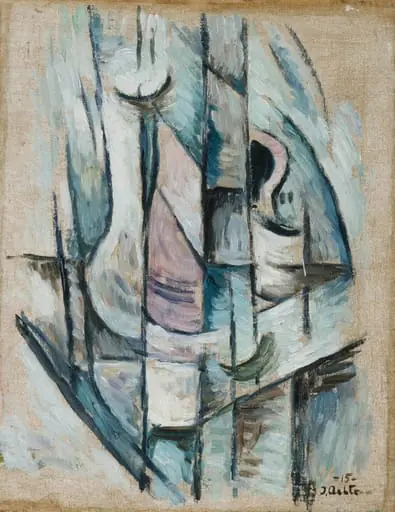
Κίτρινη Κανάτα
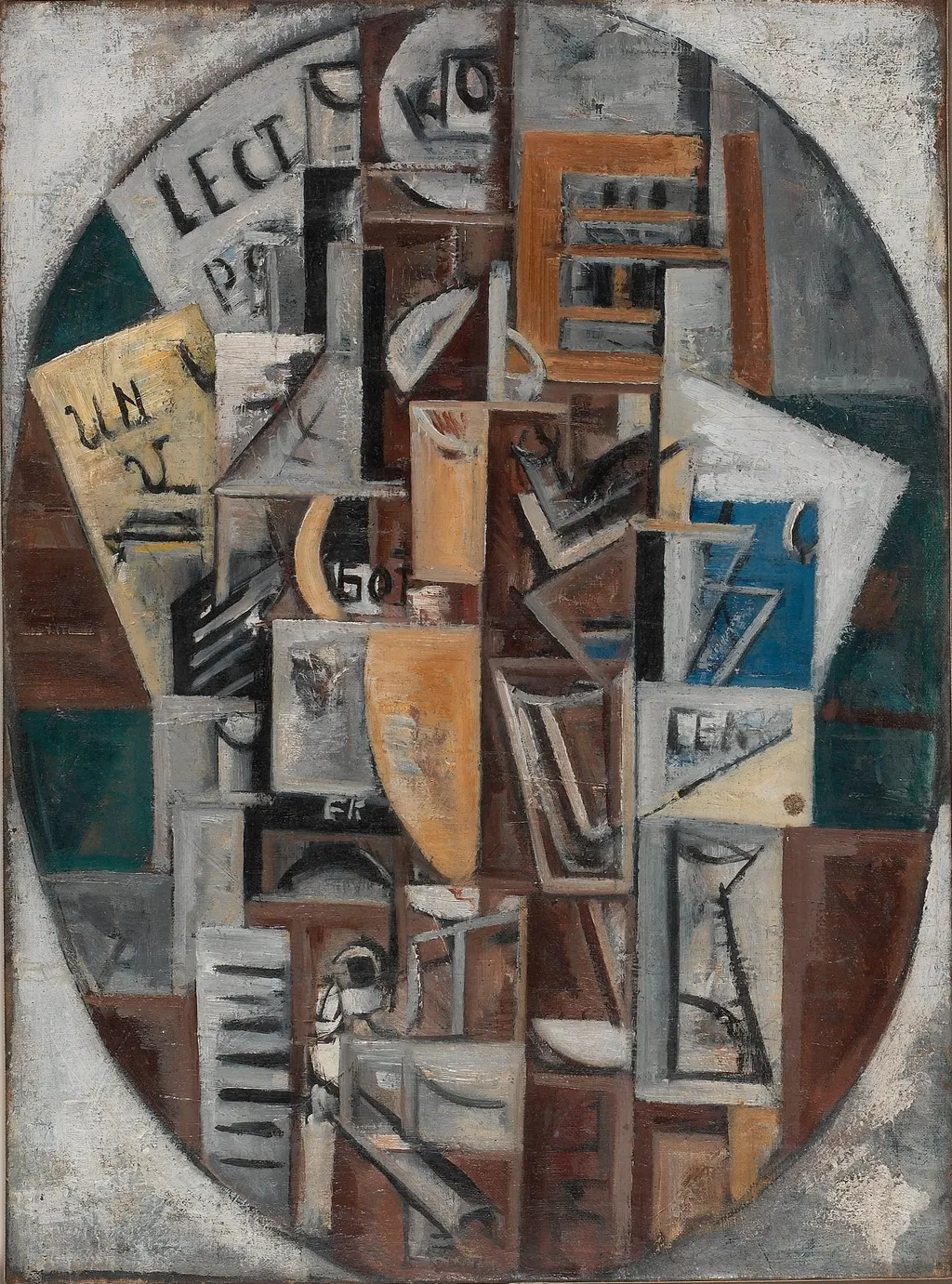
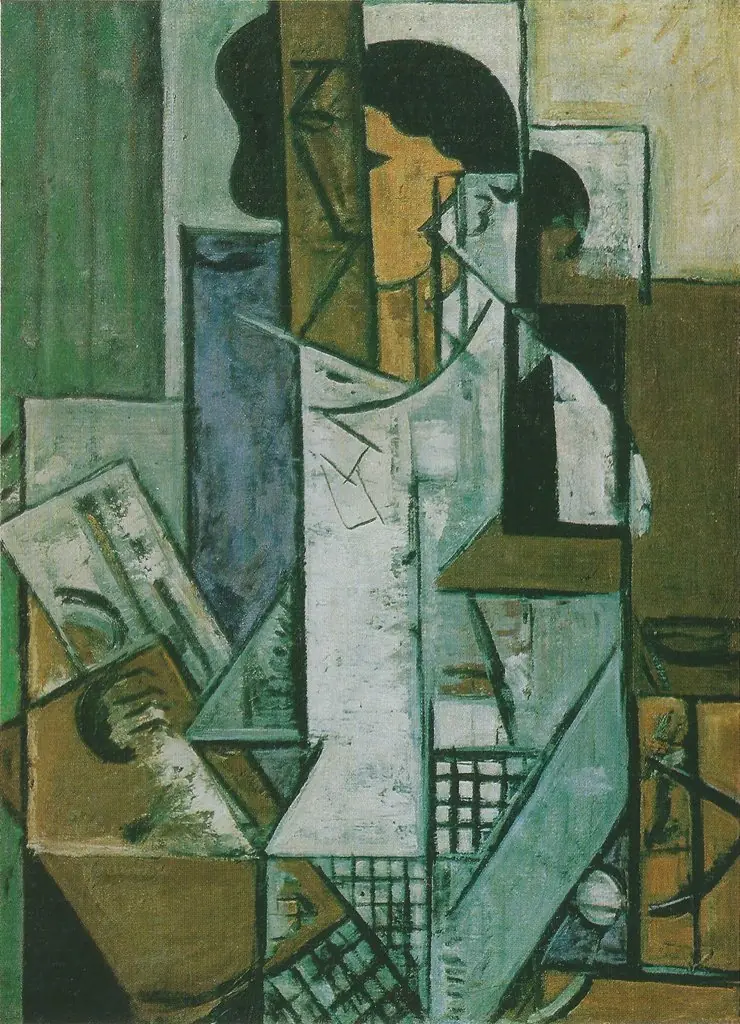
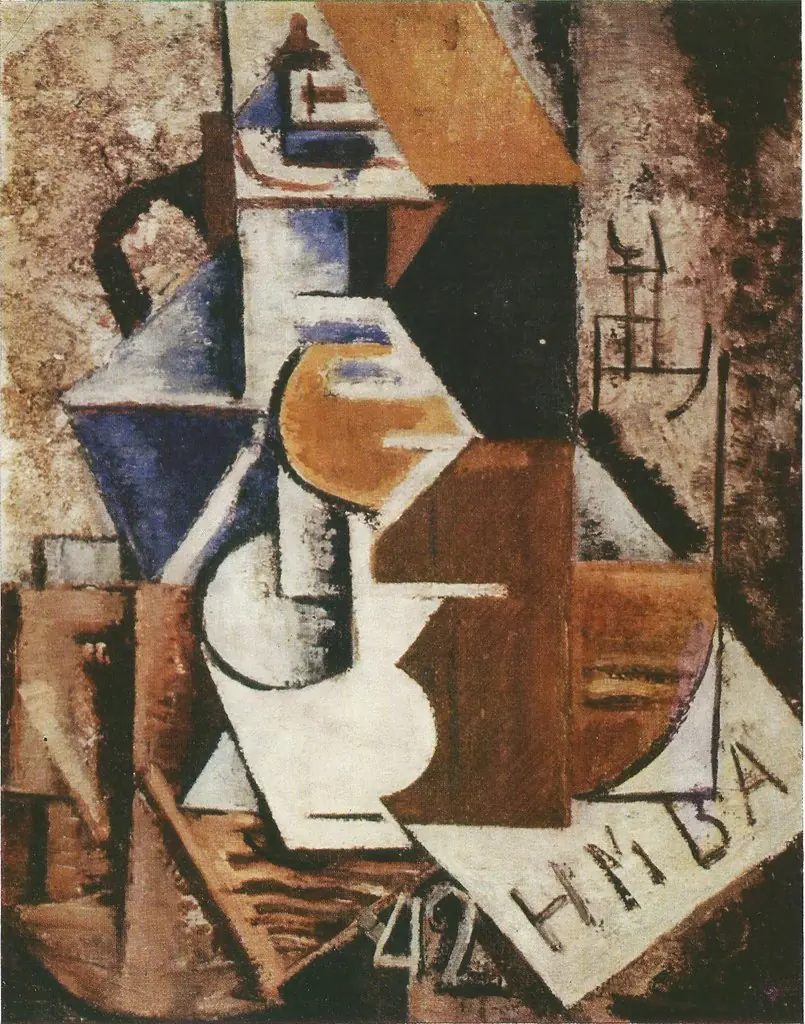
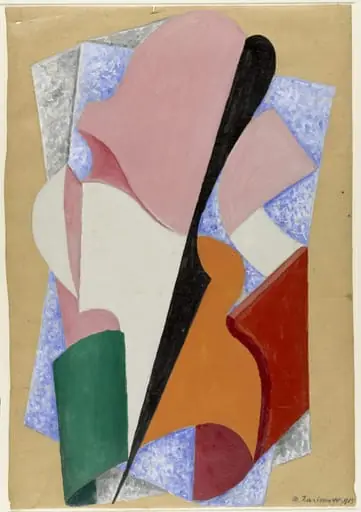
Κίτρινη Κανάτα is an unspecified painting by Nadezhda Udaltsova. It dates from 1933 and is held in the collection of the Metropolitan Organisation of Museums of Visual Arts of Thessaloniki – MOMus.
About this work
She had just spent months studying Cubism—breaking objects into sharp angles and overlapping planes.
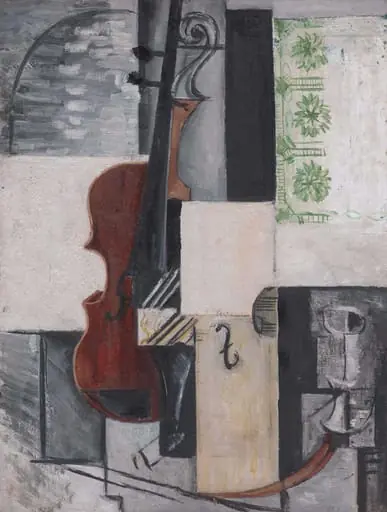
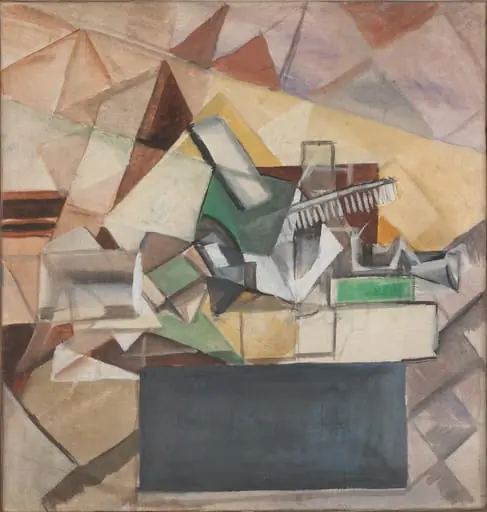
You see a yellow pitcher on a plain wooden table against a dark, flat background.
This painting was made in Moscow around 1913, right after Udaltsova returned from Paris. She had just spent months studying Cubism—breaking objects into sharp angles and overlapping planes. Here, the pitcher is simplified into geometric shapes, but it still feels solid and real. The brushwork is thick and direct, almost like she painted it in one sitting.
Look up the technique called *impasto* to see how other artists used thick paint to build form.
Overview
Painted in Moscow in 1913, Κίτρινη Κανάτα (Yellow Pitcher) emerged shortly after the artist’s return from Paris, where she immersed herself in Cubist practices. The work reflects her direct engagement with the movement’s formal innovations, translating fragmented forms into a compact still life. Set against a dark, unmodulated background, the composition isolates the pitcher as both subject and structural anchor, revealing a shift from observation to geometric abstraction.
Subject & Meaning
The yellow pitcher, a humble domestic object, becomes the focal point of a quiet investigation into form and space. Rather than idealizing or romanticizing the vessel, the artist reduces it to interlocking planes and angular contours, emphasizing its physical presence over narrative. The absence of context or decorative elements directs attention to the object’s volume and the painter’s handling of its structure, suggesting an interest in essence rather than appearance.
Technique & Style
Thick, assertive brushstrokes build the pitcher’s form through impasto, giving the surface a tactile, almost sculptural quality. The paint is applied with immediacy, avoiding smooth blending in favor of distinct, overlapping planes that suggest multiple viewpoints. The background remains flat and dark, enhancing the object’s solidity. This approach aligns with early Cubist strategies but retains a material weight that distinguishes it from more analytical French variants.
History & Provenance
Created in Moscow during the artist’s return from Paris, the painting was made in the studio of Tatlin and Morgunov on Ostozhenka Street, a hub for avant-garde experimentation. It predates her participation in the 1914 Valeska Karr exhibition, placing it among her earliest mature works. The piece documents her transition from studying European modernism to applying its lessons within a Russian artistic context, grounded in direct studio practice.
Context
In 1913, Moscow’s art scene was absorbing Cubist ideas through firsthand exposure and imported publications. Udaltsova’s work intersected with contemporaries like Popova and Vesnin, who were similarly redefining representation through geometry. While influenced by Picasso and French Cubism, her approach also absorbed elements from Dutch still life and medieval stained glass, blending structural clarity with a sense of historical continuity in Russian modernism.
Legacy
Κίτρινη Κανάτα stands as an early example of Russian Cubism’s distinct voice—less theoretical than its French counterpart, more grounded in material presence. It influenced later Constructivist concerns with form and function, serving as a bridge between avant-garde experimentation and the emerging Soviet artistic ethos. The painting’s restrained palette and structural rigor helped define a local path within modernist abstraction.
Artist & collection
Artist
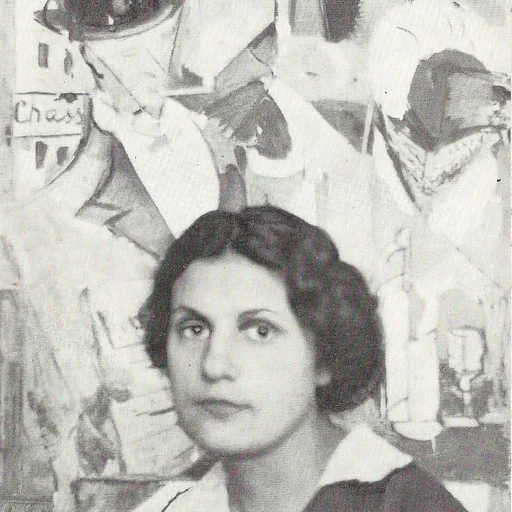
Nadezhda Andreevna Udaltsova (née Prudkovskaia; Russian: Наде́жда Андре́евна Удальцо́ва; 29 December 1885 – 25 January 1961) was a Russian and Soviet artist, painter and teacher.
Museum
Metropolitan Organisation of Museums of Visual Arts of Thessaloniki – MOMus
Continue through works from the same source collection.